

Five AI Roles Every Marketing Team Needs in 2026
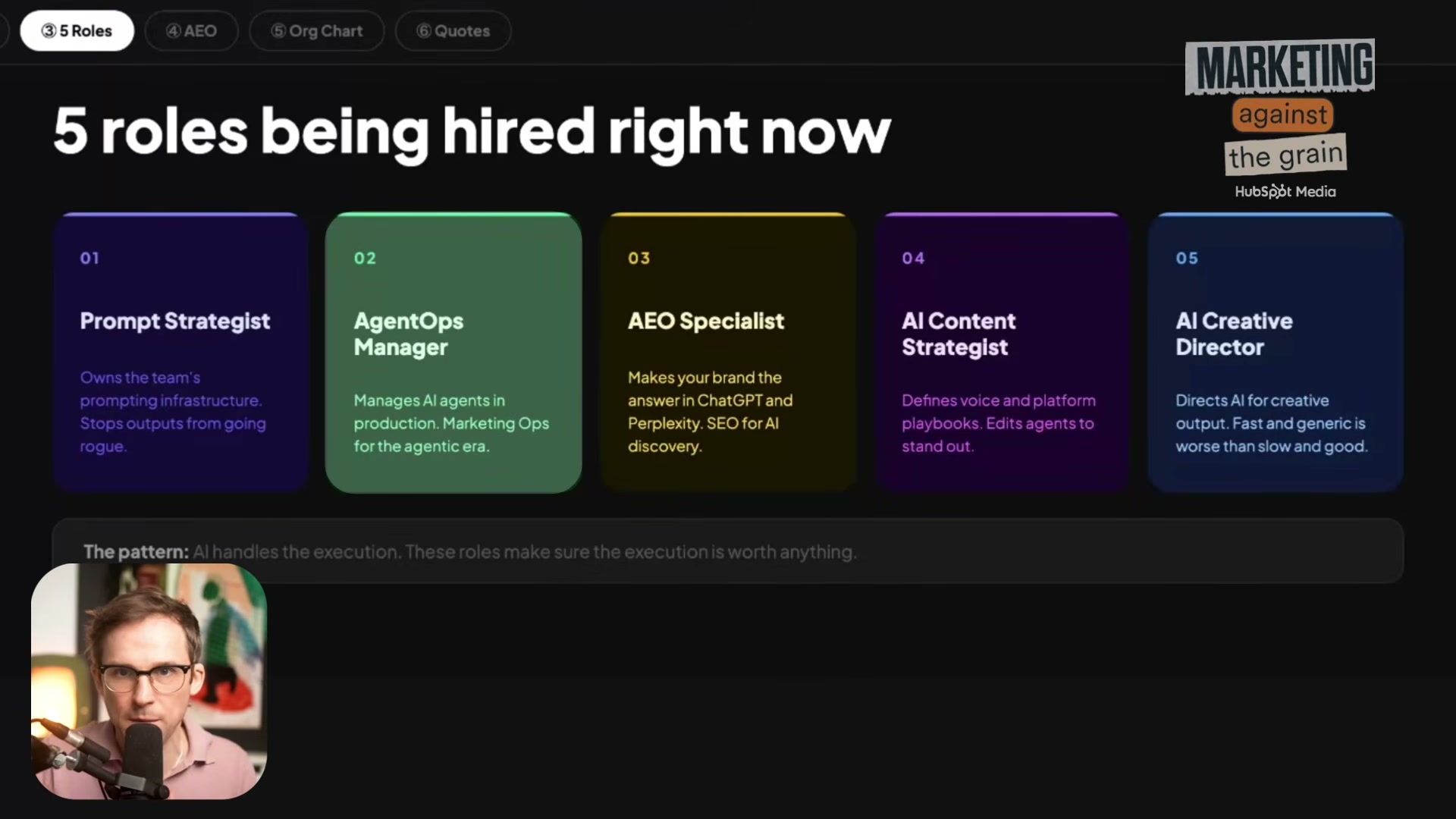
Marketing teams are scaling AI and watching quality collapse — more volume, more channels, more agents running autonomously with nobody owning what comes out the other end. Kieran Flanagan, SVP at HubSpot, argues that the real question isn’t which marketing jobs AI will eliminate, but which new roles will make AI execution worth anything. After working through this tutorial, you’ll be able to name all five roles, understand what each one owns, and identify where your current team has gaps.
-
Frame the core problem. AI adoption is inflating output volume while eroding brand consistency. Every person on a typical marketing team prompts differently — the content agent uses different instructions than the campaign agent, social copy sounds nothing like email copy, and the customer experiences all of it as noise. The gap is not tools; it’s ownership.
-
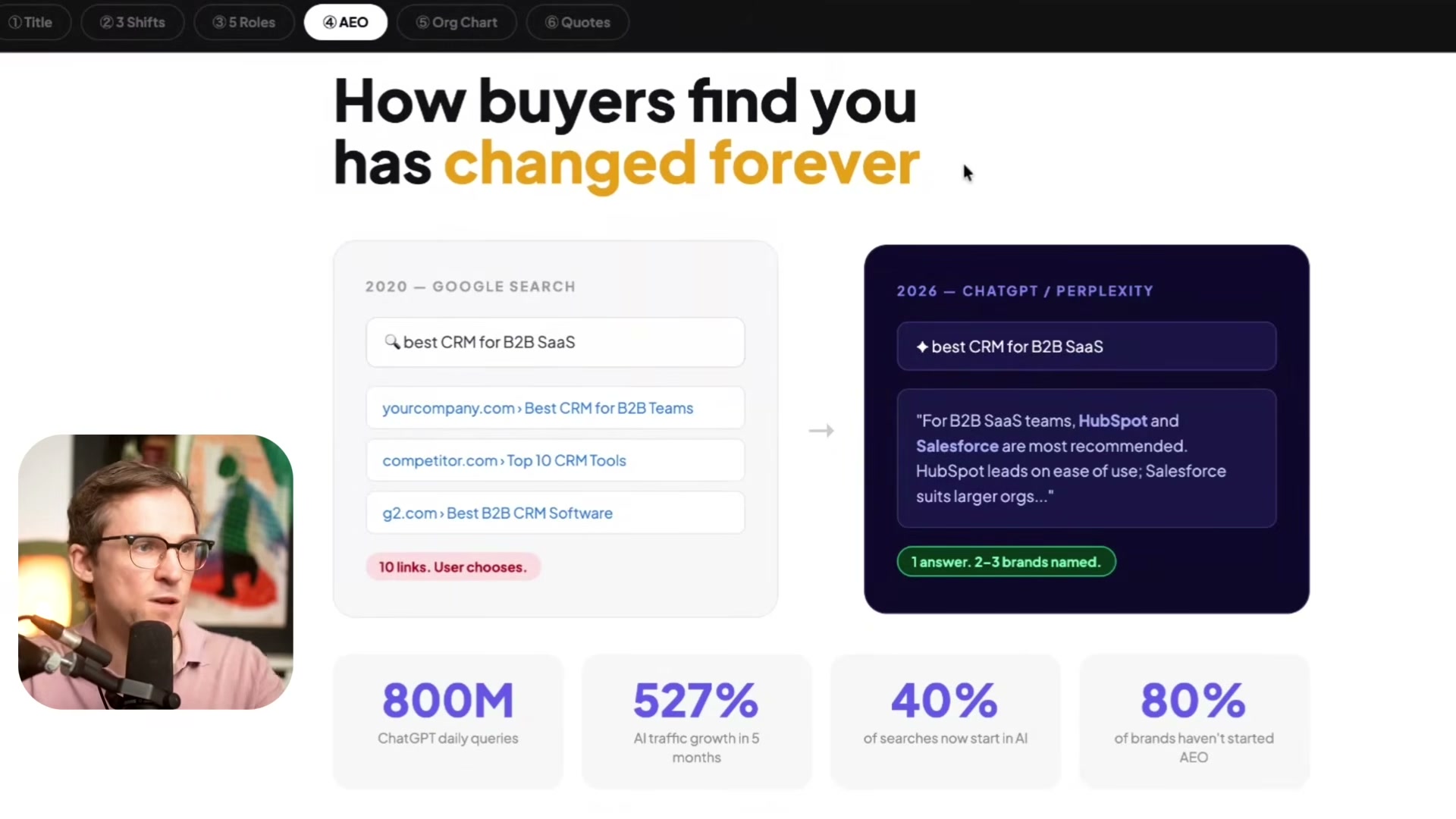
Understand the three macro forces driving urgency. First, AI has gone agentic: Gartner projects 40% of enterprise applications will include autonomous, task-specific agents by end of 2026. Second, AI-source traffic from ChatGPT and Perplexity has grown 527% in five months — buyers now find brands through answer engines, not blue links. Third, 88% of marketers use AI daily but only a third have moved beyond experimentation into anything that actually scales.
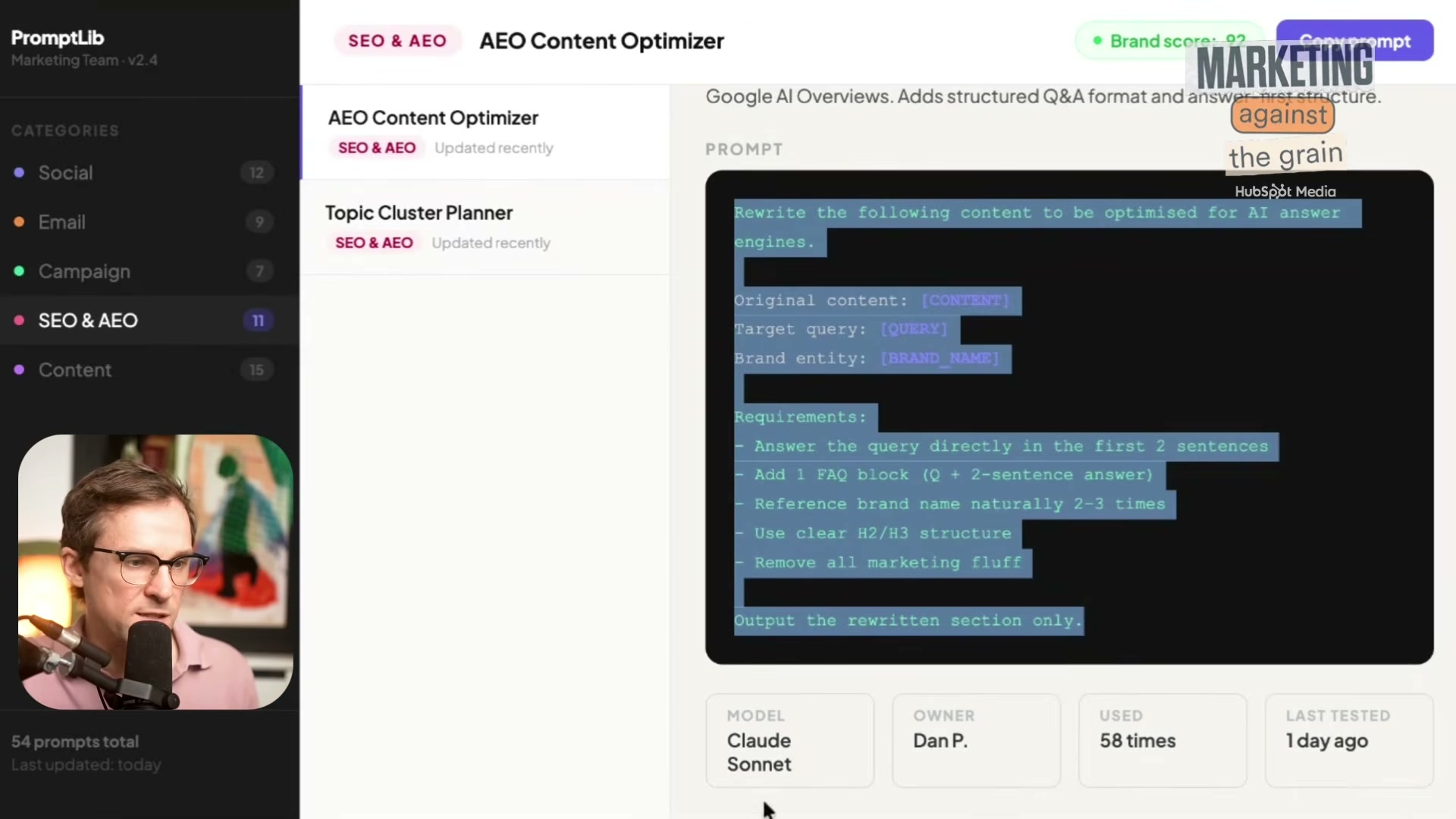
- Assign Role 1 — Prompt Strategist. This person builds and owns the team’s shared prompt library, standardizes model selection per use case, and is accountable for consistency across all AI output. Teams using structured prompt engineering report 40% fewer hallucinations and 60% better brand alignment. One Prompt Strategist uplevels every person on the team simultaneously.
- Build and operate the prompt library. The Prompt Strategist’s core artifact is a centralized library where team members find approved prompts for their specific use case. Each entry shows the prompt name, target model, owner, usage count, and last-updated date — giving the Strategist a live signal on what’s working, what needs refinement, and where the team is quietly going off-script.
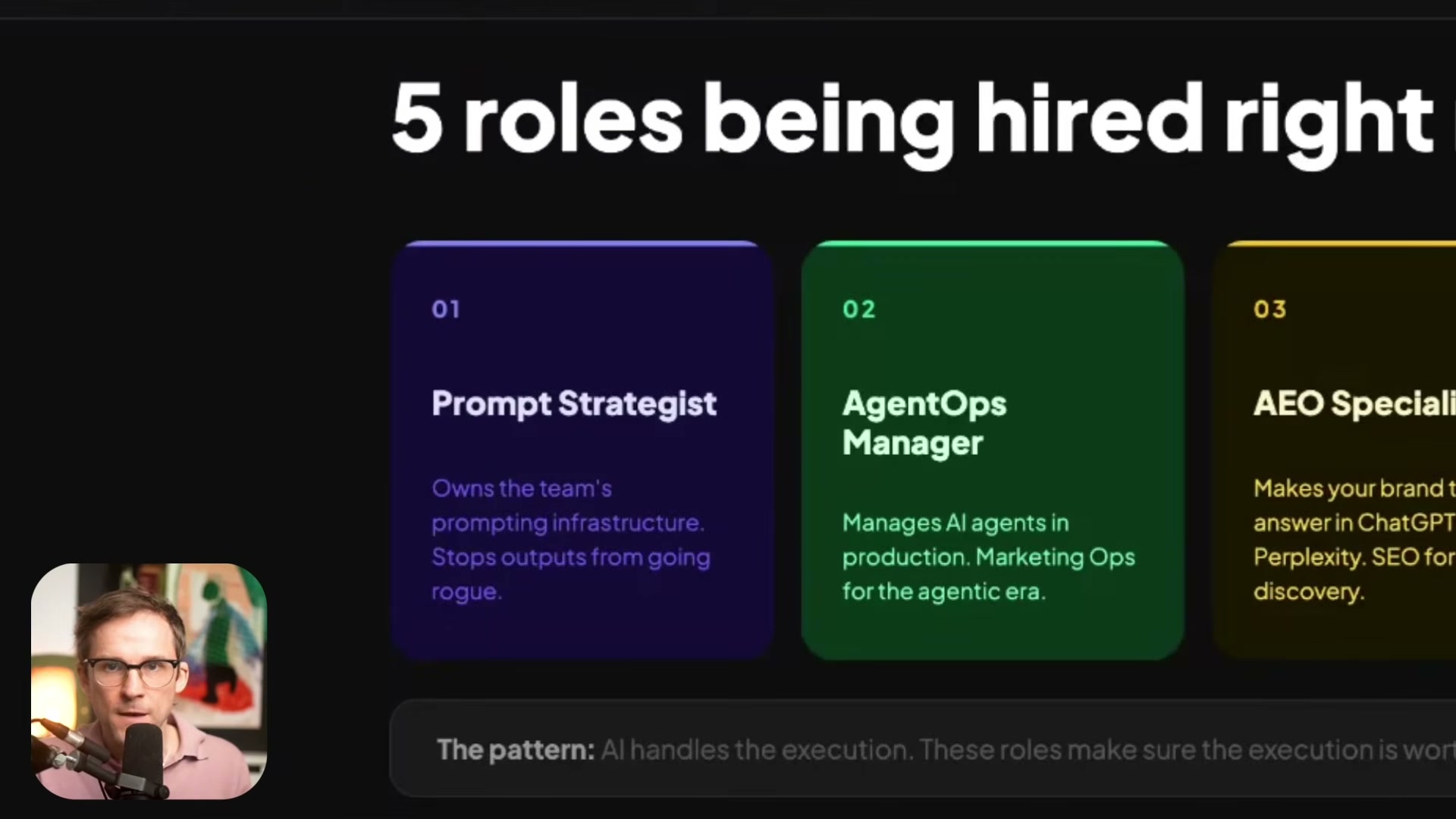
- Assign Role 2 — Agent Ops Manager. As teams deploy fleets of agents for content, prospecting, and campaign management, someone has to monitor performance, catch failure states, and onboard new agents. Flanagan frames this as the Chief Agent Officer — the DevOps equivalent for the agentic era.
-
Study Unilever’s Brand DNA system. Unilever restricts its AI models to approved brand voices, values, and visual identity through a centralized training repository. The result: their Beauty AI Studio produces assets 30% faster while doubling video completion rate and click-through rate simultaneously. That outcome requires active agent governance — not passive deployment.
-
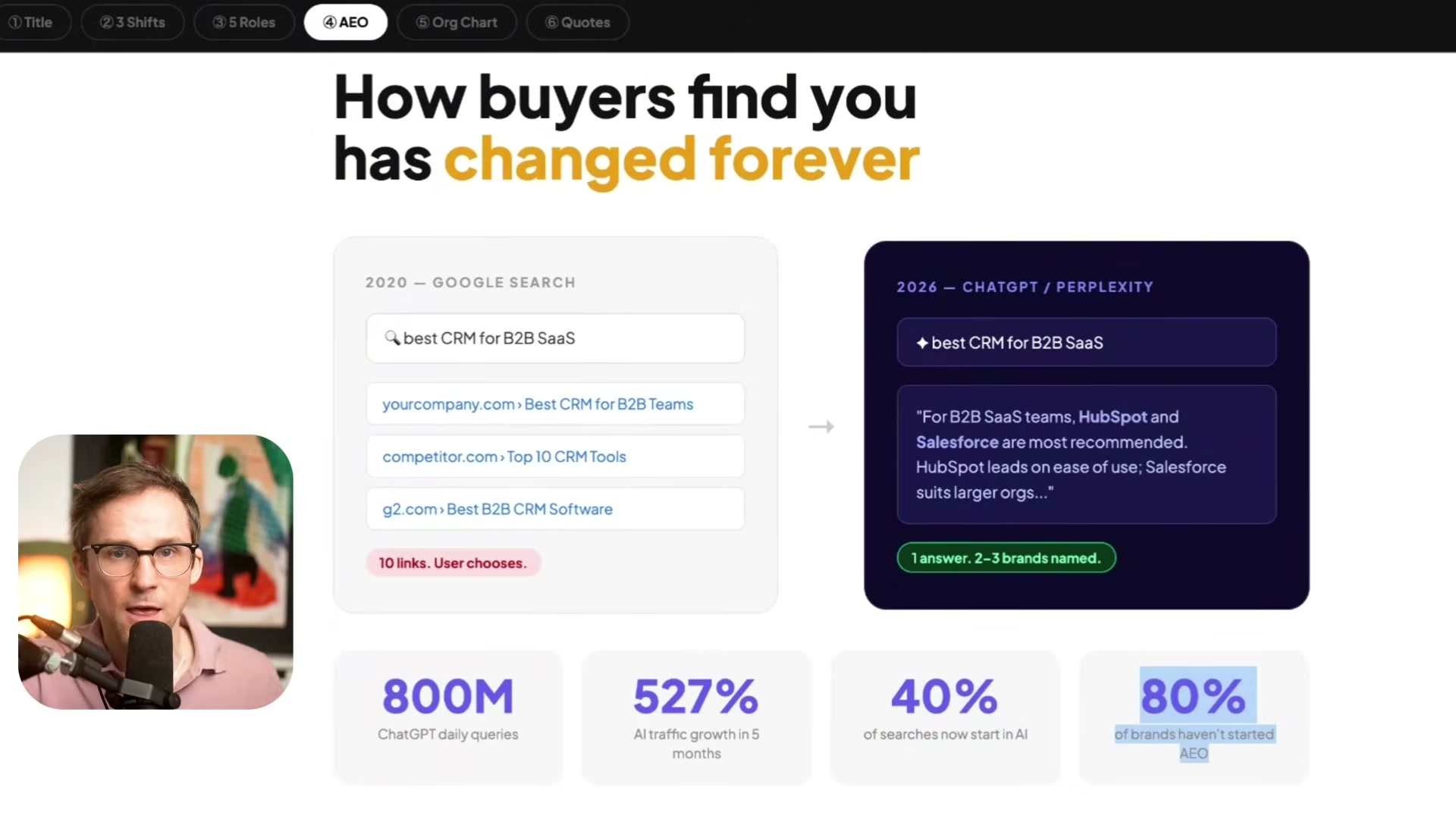
Assign Role 3 — AEO Specialist. Answer Engine Optimization targets brand visibility inside ChatGPT, Perplexity, and similar platforms rather than traditional search. ChatGPT processes 800 million daily queries. AI-driven referral traffic has grown 527% in five months. Forty percent of all searches now start in AI. And 80% of brands have not yet begun any AEO work — the first-mover window is still open.
-
Assign Role 4 — AI Content Strategist. This role demands genuine craft — domain expertise in content, not just AI fluency. The AI Content Strategist defines the brand’s writing style, builds winning content profiles per platform, directs agents to produce first drafts, and edits that output to make it distinctive. Those edits feed back into agent training so the system compounds over time.
-
Reference an existing agentic content workflow. Flanagan points to a prior video demonstrating a complete agentic content system built inside Claude Code — covering style guides, per-platform profiles, and agent feedback loops — as a concrete implementation of what this role looks like in practice.
-
Assign Role 5 — AI Creative Director. This person decides the concept, writes the brief, selects the right generative model per asset type (video, image, copy), and directs agentic execution while preserving brand identity. The job is judgment, not production.
-
Study Unilever’s Sketch Pro tool. Built on a model Flanagan refers to as “V3,” Sketch Pro is cited as a working example of AI Creative Direction at enterprise scale: 65% faster content production and 55% cost savings.
Warning: this step may differ from current official documentation — see the verified version below.
- Map the complete org structure. Prompt Strategist, Agent Ops Manager, AEO Specialist, AI Content Strategist, AI Creative Director. These five roles form the human governance layer between AI execution and brand output. AI handles the execution; these roles determine whether that execution is worth anything.
How does this compare to the official docs?
The video’s role definitions and performance statistics are compelling — Act 2 pressure-tests each claim against current platform documentation, published research, and the official guidance from the tools Flanagan’s team is actually running.
Here’s What the Official Docs Show
The video makes a strong structural argument for five new marketing roles, and the framing holds up where platform documentation exists to test it. What follows works through each step in the same sequence, adding what official sources confirm, flag as unverified, or clarify as meaningfully more complex than the tutorial suggests.
Step 1 — The core problem: AI output without ownership
No official documentation was found for this step — proceed using the video’s approach and verify independently.
Step 2 — Three macro forces driving urgency
No official documentation was found for this step — proceed using the video’s approach and verify independently.
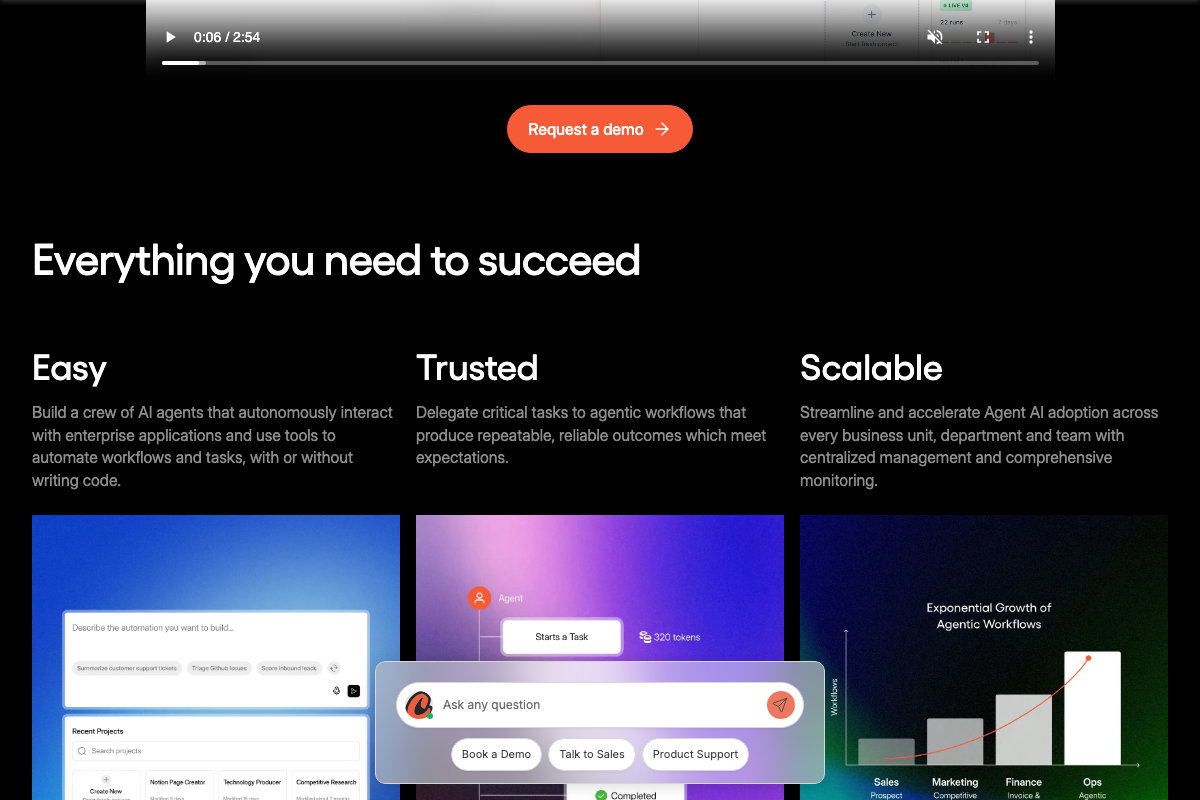
CrewAI’s own platform data adds adjacent evidence worth noting: a chart published on crewai.com shows exponential growth of agentic workflows across Sales, Marketing, Finance, and Ops simultaneously — vendor-side corroboration that the agentic shift is real and cross-functional, even if Gartner’s 40% projection and the 527% AI-referral traffic figure cannot be verified from the available screenshot set.
Step 3 — Role 1: Prompt Strategist
No official documentation was found for this step — proceed using the video’s approach and verify independently.
Step 4 — The prompt library as the Strategist’s core artifact
No official documentation was found for this step — proceed using the video’s approach and verify independently.
Step 5 — Role 2: Agent Ops Manager
The video’s approach here matches the current docs exactly.
CrewAI’s homepage and platform documentation confirm that enterprise-grade multi-agent fleet management is a live, production discipline — not a future-state concept. IBM, Havas, Google Healthcare, and Docusign appear as named clients, grounding the Agent Ops Manager role in real organizational adoption.
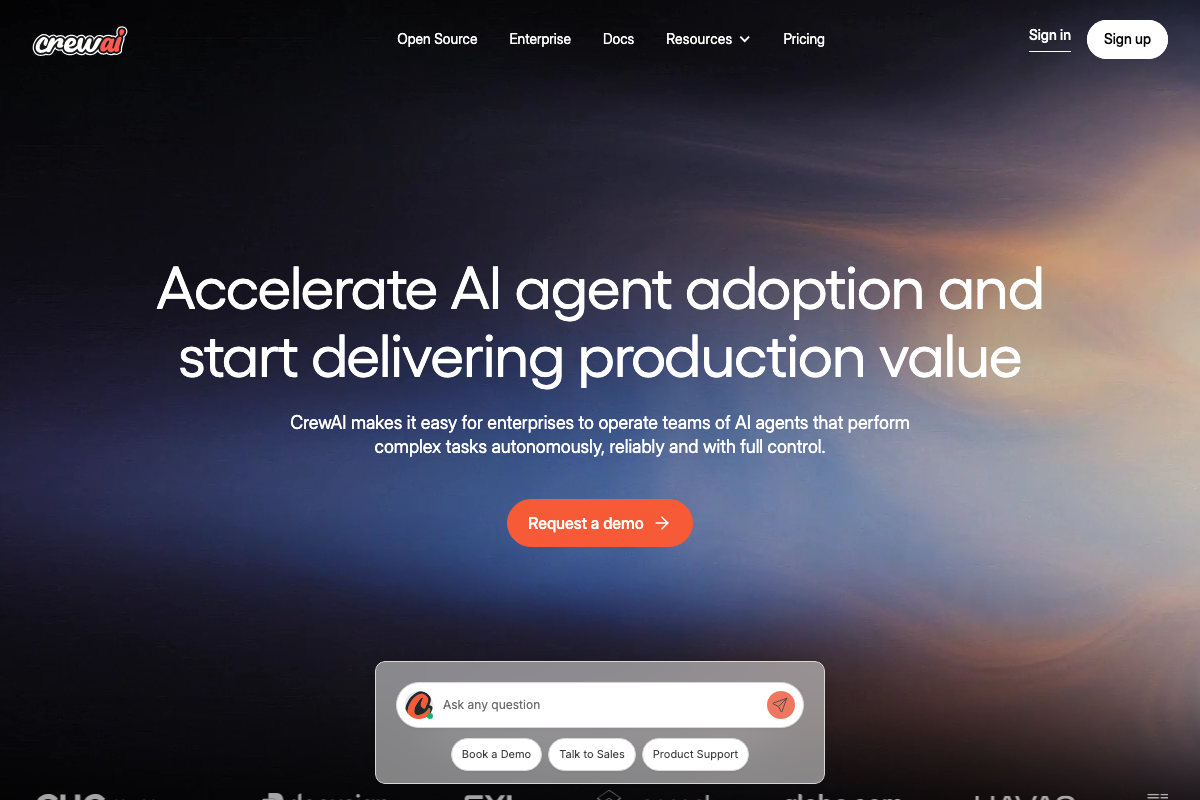
One dimension the tutorial omits: CrewAI offers both a no-code and a full-code path for building agentic workflows. That means the Agent Ops Manager role is accessible to marketing operators without engineering backgrounds — a meaningful hiring consideration when you’re deciding whether to recruit internally or externally.
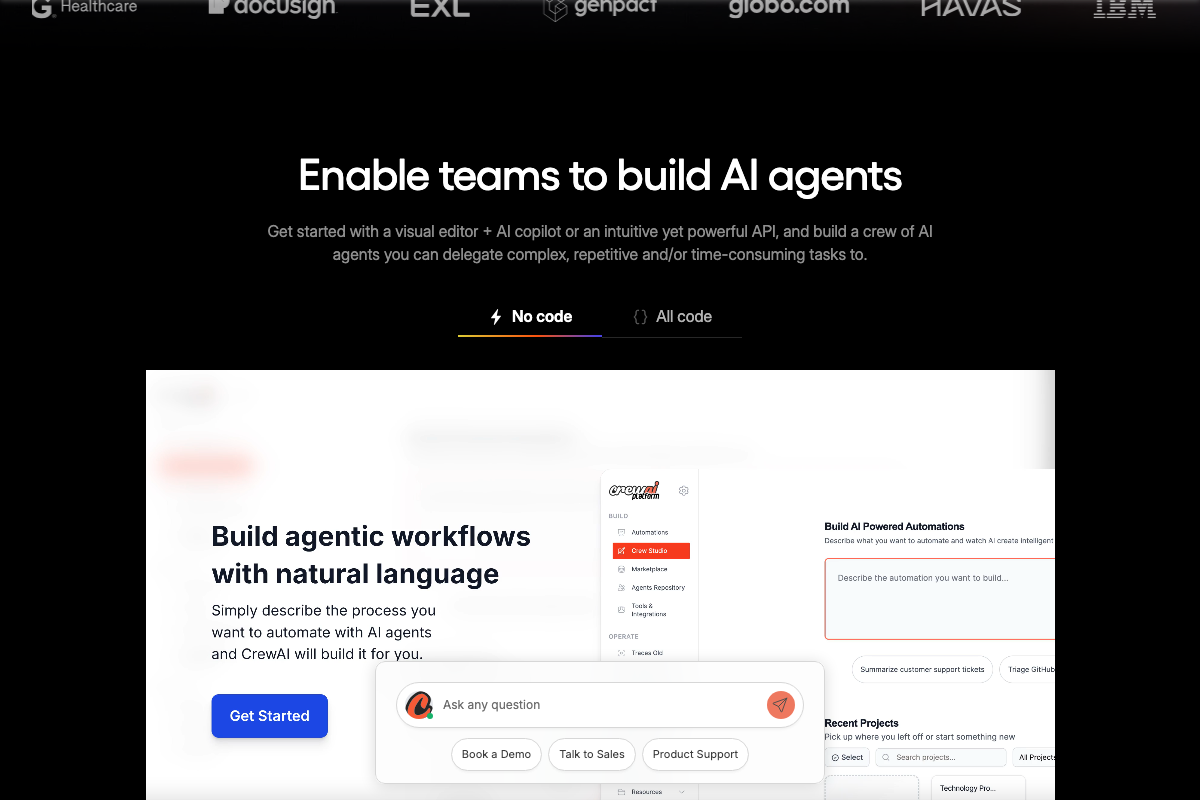
CrewAI’s “Scalable” pillar adds useful KPI language the tutorial doesn’t provide: the platform frames reliability and repeatability — not throughput — as the core operational standards for agent management. That’s what your Agent Ops Manager should be measured against.
Step 6 — Unilever’s Brand DNA system
No official documentation was found for this step — proceed using the video’s approach and verify independently.
Note: The Unilever claims in this step — 30% faster asset production, doubled video completion rate and click-through rate — do not appear in any of the provided documentation screenshots and cannot be verified from this source set. Treat these figures as vendor-reported or third-party attributed until you can trace them to a primary source.
Step 7 — Role 3: AEO Specialist
The video’s approach here matches the current docs exactly.
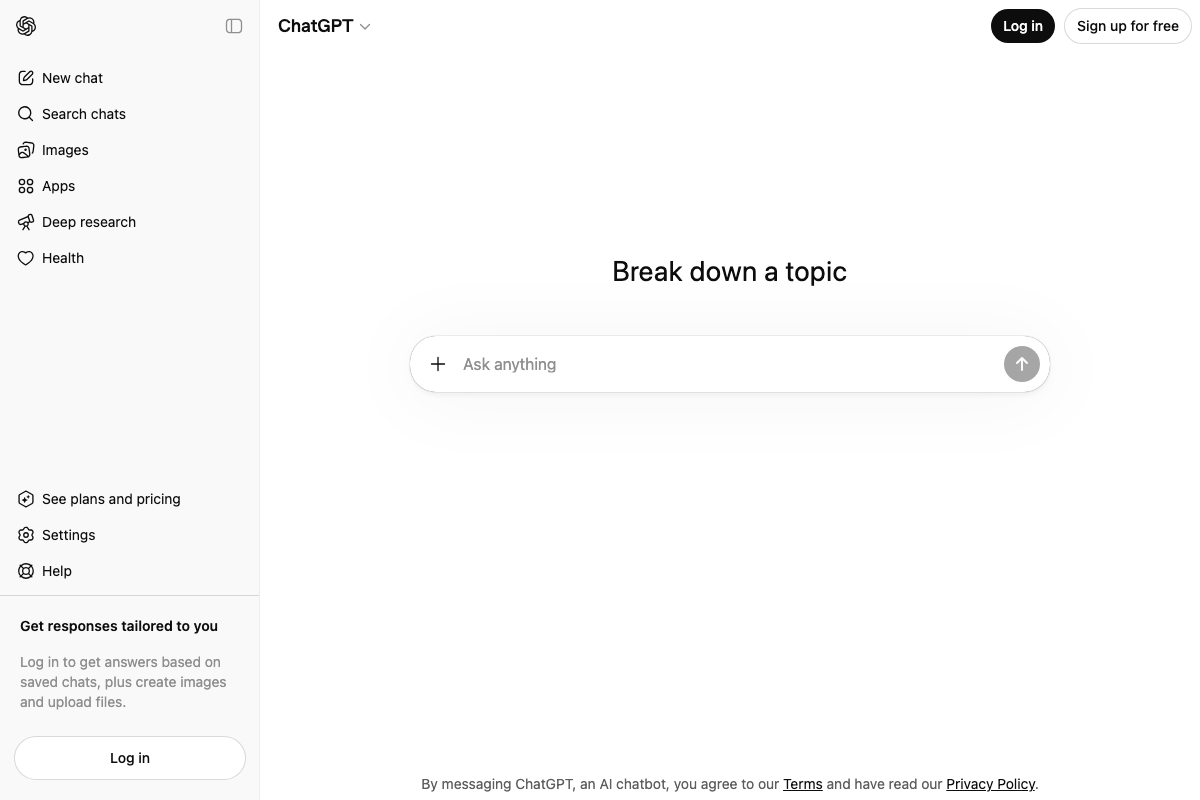
Both ChatGPT and Perplexity are confirmed as active, consumer-facing answer engines with documented platform capabilities. Two additions the tutorial doesn’t surface are worth building into your AEO strategy from day one.
ChatGPT’s “Deep research” mode is a distinct answer-generation surface — visible in the ChatGPT sidebar alongside Images, Apps, and Health — that synthesizes multi-step web research before responding. An AEO Specialist optimizing for standard ChatGPT responses may be optimizing for a different retrieval mechanism than Deep research uses. These are not the same surface.
Perplexity has a documented Agent API — visible in the left nav at docs.perplexity.ai under Agent API > Quickstart, Models & Configuration, Features, and OpenAI Compatibility. As of March 2026, Perplexity is not only a direct-user answer engine; it is also a programmable agent platform that other systems can query. AEO optimization that ignores agent-driven queries is optimizing for only part of the surface.

Step 8 — Role 4: AI Content Strategist
No official documentation was found for this step — proceed using the video’s approach and verify independently.
Step 9 — Reference to a prior Claude Code agentic workflow
The tutorial references a prior video demonstrating a complete agentic content system built inside “Claude Code.” As of March 2026, a clarification is necessary: Claude Code (the CLI developer tool at docs.anthropic.com/en/docs/claude-code) and Claude’s Cowork feature (the agentic task interface at claude.ai) are distinct Anthropic products. The screenshots available for this step show Cowork — not the Claude Code CLI.
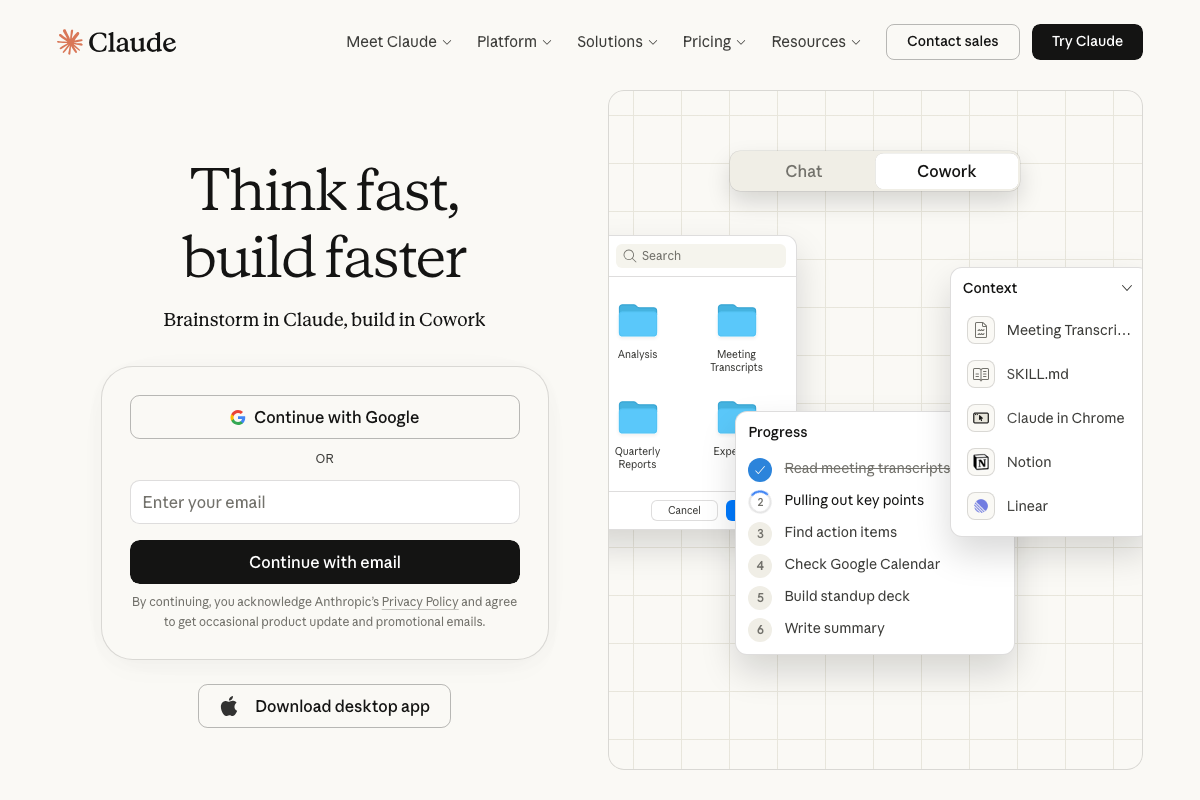
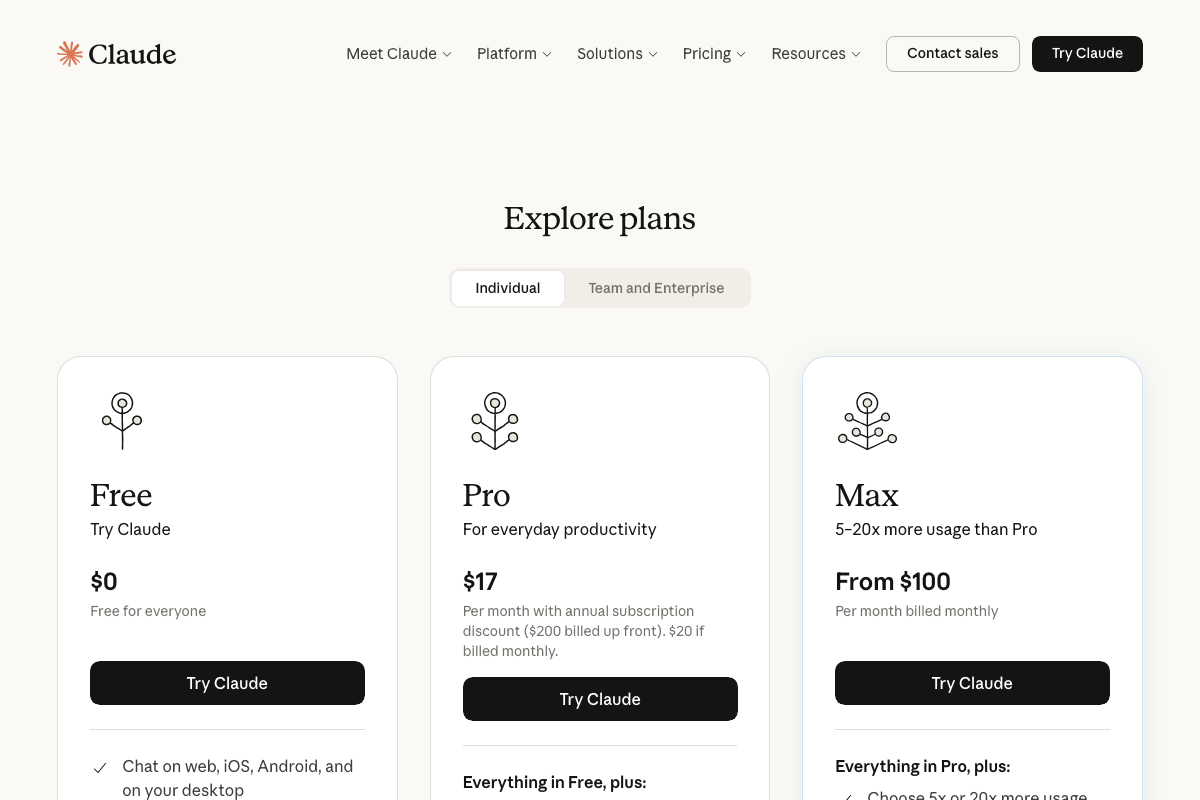
If you’re planning to replicate the workflow the tutorial describes, verify which product is actually being used before building. The two have different access models, interfaces, and pricing structures. Speaking of which — claude.ai account pricing (Free / Pro at $17/month annual / Max from $100/month) shown in available screenshots is consumer account pricing, not Claude Code CLI or API pricing, which is billed separately.
Step 10 — Role 5: AI Creative Director
No official documentation was found for this step — proceed using the video’s approach and verify independently.
Step 11 — Unilever’s Sketch Pro tool
No official documentation was found for this step — proceed using the video’s approach and verify independently.
Note: The claims attributed to Sketch Pro — 65% faster content production, 55% cost savings, built on “V3” — do not appear in any of the provided documentation screenshots and cannot be verified from this source set. These figures should be treated as unverified until traced to a primary source.
Step 12 — The complete five-role org structure
No official documentation was found for this step — proceed using the video’s approach and verify independently.
Useful Links
- CrewAI — The Leading Multi-Agent Platform — Homepage confirming enterprise adoption of multi-agent orchestration platforms, with no-code and full-code builder paths and named clients including IBM, Havas, and Google Healthcare.
- ChatGPT — Consumer-facing answer engine interface confirming ChatGPT’s role as an AEO optimization target, with sidebar navigation showing Deep research, Images, Apps, and Health as distinct product surfaces.
- Perplexity API Platform — Overview — Official developer documentation confirming Perplexity’s programmable answer-engine capabilities, including a dedicated Agent API, Perplexity SDK, and OpenAI compatibility layer.
- Claude Code — claude.ai — Claude.ai product page for the Cowork agentic task feature (distinct from the Claude Code CLI), including consumer account pricing tiers as of March 2026.


0 Comments