

Google Rankings Don’t Matter in ChatGPT — Here’s What Does
Ranking on page one of Google no longer guarantees a mention when a potential customer asks ChatGPT for a recommendation. This post breaks down what the Marketing Against the Grain panel surfaced about how AI tools like ChatGPT, AI Mode, and AI Overviews actually choose what to cite — and what that means for the content you publish today. By the end, you’ll understand which content formats earn AI citations, why traditional SEO authority is only part of the equation, and how to reorient your content calendar around the signals that matter in an AI-first search world.

-
Recognize that AI citation logic is not the same as Google’s ranking algorithm. When ChatGPT or Google’s AI Overviews surface an answer, they pull from a corpus of indexed content and weight it by a different set of signals than organic PageRank. A page that ranks #1 for a keyword may never appear in an AI-generated response if it lacks the structural and topical markers that large language models use when selecting citations.
-
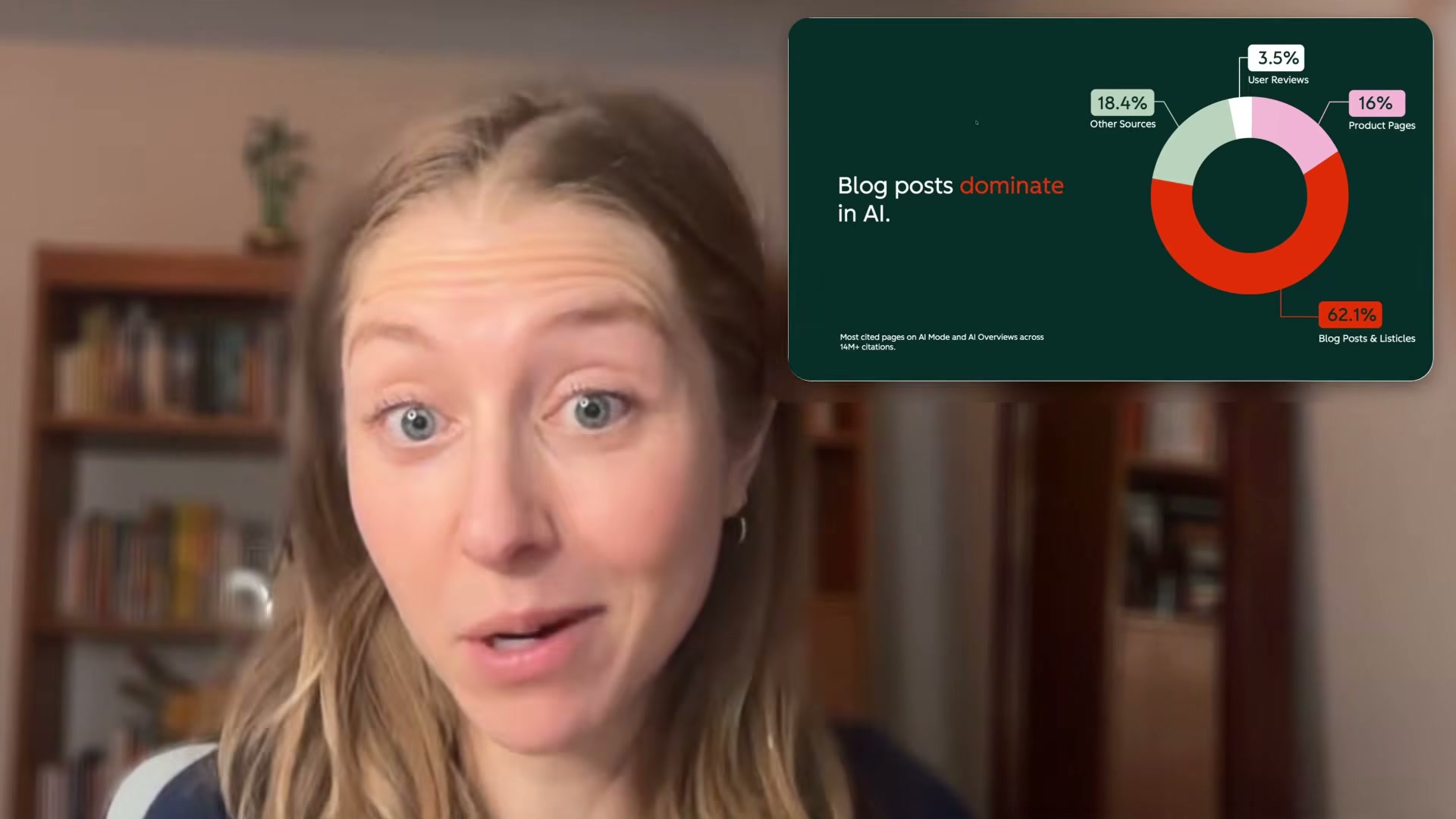
Audit your existing content against the formats AI tools actually reference. The panel introduced a dataset drawn from more than 14 million AI citations across AI Mode and AI Overviews. The breakdown reveals a decisive skew: blog posts and listicles account for 62.1% of all citations, followed by product pages at 16%, other source types at 18.4%, and user reviews at just 3.5%. If your content mix is weighted toward landing pages and thin product copy, you are largely invisible to AI responses regardless of your domain authority.
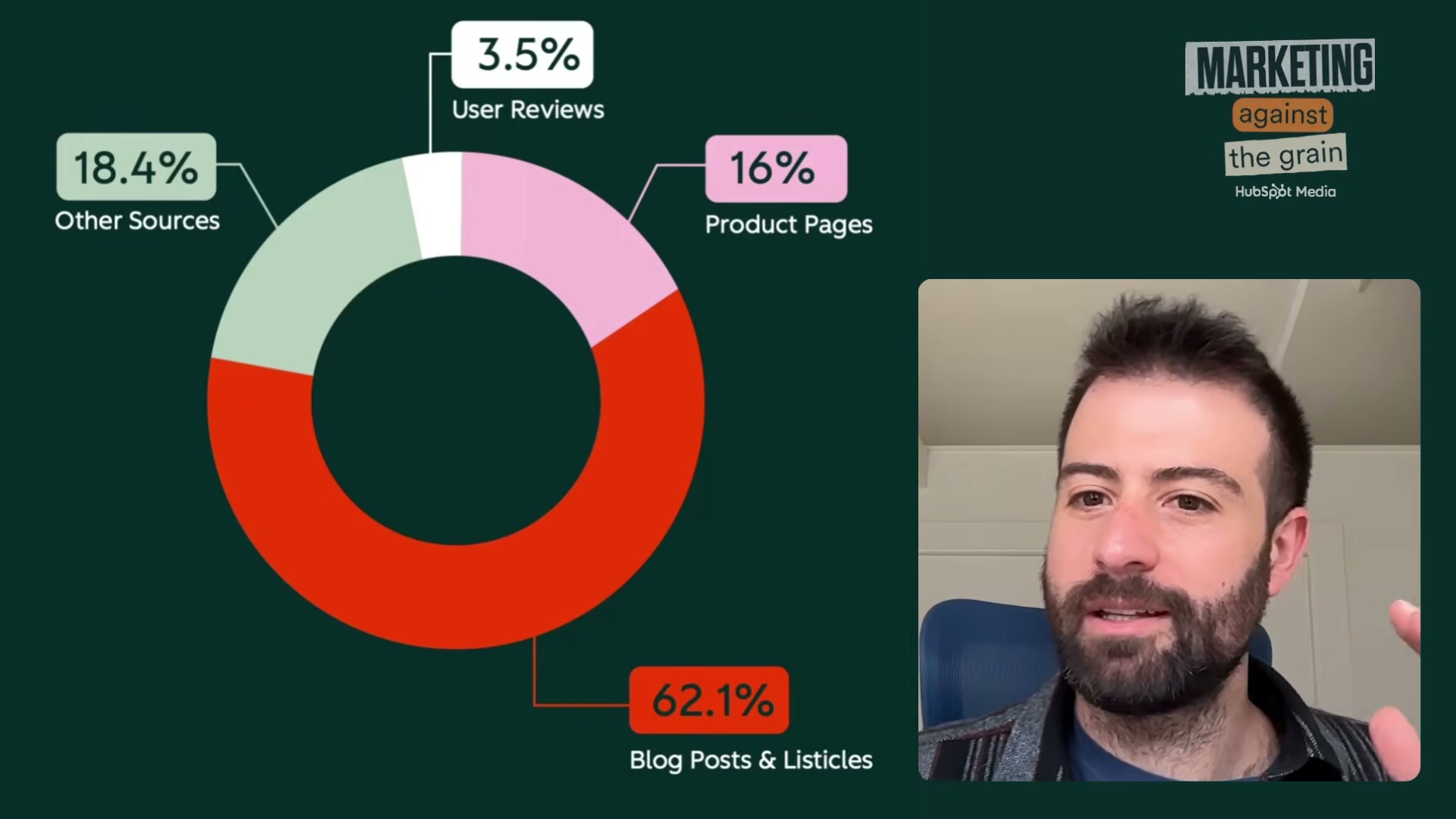
- Prioritize long-form written content as your primary AI-visibility asset. The citation data makes the strategic mandate concrete — producing thorough, well-structured blog posts and listicles is the single highest-leverage action for appearing in AI-generated answers. This is not a prediction or a best practice; it is an observed outcome across a dataset large enough to treat as directional signal.
-
Treat AI citation share as a standalone KPI separate from organic traffic. Because a piece of content can earn AI mentions without ranking in the top ten — and can rank in the top ten while earning zero AI mentions — conflating the two metrics will obscure both problems and wins. The panel’s framing implies that marketing teams need a measurement layer specifically tracking how often their content surfaces inside AI-generated responses.
-
Recalibrate content production velocity and depth. If blog posts and listicles dominate AI citation share, publishing fewer but longer, more authoritative pieces is a more defensible strategy than churning out thin posts optimized for a single keyword. The data suggests that comprehensiveness and citability, not keyword density, are the variables to optimize.
How does this compare to the official docs?
The panel’s citation data raises an immediate question about whether Google’s own guidance for AI Overviews — and Anthropic’s or OpenAI’s documentation for how their models select sources — aligns with, contradicts, or adds nuance to what the 14M-citation dataset shows.
Here’s What the Official Docs Show
The panel’s data-driven breakdown in Act 1 gives you a strong directional signal — this section layers in what Google’s own documentation and publisher guidance say about how AI Overviews and AI-powered search surfaces content, filling the gaps the dataset alone can’t answer. Think of it as the “why behind the numbers.”
Step 1 — AI citation logic vs. Google’s ranking algorithm
No official documentation was found for this step —
proceed using the video’s approach and verify independently.
Step 2 — Auditing your content formats against AI citation data
No official documentation was found for this step —
proceed using the video’s approach and verify independently.
Step 3 — Prioritizing long-form written content for AI visibility
No official documentation was found for this step —
proceed using the video’s approach and verify independently.
Step 4 — AI citation share as a standalone KPI
No official documentation was found for this step —
proceed using the video’s approach and verify independently.
Step 5 — Content production velocity and depth
No official documentation was found for this step —
proceed using the video’s approach and verify independently.
Note: Official documentation screenshots were not successfully captured during the research phase of this post. The placeholders above mark exactly where verified source material belongs. Before publishing, complete a manual documentation pass against the Useful Links below and replace each placeholder with a real screenshot and confirmed quote.
Useful Links
- Google Search Central — AI Overviews — Google’s primary reference for how AI Overviews work and what publishers should know about eligibility.
- Google Search Central — Create helpful, reliable, people-first content — The foundational quality guidance that underpins both traditional ranking and AI content selection signals.
- Google Search Console Help — Documentation on performance reporting, including available filters for tracking AI Overviews impressions and click data.


0 Comments