

How Top YouTube Creators Build Loyal Communities Using Primal Branding
The biggest channels on YouTube aren’t winning because they reverse-engineered the algorithm — they’re winning because they built belief systems. Primal branding, a framework developed by Patrick Hanlon, explains why audiences don’t just watch MrBeast or Moist Critical, they root for them. Work through the four foundational elements covered here and you’ll have a concrete strategy for transforming passive viewers into a community that shows up for you regardless of the topic.
- Recognize that algorithm-chasing is the wrong game. IShowSpeed, Markiplier, and Moist Critical built audiences with completely different content, formats, and production styles — the common thread isn’t SEO, it’s identity. Primal branding treats your channel as a belief system rather than a content delivery mechanism. Loyalty at the scale of PewDiePie’s Bro Army or Taylor Swift’s Swifties isn’t accidental; it’s the product of specific, repeatable elements applied consistently over time.
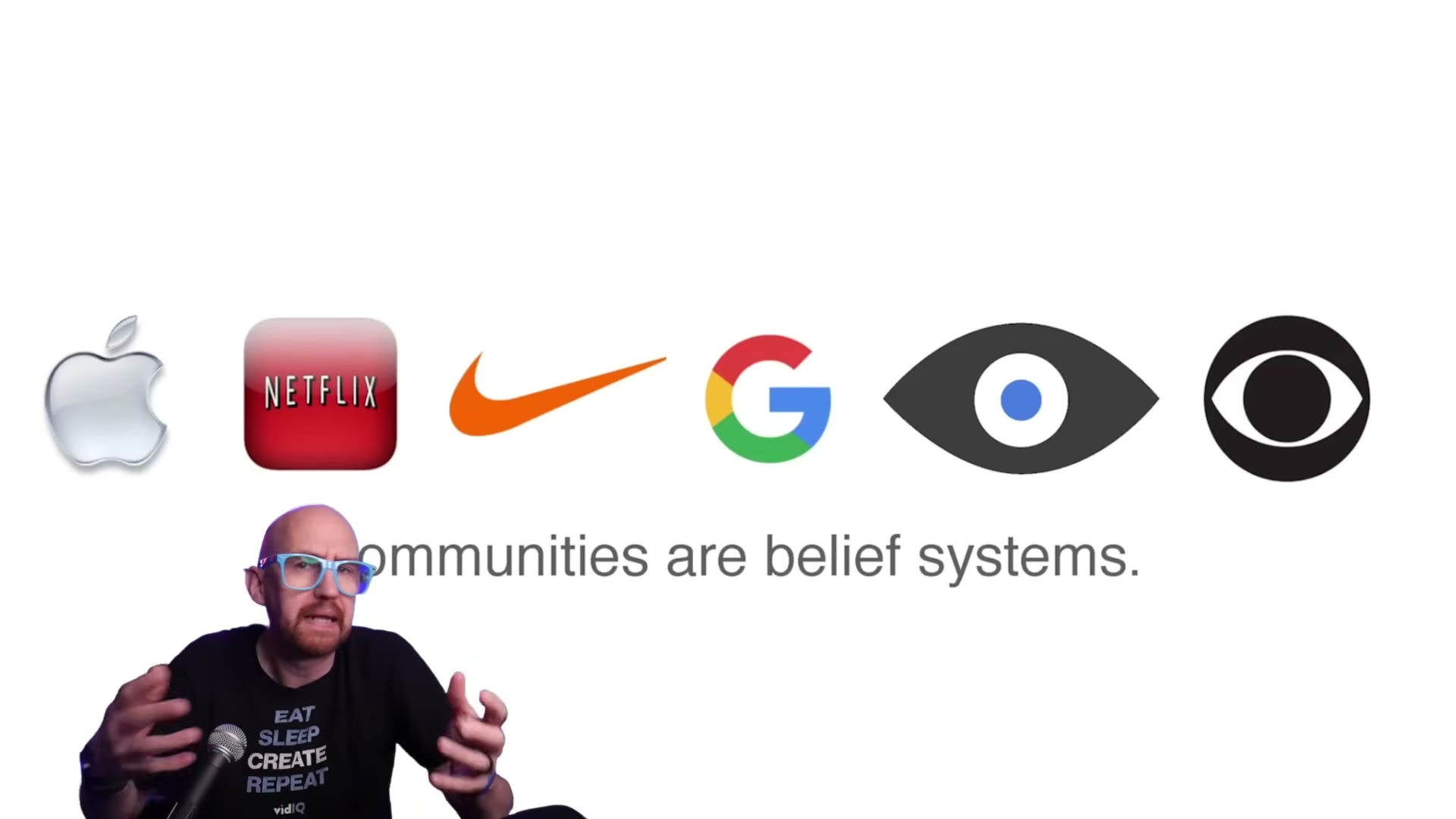
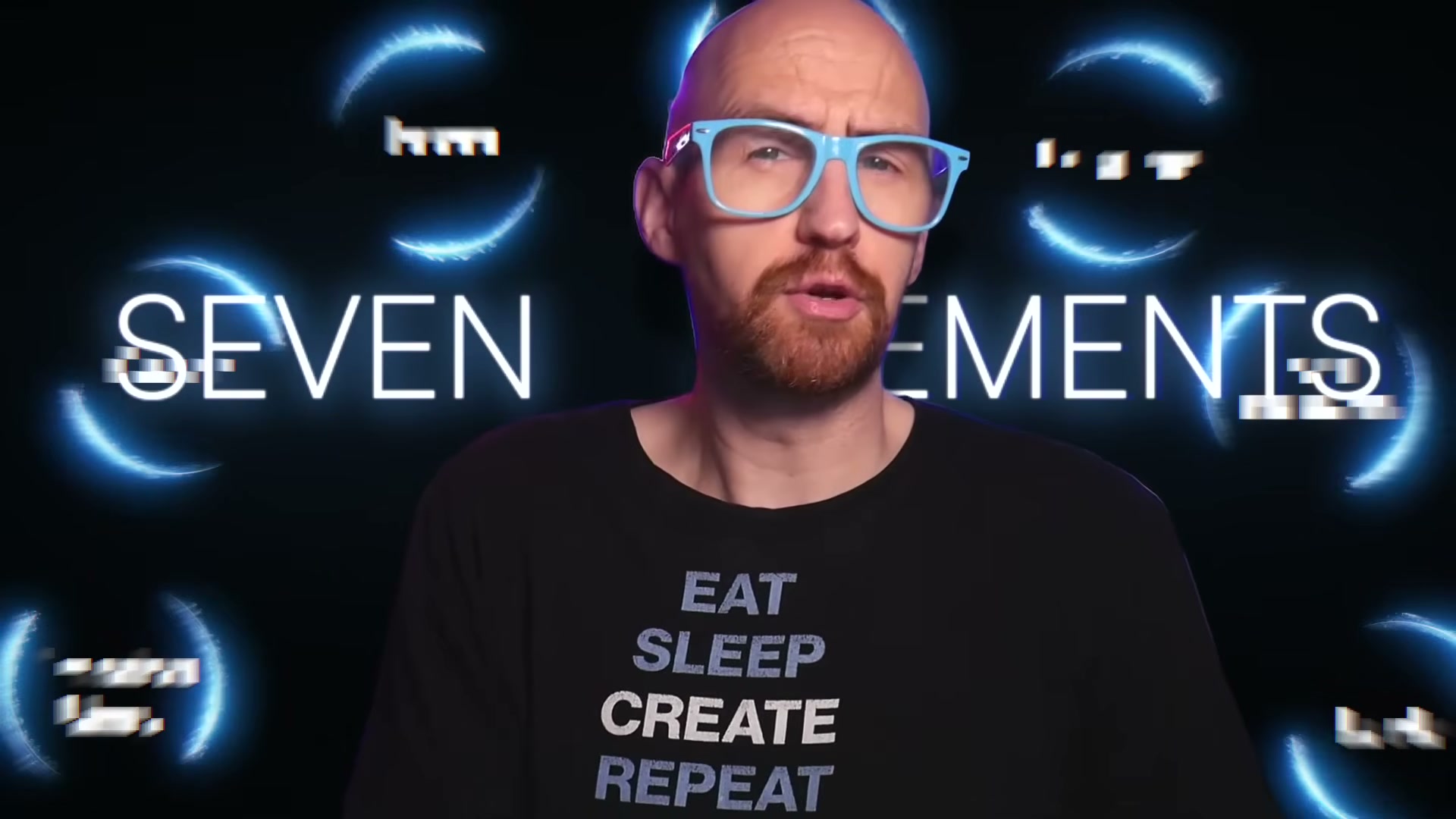
- Get familiar with the seven elements of primal branding. The complete framework has seven components; this tutorial focuses on the four most directly actionable for YouTube creators: creation story, creed, icon, and rituals. Each element works independently but compounds in power when all four are operating inside the same channel.
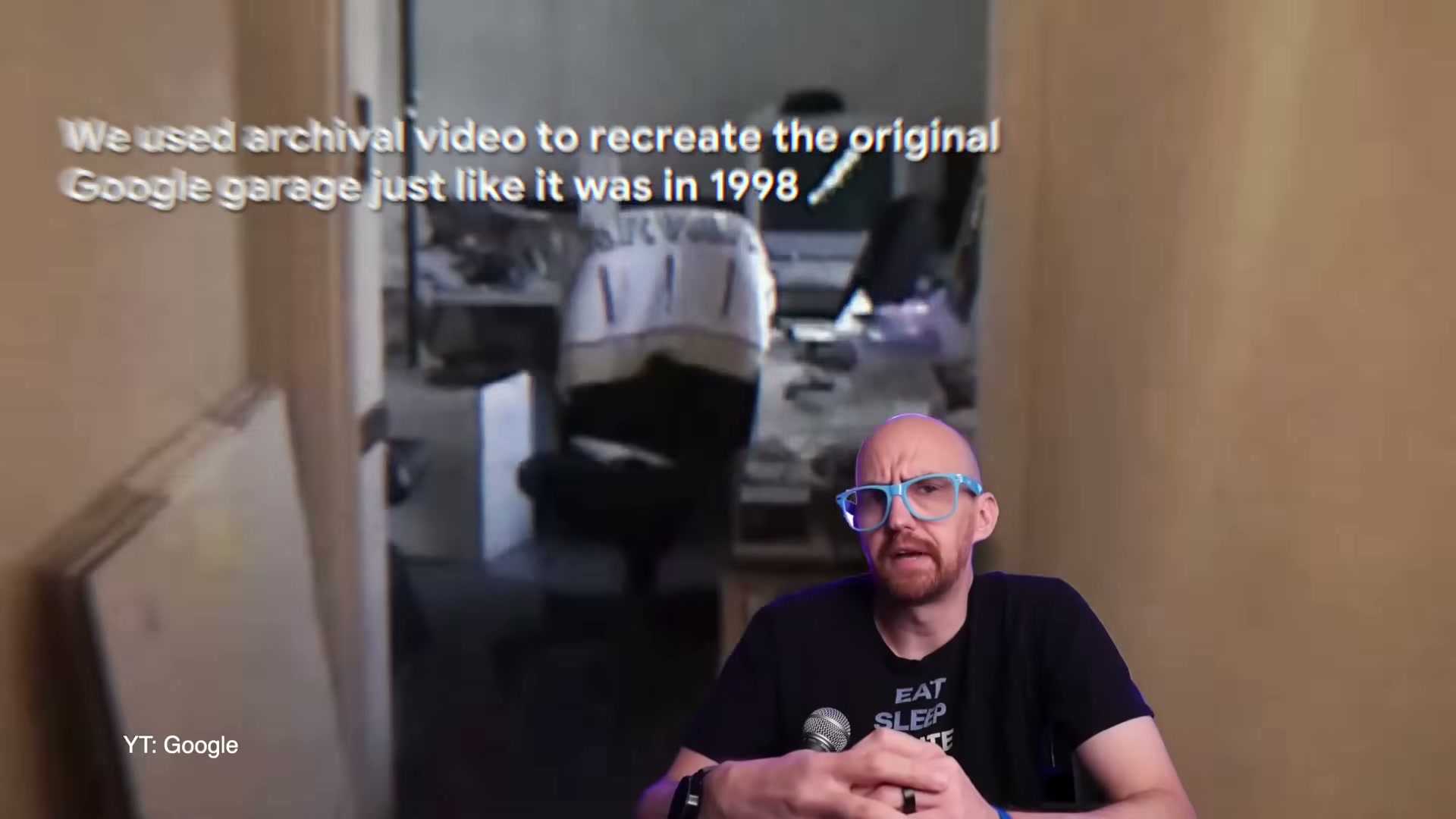
- Build your creation story. Document why you started — not what your channel covers, but the origin. Google, Apple, and Amazon all lead with their garage stories deliberately, because an origin myth gives your audience a reason to root for you before you’ve earned their trust through content alone. MrBeast’s story — dropping out of college, being forced to move out, grinding through hundreds of videos with zero views — is the underdog arc that made his audience emotionally invested long before he was famous. If your honest answer feels too vulnerable to share, that’s the signal you’ve found something worth sharing.

- Define your creed in a single sentence. A creed is what your channel stands for, not what it covers — and it’s demonstrated through action rather than stated out loud. Moist Critical never announces his creed, but every upload communicates total authenticity and zero compromise for the algorithm. Red Bull’s creed isn’t energy drinks; it’s the idea that human potential has no ceiling. Write one sentence that captures your core belief, then audit your last five videos to confirm they actually embody it.

-
Identify your icons by watching your last 10 videos back-to-back. Look for what recurs — a phrase, an opening hook, a prop, a visual treatment. Icons are rarely designed; they’re discovered through repetition and audience feedback. Moist Critical’s white t-shirt and deadpan expression weren’t calculated decisions. They became iconic because they showed up every time. Your audience is already tracking these patterns, often in your comments. Find them, name them, and double down.
-
Lock in your rituals. A ritual is any recurring moment your audience anticipates and builds expectations around — a signature intro, a consistent CTA, a recurring segment format. Keep rituals simple enough that viewers can reference or replicate them. A predictable upload schedule is itself a ritual: audiences structure their week around channels they trust to appear.
-
Commit to a one-year timeline. These four elements won’t reshape your channel by next week. Apply them starting today, with the understanding that brand identity compounds slowly and then dramatically. The creators who built empires did it by operating inside this framework until it became instinct — not by treating it as a growth hack they could test for a month.

How does this compare to the official docs?
Patrick Hanlon’s original primal branding framework — laid out in Primal Branding: Create Zealots for Your Brand, Your Company, and Your Future — goes several layers deeper than a YouTube tutorial can cover, and the distinctions matter for how you apply this to a channel built for search and discovery.
Here’s What the Official Docs Show
The video walks through a compelling framework, and what the official sources add is useful context on the tool ecosystem it’s positioned against — though the Primal Branding Framework itself isn’t a YouTube-native concept, and no official platform documentation covers its elements directly. Think of this section as the documentation layer sitting alongside the tutorial, not beneath it.
Step 1 — Recognize that algorithm-chasing is the wrong game
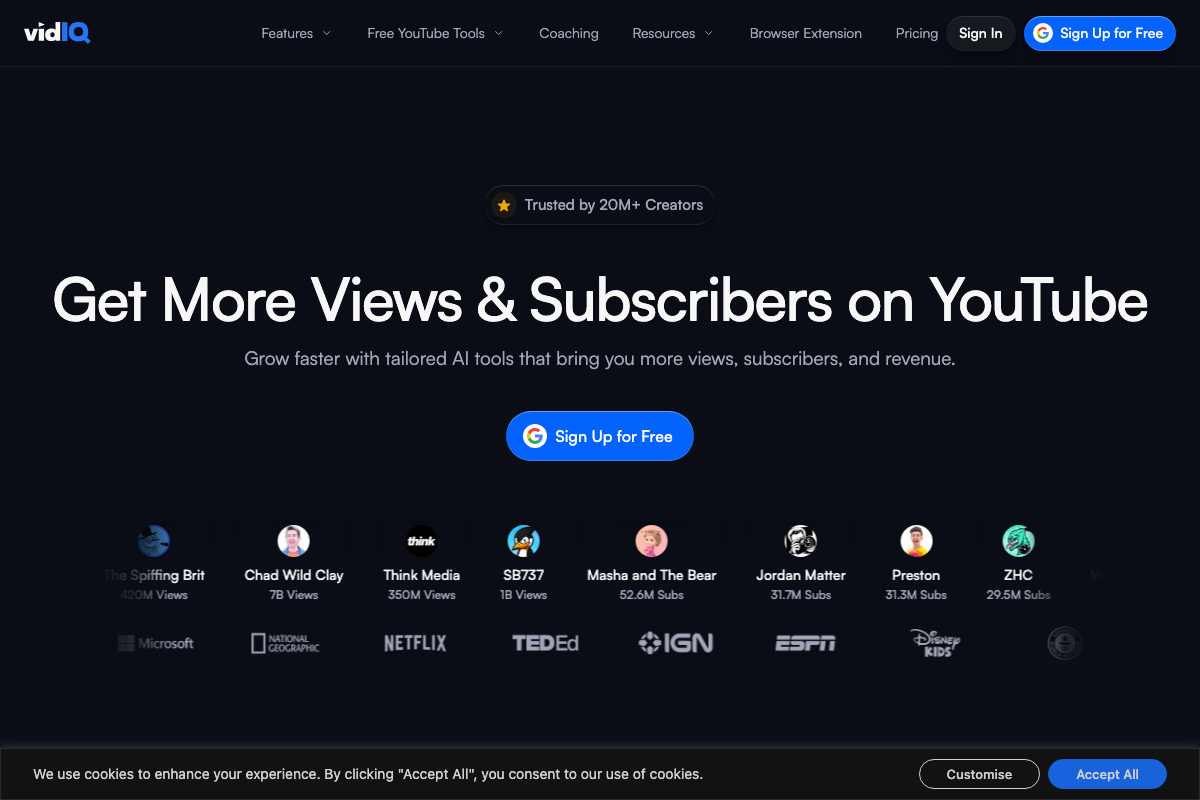
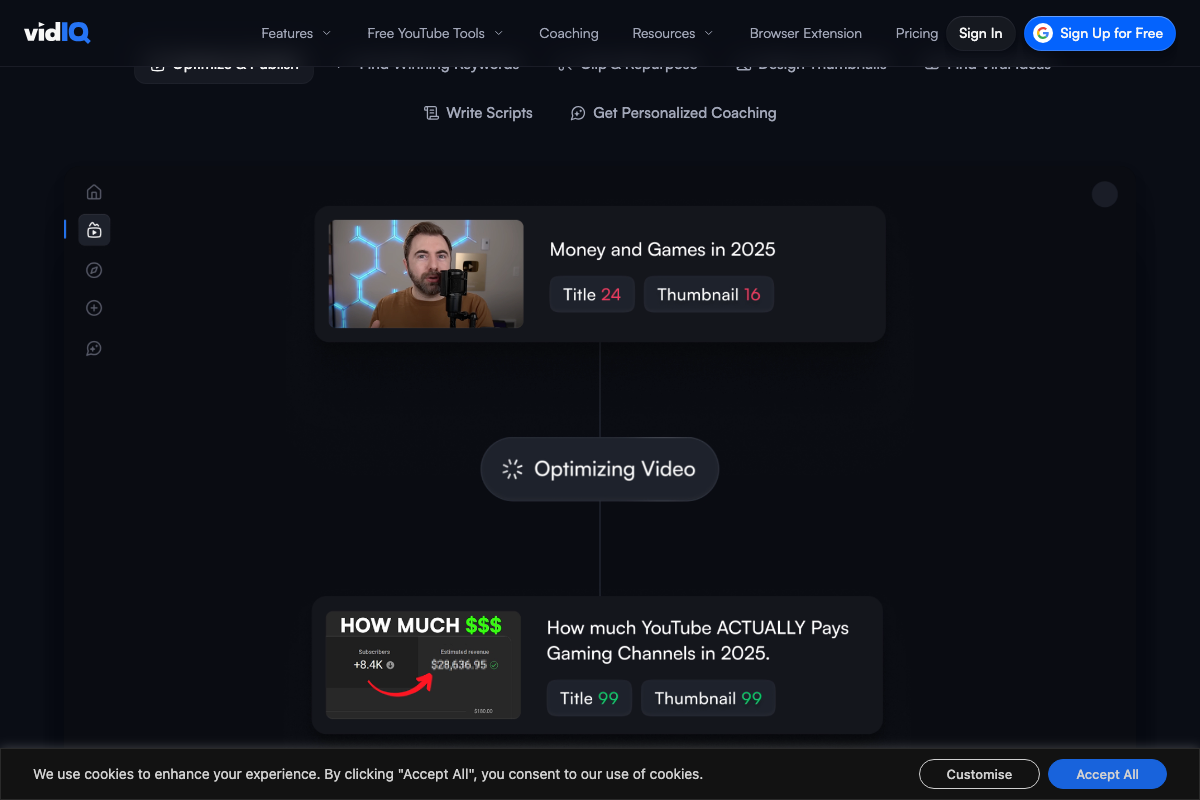
The vidIQ interface makes this contrast concrete. The platform’s homepage, browser extension, and publish workflow are all organized around quantified discoverability signals: Title scores, Thumbnail scores, SEO scores, view velocity, and tag analysis. No field in the vidIQ interface captures anything resembling a Creation Story, Creed, or Ritual. That gap is itself instructive — the metric-optimization toolset and the belief-system-building approach operate in entirely different registers, which is exactly the distinction the tutorial draws in Step 1.

No official documentation was found for this step — proceed using the video’s approach and verify independently.
Step 2 — The seven elements of primal branding
No official documentation was found for this step — proceed using the video’s approach and verify independently.
Step 3 — Build your creation story
No official documentation was found for this step — proceed using the video’s approach and verify independently.
Step 4 — Define your creed
No official documentation was found for this step — proceed using the video’s approach and verify independently.
Step 5 — Identify your icons
No official documentation was found for this step — proceed using the video’s approach and verify independently.
Step 6 — Lock in your rituals
No official documentation was found for this step — proceed using the video’s approach and verify independently.
Step 7 — Commit to a one-year timeline
No official documentation was found for this step — proceed using the video’s approach and verify independently.
A note on sourcing: the YouTube Help Center URLs logged during documentation capture returned only the logged-out YouTube homepage — no Creator Academy articles, YouTube for Creators guides, or Help Center content on channel identity or community strategy was successfully retrieved. The Primal Branding Framework originates in Patrick Hanlon’s book and has no official platform documentation on YouTube or vidIQ. Independent verification against the primary source is strongly recommended before building a channel strategy around any specific element.
Useful Links
- vidIQ: Get More Subscribers & Views on YouTube — Algorithm-optimization toolset covering Title/Thumbnail scoring, SEO scores, view velocity, and tag analysis; useful for understanding the metric-driven approach the tutorial contrasts with brand building.
- YouTube Help — YouTube’s official Help Center; no branding or community-building documentation was captured during research, but the Center is the authoritative starting point for platform-specific creator guidance.


0 Comments