

How Long-Form YouTube Videos Drive Watch Time and Revenue
YouTube’s recommendation algorithm doesn’t just reward retention percentage — it rewards total accumulated watch time, and longer videos generate more of it. Data from Little Dot Studios, covering 800+ managed channels and 11.2 billion monthly views, shows that videos over 30 minutes drive 82% of watch time despite representing only 39% of uploads. By the end of this analysis, you’ll understand why ultra-long content outperforms shorter videos on revenue per view, what changed in January 2025, and how to evaluate whether the format fits your channel.
- Recognize the old short-video doctrine: shorter content maximized viewer retention percentages, which the algorithm read as satisfaction signals. Shorter runtimes also encouraged session-level binge-watching — three 5-minute videos in a row instead of one 20-minute one. This logic drove YouTube growth advice for years, and much of it wasn’t wrong — it just didn’t account for what came next.
- Understand how YouTube Shorts invalidated that logic. Once Shorts occupied every surface of the app, the “short equals quick and satisfying” slot moved to vertical video. A 5-minute horizontal video no longer competes for quick entertainment — it occupies a different behavioral context, one that favors depth over brevity.
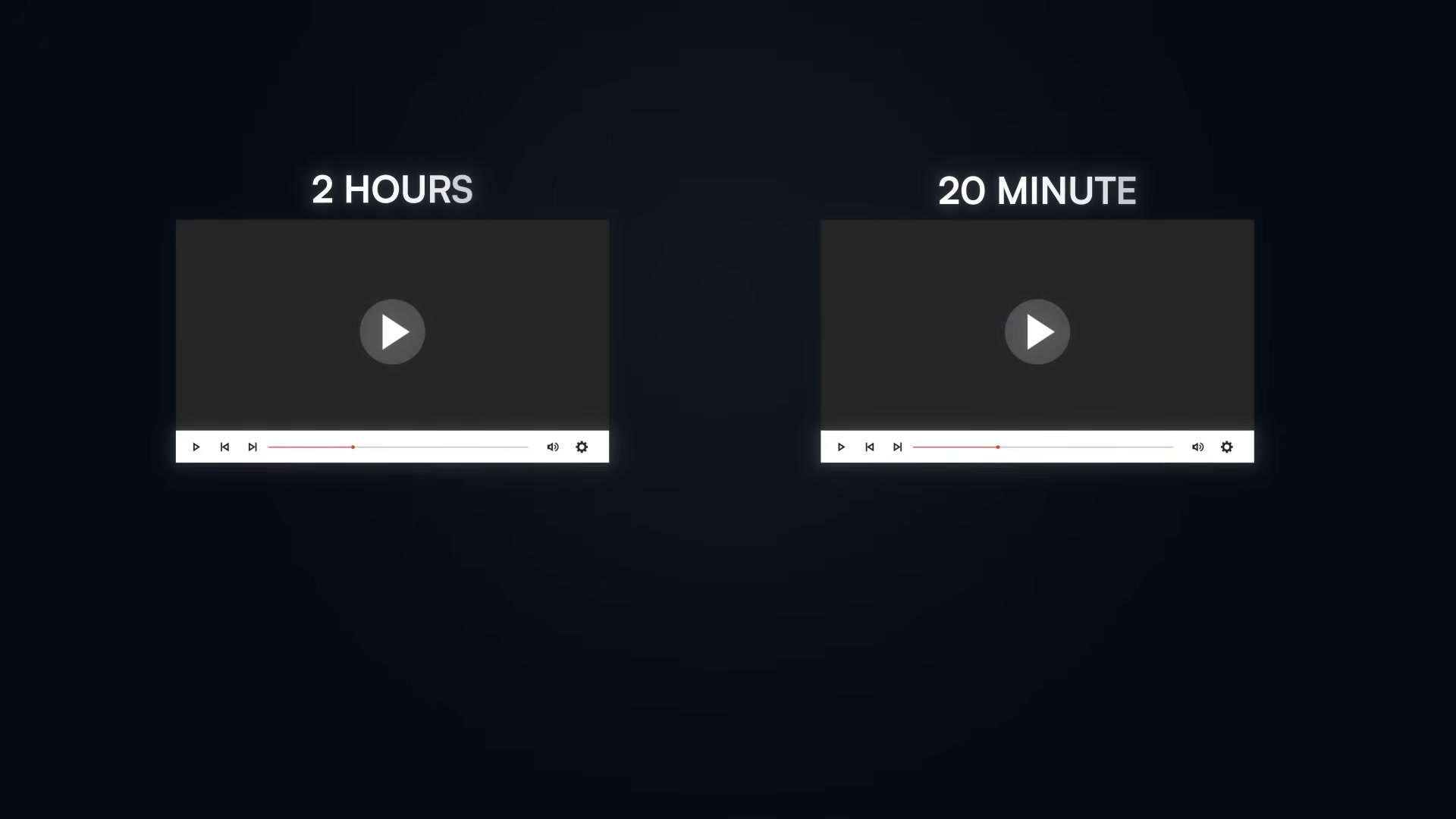
- Define the two formats before reviewing the data. Long-form runs 30–60 minutes. Ultra-long-form means anything over 2 hours. The 60–120 minute range — common for podcasts — is a transitional zone. Each threshold unlocks different mid-roll ad inventory and triggers distinct viewer behavior patterns.
- Study the Little Dot Studios findings. Across 930 million subscribers and 11.2 billion monthly views, the 39% of uploads that exceeded 30 minutes generated 82% of total watch time and 70% of revenue. Critically, the researchers found that ultra-long videos didn’t just accumulate watch time by virtue of length — they earned more views and higher RPM, meaning the algorithm actively amplified them beyond their baseline audience.


- Examine the creator case studies: Wendigoon (9-hour videos, 4.5M subscribers), Lofi Girl (8–12 hour continuous streams), Folding Ideas, Jenny Nicholson, Quinton Reviews, and hbomberguy (4 hours, 40M+ views). Each shifted from short-form to long-form and saw measurable per-video performance gains — not just inflated totals.

- Account for the January 2025 algorithm change. By May 2025, the average promoted YouTube video dropped from 35 minutes to 28 minutes — roughly back to 2022 levels, before the ultra-long boom began.
Warning: this step may differ from current official documentation — see the verified version below.
-
Understand what separates creators still succeeding with ultra-long content: runtime that emerges from niche depth, not artificial padding. Media analysts, documentary-style explainers, and ambient audio channels generate length organically because their subject matter demands it.
-
Consider the compilation workaround for channels not suited to organic long runtimes — assembling multiple shorter videos into a single extended upload. This serves passive, background-viewing audiences and layers a secondary content strategy over your existing publishing cadence without restructuring it.
-
Audit your niche before committing to the format. Whether ultra-long video works depends on whether your topic naturally sustains that runtime, your audience’s session-length tolerance, and your ability to deliver depth rather than just duration.
How does this compare to the official docs?
vidIQ builds its case on third-party data and creator pattern-matching, but YouTube’s own documentation on watch time mechanics, RPM thresholds, and content-length signals offers a more granular framework — and reveals exactly where these recommendations align with platform mechanics and where they diverge.
Here’s What the Official Docs Show
The video builds its case on third-party industry data and creator pattern analysis — and the structural logic largely holds. What the official docs add is the platform-side architecture that explains why the pattern exists.
Step 1 — The old short-video doctrine
No official documentation was found for this step — proceed using the video’s approach and verify independently.
Step 2 — How YouTube Shorts changed the content landscape
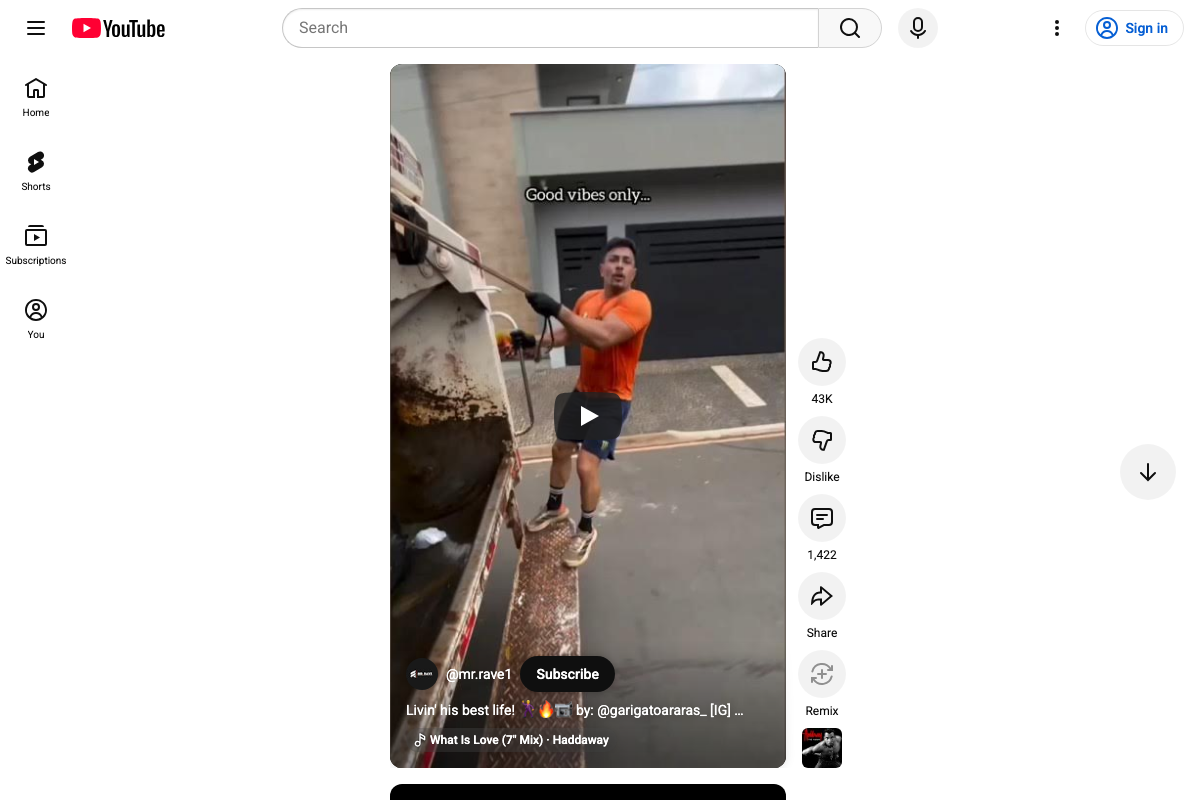
The video’s approach here matches the current docs exactly. YouTube’s own navigation structure confirms Shorts as a platform-level content category — a permanent top-level destination equal to Home and Subscriptions, not a secondary feature. The Shorts player’s distinct vertical UI, including a dedicated Remix action the video doesn’t mention, reinforces the format separation at the product level.
Step 3 — Defining long-form vs. ultra-long-form
No official documentation was found for this step — proceed using the video’s approach and verify independently.
Step 4 — The Little Dot Studios revenue findings
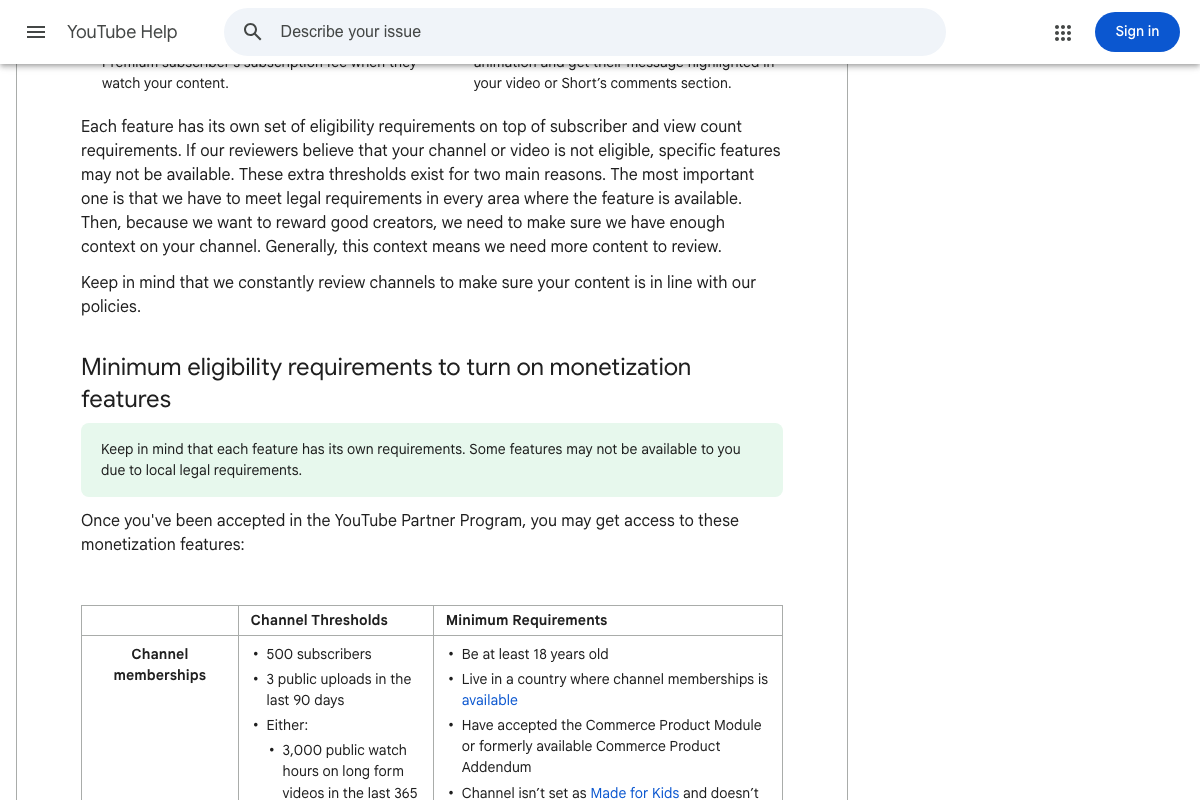
The specific numbers — 39% of uploads generating 82% of watch time and 70% of revenue — do not appear in any official YouTube documentation captured here. What the docs do confirm is the structural architecture underneath those claims. YouTube explicitly designates “Watch Page ads” and “Shorts Feed ads” as separate revenue systems, not one unified ad pool. The YPP eligibility table further treats 3,000 public long-form watch hours as a standalone qualification metric independent of Shorts view counts — confirming the platform weights these formats differently at the infrastructure level, even if the precise revenue split remains a third-party figure.
Step 5 — Creator case studies
No official documentation was found for this step — proceed using the video’s approach and verify independently.
Step 6 — The January 2025 algorithm shift
No official documentation was found for this step — proceed using the video’s approach and verify independently.
Step 7 — Depth vs. padding
No official documentation was found for this step — proceed using the video’s approach and verify independently.
Step 8 — The compilation workaround
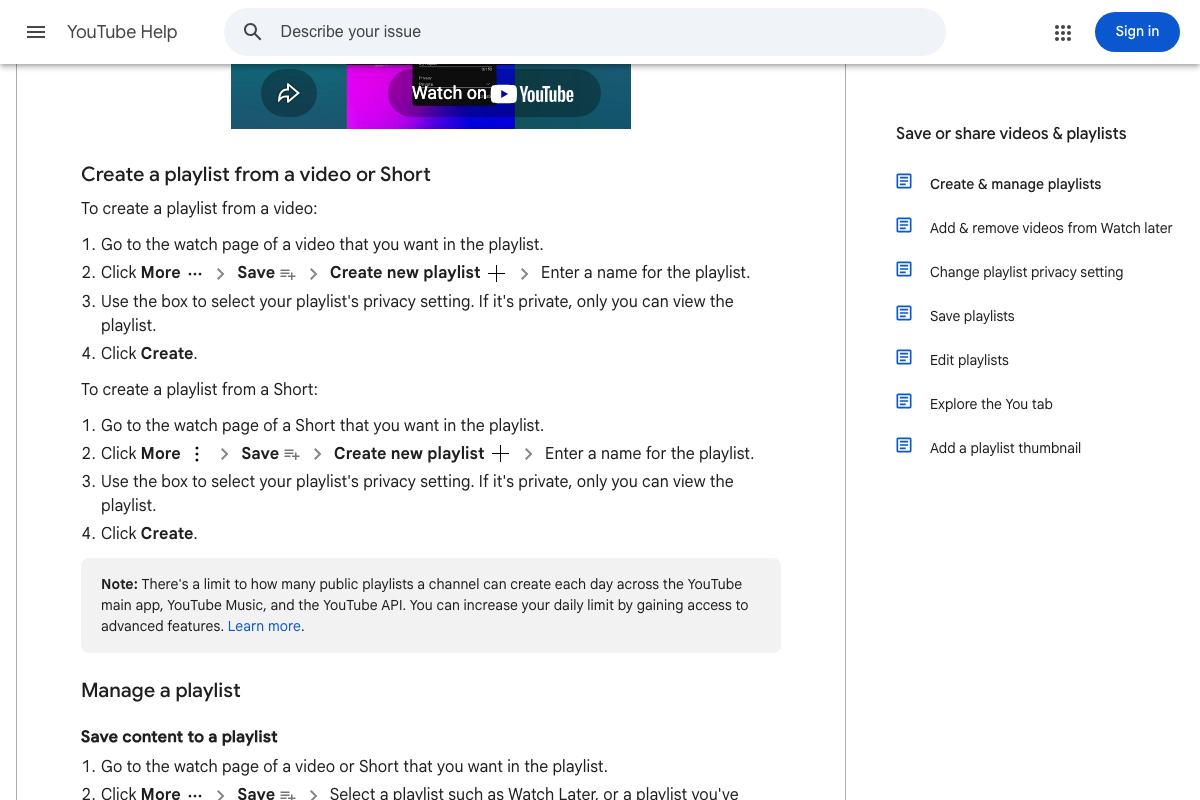
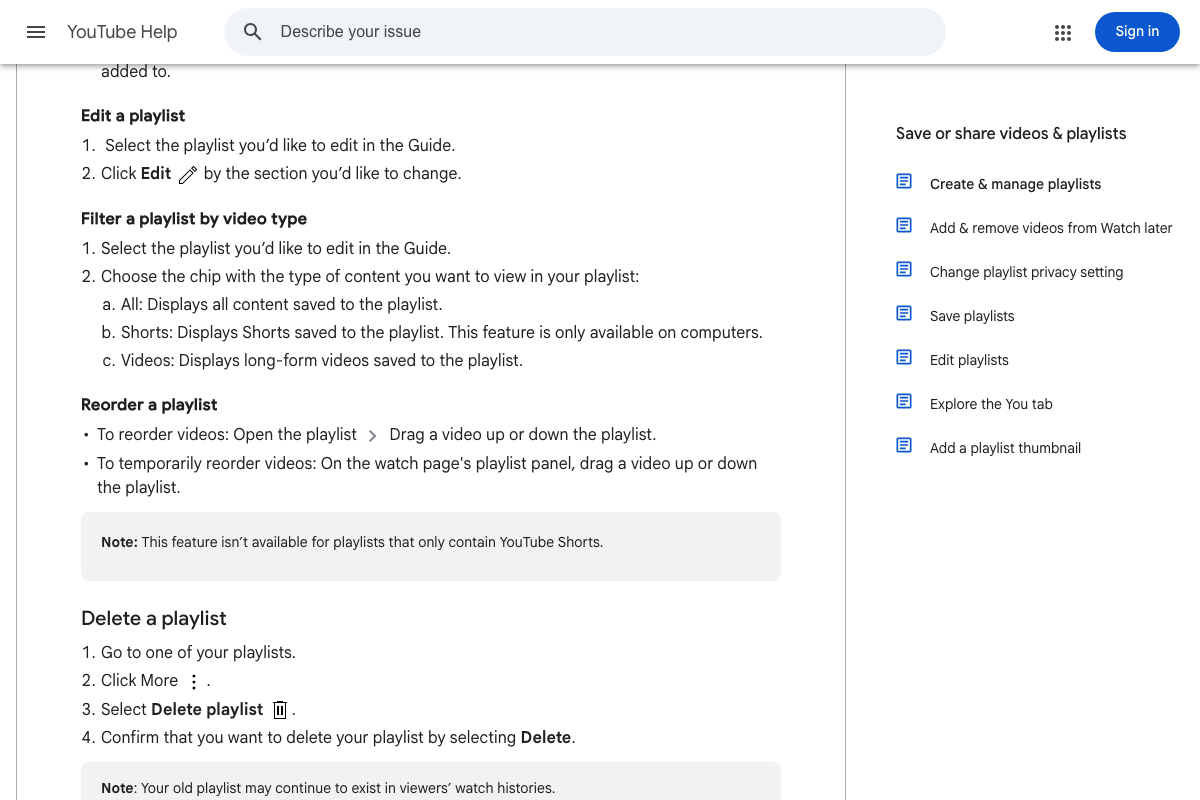
The video’s approach here matches the current docs exactly. Playlists are fully documented as a supported mechanism for organizing both standard videos and Shorts, with configurable privacy settings. Two constraints the video doesn’t mention: YouTube imposes a daily limit on public playlist creation across the main app, YouTube Music, and the API (expandable via advanced features access); and the “Filter by video type” option — which lets viewers isolate long-form content from Shorts within a single playlist — is available on desktop only. Deleted playlists may also persist in viewers’ watch histories, a relevant behavior for anyone using playlists as a navigation layer.
Step 9 — Auditing your niche
No official documentation was found for this step — proceed using the video’s approach and verify independently.
Useful Links
- YouTube — YouTube homepage confirming Shorts as a top-level navigation destination alongside Home and Subscriptions
- YouTube Shorts — Live Shorts player confirming the vertical-video format and distinct engagement UI including the Remix feature
- How to earn money on YouTube — Official YouTube Help page covering YPP eligibility, Watch Page ads vs. Shorts Feed ads, and the structural separation of long-form and Shorts revenue systems
- Create & manage playlists — Official YouTube Help page documenting playlist creation, daily public playlist limits, and the desktop-only video type filter
- vidIQ: Get More Subscribers & Views on YouTube — Third-party YouTube analytics and optimization platform referenced in Act 1’s supporting data


0 Comments