

What Is Local SEO and Why Does It Matter for Your Business
When a potential customer searches “plumber near me” or “optometrist near me,” a complex, multi-layered competition is already underway — and most business owners have no idea they’re losing it before a user ever scrolls. This tutorial walks you through what Local SEO is, how Google structures local search results, and which six levers actually move the needle. By the end, you’ll understand why optimizing only your homepage is insufficient and what a complete local search presence looks like.
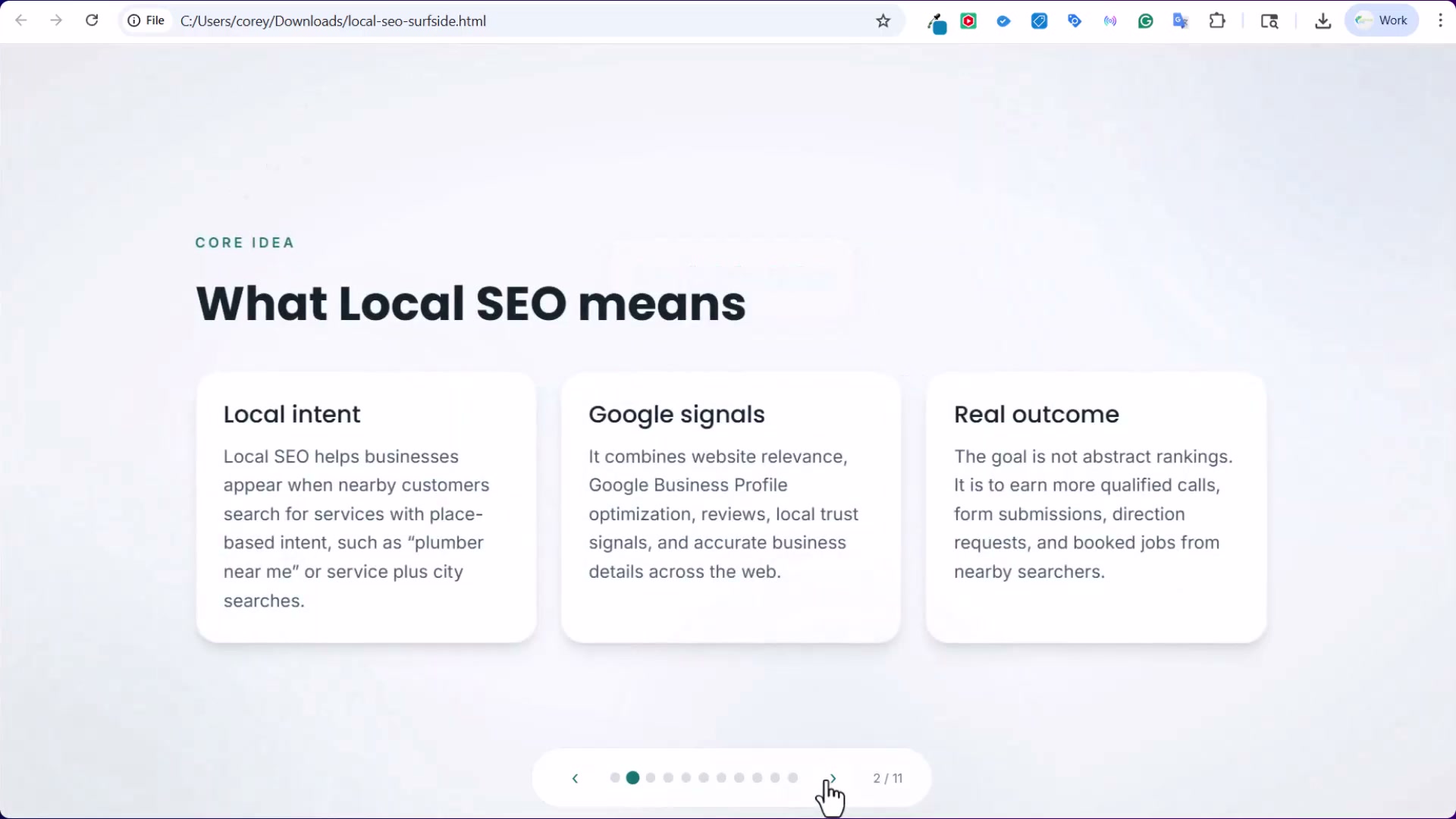
- Define Local SEO around its three core pillars. Local SEO is not a single tactic — it’s the intersection of three elements: local intent (searches where the user’s location is relevant to the result), Google’s multi-signal ranking system (which weighs proximity, relevance, and prominence), and real-world outcomes like phone calls and booked appointments. When you treat these three pillars as a system rather than isolated tasks, strategy decisions become clearer.
- Understand the full structure of a local SERP before you optimize anything. The moment a user types a service-plus-location query, Google serves sponsored listings first — paid ads with ratings, call buttons, and location context. Only after those do organic and map results appear. Treating local search as a purely organic game ignores the paid competition your customers see at the very top of every results page.
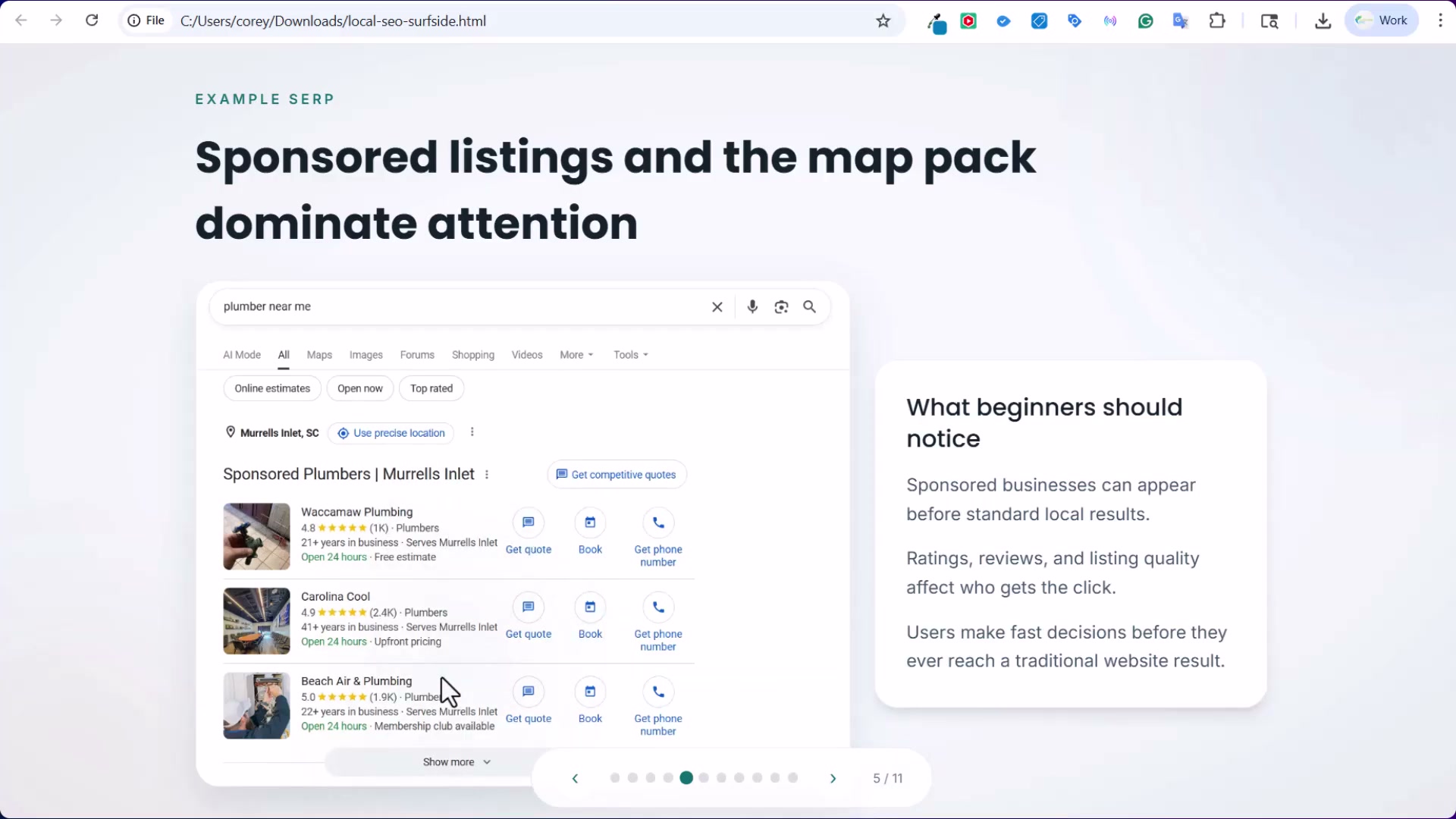
- Recognize the map pack as a separate, parallel competition. Scrolling past the sponsored ads surfaces the Google map pack — a second competitive layer with its own ranking signals, entirely independent of organic web rankings. A business can rank on page one organically and still be invisible to a user who never scrolls past the map pack.
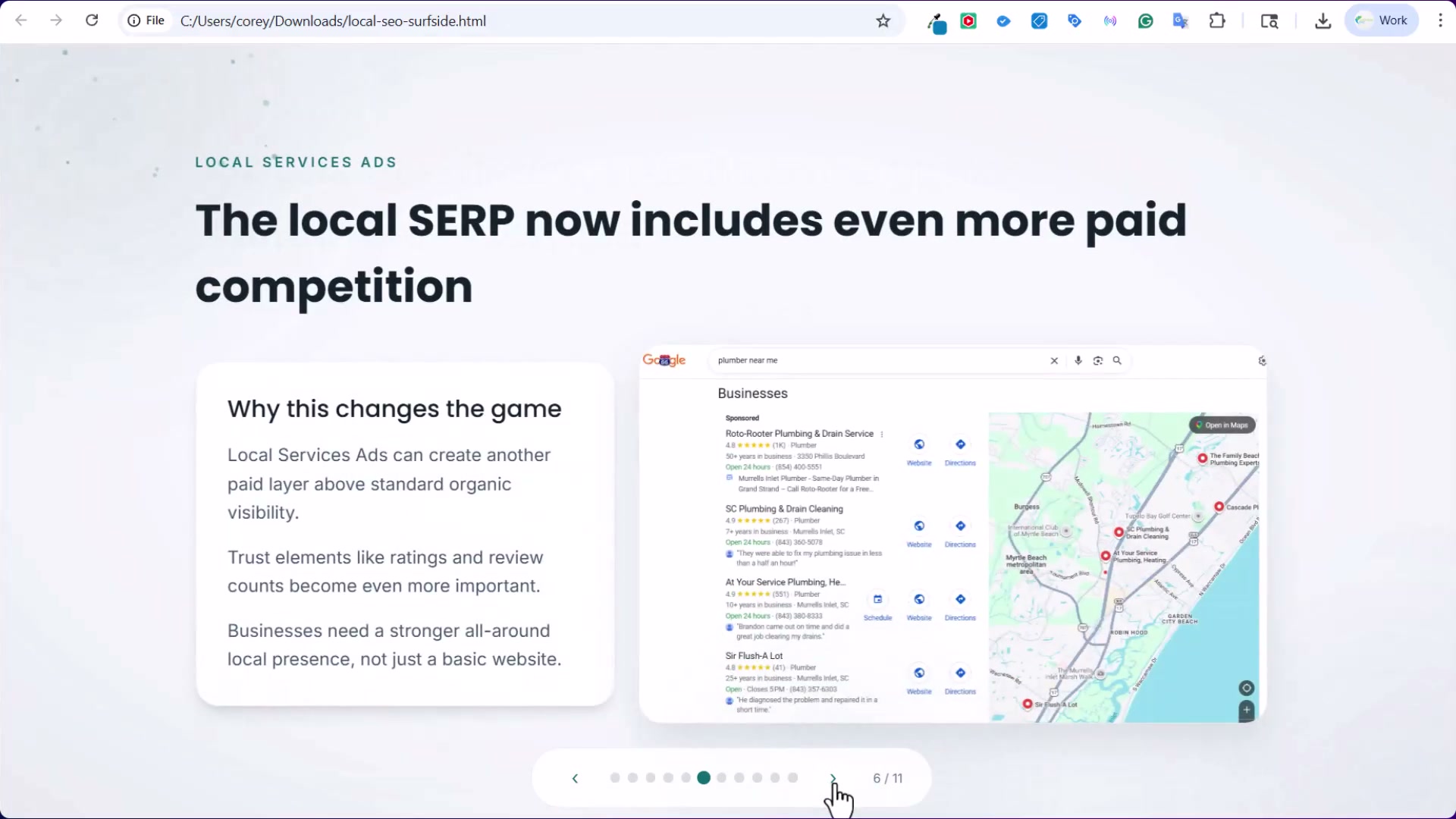
- Add Local Services Ads to your competitive model. Above the standard map pack, Google now runs Local Services Ads (LSAs) — a third paid tier where review count and ratings directly influence ad visibility. Businesses that ignore LSAs are ceding the top three sections of the SERP to competitors before any organic signal is even evaluated.
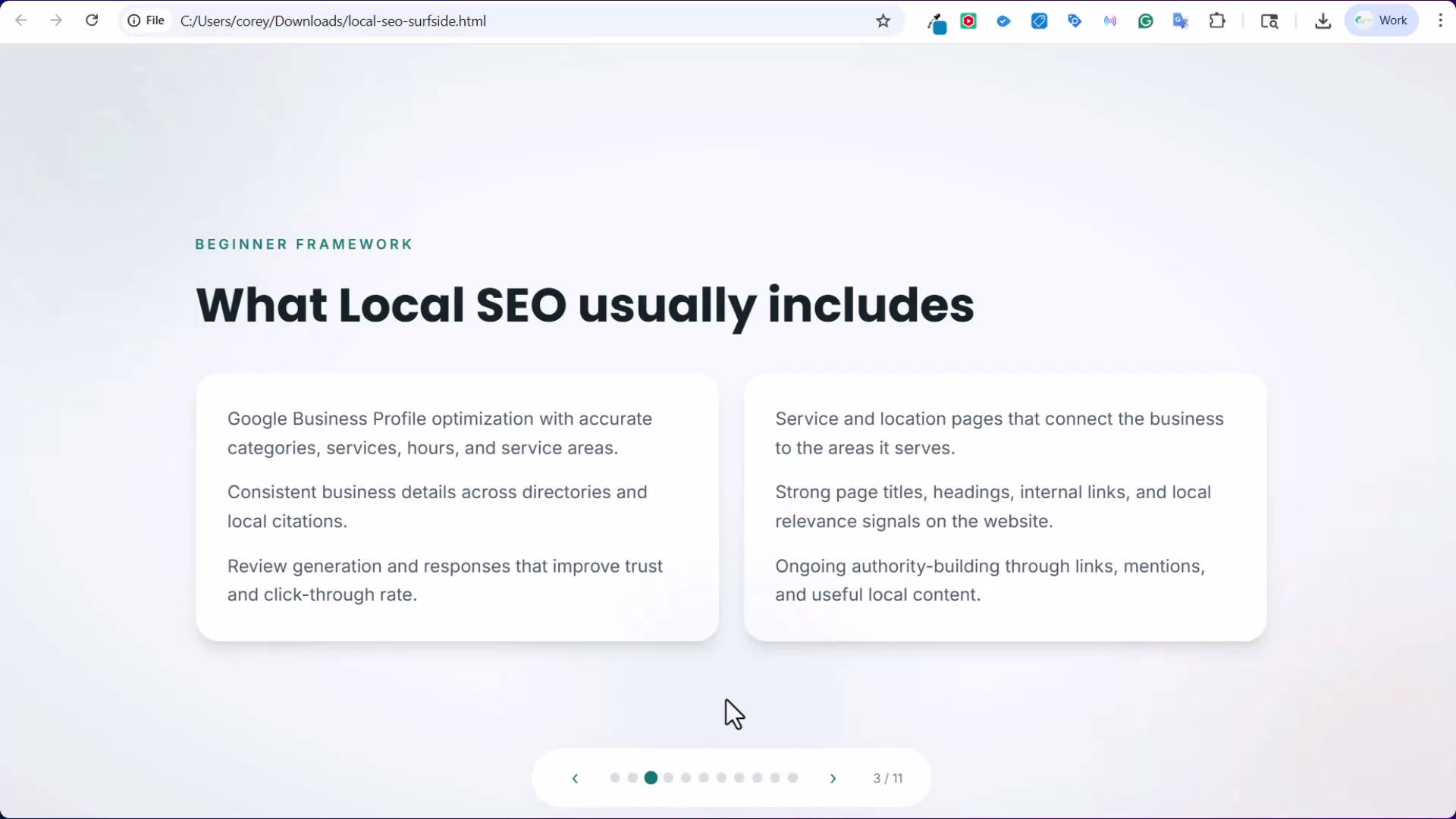
- Map your strategy to the six-component Local SEO framework. A complete local presence requires work across six areas: Google Business Profile optimization, citation consistency across directories, review generation, dedicated service and location pages, on-page signals (title tags, schema, NAP consistency), and ongoing authority building through links and engagement. Treating any one of these as optional creates gaps competitors will fill.
- Build individual service pages, not just a homepage. Long-tail local queries — “tankless water heater installation near me,” for example — return dedicated service pages in the results, not homepages. A service page built around a specific job type and service area can rank for both narrow long-tail terms and broader “near me” queries when it clearly signals category, location, and relevance.

- Lock in the three beginner takeaways. Local SEO earns visibility precisely when a buyer has intent. The competition happens across paid, map, and organic formats simultaneously. And your website’s service pages are active ranking assets — not brochures.

How does this compare to the official docs?
Google’s own documentation on how the Business Profile and local ranking signals work adds precision — and a few surprises — to what the video outlines at a conceptual level.
Here’s What the Official Docs Show
The video’s conceptual framework for Local SEO holds up well as an entry point — the six-component model and the SERP layer breakdown are sound starting positions. What Google’s own documentation adds is the precise language and signal hierarchy the algorithm actually uses, which matters when you move from understanding to execution.
Step 1 — The three pillars of Local SEO
Google’s official ranking documentation names the three factors that determine local ranking as relevance, distance, and prominence — not “local intent, ranking system, and outcomes” as the video frames them. The distinction is worth noting: Google evaluates these three signals on every local query, and your optimization work maps directly to improving each one. Relevance comes from complete, category-accurate Business Profile data. Distance is a function of the searcher’s location relative to your listed address. Prominence aggregates reviews, links, and web presence.
No official documentation was found confirming the “three pillars” framing used in the video — proceed using the video’s approach and verify independently.
Step 2 — The structure of a local SERP
No official documentation was found for this step — proceed using the video’s approach and verify independently.
Step 3 — The map pack as a parallel competition
Google’s Business Profile Help confirms that map pack rankings are governed by their own signal set — Business Profile completeness, review quantity and quality, and category accuracy — independent of traditional organic ranking factors. A strong organic domain authority does not transfer automatically to map pack position.
Step 4 — Local Services Ads
No official documentation was found for this step — proceed using the video’s approach and verify independently.
Step 5 — The six-component framework
Google’s official guidance surfaces citation consistency and NAP accuracy as foundational — not supplementary — to Business Profile performance. The video’s approach here aligns with this emphasis. Where the docs add precision: Google explicitly states that adding photos, keeping hours current, and responding to reviews each contribute measurable signals to prominence scores.
Step 6 — Service pages as ranking assets
No official documentation was found for this step — proceed using the video’s approach and verify independently.
Step 7 — Beginner takeaways
The video’s three summary takeaways — buying-intent visibility, multi-format competition, and service pages as SEO assets — are consistent with Google’s documented ranking philosophy. The video’s approach here matches the current docs exactly.
Useful Links
- How Google Determines Local Ranking — Google’s official breakdown of the relevance, distance, and prominence signals that power all local results.
- Google Business Profile Help Center — Central documentation hub for setting up, verifying, and optimizing a Business Profile listing.
- Local Services Ads Overview — Google’s product page explaining LSA eligibility, badge requirements, and how review signals affect ad placement.


0 Comments