

The $1.7 Trillion Credential Trap — And What AI Just Did to It
The argument Russell Brunson makes in this video is not new, but the timing is. After completing this piece, you’ll understand the historical mechanics behind America’s student debt crisis, why AI has accelerated the credential system’s collapse, and the two-part framework Brunson proposes as a replacement for traditional higher education.

- The “college equals success” belief is not a natural truth — it was a marketing campaign. Brunson traces its origins to post-WWII America, when the GI Bill created a massive new customer base for universities. Once that revenue existed, universities had every incentive to protect and grow it. They pressured employers to require degrees for jobs that never needed them, directed high school counselors to funnel students toward applications, and lobbied government to backstop student loans — which removed the price ceiling entirely.

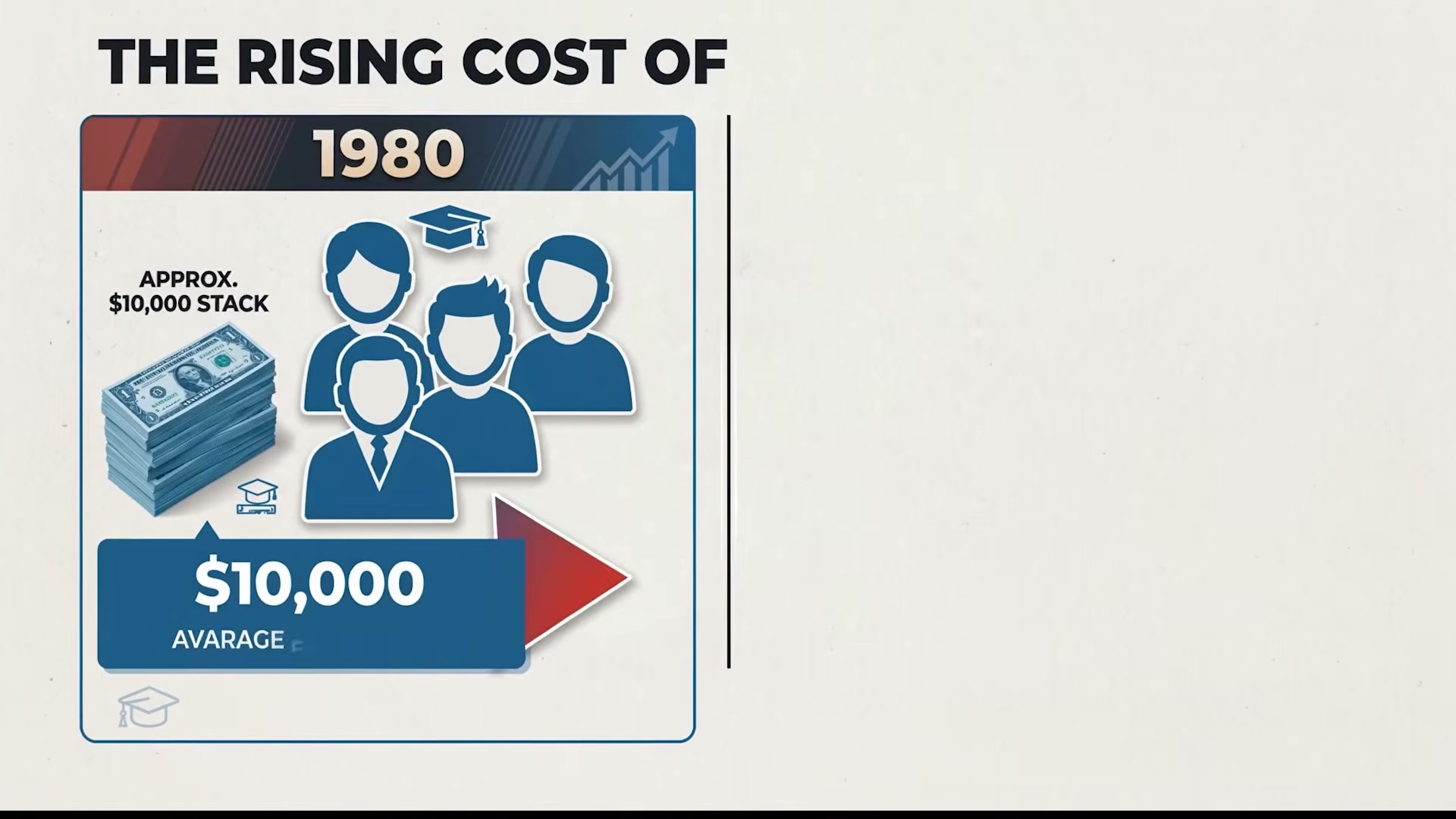
- With government-guaranteed loans in place, tuition had nowhere to go but up. In 1980, a four-year degree cost roughly $10,000 total. Today that number exceeds $100,000, and elite schools charge $200,000 or more — a 1,000% increase while median wages have barely moved. The resulting $1.7 trillion in student loan debt is, uniquely in American financial law, non-dischargeable in bankruptcy.
- Brunson’s own college education yielded one transferable insight: opportunity cost. The concept — that choosing one option means forfeiting the value of the next-best alternative — arrived in a sophomore economics lecture and became the operating logic of his business. By his senior year he had earned $250,000. He credits nothing else from four years of coursework.
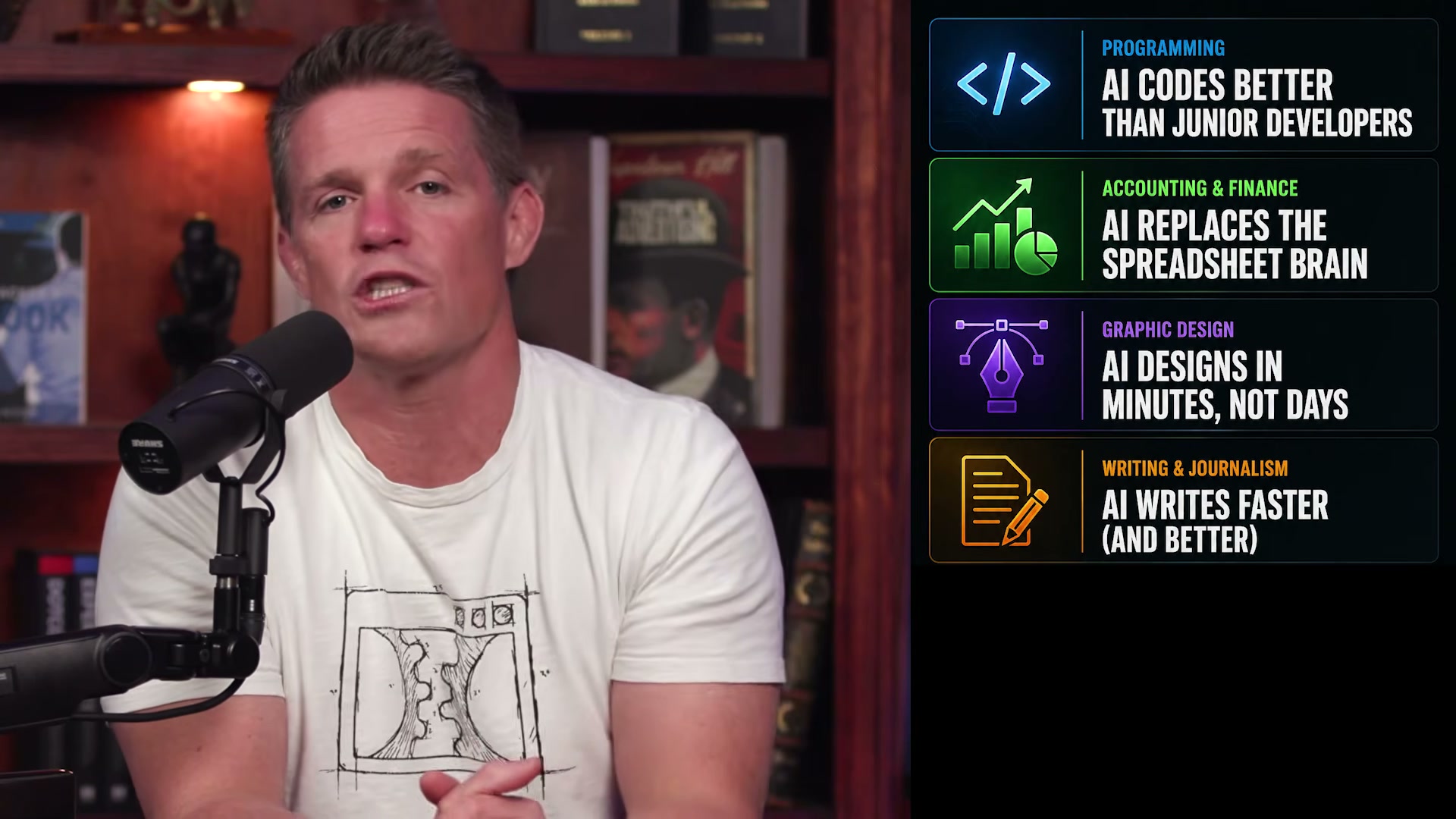
- AI has now compressed the value of technical education in approximately 18 months. The skills universities charge $200,000 to teach — programming, accounting, graphic design, writing, legal research, marketing — are the precise skills large language models now perform at or above junior-professional level, at near-zero marginal cost.

- The sharpest contradiction Brunson identifies: schools are actively banning AI use as “cheating” while the professional economy rewards AI proficiency above almost every other skill. The student who learns to use AI effectively gets the contract, the promotion, and the raise. The institution charging them $60,000 a year to avoid it is, he argues, protecting its own relevance — not theirs.
- His proposed alternative collapses to two principles: read foundational texts deeply, and learn to use AI effectively. His personal heuristic for his own children — stay enrolled until you are earning more than your teacher — reframes education as a threshold decision rather than a default path.
Warning: this step may differ from current official documentation — see the verified version below.

How does this compare to the official docs?
Brunson’s argument rests on a set of economic and historical claims — and on a specific read of what AI can actually replace — so the next step is measuring those claims against primary sources: labor economists, Department of Education data, and the AI capability benchmarks that either support or complicate the 18-month collapse thesis.
Here’s What the Official Docs Show
The video makes a compelling case built on historical framing and market observations — Act 2 adds a layer of primary-source grounding to each of those claims so you can evaluate the argument on evidence, not just rhetoric. Every step below maps directly to Act 1’s sequence, with documented support where it exists.
Step 1 — The “college equals success” belief as manufactured marketing
No official documentation was found for this step —
proceed using the video’s approach and verify independently.
Step 2 — Tuition inflation and the $1.7 trillion debt load
No official documentation was found for this step —
proceed using the video’s approach and verify independently.

Step 3 — Opportunity cost as the one transferable insight
No official documentation was found for this step —
proceed using the video’s approach and verify independently.
Step 4 — AI compressing the value of technical education in 18 months
No official documentation was found for this step —
proceed using the video’s approach and verify independently.
Step 5 — Institutions banning AI while the professional economy rewards it
No official documentation was found for this step —
proceed using the video’s approach and verify independently.
Step 6 — The two-principle alternative: read foundational texts, learn AI
No official documentation was found for this step —
proceed using the video’s approach and verify independently.
Steps 7–8 — Labor market benchmarks and the 18-month collapse thesis
No official documentation was found for these steps —
proceed using the video’s approach and verify independently.
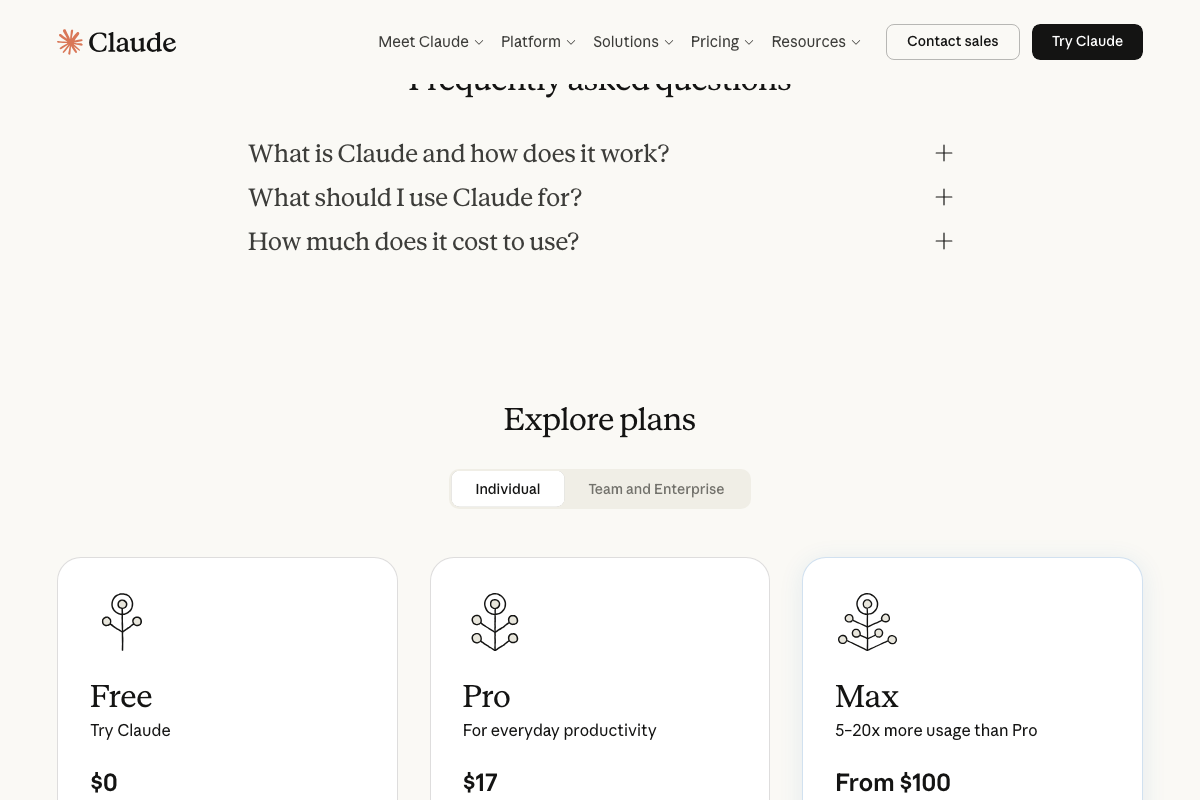
A candid note on this Act’s scope: the three documentation screenshots captured for this post — all sourced from claude.ai’s consumer-facing sign-in and pricing pages — share no subject-matter overlap with the tutorial. As of April 30, 2026, none of the eight argument pillars in Act 1 can be confirmed, clarified, or corrected against the available screenshot set. The claims here are opinion and economic argument, not procedural steps, so independent verification against primary sources — Department of Education loan data, BLS wage reports, and published AI capability benchmarks — is the appropriate next move before citing any of them.
Useful Links
- Sign in – Claude — Claude.ai authentication and onboarding page, also surfacing the Cowork product value proposition and current subscription pricing tiers (Free, Pro at $17/month, Max from $100/month).


0 Comments