

Why AI Ignores 38% of Google’s Results — And How to Fix It for Your Brand
AI search tools are reshaping buyer decisions before prospects ever reach your website, yet brands with strong traditional Google rankings only appear in ChatGPT results 61–62% of the time. This tutorial walks you through identifying the content topic gaps behind that number using manual Google research and Semrush’s AI Visibility Toolkit. By the end, you’ll have a prioritized list of the topics your competitors are being cited for in AI search — and your brand isn’t.
- Internalize the scale of the visibility gap before building your strategy. Research cited in the video shows that only 61–62% of brands ranking well in traditional Google search also appear in ChatGPT results. Strong SEO alone doesn’t guarantee AI citation — but the inverse is also true: brands with weaker organic rankings can outperform larger competitors in AI search by covering the right topics.
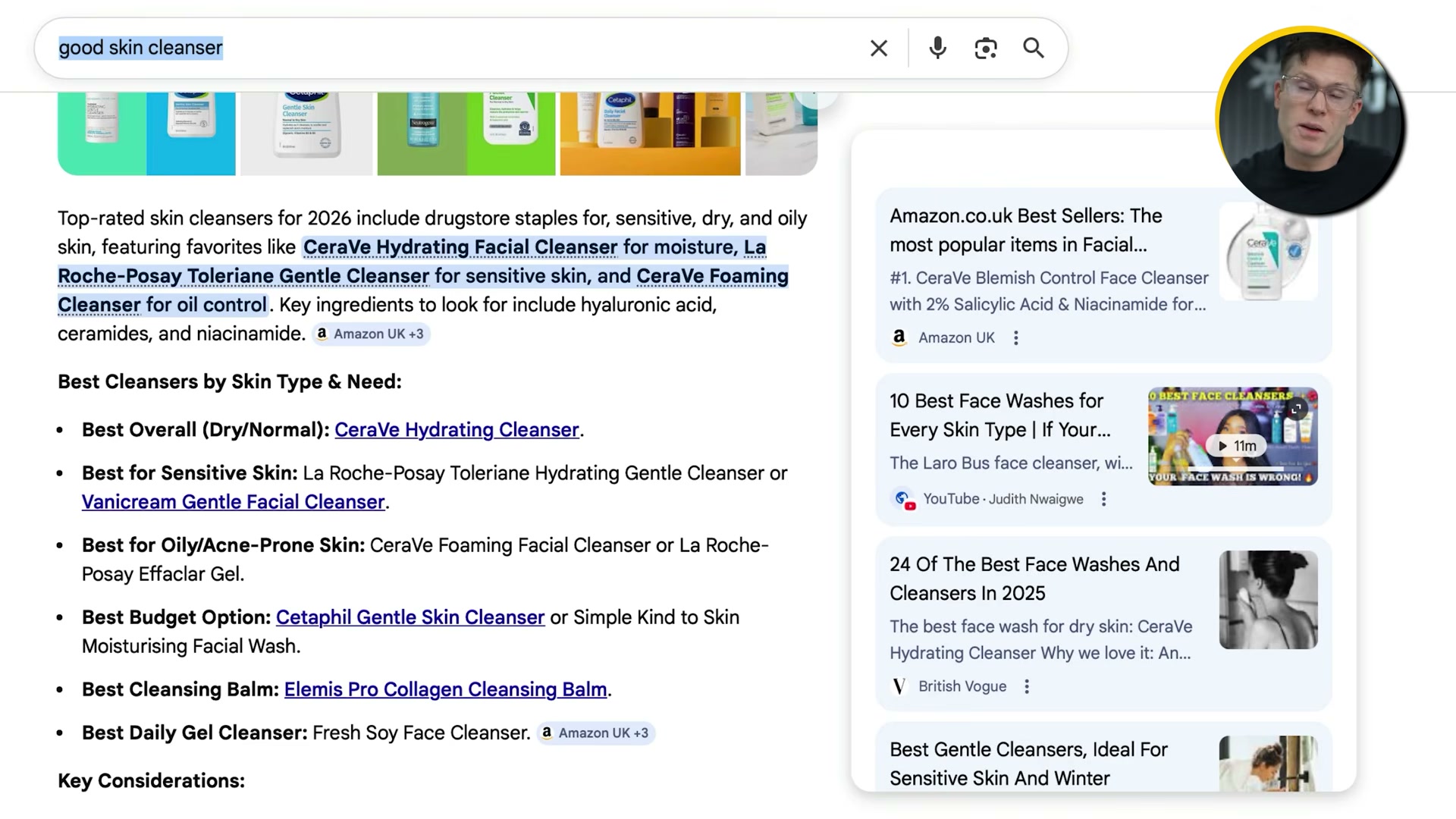
- Start from purchase-intent queries tied to the specific product or service you want to sell. For a skincare brand targeting cleansers, that means queries like “good skin cleanser” rather than broad informational questions. Proximity to a buying decision is the filter — you want AI to cite you where prospects are choosing, not just researching.
- Enter each target query into Google and study the AI Overview section. Identify which site types appear in the citations: brand-owned content, media outlets, e-commerce stores, or medical publishers. This single observation tells you whether your content is even eligible for citation on this topic, or whether Google structurally prefers third-party sources regardless of content quality.
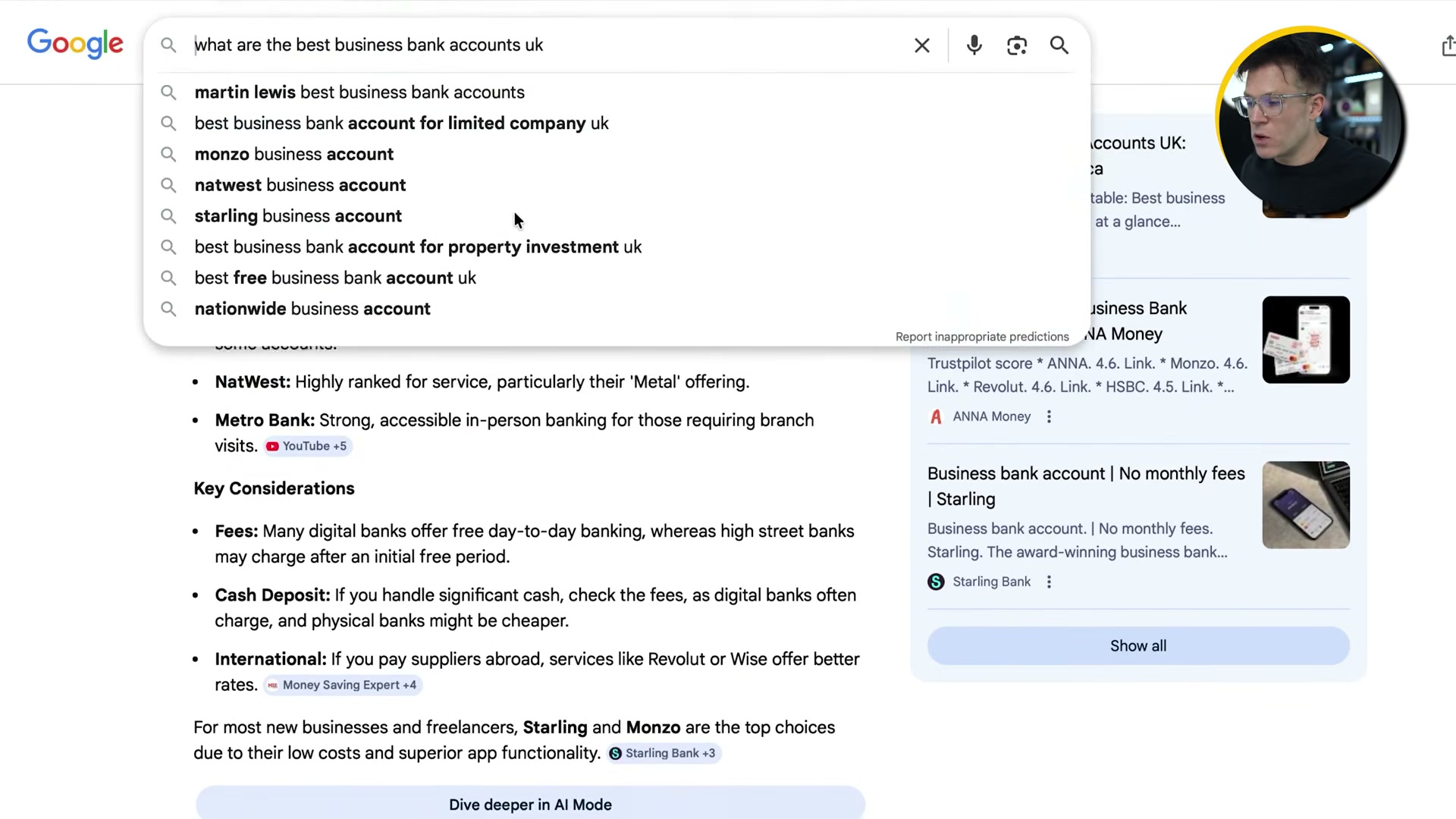
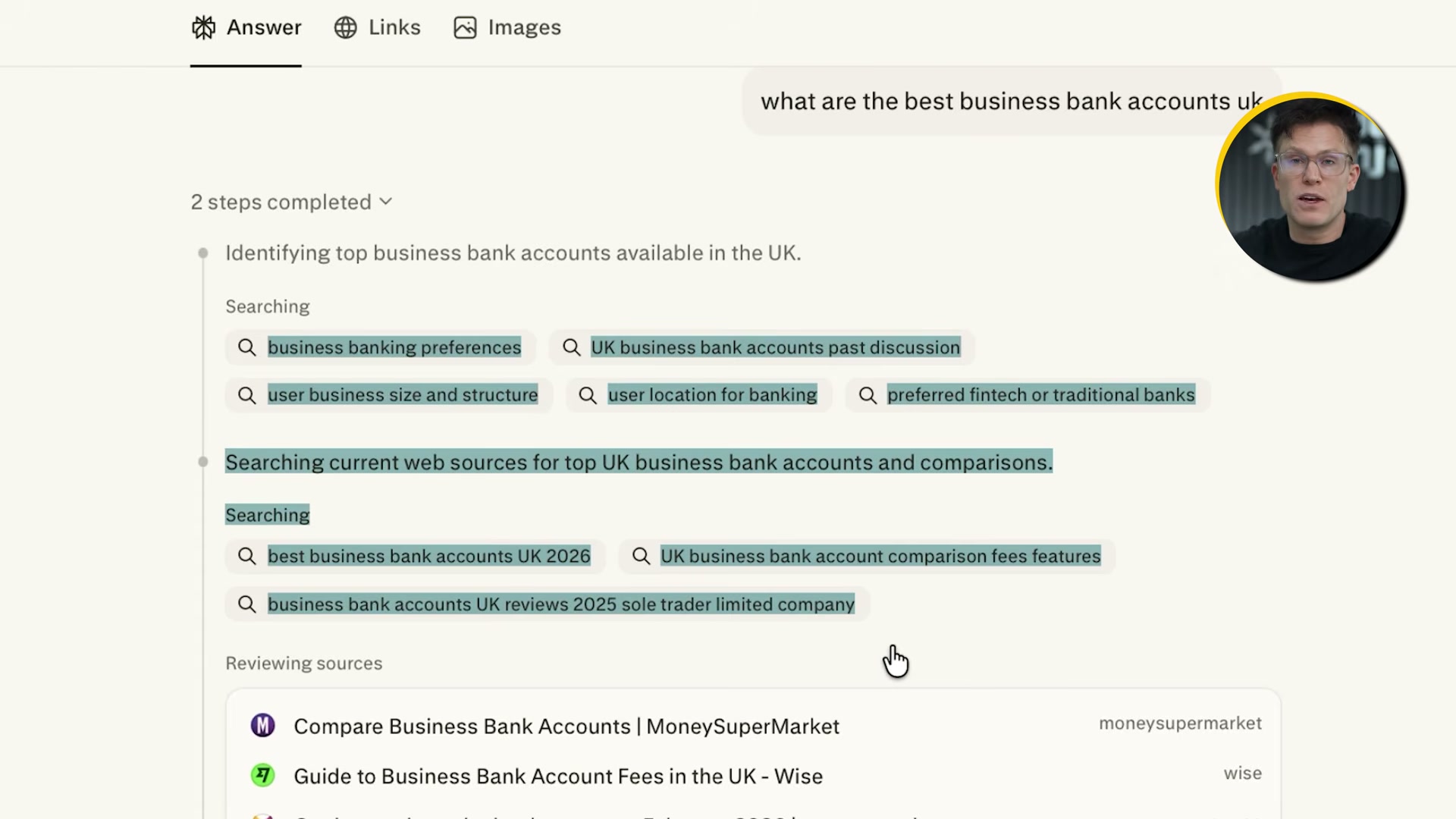
4. Recognize that AI tools don’t answer a single query — they fan out into multiple background sub-searches before synthesizing a response. Perplexity’s reasoning trace makes this process visible: each internal sub-query it runs represents a discrete content topic your brand could rank for and own.
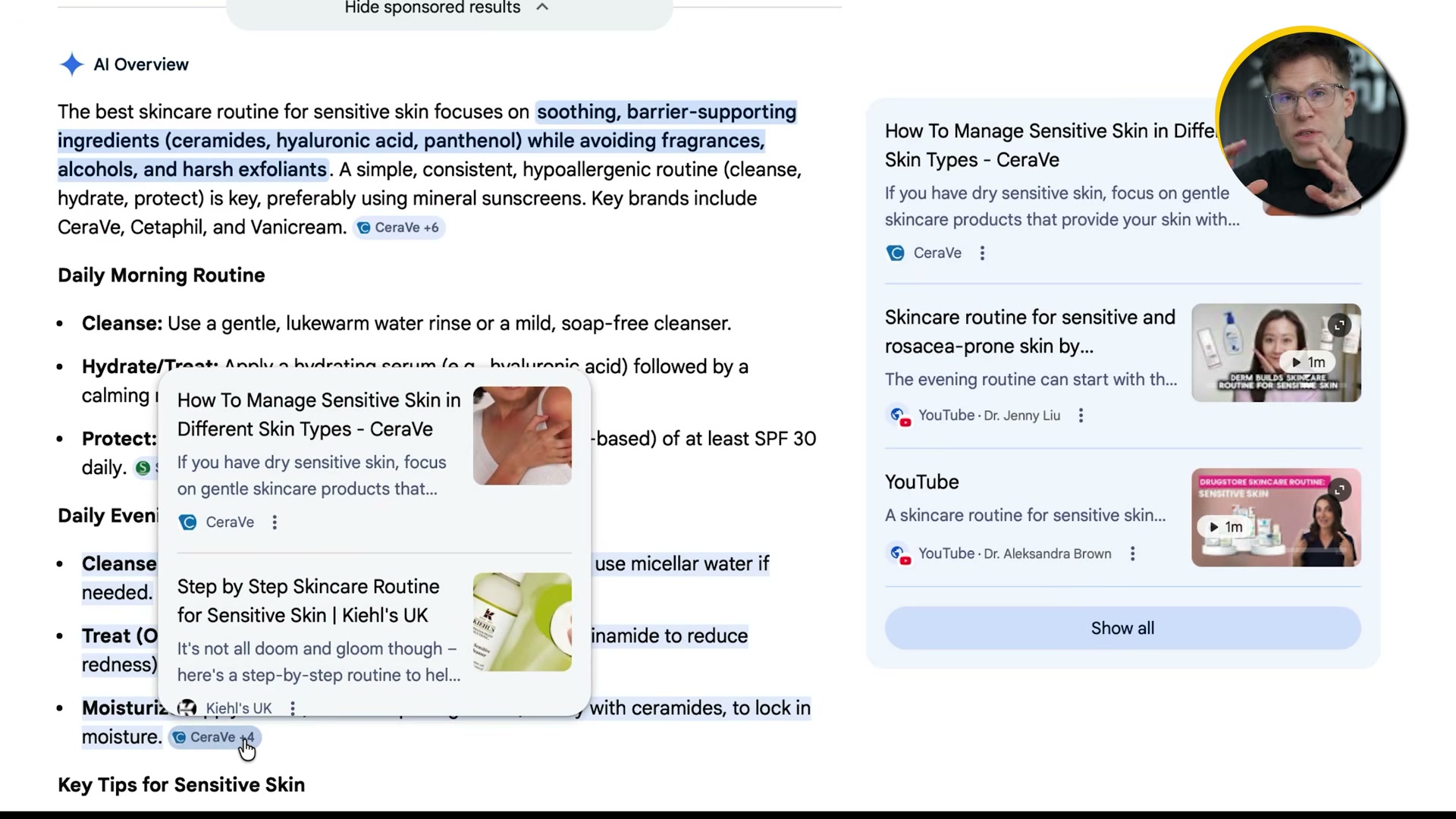
5. Apply this understanding to your product queries. For “good skin cleanser,” check whether Google’s AI Overview cites any brand-owned content or exclusively pulls from media and e-commerce sites. If brand-owned content appears — as it does for queries like “best skincare routines for sensitive skin,” where CeraVe earns repeated citations — that topic is actionable for your own content calendar.
6. Test query variants to surface sub-topic specificity. Searching “what are the best skin cleansers for acne” returns an AI Overview organized around specific active ingredients — salicylic acid, benzoyl peroxide, glycolic acid — rather than generic product lists. Each ingredient category is a content sub-topic your articles need to address at the paragraph level.

7. When you find a query where Google cites brand-owned content, click the citation badge inside the AI Overview to reveal the exact URL being referenced. Open that page and document its structure: headline, H2 subheadings, and the specific paragraph answering each sub-question. That structure becomes your content brief.
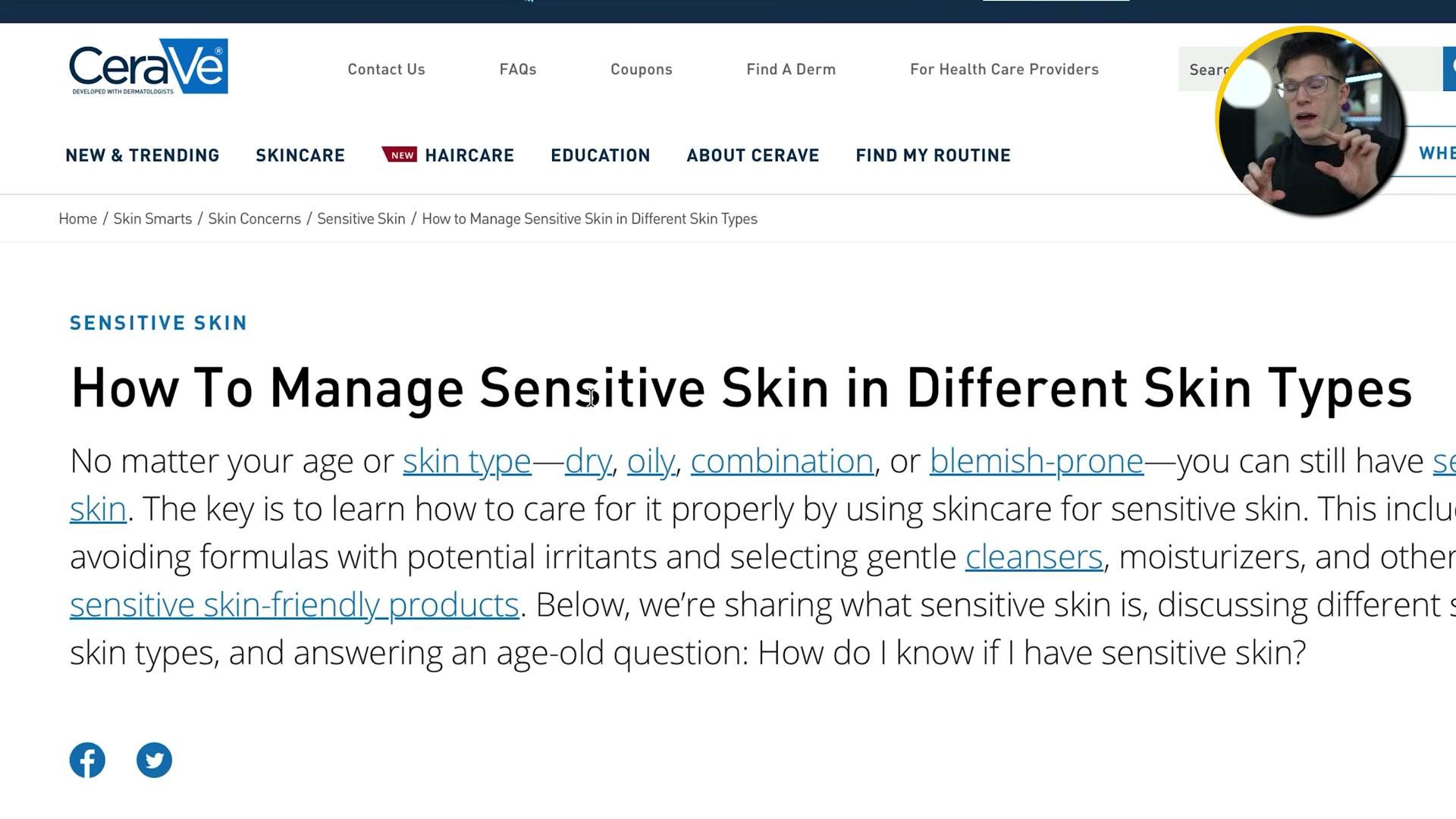
8. Repeat this manual process across multiple queries per product category, running each query more than once since AI responses vary between sessions. Log which domains appear consistently — those are the benchmark competitors you’ll bring into Semrush.
9. Open Semrush and navigate to the AI Visibility overview for your domain. Review the overall visibility score and per-platform trends across ChatGPT, Perplexity, and Google AI Overviews. Open the Performing Topics tab to see which topics your site is already cited for, including monthly AI search volume per topic cluster.
10. Navigate to the Topic Opportunities tab. Add relevant competitors from Semrush’s suggested list — in the video’s example, Nivea is added as a Dove competitor — then click Analyze to generate a gap report showing topics where those competitors earn AI citations and your domain does not. Filter by product category to isolate the most actionable gaps and use the results to plan new or expanded content.
How does this compare to the official docs?
The manual Google research method demonstrated here builds strong intuition for how AI citation works in practice, but Semrush’s AI Visibility Toolkit has its own documentation covering data freshness, platform coverage scope, and competitor selection logic that directly affects how you should interpret — and prioritize — the gap report results.
Here’s What the Official Docs Show
The manual research and Semrush workflow covered in Act 1 hold up as a practical framework — the screenshots gathered for this post add two interface clarifications that affect how you execute it and what you should expect to see. Every step remains unverified against official documentation, so treat what follows as essential context rather than a confirmation checklist.
Steps 1–2: Framing the visibility gap and selecting purchase-intent queries
No official documentation was found for these steps — proceed using the video’s approach and verify independently.
Steps 3–7: Manual Google AI Overview research
Start on Google as described — but note one distinction the tutorial doesn’t draw. As of March 17, 2026, Google’s search bar includes a dedicated AI Mode button, which is a separate product surface from AI Overviews. AI Overviews appear automatically inline in standard search results for eligible queries; AI Mode is a user-initiated interface with its own behavior and different output. Steps 3–7 describe examining AI Overviews in standard results — that process is conceptually sound — but the two surfaces are not interchangeable, and conflating them will produce inconsistent research results.
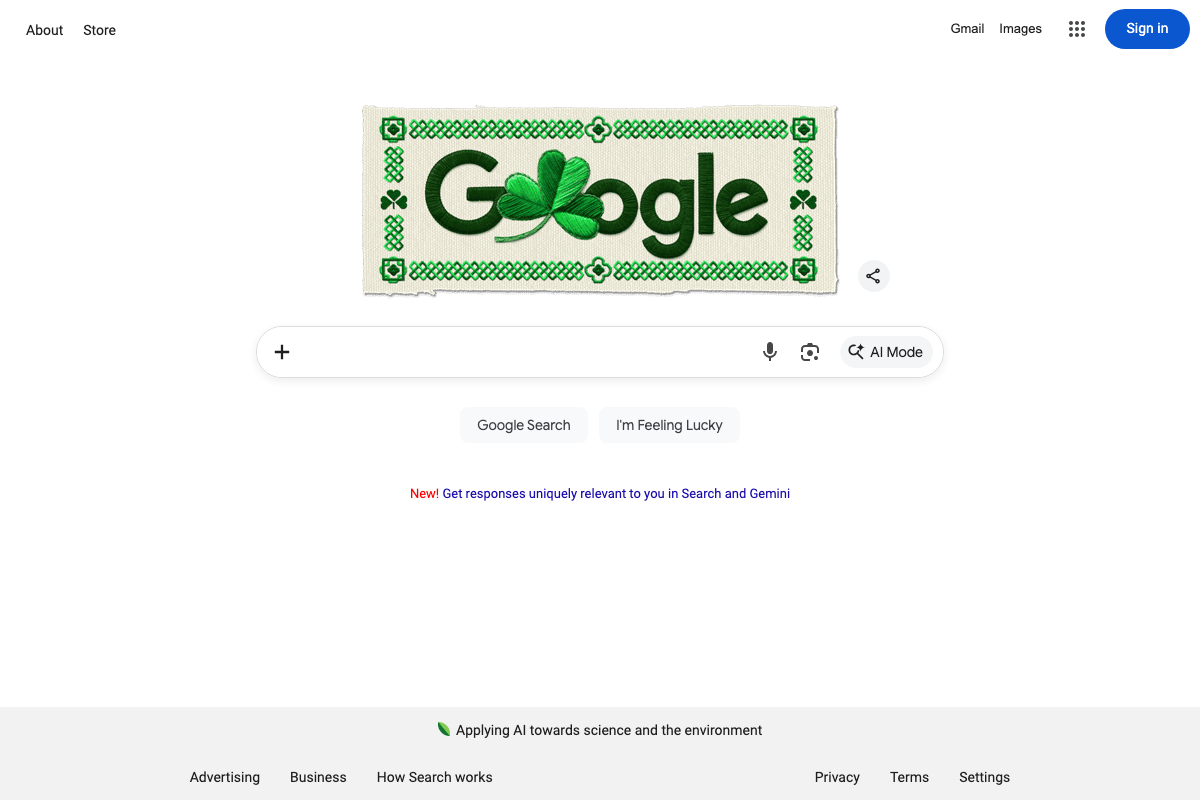
No official documentation was found for the citation-clicking and URL reverse-engineering workflow in steps 4–7 — proceed using the video’s approach and verify independently.
Steps 8–10: Opening Semrush and locating AI Visibility data
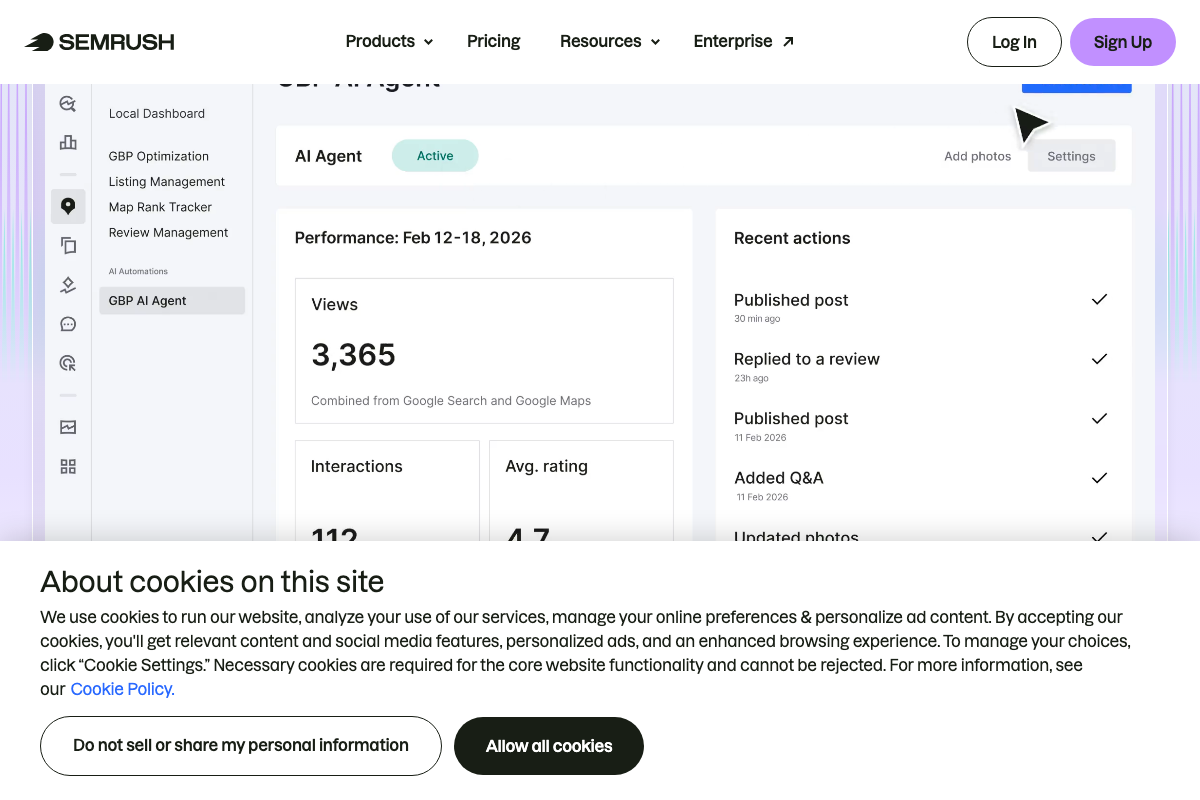
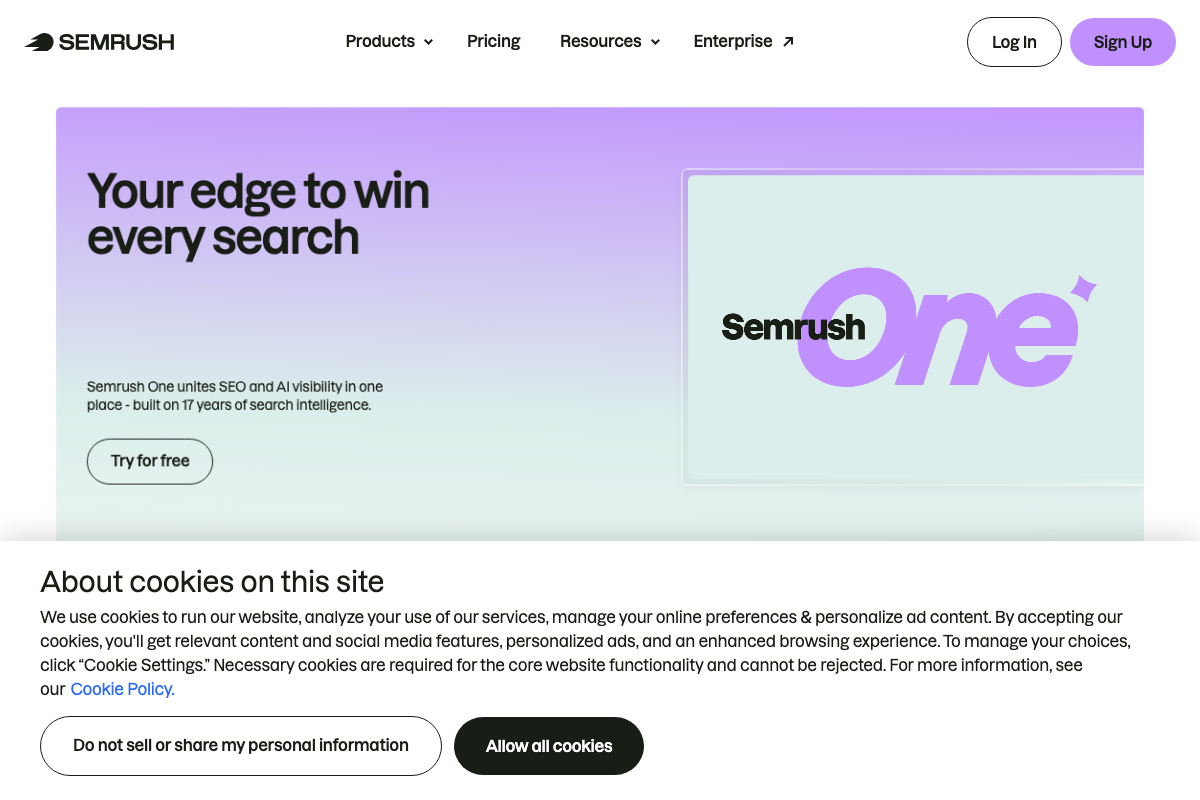
Semrush does offer AI search tracking as a named product pillar — the Semrush One suite is confirmed to “unite SEO and AI visibility in one place,” which validates the tutorial’s premise. What the available screenshots do not show is the AI Visibility Toolkit interface itself. The UI captured shows the GBP AI Agent dashboard under “AI Automations,” which is a Google Business Profile management tool — a separate product entirely. As of March 17, 2026, none of the navigation tabs described in steps 9–15 — AI Visibility, Performing Topics, or Topic Opportunities — appear in the interface shown.
Steps 11–16: Topic gap analysis and content prioritization
No official documentation was found for these steps — proceed using the video’s approach and verify independently.
A note on Perplexity (referenced in steps 1 and 9)
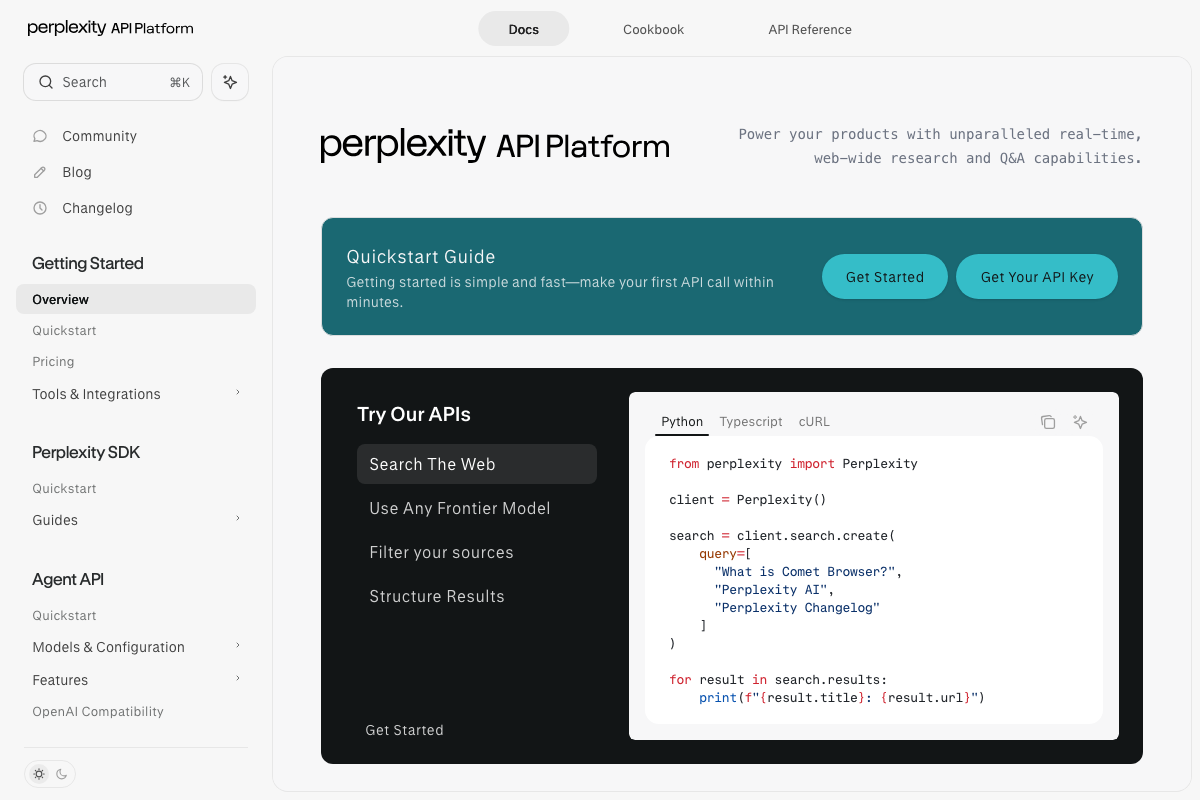
The Perplexity screenshots captured for this post show the developer API documentation at docs.perplexity.ai — not the consumer search product at perplexity.ai that the tutorial references as a brand citation surface. The API docs do confirm that Perplexity returns structured, citation-based, web-grounded results with titles and URLs — which is precisely why Semrush tracks brand mentions from it. The consumer citation behavior the tutorial describes is real; the documentation simply isn’t from the right interface to verify the specific workflow.
Useful Links
- Semrush: Your Unfair Advantage for Growing Brand Visibility — Main Semrush homepage confirming AI search and GEO (Generative Engine Optimization) as core product pillars under the Semrush One suite.
- Knowledge Base | Semrush — Semrush product documentation hub, including the GBP AI Agent and AI Automations tools; starting point for locating AI Visibility Toolkit-specific documentation.
- Google — Google Search homepage; note the distinct AI Mode button, which is separate from the inline AI Overviews examined in steps 3–7.
- Overview – Perplexity — Perplexity developer API documentation; distinct from the consumer search product at perplexity.ai that Semrush tracks for brand citation data.


0 Comments