

What Is AI Visibility? The 3 Types Every Marketer Needs to Know
AI visibility isn’t a single metric — it’s a spectrum with three distinct states, and most marketers are only tracking one of them. After completing this lesson, you’ll understand all three, know why unlinked brand mentions compound into long-term model authority, and be able to use Ahrefs Brand Radar to locate the exact gap between where AI discusses your topic and where it leaves your brand out.
-
Define the three states of AI visibility. Every brand occupies one of three positions in any AI response: cited and linked (the model includes a URL to your page), mentioned but not linked (the model names your brand but gives the user no path to click), or not visible at all (your brand is absent from the response entirely). The third state matters as much as the first — you cannot close a gap you haven’t identified.
-
Compare citation rates across platforms. Gemini cites brands in 71.3% of impressions; AI Overviews cites them in just 13%. That gap means your platform mix determines which visibility metric deserves the most attention. A brand whose audience lives primarily in AI Overviews is operating in a near-zero-citation environment — a fundamentally different strategic reality than one concentrated on Gemini.
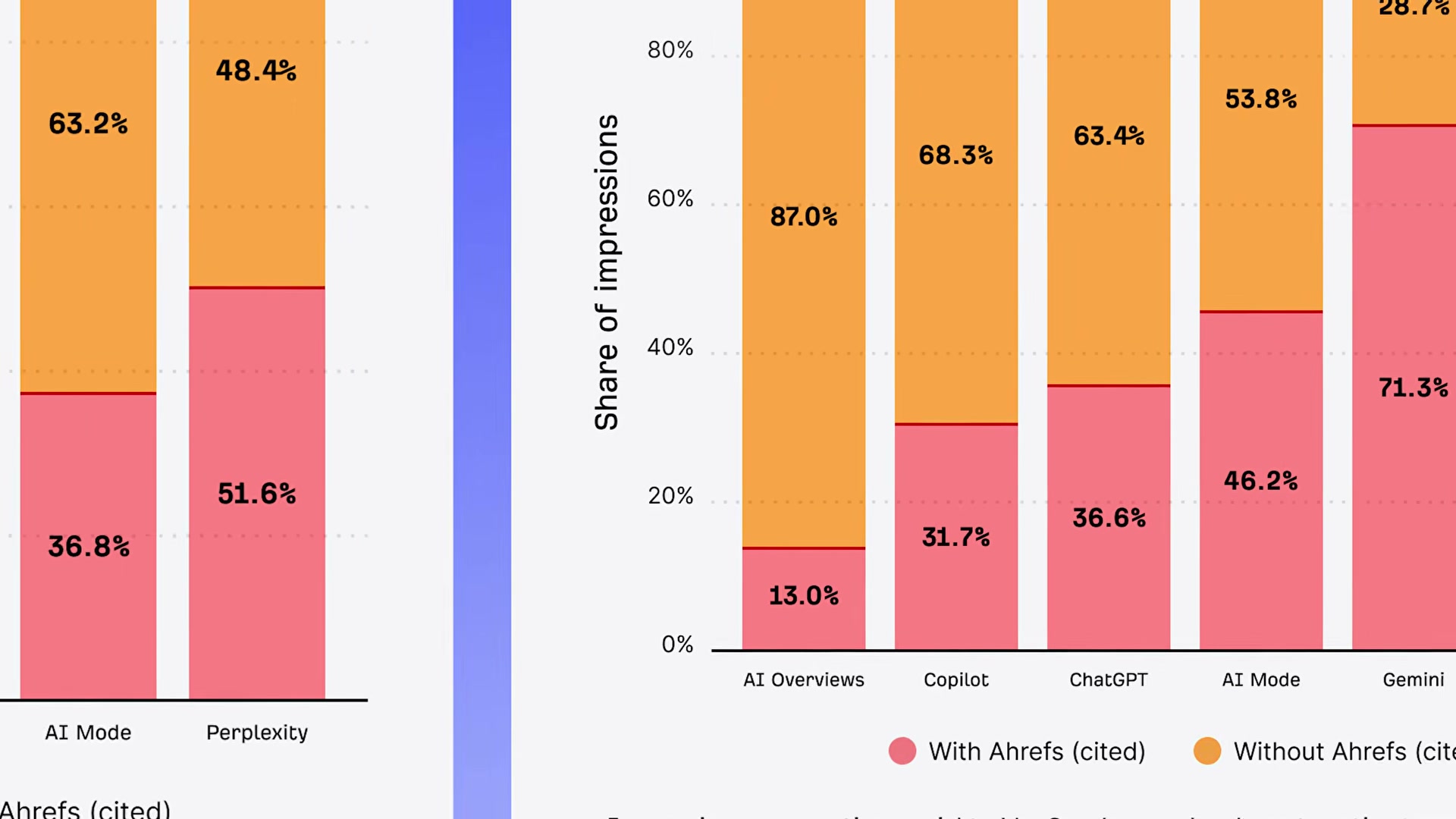
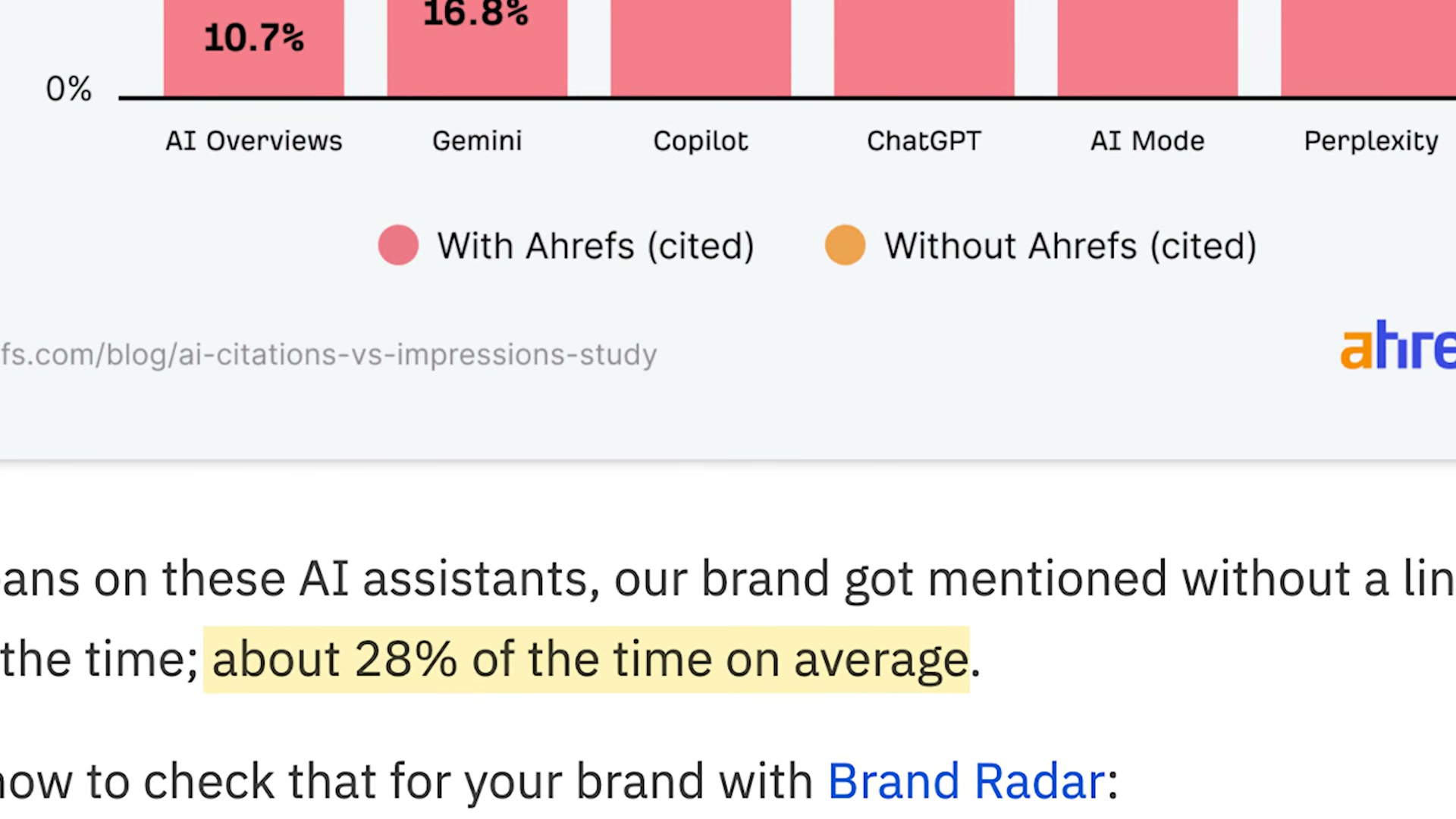
- Distinguish raw mention rate from impression-weighted citation rate. On average, only 28% of AI mentions include a link, meaning roughly seven out of ten times your brand surfaces in a response, no clickable URL is attached. The more useful number is impression-weighted citation rate: on Perplexity, cited responses appear in 78% of total impressions even though only 51.6% of individual mentions carry a link, because citations cluster heavily on high-traffic queries.
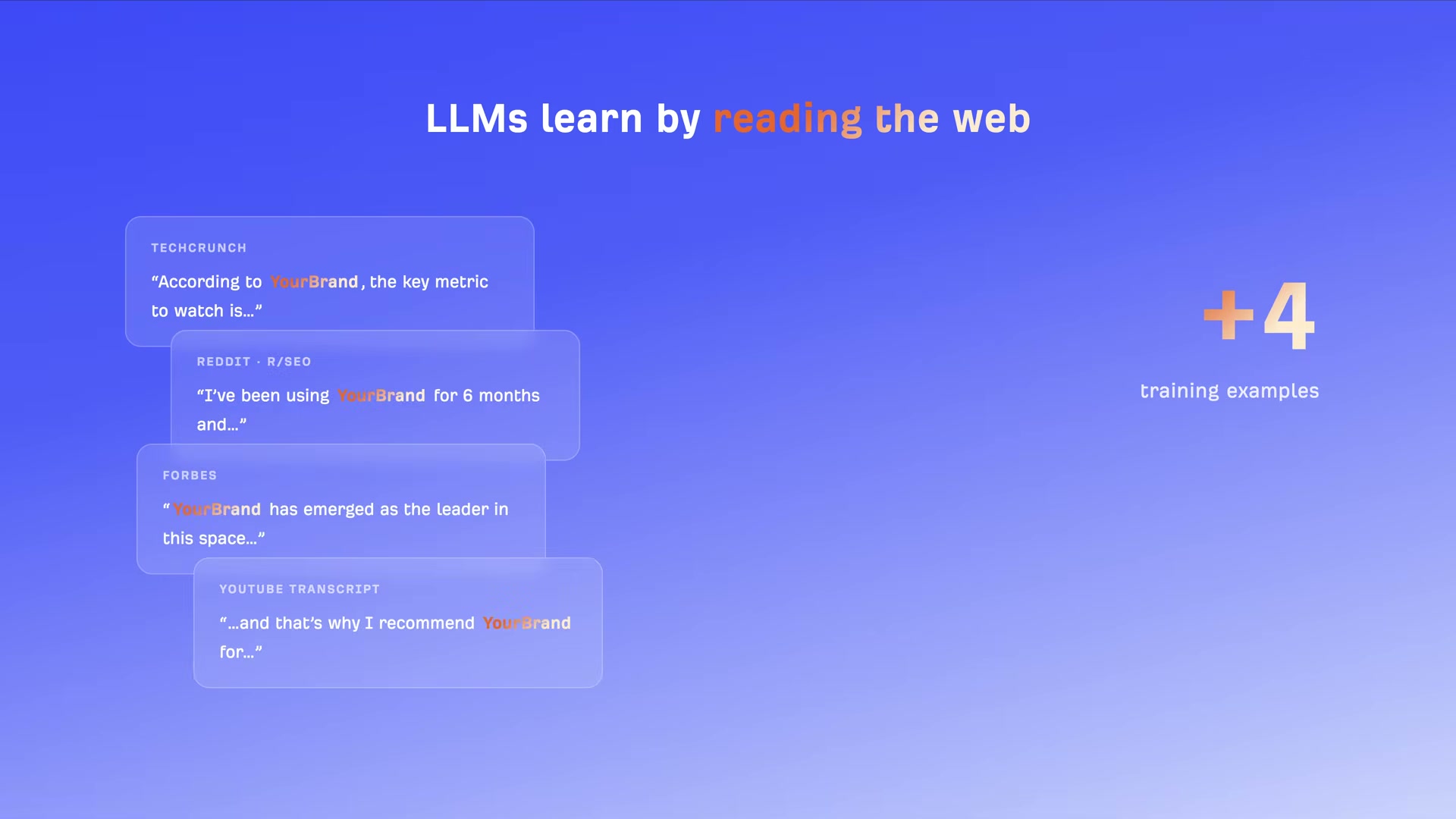
- Recognize how unlinked mentions build model authority. LLMs learn by reading the web, and every time your brand name appears on a credible source — a TechCrunch article, a Reddit thread, a Forbes piece, a YouTube transcript — the model builds a new association between your brand and that topic. A study of 75,000 brands found that branded web mentions correlate with AI visibility at 0.664, outperforming backlinks, domain rating, and referring domains.
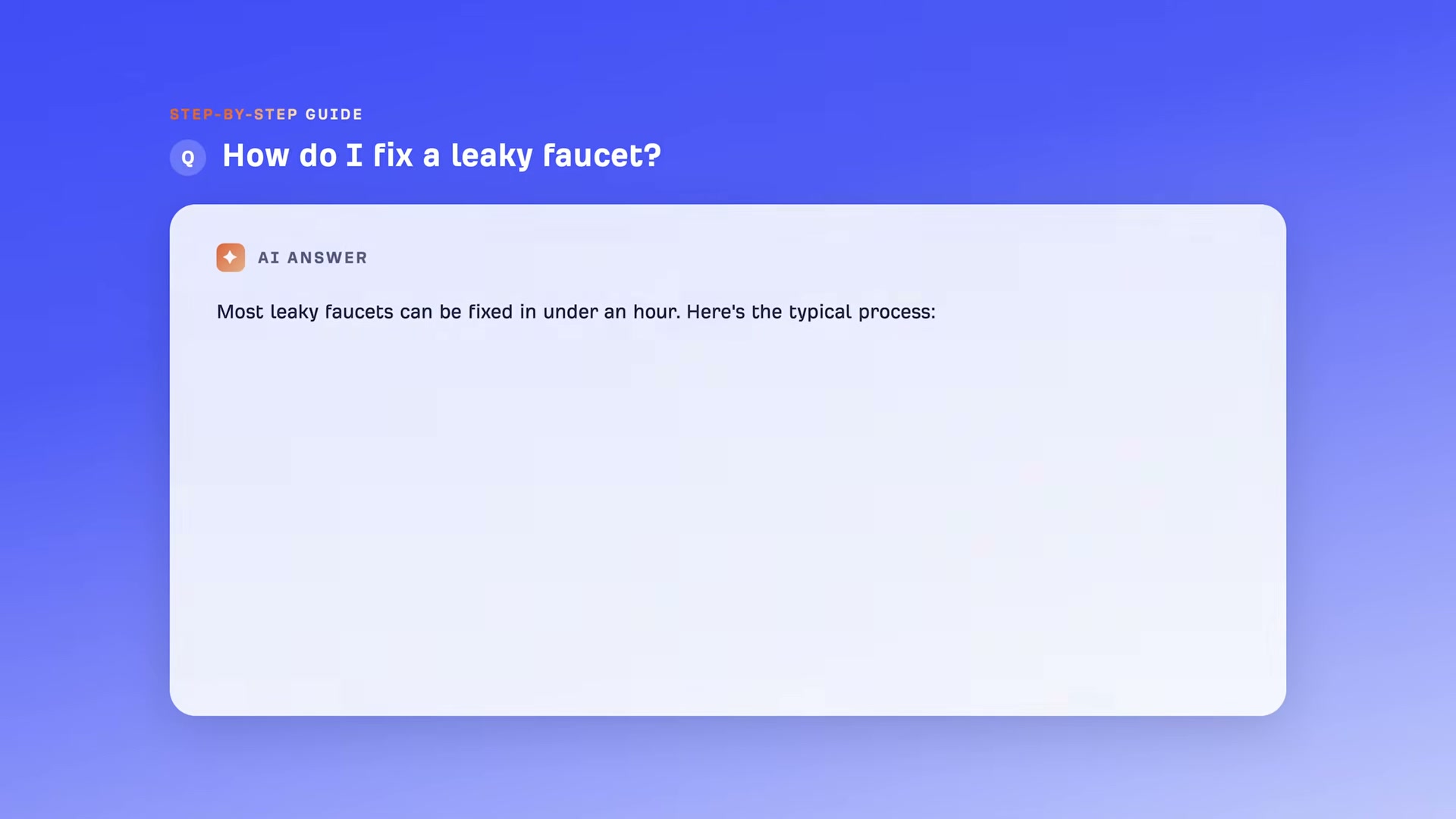
- Match the AI response format to your business model. Step-by-step guides favor service businesses and how-to publishers. Direct factual answers build authority for informational brands, though they rarely drive clicks. Video citations benefit creators most directly — YouTube is one of the most cited domains across major AI platforms, and some users prefer video over text regardless of format. The query type determines which visibility state generates the most value for your model.
- Open Ahrefs Brand Radar and search your domain. Navigate to Brand Radar, enter your website, and review your performance across AI platforms: mentions, citations, impressions, and share of voice. The filters let you isolate each visibility type so you can see precisely where you’re being named without credit versus where you’re earning links.
- Locate the gap between impressions and mentions. The difference between how many AI responses exist on your topic (impressions) and how many name your brand (mentions) is your visibility gap. That delta represents queries where AI is already answering your audience’s questions — without you in the conversation. Branded web mentions and YouTube mentions rank among the strongest predictors of closing that gap, with correlation coefficients that outperform traditional domain authority metrics by a wide margin.

How does this compare to the official docs?
The framework above is drawn from Ahrefs’ own AEO course and proprietary research — Act 2 checks how Ahrefs’ platform documentation defines these metrics, and where independent sources either validate or complicate the correlation data presented here.
Here’s What the Official Docs Show
Act 1 built a solid conceptual foundation for measuring AI visibility — the documentation captured here adds a few navigation details the video leaves implicit and updates how Ahrefs currently describes its own platform. What follows is additive context, not a rewrite.
Step 1 — Define the three states of AI visibility
No official documentation was found for this step — proceed using the video’s approach and verify independently.
Step 2 — Compare citation rates across platforms
The video’s approach here matches the current docs exactly. Brand Radar’s tab structure — Search demand, Web visibility, AI overviews, ChatGPT, Perplexity — is confirmed in the product UI, and the platform-by-platform breakdown the tutorial describes is a native feature of the tool, not a workaround.

Step 3 — Distinguish raw mention rate from impression-weighted citation rate
No official documentation was found for this step — proceed using the video’s approach and verify independently.
Step 4 — Recognize how unlinked mentions build model authority
No official documentation was found for this step — proceed using the video’s approach and verify independently.
Step 5 — Match the AI response format to your business model
No official documentation was found for this step — proceed using the video’s approach and verify independently.
Two platform developments the screenshots do surface: Google AI Mode is now a homepage-level button integrated directly into the standard Google search bar — no separate URL, no login required — though it’s currently unclear whether Brand Radar tracks AI Mode responses separately from AI Overviews. The current ChatGPT interface also includes a Deep research mode the tutorial’s response-type classification doesn’t cover; this mode may differ meaningfully from standard ChatGPT in how it sources and links citations.


Step 6 — Open Ahrefs Brand Radar and search your domain
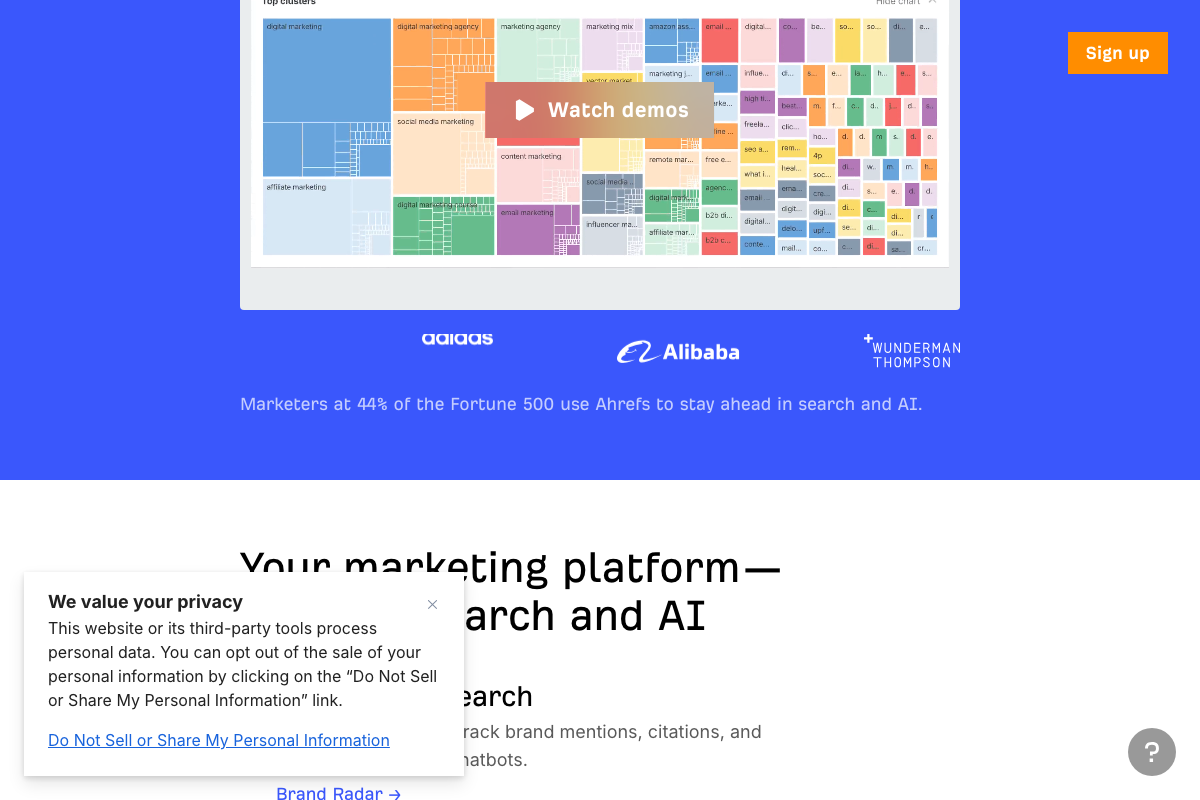
The video’s approach here matches the current docs exactly. Brand Radar is confirmed as a named, linked feature on the Ahrefs homepage, and the platform’s own copy confirms it tracks “brand mentions, citations, and chatbots” — directly aligning with the metrics the tutorial walks through.
One navigation detail the tutorial doesn’t call out explicitly: Brand Radar opens on the Search demand tab by default. The AI citation metrics — mentions, impressions, share of voice — live inside the ChatGPT, Perplexity, and AI overviews tabs. Switch to those before drawing any conclusions about your AI visibility.
Also worth noting: Ahrefs now describes itself as an “AI Marketing Platform Powered by Big Data” and has launched a new product, Firehose, for real-time content discovery. The tutorial’s framing as an SEO tool with AI tracking features is functional but undersells where the platform currently positions itself.

Step 7 — Locate the gap between impressions and mentions
No official documentation was found for this step — proceed using the video’s approach and verify independently.
Useful Links
- Ahrefs — AI Marketing Platform Powered by Big Data — Ahrefs homepage confirming Brand Radar’s availability, current platform positioning as an AI marketing suite, and free-tier sign-up entry point.
- Google — Google homepage confirming AI Mode as a live, unauthenticated, homepage-level feature built into the standard search bar.
- ChatGPT — ChatGPT homepage confirming the current interface state including Deep research mode and Voice features not addressed in the tutorial’s response-type classification.


0 Comments