

Rank Everywhere: Jabz’s LLM + Google Listicle Strategy from Chiang Mai
Ten years into SEO, Bangkok-based practitioner Jabz has stress-tested a framework that gets clients ranking simultaneously on traditional Google SERPs, AI Overviews, and LLM citation surfaces — without chasing premium placements or aged articles. The method combines on-site topical authority with a mirrored off-page semantic network built from fresh guest-post listicles. By the end of this walkthrough, you’ll understand how to structure that network, vet the sites you publish on, and position your client entries to maximize authority signals at every slot.
-
Build a complete topical map on the client’s own domain before touching any off-page assets. The on-site map is the anchor — every off-page piece you publish later will reinforce it, so gaps on-site undermine the whole network.
-
Replicate that topical map off-page through a distributed network of listicles published on third-party sites. Jabz frames this as building “a solid consensus off-page” — the same topic clusters that live on the client’s site should also exist across the broader web, pointing back at the client.
-
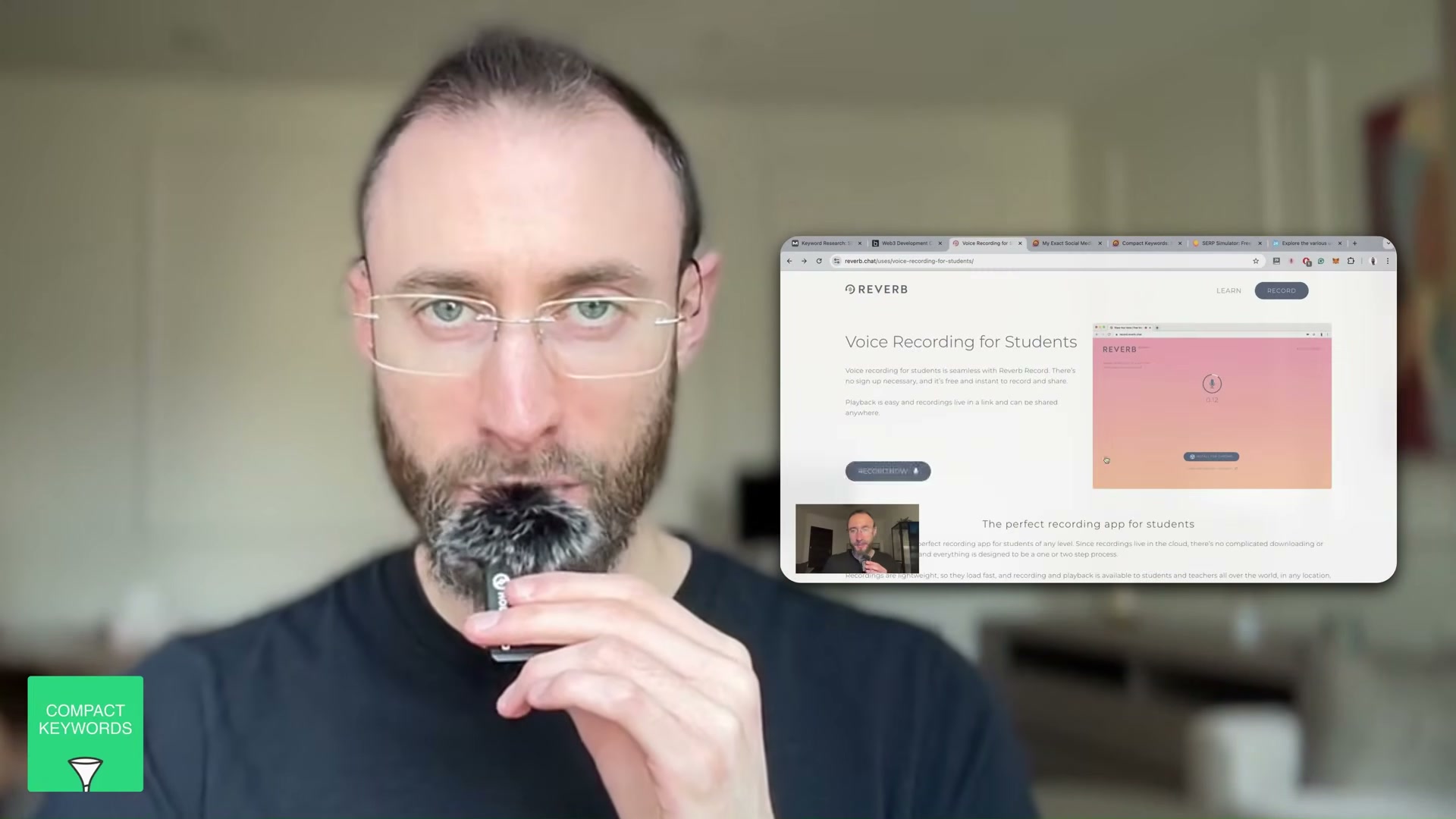
Vet every guest-post target in Ahrefs before outreach. The criteria Jabz uses: 1,000+ monthly organic traffic, a clean backlink profile, no evidence of bot-driven traffic inflation, and — critically — no robots.txt or meta directives blocking LLM crawlers. A site that blocks GPTBot or similar crawlers offers zero LLM citation value regardless of its traffic.
-
Publish fresh listicles rather than negotiating insertion into existing ranked articles. Jabz’s team has tested both approaches and consistently favors fresh publication for four reasons: faster turnaround, full editorial control over client placement and article structure, lower cost (aged-article owners charge a premium for insertions), and observed ranking results that match or beat the insertion route.
-
Place the client at position 1 on every listicle you fully control. On placements where you’re sharing the page with a site editor’s own choices, target positions 2–3 as the practical ceiling before signal dilution becomes a concern.
-
When a placement only allows positions 4 or 5, don’t default to a generic entry. Attach a specific, unique descriptor to the client listing — something that articulates a distinct angle no other entry claims. Jabz’s example: instead of listing an SEO agency as “another option,” label it as “the agency known for ranking across LLMs.” The position matters less when the entry itself carries a differentiated authority signal.
-
Calibrate the volume of off-page listicles to how competitive the niche is. Jabz doesn’t give a fixed number — the competitiveness of the niche determines how deep the off-page topical map needs to go before momentum builds.
-
Run a parallel test using exact match domains (EMDs) as fresh listicle hosts. Jabz reports early results showing EMD-hosted listicles indexing and ranking on page one with zero external backlinks pointing at them.
Warning: this step may differ from current official documentation — see the verified version below.

- Track performance across two surfaces simultaneously: standard Google SERPs and LLM/AI Overview results. Jabz reports that the same listicles published through this network are appearing in both — three of four top results for one client keyword were all listicles his team had published on mid-tier third-party sites.
How does this compare to the official docs?
Google’s own guidance on structured off-page signals, LLM crawler directives, and the ranking behavior of fresh versus aged content tells a more nuanced story — and a few of Jabz’s observed results sit in territory the documentation doesn’t straightforwardly endorse.
Here’s What the Official Docs Show
Jabz’s nine-step framework is structurally sound, and what follows adds platform-level context from current documentation that fills a few gaps the video leaves open. Where official sources were captured, you’ll find them below in the same sequence — where they weren’t, the flags tell you exactly where to verify independently.
Step 1: Build the on-site topical map first
No official documentation was found for this step —
proceed using the video’s approach and verify independently.
Step 2: Replicate the topical map off-page with distributed listicles
No official documentation was found for this step —
proceed using the video’s approach and verify independently.
Step 3: Vet guest-post targets in Ahrefs
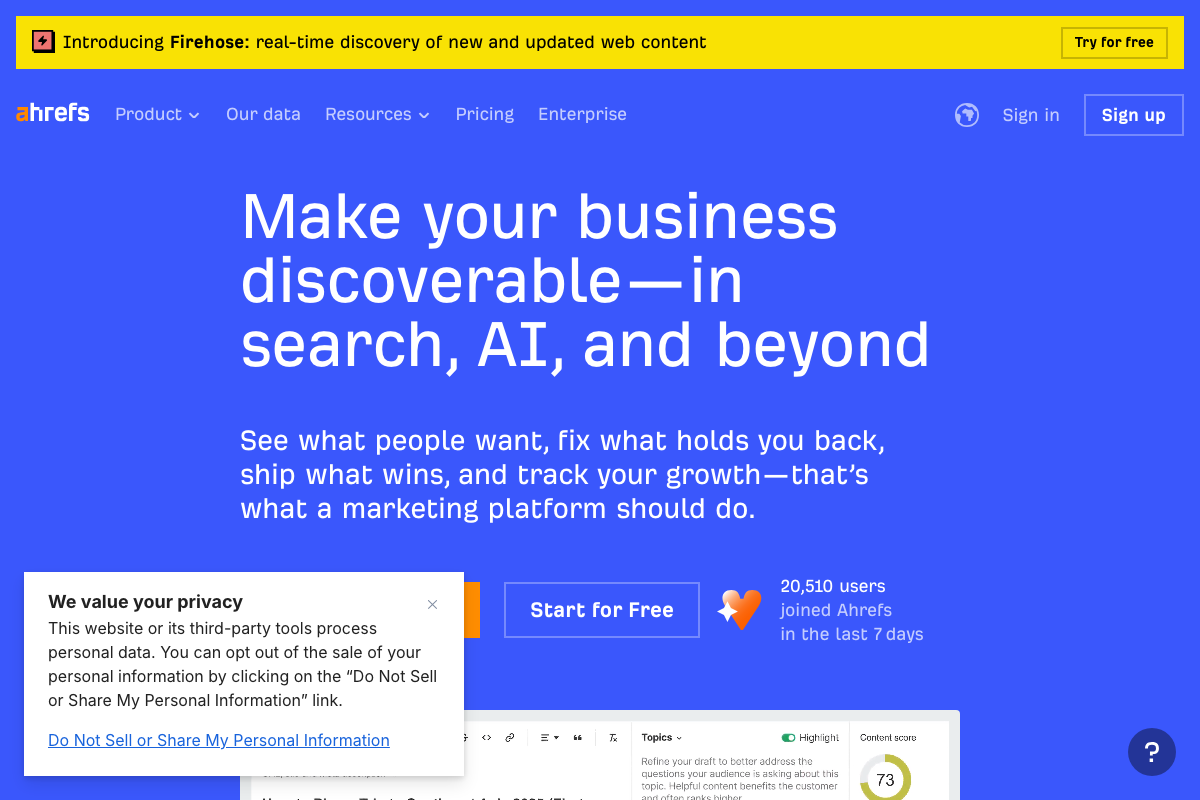
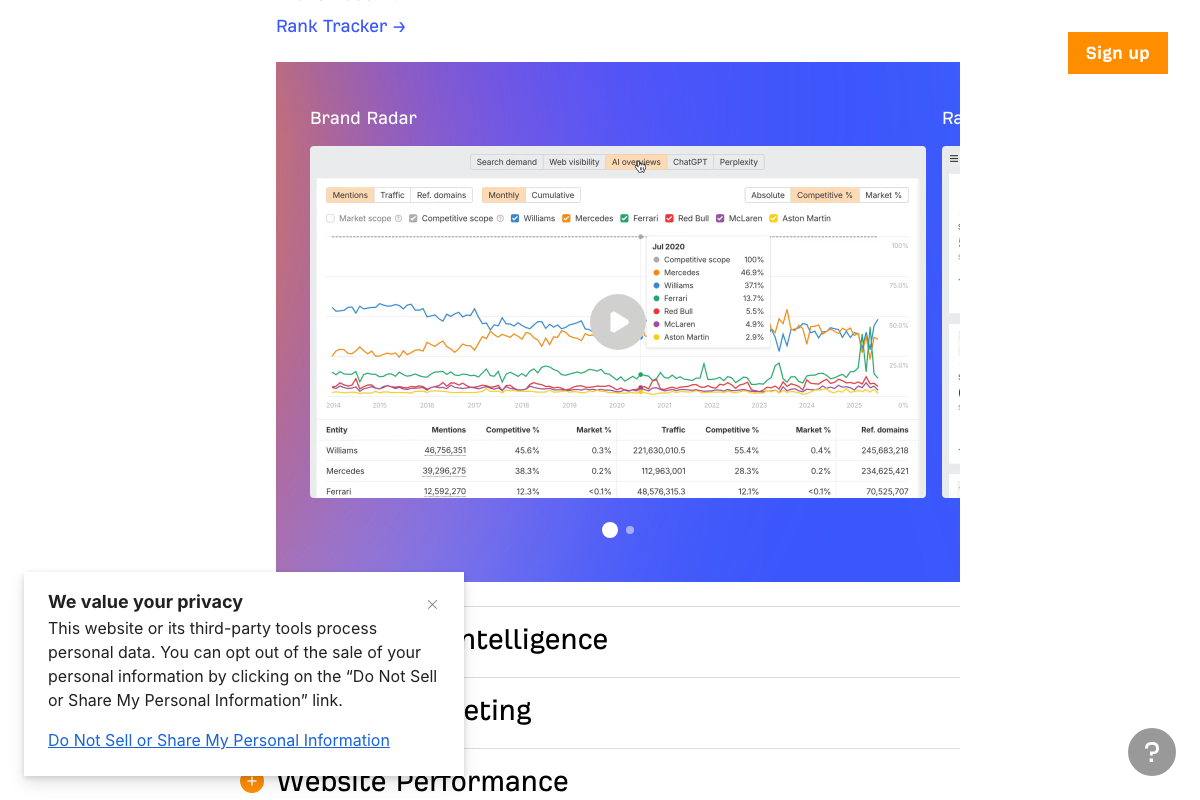
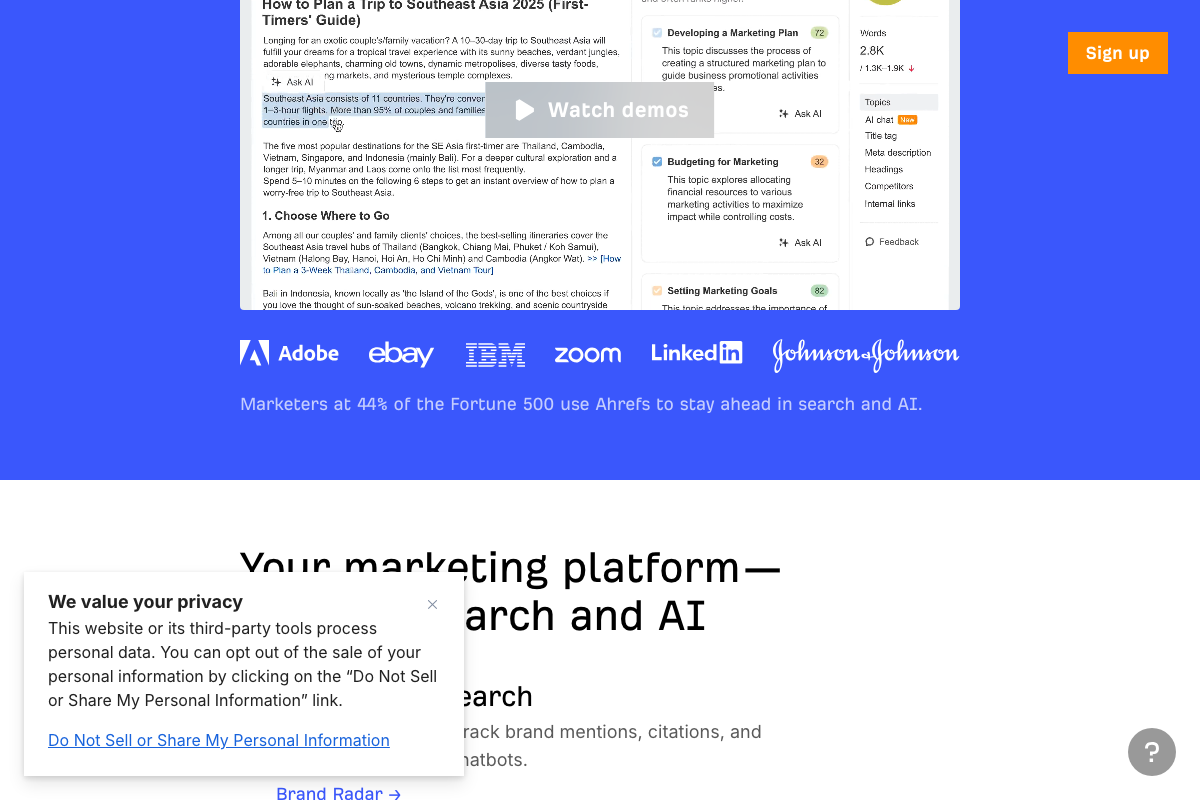
The tutorial frames Ahrefs as a backlink and traffic vetting tool. As of April 2026, that framing understates what the platform does. Ahrefs’ current homepage headline reads “Make your business discoverable — in search, AI, and beyond,” and it now self-describes as an AI Marketing Platform. Two features are worth noting for this workflow: Firehose, a real-time content discovery tool for tracking new and updated web content, and Brand Radar, which monitors brand mentions and citations inside chatbots and AI surfaces — neither is referenced in the video’s vetting step.
The specific criteria Jabz describes — 1,000+ organic traffic threshold, clean backlink profile, LLM-crawler block detection — could not be confirmed from the available screenshots. No Site Explorer or filter UI was captured.
No official documentation was found confirming the specific vetting thresholds in this step —
proceed using the video’s approach and verify independently.
Step 4: Publish fresh listicles rather than inserting into ranked articles
No official documentation was found for this step —
proceed using the video’s approach and verify independently.
Step 5: Place the client at position 1 on fully controlled listicles
No official documentation was found for this step —
proceed using the video’s approach and verify independently.
Step 6: Add a unique descriptor when confined to positions 4–5
No official documentation was found for this step —
proceed using the video’s approach and verify independently.
Step 7: Calibrate listicle volume to niche competitiveness
No official documentation was found for this step —
proceed using the video’s approach and verify independently.
Step 8: Use exact match domains as fresh listicle hosts
No official documentation was found for this step —
proceed using the video’s approach and verify independently.
Step 9: Track performance across Google SERPs and AI surfaces simultaneously
The video’s approach here matches the current docs in spirit, with one useful distinction to make explicit. As of April 2026, Google’s main search bar includes a dedicated AI Mode button — a separately navigable destination, not an inline overlay. The tutorial uses “AI Overviews” as shorthand for Google’s AI surface; AI Overviews is a specific inline feature within standard SERPs, while AI Mode is a standalone product. Treating them as two distinct tracking targets gives you a more precise read on where your listicles are surfacing.
Ahrefs’ Brand Radar, noted in step 3, extends the monitoring workflow further: it tracks citations inside chatbots beyond Google’s ecosystem, which the video doesn’t account for.

Useful Links
- Ahrefs — AI Marketing Platform Powered by Big Data — Ahrefs’ current homepage, confirming its expanded positioning with Firehose (real-time content discovery) and Brand Radar (AI-surface citation tracking).
- Home | Help Center – Ahrefs — Ahrefs Help Center entry point for tool-specific documentation on Site Explorer, Content Explorer, and filter-based vetting workflows.
- Documentation to Improve SEO | Google Search Central — Google’s official developer documentation for search guidance, including crawl controls, robots.txt directives, and structured data requirements.
- Google — Google’s search homepage, confirming AI Mode as a first-class, separately navigable search destination distinct from inline AI Overviews.


0 Comments