

Google’s Official GEO Guide: What’s True, What’s a Myth, and the One Thing They Got Wrong
Google Search Central’s post on optimizing for generative AI features sent the marketing community into competing factions — some calling it a vindication, others calling it a cover-up. Edward Sturm works through the guide systematically, confirming what holds up, identifying what you can safely ignore, and flagging one claim where Google’s stated position conflicts with observed traffic data. After this analysis, you’ll have a clear action list for AI search optimization grounded in both Google’s guidance and real-world results.
-
Open Google Search Central’s guide “Optimizing your website for generative AI features on Google search.” Google frames it as official best-practice guidance for AI Overviews and AI Mode — but the same principles extend to ChatGPT, Perplexity, and Claude, even if the guide doesn’t say so.
-
Internalize Google’s core position: GEO and AEO are SEO. The guide states — with an unusually emphatic exclamation point — that AI Overviews and AI Mode are “rooted in our core search ranking and quality systems.” Pages that perform well in traditional search are already in the pool generative AI features draw from.
-
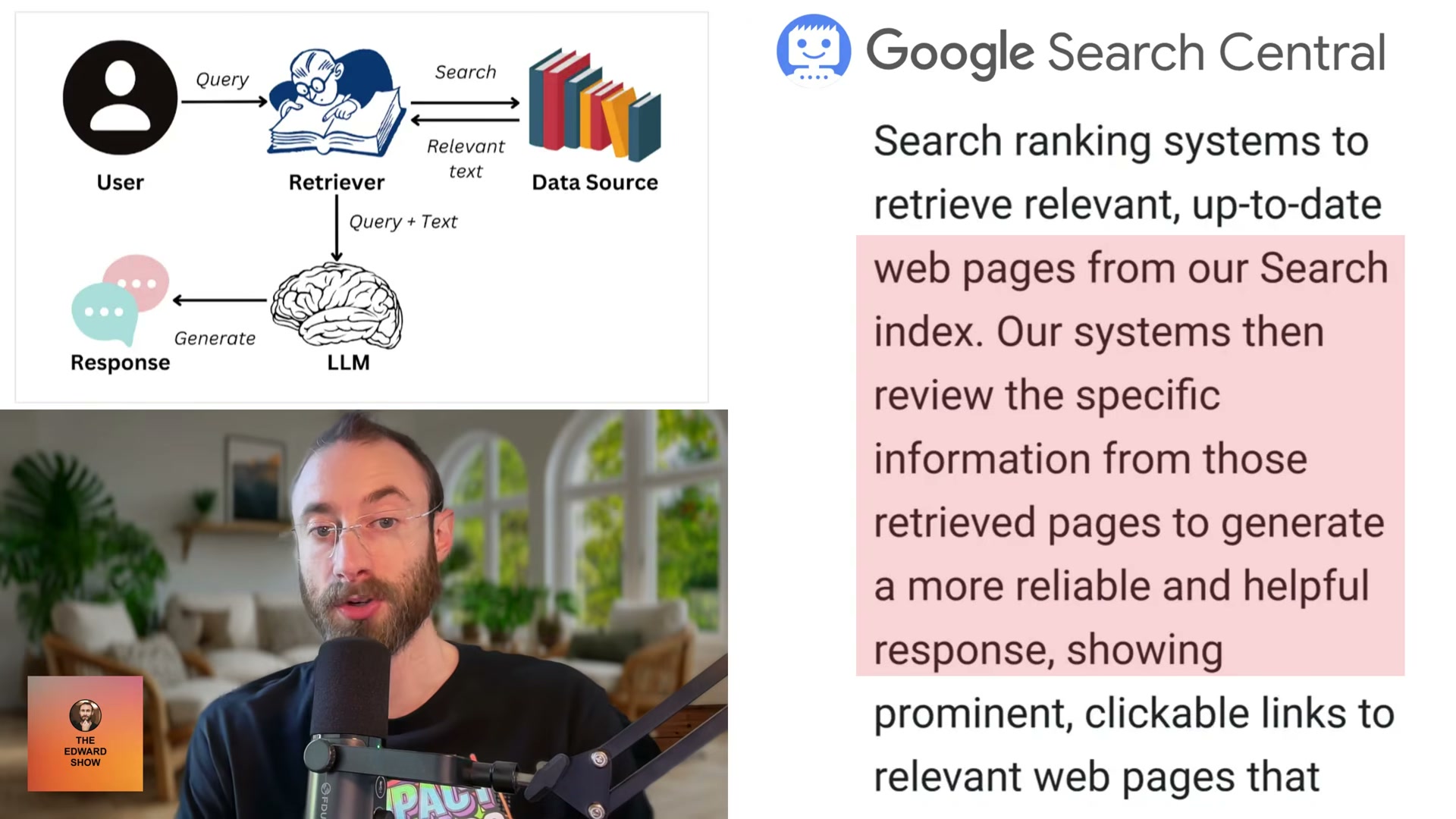
Understand how RAG and query fanout connect to your content. Retrieval-augmented generation (RAG), which Google calls “grounding,” means AI pulls live indexed pages before generating a response — Google’s search index is the data source. Query fanout means a single user prompt expands into multiple concurrent search queries. For most prompts, the LLM is literally querying Google.
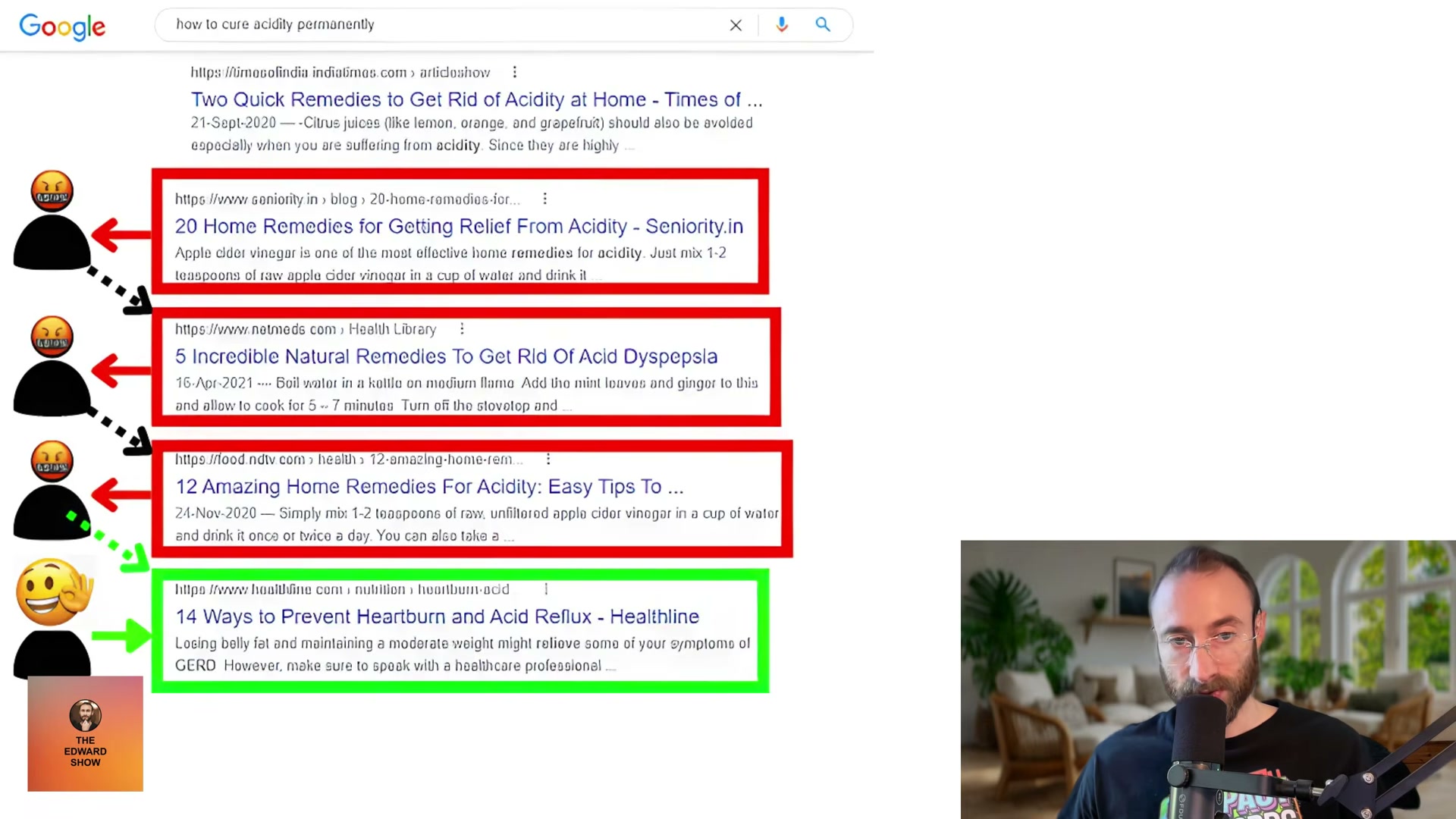
- Write from direct experience, not synthesis. Google explicitly flags content that “simply restates information already available elsewhere” as unhelpful to its systems. Non-commodity content — specific, experience-based, unreplicable — outperforms generic how-to articles even when both are technically relevant to the query. Match the searcher’s intent in your title, URL, and H1, then make the title compelling enough to earn the click over equally relevant competitors.
-
Structure content for human readers first. Short paragraphs, clear headings, and logical section flow satisfy both the reader and the AI systems simultaneously. Add high-quality images with descriptive alt text and relevant video where they help users understand the content — not as decoration.
-
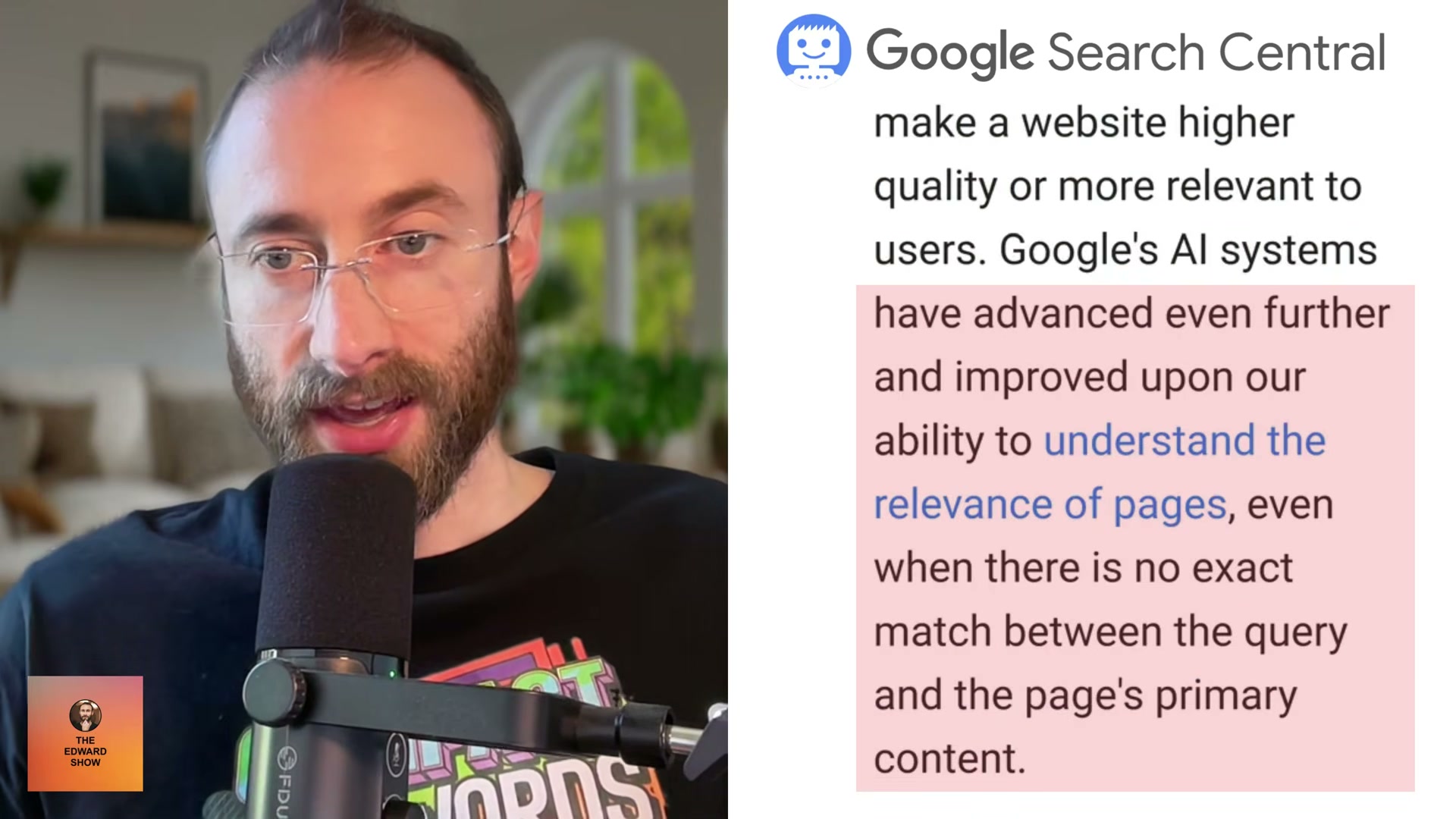
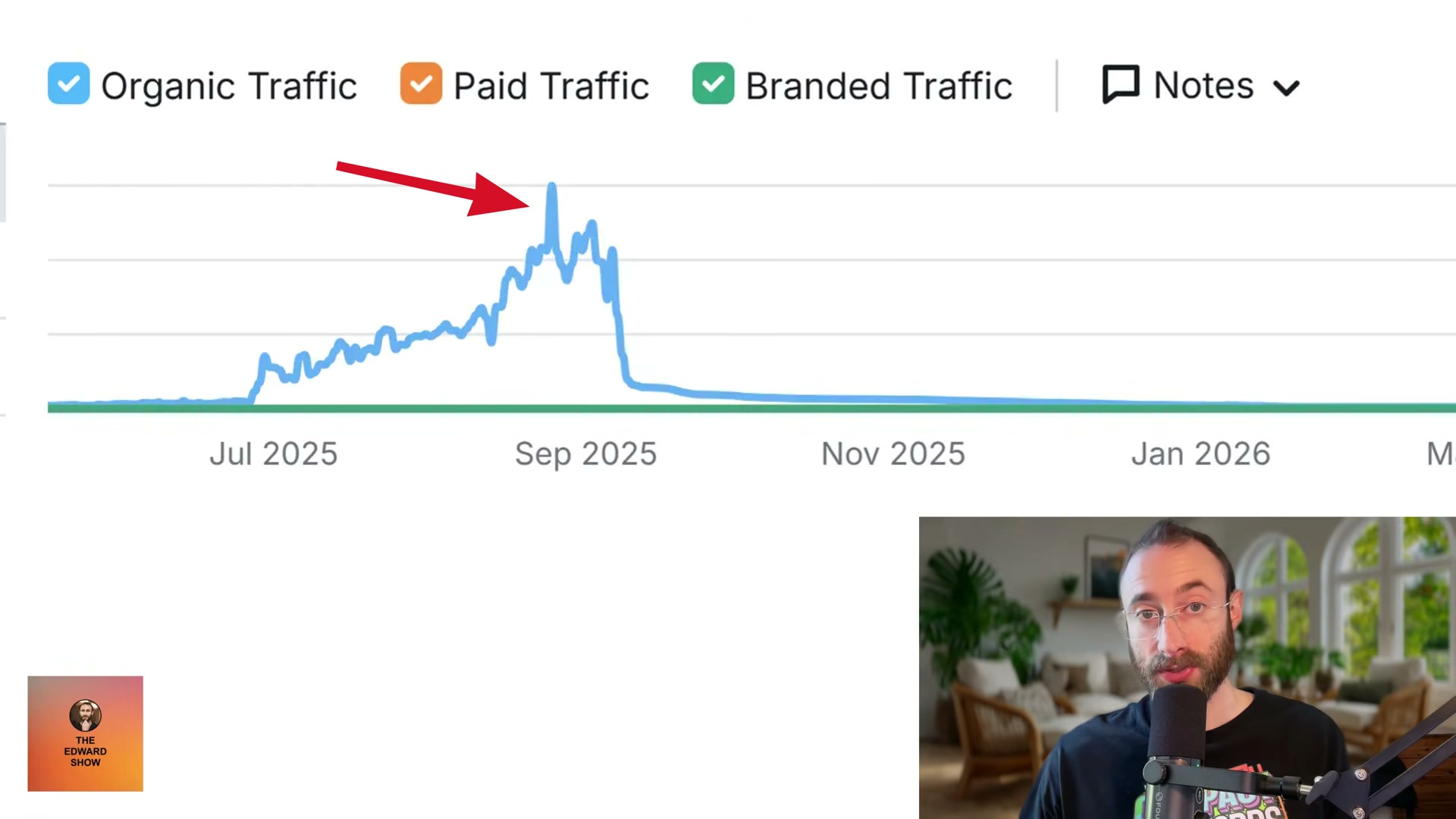
Stop mass-producing keyword-variant pages. Building separate pages for every query variation or fanout query to manipulate AI rankings triggers Google’s scaled content abuse spam policy and produces what practitioners call the “melt AI” traffic pattern: a sharp spike followed by a collapse below the starting baseline. Google’s systems resolve semantic relevance without exact keyword matches — one strong page covers multiple variations.
-
Confirm your technical SEO baseline. Pages must be crawlable, use semantic HTML that prioritizes readability over perfect markup, follow JavaScript SEO best practices if applicable, load fast across devices, and minimize duplicate content. These are entry requirements for the index generative AI features pull from — not incremental optimizations.
-
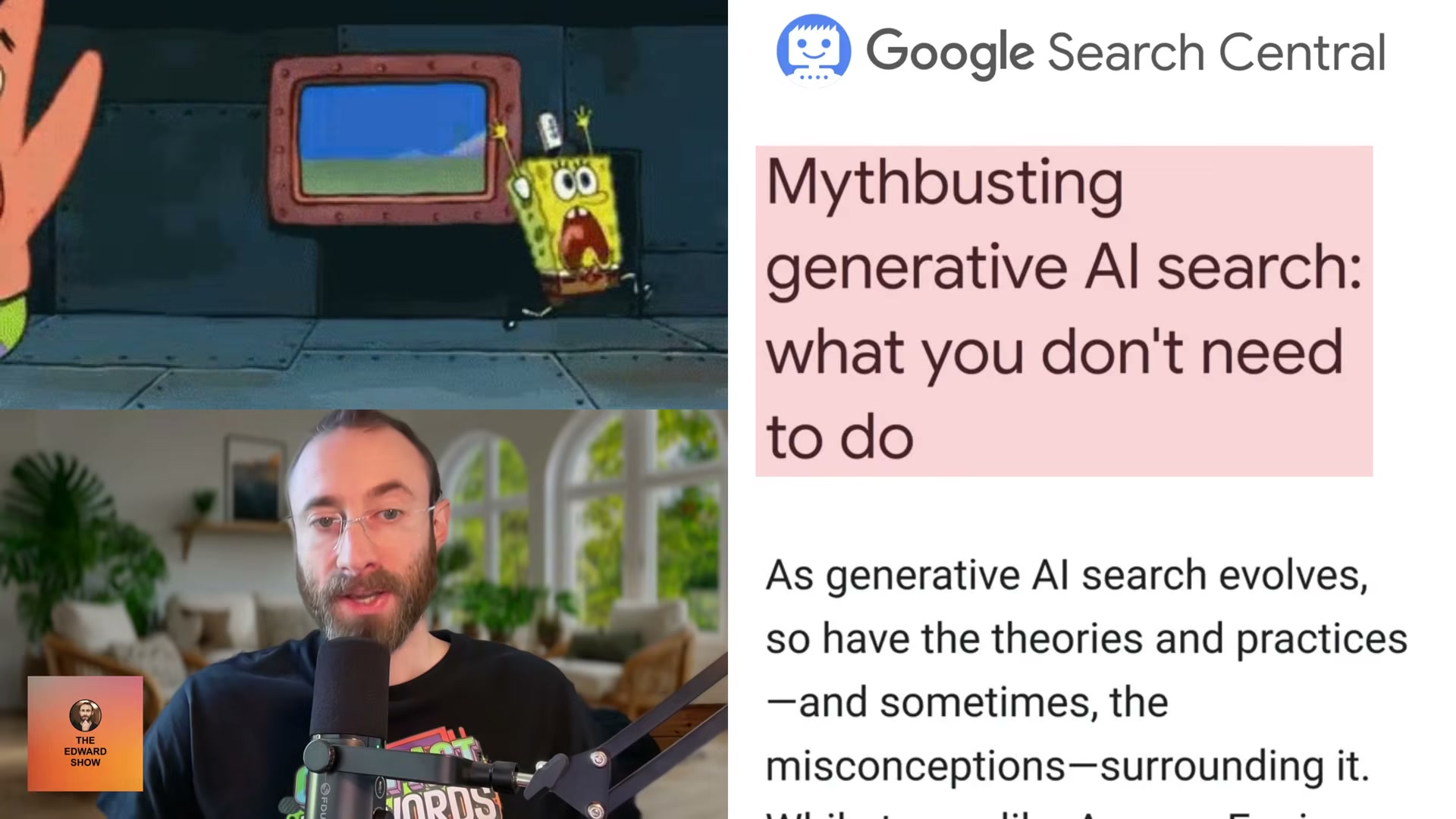
Skip LLM.txt and content chunking for AI. Google’s mythbusting section is unambiguous: neither tactic provides a documented ranking benefit, and the top-performing SEO and content marketing sites aren’t using them. Writing clearly for human readers produces equivalent or better AI comprehension without added complexity or maintenance overhead.
-
Treat schema markup as conditional, not foundational. Structured data does not improve generative AI citation rates. Apply it only where the target SERP already surfaces rich results for that schema type — otherwise it adds technical overhead with no measurable return.
-
Scrutinize Google’s position on mention amplification. Google categorizes “seeking inauthentic mentions” as ineffective and potentially spammy, arguing its ranking systems filter for authentic high-quality signals. Sturm challenges this directly: authentic PR and consistent brand presence amplified across YouTube, Instagram, Facebook, X, and LinkedIn appear to influence LLM citation frequency in ways the guide doesn’t account for. Traffic data from late 2025 — a sharp organic spike followed by a near-total collapse by November — suggests the handoff between traditional search ranking and AI citation is less automatic than Google implies.
Warning: this step may differ from current official documentation — see the verified version below.
How does this compare to the official docs?
The gap between what Google’s guide prescribes and what observed traffic data actually shows is exactly where the official documentation needs to be held to account.
Here’s What the Official Docs Show
The video works through Google’s GEO guide methodically, and several of its conclusions line up with what the current docs confirm — this section adds documentation context and flags two places where the original source material has moved or was not captured. Four steps verify cleanly; the rest are flagged for independent confirmation.
Step 1 — Open the “Optimizing for generative AI features” guide
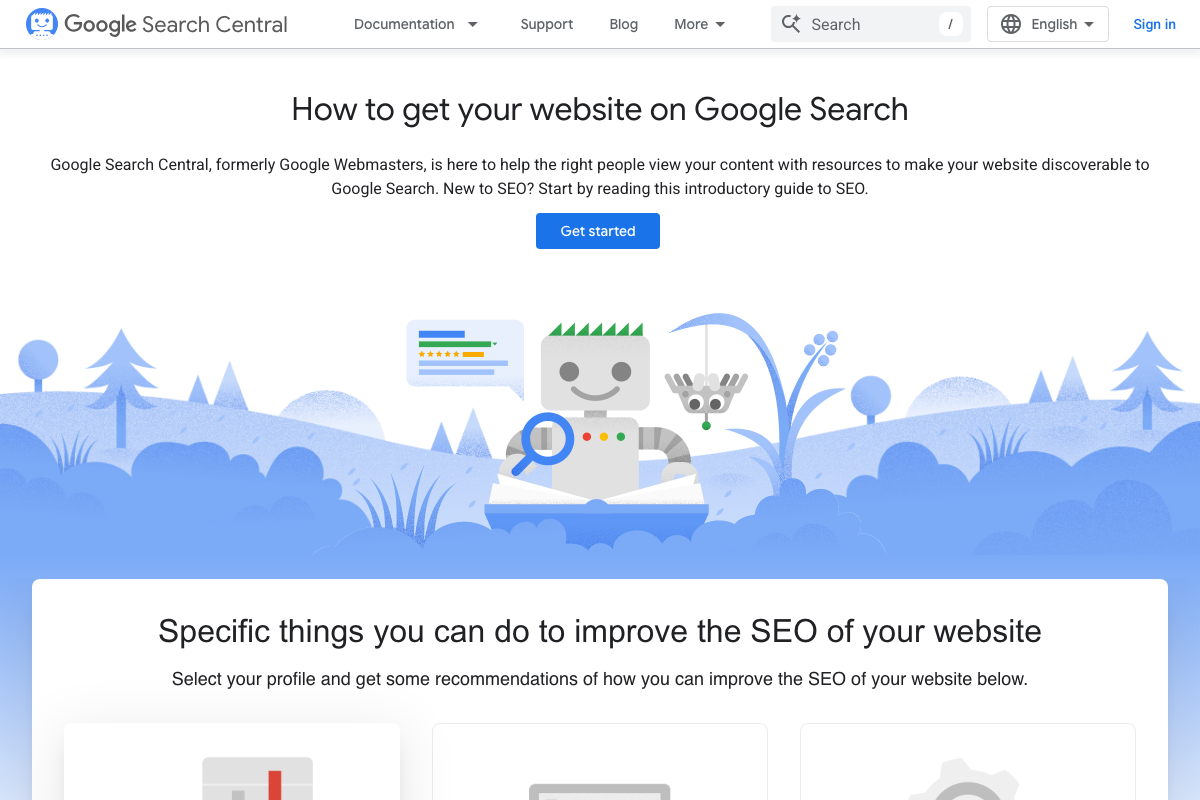
The screenshots intended to capture the AI Features documentation at developers.google.com/search/docs/appearance/ai-overviews returned the general Google Search Central homepage instead. The AI-specific guidance referenced in this step exists at a distinct URL path within the same domain — verify it directly before citing it in your own work.
Step 2 — GEO and AEO are SEO: AI Overviews are rooted in core search ranking
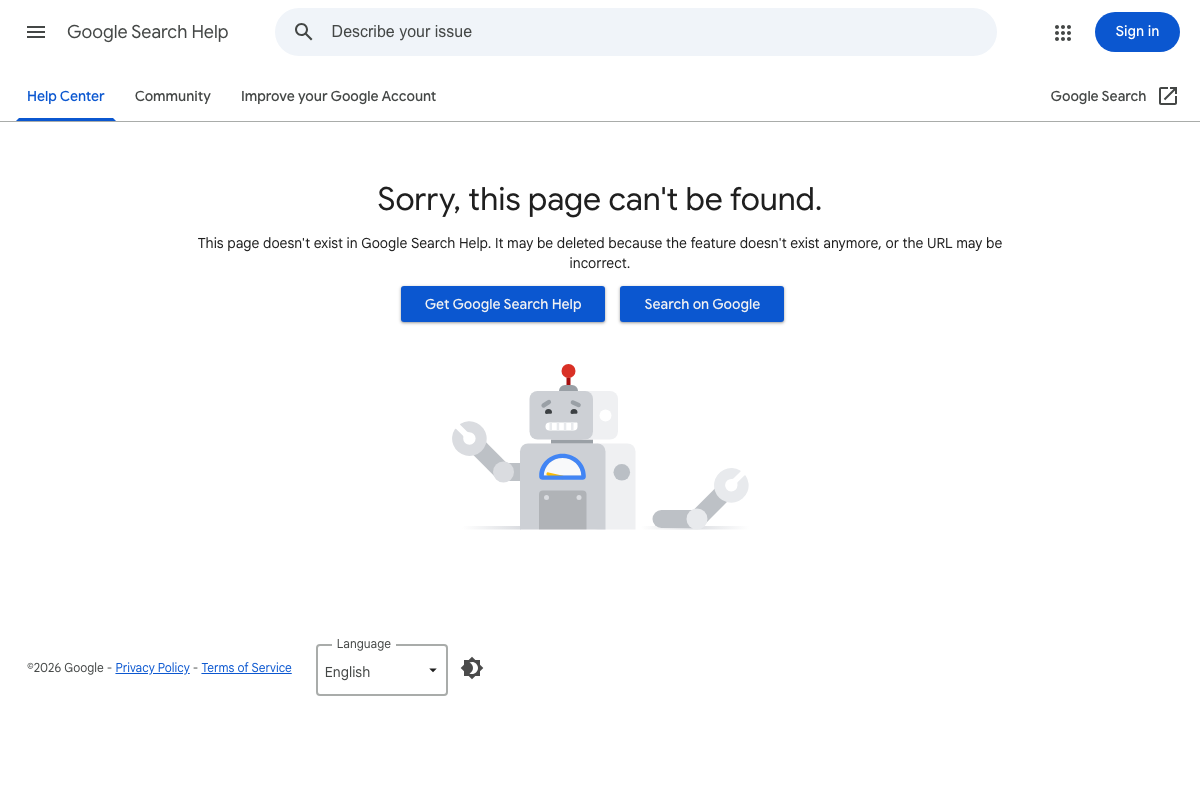
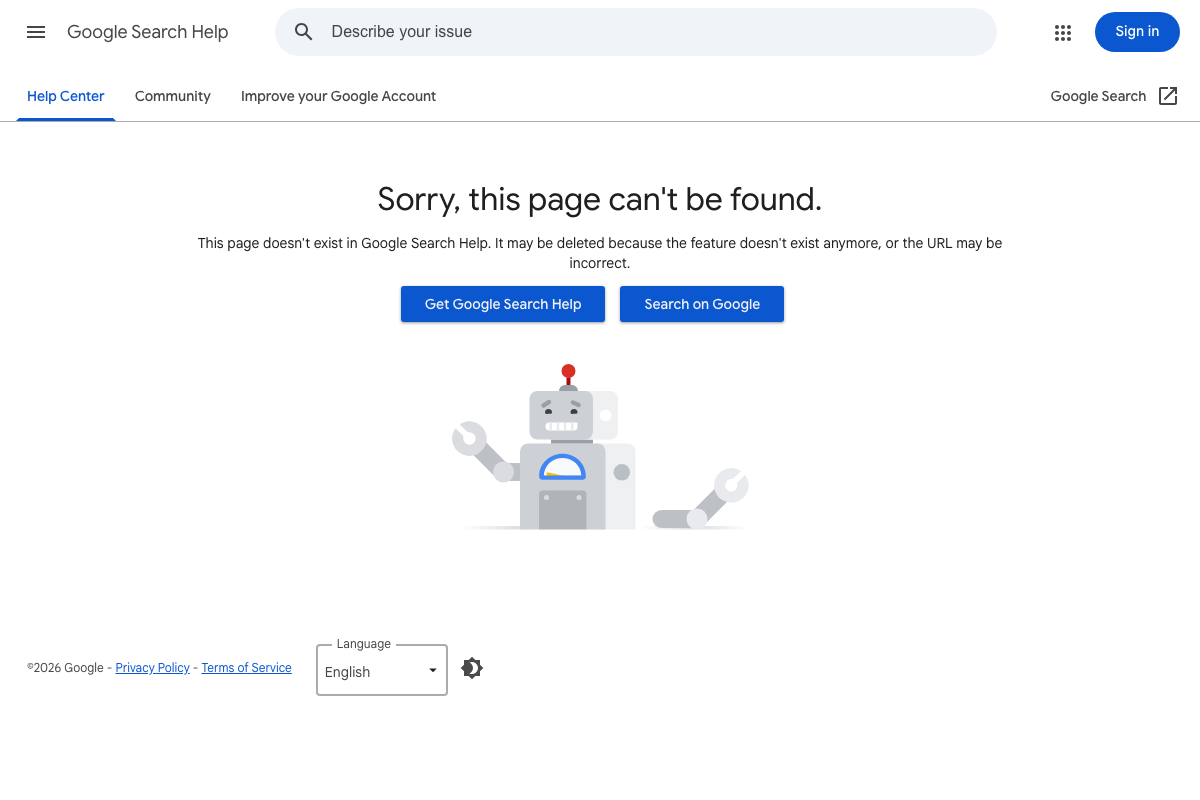
As of May 17, 2026, the help page cited as the source for this claim — support.google.com/websearch/answer/13743214 — returns a 404 error. Google’s own error message states the page “may be deleted because the feature doesn’t exist anymore.” The underlying principle may still be accurate, but the documentation support for it is currently offline.
Step 3 — How RAG/grounding and query fanout work
The same 404 covers this step. All three captures of the referenced URL returned the same error, confirming it is persistent — not a transient issue.
Step 4 — Write from direct experience, not synthesis
No official documentation was found for this step — proceed using the video’s approach and verify independently.
Step 5 — Structure content for readers; use high-quality images with descriptive alt text
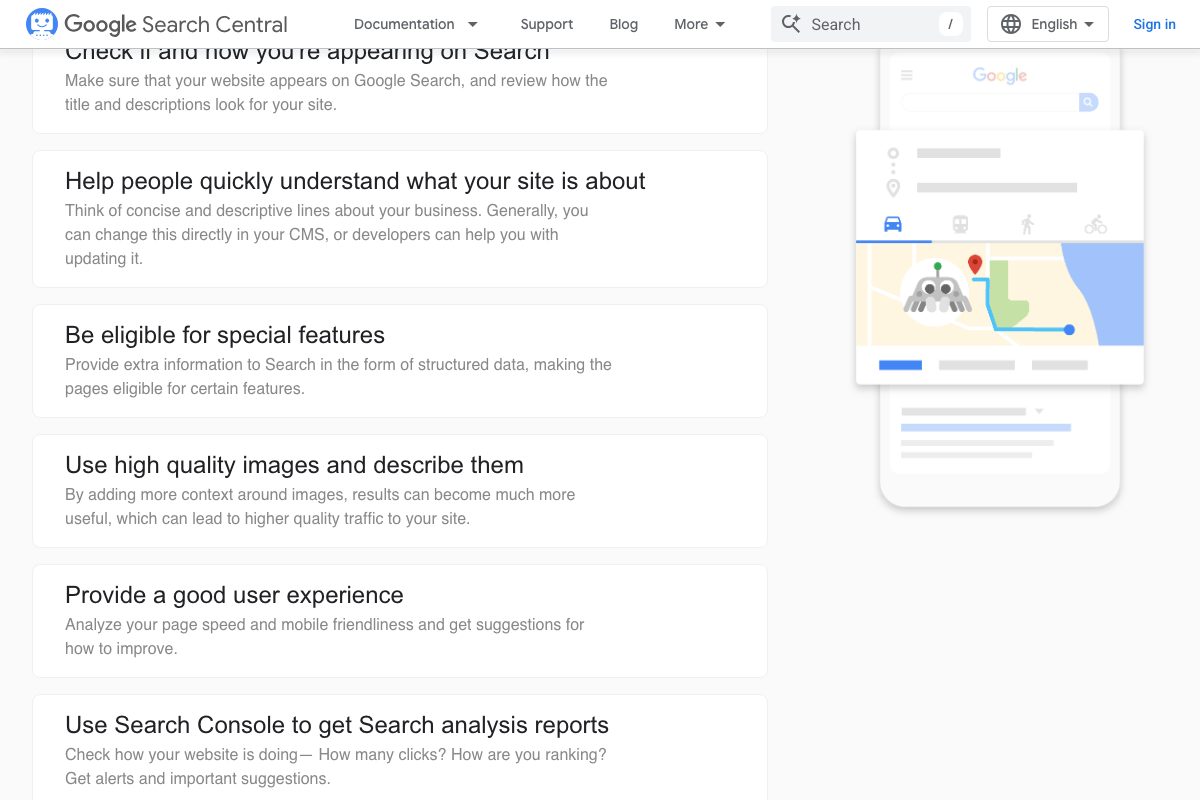
Google Search Central explicitly lists “Use high quality images and describe them” in its core recommendations. The video’s approach here matches the current docs exactly.
Step 6 — Stop mass-producing keyword-variant pages
No official documentation was found for this step — proceed using the video’s approach and verify independently.
Step 7 — Confirm your technical SEO baseline
Google Search Central lists “Provide a good user experience” as a core recommendation, consistent with the video’s framing of page experience as a non-negotiable baseline. The video’s approach here matches the current docs exactly.

Step 8 — Skip llms.txt and content chunking for AI
The llmstxt.org specification confirms the file is explicitly a “proposal” authored by Jeremy Howard in September 2024 — its stated purpose is helping LLMs handle context window limitations at inference time, not influencing search ranking. No ranking mechanism appears anywhere in the visible specification text. The video’s approach here matches the current docs exactly on the llms.txt claim. The content chunking portion of this step has no corresponding documentation captured in this screenshot set.

Step 9 — Treat schema markup as conditional, not foundational
Google Search Central describes structured data as making pages “eligible for certain features” — with no mention of generative AI citations or AI Overviews anywhere in the captured guidance. The video’s approach here matches the current docs exactly. Note that the Google Search Central structured data intro page (developers.google.com/search/docs/appearance/structured-data/intro-structured-data) was not successfully captured; what appears in the screenshot set is the schema.org homepage, which establishes adoption context but does not address the AI citation question directly.

Step 10 — Scrutinize Google’s position on mention amplification
No official documentation was found for this step — proceed using the video’s approach and verify independently.
Useful Links
- Google Search Central — The official SEO resource hub covering ranking systems, structured data, and technical guidance for developers, marketers, and business owners.
- Google Search Help — AI Overviews — Consumer-facing help page for AI Overviews and AI Mode; returns a persistent 404 error as of May 2026.
- The /llms.txt file — Jeremy Howard’s September 2024 proposal for an LLM-readable site summary file, with full Markdown format specification and adoption examples.
- Schema.org — Community-maintained structured data vocabulary co-founded by Google, Microsoft, Yahoo, and Yandex; currently at V30.0 released March 19, 2026.


0 Comments