

The Fastest Way to Get SEO Results: Slow Is Smooth, Smooth Is Fast
Publishing more pages faster feels like momentum — but for most new and established sites, it’s the fastest route to stalled rankings and undiagnosable problems. Edward Sturm makes the case that the sites that rank soonest are the ones that start with three pages, not three hundred. By the end of this walkthrough, you’ll know how to audit your current page count, identify genuinely low-competition keywords, and build an observation loop that tells you exactly why pages are or aren’t ranking.

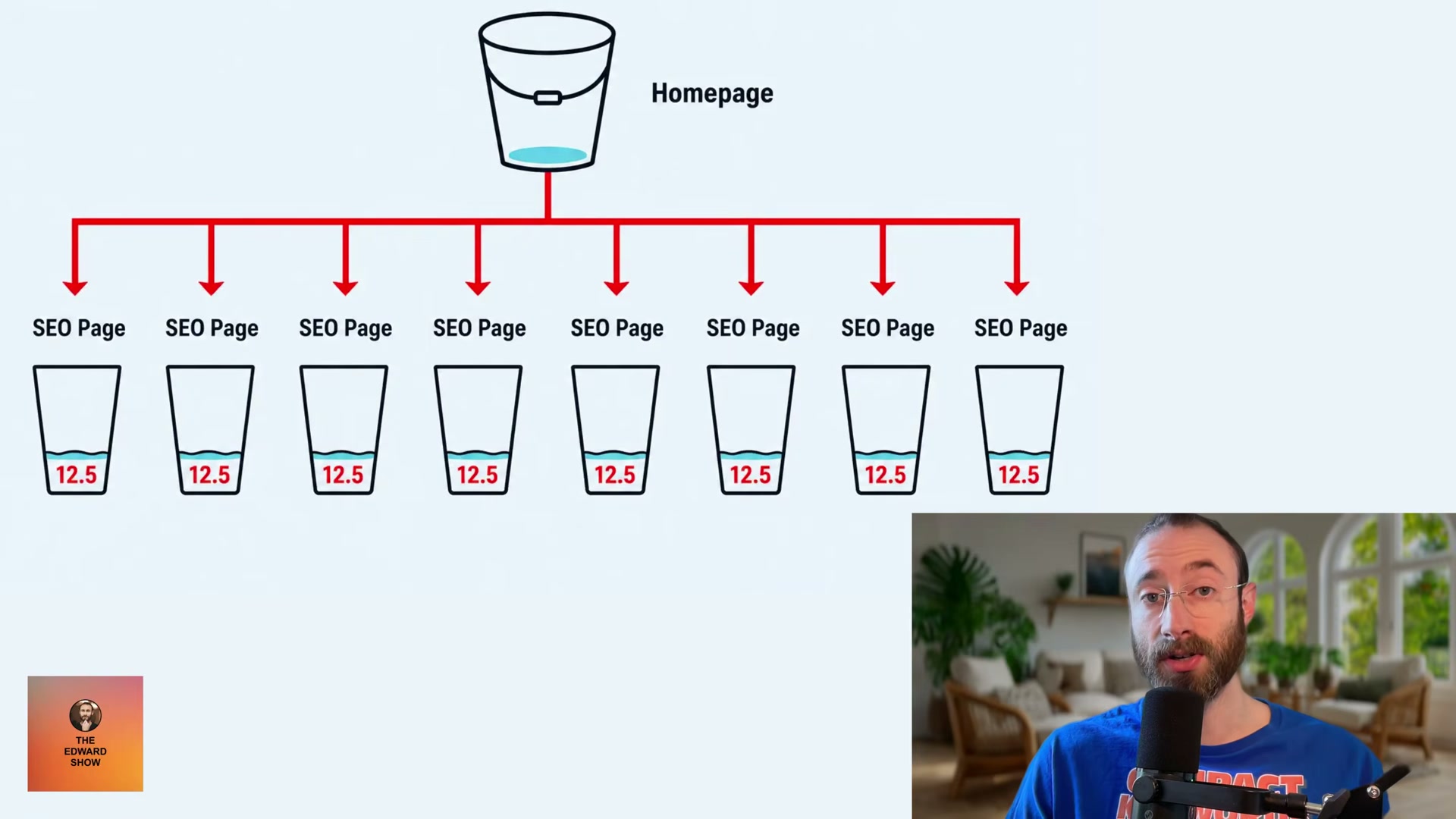
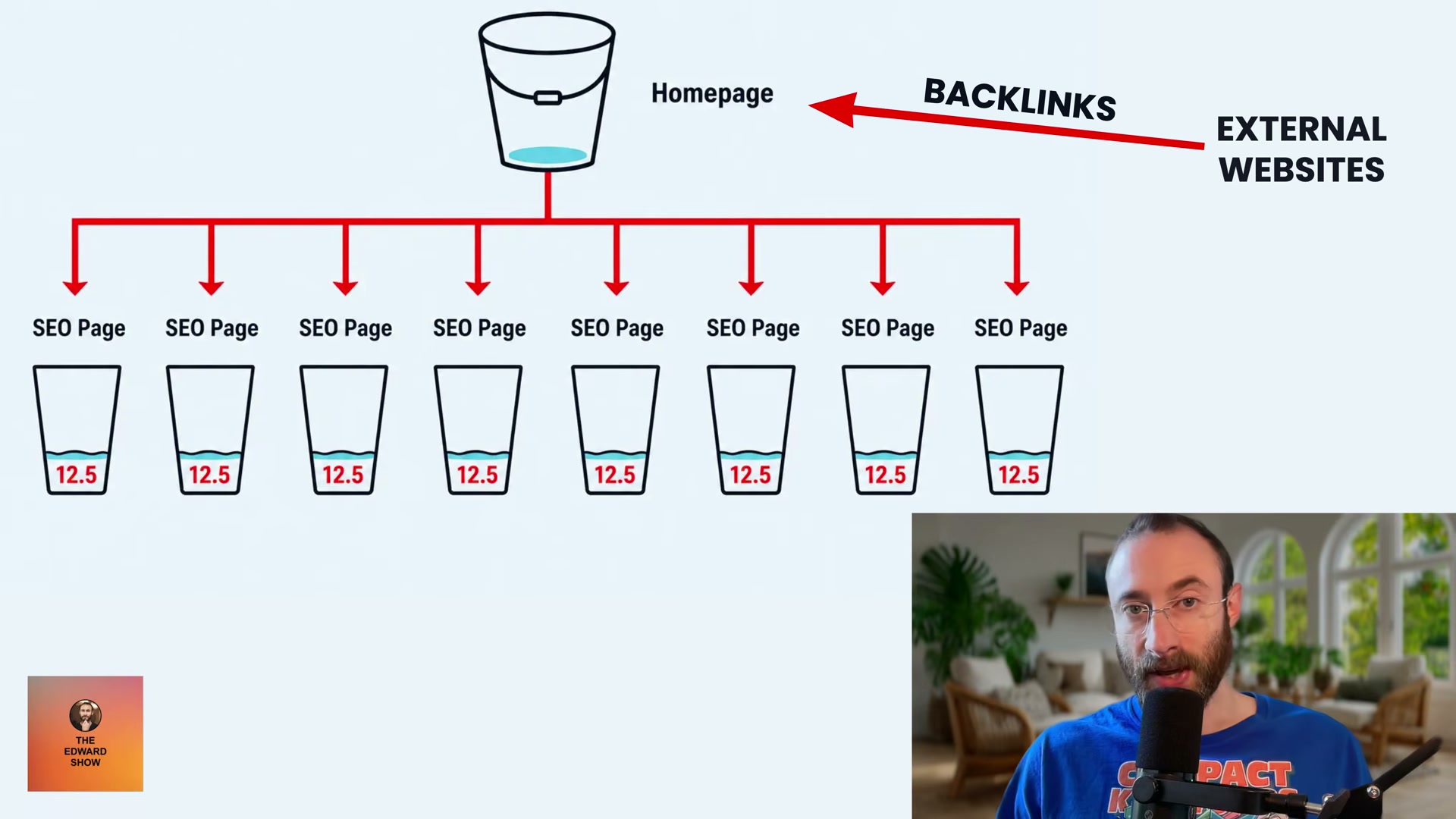
Every backlink pointing to your homepage fills an authority bucket. That bucket doesn’t grow just because you add more pages — it drains faster. When eight pages are linked from the homepage, each one receives 12.5 units of authority. Add more pages without growing your backlink base and those units shrink again.
-
If you are a new site that has published many AI-generated pages without deliberate review, delete as many of those pages as possible. The goal is to concentrate whatever domain authority you’ve accumulated into a small number of URLs rather than leaking it across dozens of low-effort pages that teach Google your site produces content searchers don’t want.
-
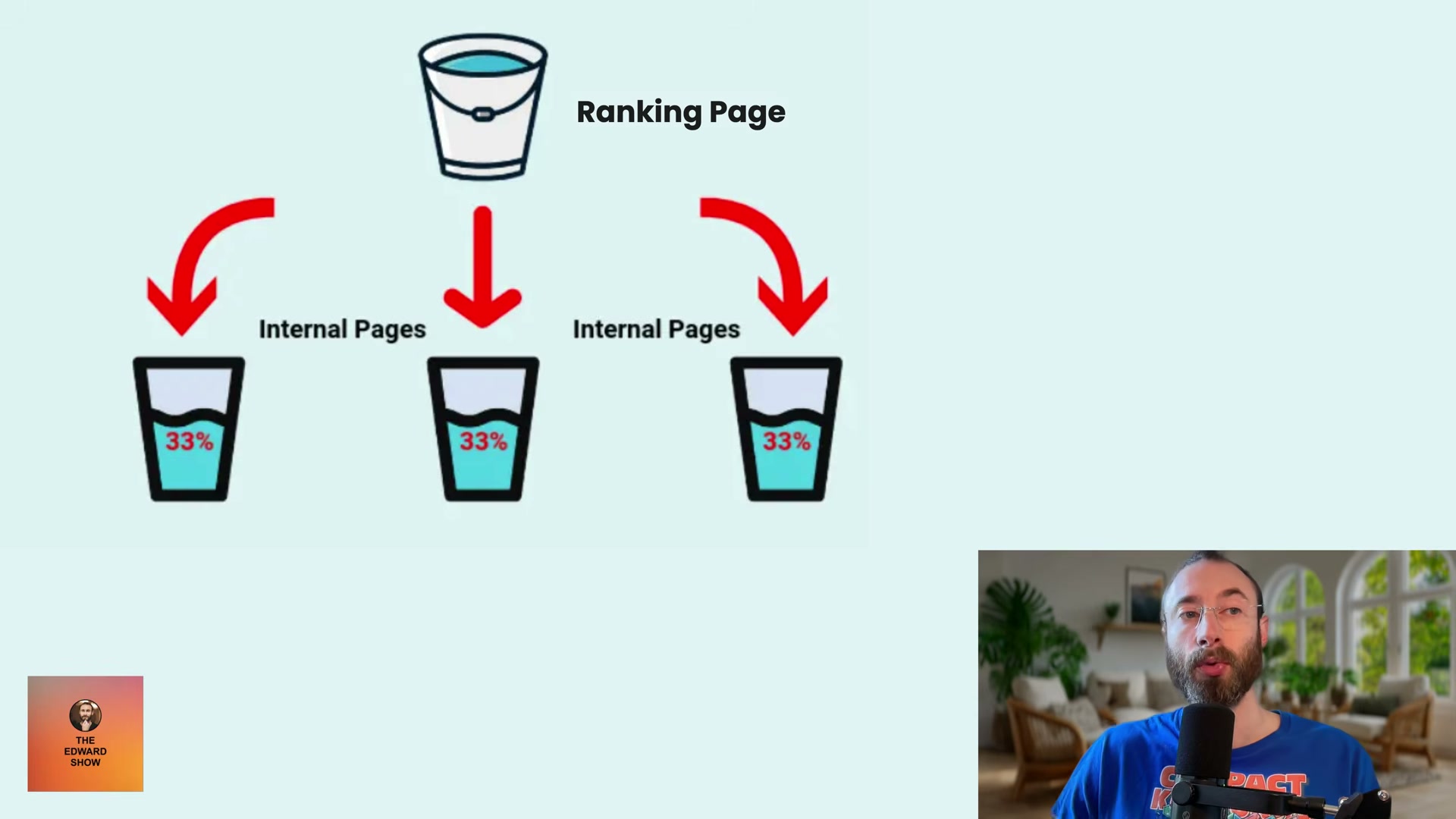
Reduce your active SEO footprint to exactly three pages, each targeting a low-competition keyword. Three is not a floor — it is the target. Fewer pages means more authority per page and a clean experimental baseline.
- Identify low-competition keywords by examining the SERPs for one signal: how many competing pages include the keyword in their page title, URL slug, H1, and opening sentence? If few do, that keyword is under-targeted and reachable for a site with limited authority.
-
Build backlinks to those three pages before publishing anything new. Link acquisition is a prerequisite for diagnosis here, not a parallel track — you need authority flowing to a small number of pages before you can read the results accurately.
-
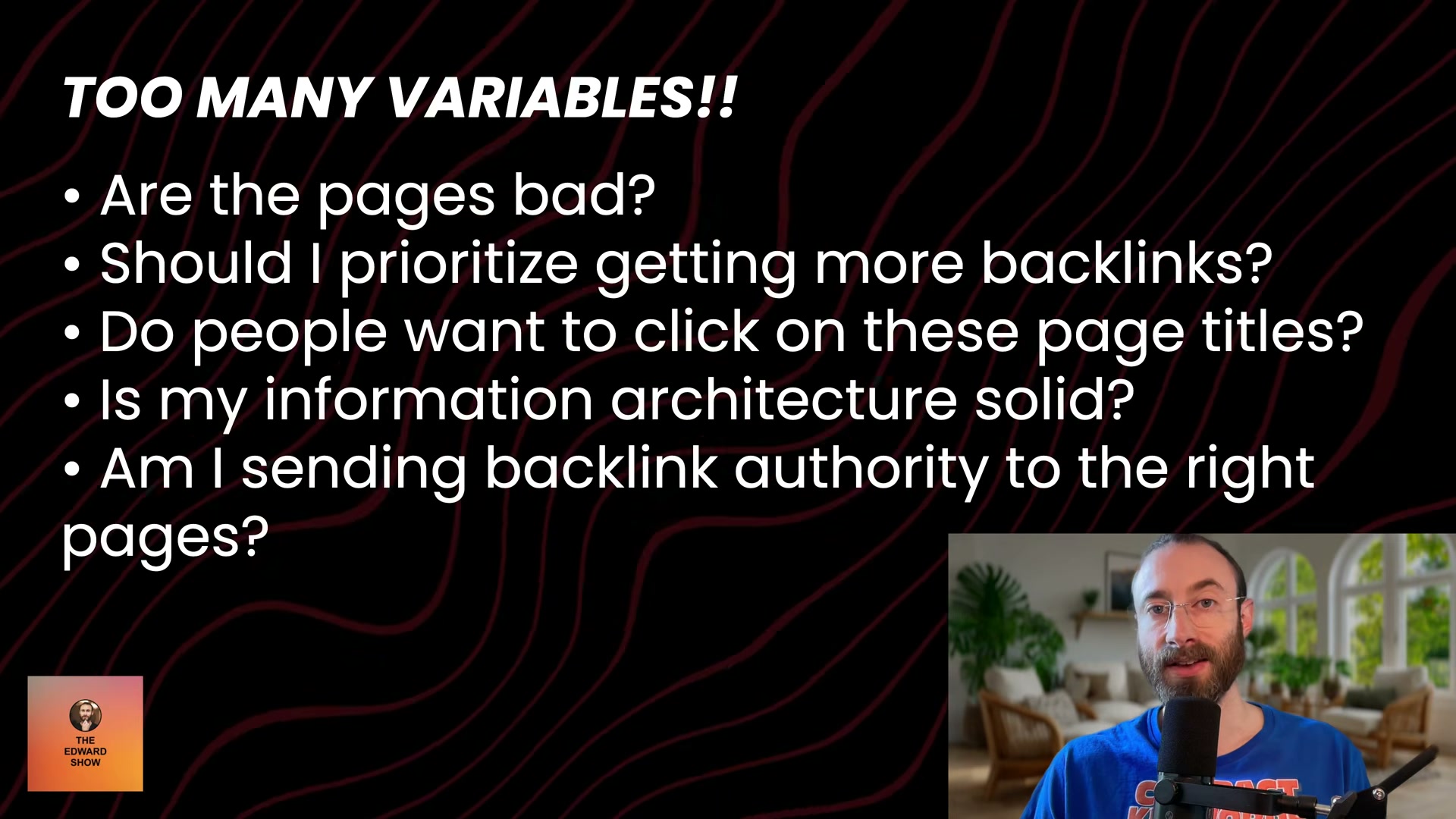
With fewer pages in play, evaluate why each page is or isn’t ranking. A three-page setup reduces SEO troubleshooting from a five-variable guessing game into a tractable experiment.
-
Once pages are ranking and their signals are understood, add more pages in small batches — Sturm suggests six at a time — then pause and observe before expanding further.
-
Take deliberate breaks between content production cycles. The gap gives you time to study search intent more carefully, which raises click-through rates and reduces pogo-sticking before the next batch goes live.
-
For established sites that have grown sloppy, the same logic applies in reverse: scale back to the workflows that were producing results, isolate what is and isn’t working, then scale only the proven processes.
How does this compare to the official docs?
Sturm’s framework rests on specific claims about how link equity distributes across pages — and Google’s own documentation has a more nuanced story to tell about when and how that math actually holds.
Here’s What the Official Docs Show
Act 1 presents a well-reasoned framework for concentrated publishing and authority management — this act follows the same eight steps to layer in documentation-sourced context. Because the screenshot batch assembled for this post captured homepages rather than the intended reference pages, all eight steps carry an unverified flag; a source-verified update will follow.
Step 1 — Delete low-effort AI-generated pages
Culling thin pages to concentrate authority is a widely cited SEO practice. Confirming how Google’s content quality guidelines formally address thin-content removal would give this step a durable official footing.
No official documentation was found for this step —
proceed using the video’s approach and verify independently.
Step 2 — Reduce your footprint to three pages on low-competition keywords
The three-page target is a practitioner heuristic, not a Google-endorsed number. Cross-referencing crawl budget and indexing guidance from Google Search Central would sharpen the rationale considerably.
No official documentation was found for this step —
proceed using the video’s approach and verify independently.
Step 3 — Identify low-competition keywords using title, URL, H1, and opening sentence signals
This four-signal audit is actionable and specific. Google’s organic ranking systems documentation would clarify how heavily each of these on-page signals is weighted in practice.
No official documentation was found for this step —
proceed using the video’s approach and verify independently.
Step 4 — Build backlinks before publishing new pages
Sequencing link acquisition ahead of new content is a meaningful strategic distinction. Google Search Central’s links documentation would either reinforce or qualify this ordering.
No official documentation was found for this step —
proceed using the video’s approach and verify independently.

Step 5 — Evaluate ranking signals using a small footprint as a controlled experiment
Treating three pages as a diagnostic baseline is sound methodology. No documentation source was captured to confirm or extend this framing.
No official documentation was found for this step —
proceed using the video’s approach and verify independently.

Step 6 — Add pages in batches of six, then pause before expanding
The batch-of-six cadence is a practitioner heuristic with no documentation basis captured here. Google’s crawl frequency and indexing lag documentation could add useful precision to this step.
No official documentation was found for this step —
proceed using the video’s approach and verify independently.

Step 7 — Take deliberate breaks to study search intent between content cycles
Pause-and-observe loops are sensible feedback mechanics, and Google’s quality rater guidelines do address search intent alignment — but no relevant documentation page was captured for this post.
No official documentation was found for this step —
proceed using the video’s approach and verify independently.

Step 8 — For established sites, scale back to proven workflows before expanding
Applying concentrated-footprint logic to mature sites is a natural extension of the framework. No documentation source was captured to support or refine this step.
No official documentation was found for this step —
proceed using the video’s approach and verify independently.
Useful Links
- Google — Google search homepage; captured in place of the intended Google Search Central organic ranking systems documentation.
- Reddit – The Heart of the Internet — Reddit general homepage; captured in place of intended practitioner discussions in SEO-focused subreddits.
- Tools to Manage and Grow Your Podcast – Spotify for Creators — Spotify’s podcast hosting and creator analytics platform; unrelated to the tutorial’s SEO methodology.
- Apple Podcasts – Web Player — Apple’s podcast browse interface; unrelated to the tutorial’s SEO methodology.


0 Comments