

Why Small YouTube Channels Out-Earn Bigger Ones
Your subscriber count is not your income ceiling. This vidIQ tutorial walks through how creators with small-but-focused audiences are generating $40K months and million-dollar course launches by stacking income streams that have nothing to do with AdSense. Work through these steps and you’ll have a concrete framework for monetizing your existing YouTube presence — at any channel size.
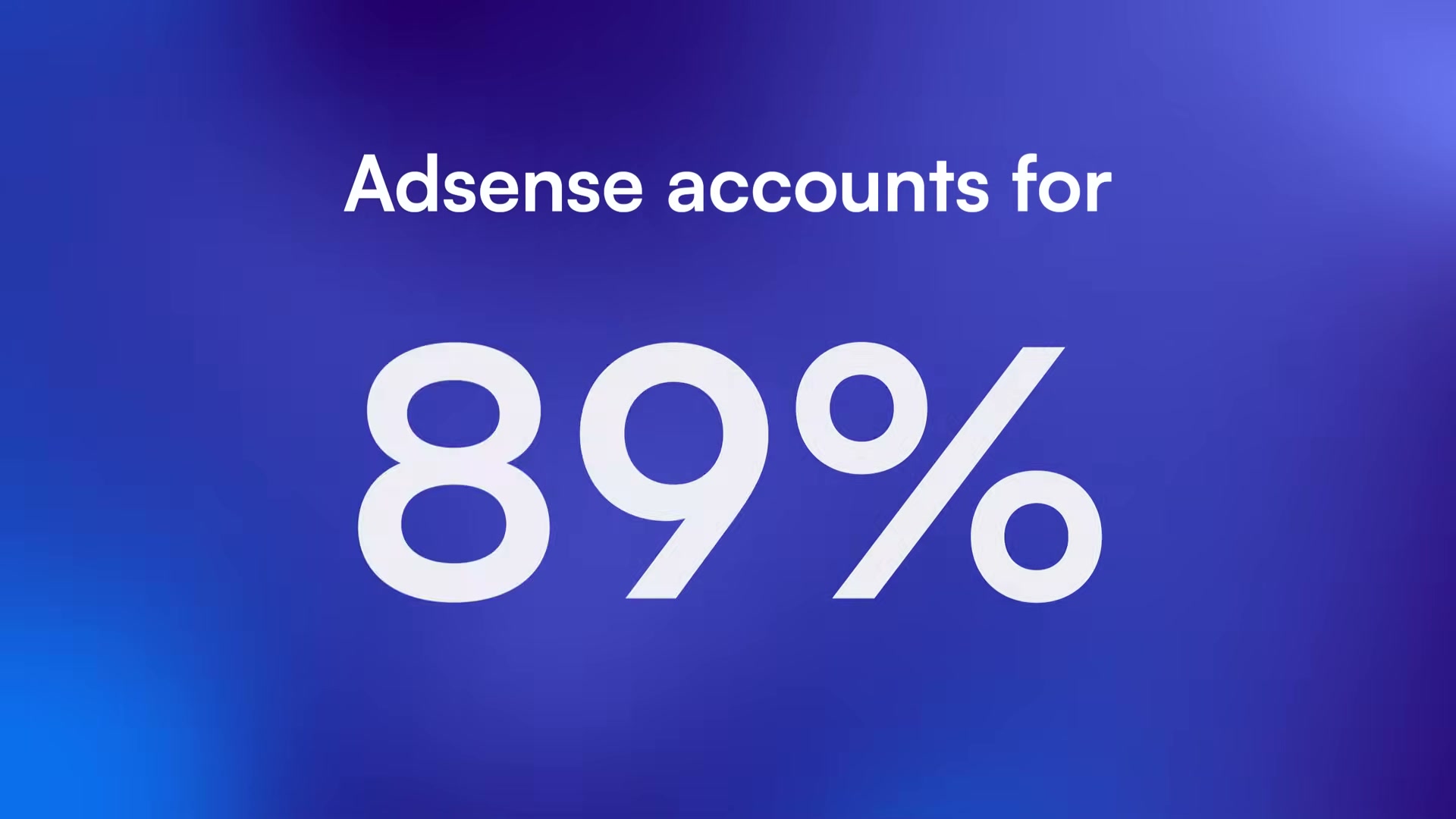
- Audit your AdSense dependency. For most creators, AdSense accounts for 89% of total YouTube income. That concentration isn’t a feature — it’s a single point of failure. Before building anything new, acknowledge that your current income model breaks the moment CPMs drop or a video underperforms.
- Treat your channel as proof of expertise, not a traffic source. The creators covered in this tutorial — a typography designer, a video colorist, a retro console restorer — didn’t monetize their audience first. They monetized their knowledge, then used the channel to put that knowledge in front of the right people.
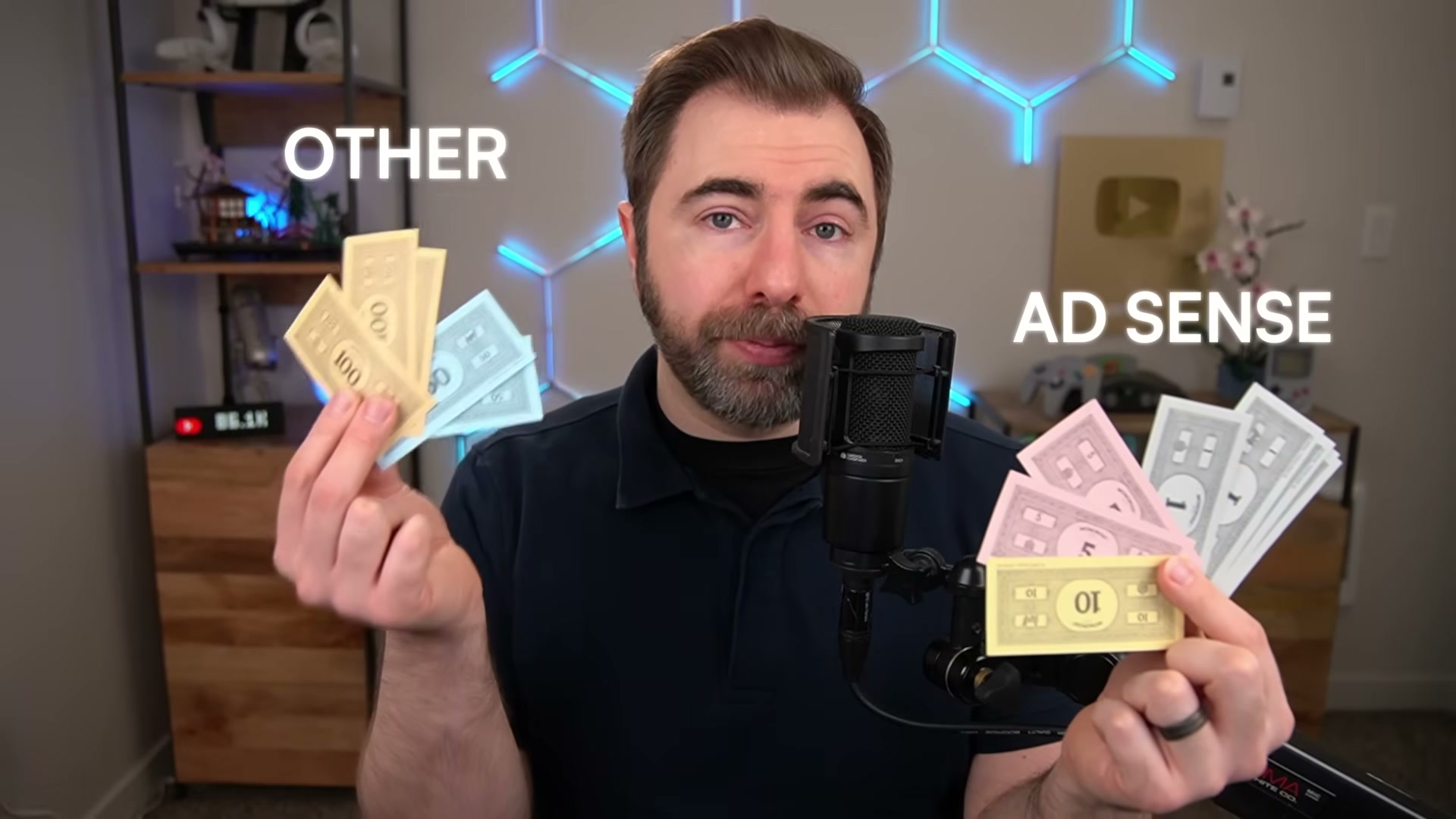
- Start with one high-touch income stream. The simplest entry point is a coaching program or paid newsletter attached to content you’re already making. Dave, the case study featured in the video, went from $50/month to $400/month by adding a coaching layer to his existing newsletter — before touching brand deals, affiliates, or products.

-
Stack income streams sequentially, not all at once. Dave’s eventual setup — coaching, brand deals, affiliate sales, and a paid program running simultaneously — wasn’t built overnight. Each stream was added after the previous one was stable. Running four streams in parallel is the goal; launching four at once is a distraction.
-
Anchor your niche around CPM, not just content interest. A broad entertainment channel might pull $3 CPM. A channel focused on a specific professional or hobbyist audience can command $10 CPM or higher for the same view count. Selecting a tighter niche isn’t just an audience strategy — it’s a direct revenue lever.

-
Pursue long-term brand partnerships over one-off sponsorships. The video profiles Macho Nacho Productions (Tito), a sub-500K channel that has maintained a multi-year partnership with PCB Way. Brand partners value audience stickiness over raw size — a smaller audience that converts and stays is worth more to the right sponsor than a passive million-subscriber channel.
-
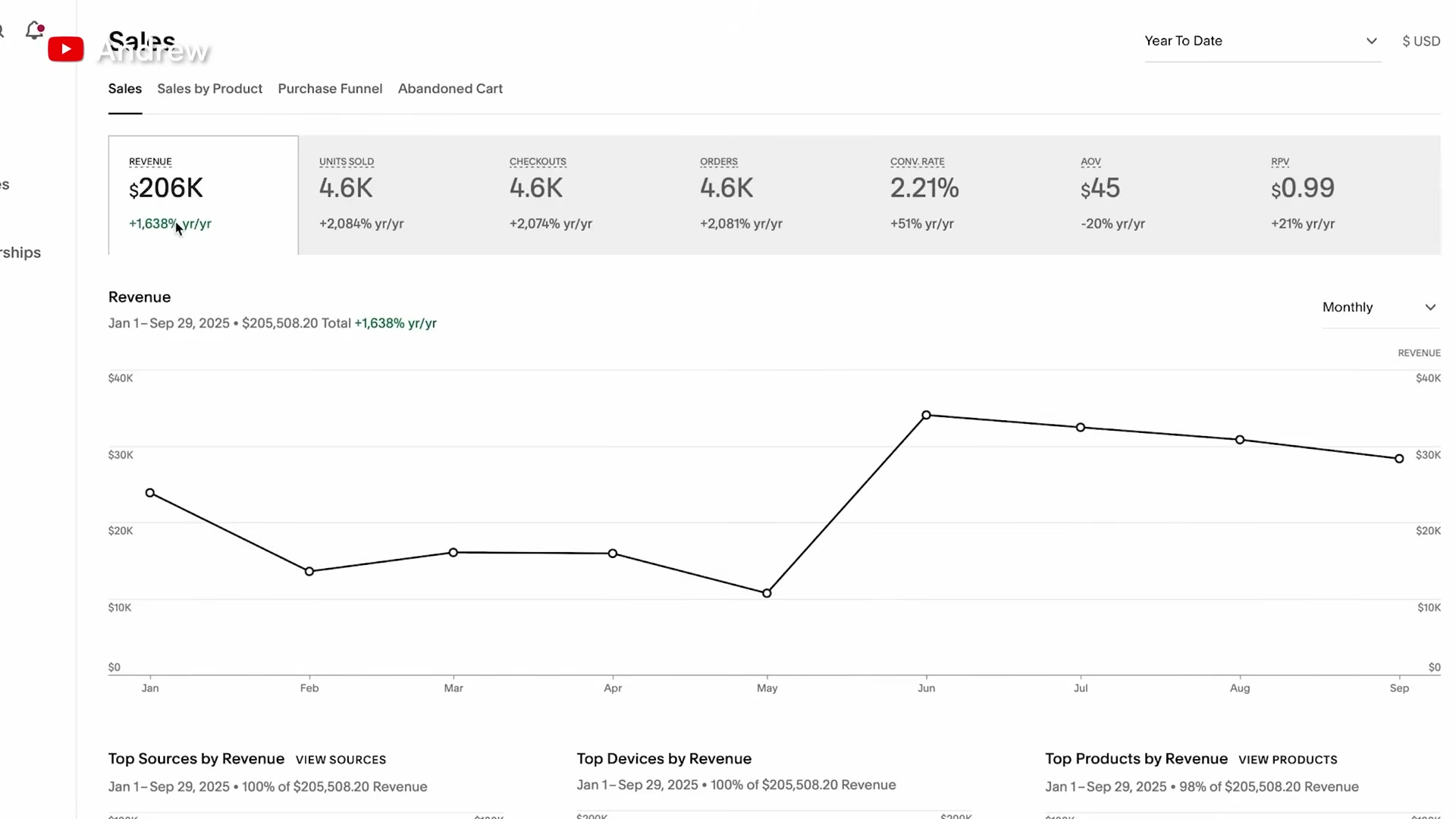
Build a digital product that sells without inventory. Andrew, a colorist featured in the video, launched a Lightroom preset pack in May 2024. It earned a few hundred dollars for months, then hit $40,000 in a single month once momentum compounded. The asset was built once and has no fulfillment cost.
-
Use live-stream mechanics to launch a course. Chris, a typography designer, pre-sold his $49 course by live-streaming it free for 24 hours with a countdown. That scarcity window converted hundreds of viewers into buyers. He raised the price after each cohort and eventually crossed $1 million from that single course.
-
Raise pricing as demand and social proof accumulate. The early-bird price exists to generate testimonials, not maximize per-unit revenue. Chris started at $49, moved to $79, and continued raising from there. Price increases are a signal of product credibility, not greed.
-
Use YouTube content as traffic infrastructure, not income. Every video is an awareness asset pointing toward off-platform revenue. The channel builds authority; the authority builds the business.
-
Convert on-channel expertise into a consulting brand. Max Foch, a creator profiled in the video, generates 7.5% of his total income from a consulting brand — roughly half of what his AdSense brings in. AdSense accounts for only 15% of his overall revenue. The channel positioned him as an authority; the consulting brand monetizes that positioning directly.
How does this compare to the official docs?
The strategies here are drawn from creator case studies and real dashboards, but how these income streams are set up — the platforms, pricing tools, and partner program requirements — is where official documentation fills the gaps the video leaves open.
Here’s What the Official Docs Show
The video makes a strong practical case for multi-stream monetization, and the documentation reviewed here fills in the tool-level specifics it leaves open. Where sources couldn’t be retrieved or didn’t cover a step, those gaps are flagged explicitly so you know exactly where to verify independently.
1. Audit your AdSense dependency
The three screenshots captured to cover YouTube’s partner earnings page all loaded youtube.com in a logged-out state instead of the support.google.com/youtube/answer/72902 help article. No AdSense concentration data, CPM averages, or YPP thresholds appear in any of them.
No official documentation was found for this step — proceed using the video’s approach and verify independently.
2. Treat your channel as proof of expertise
No official documentation was found for this step — proceed using the video’s approach and verify independently.
3. Start with one high-touch income stream
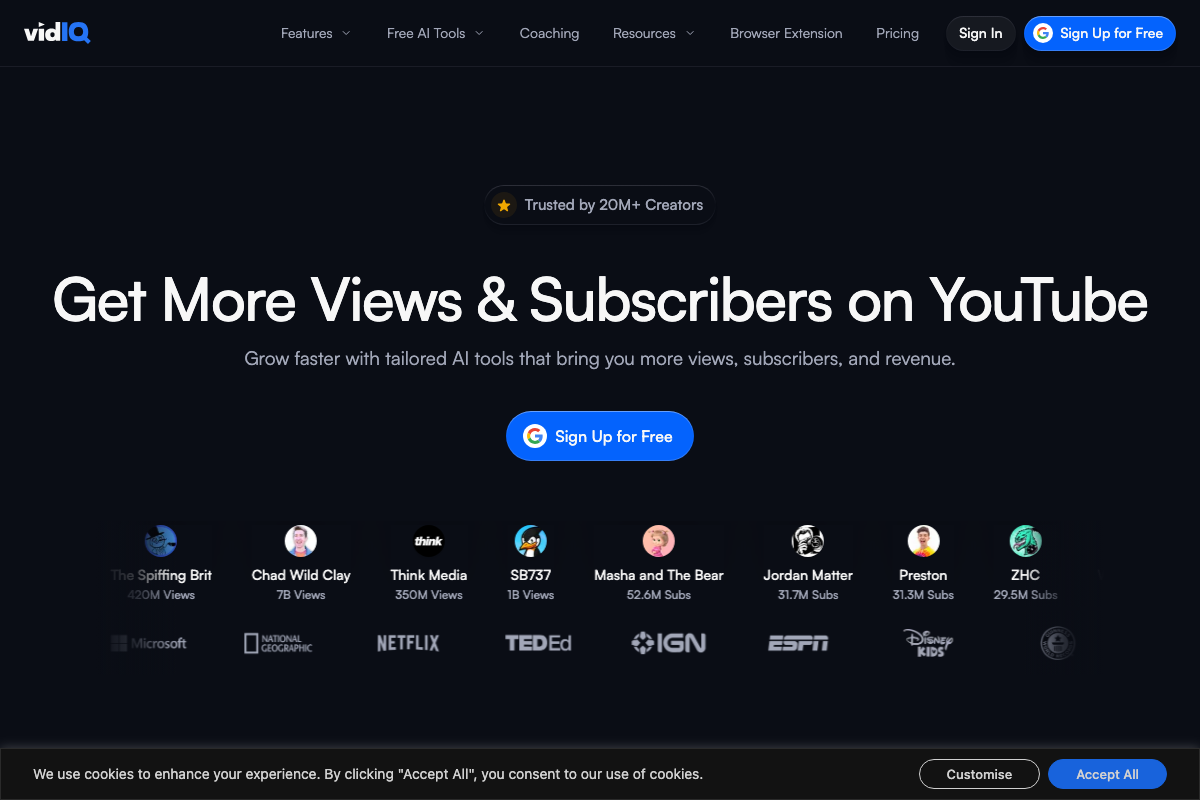

The video’s approach here matches the current docs exactly. vidIQ names Coaching in its top navigation and surfaces a “Get Personalized Coaching” tab inside its video optimization interface — coaching is a built product, not a marketing label. As an additional data point, vidIQ’s dashboard displays subscriber count and estimated revenue as distinct figures (e.g., +8.4K subscribers alongside $28,636.95 revenue), lending indirect visual support to step 1’s premise even where YouTube Help documentation is unavailable.
4. Stack income streams sequentially
No official documentation was found for this step — proceed using the video’s approach and verify independently.
5. Anchor your niche around CPM
The specific CPM figures cited — $10 for niche content, $3 for broad — do not appear in any documentation reviewed. As of April 27, 2026, support.google.com/youtube/answer/72902 could not be retrieved for verification. Treat those numbers as directionally illustrative until you confirm them against current YPP documentation directly.
No official documentation was found for this step — proceed using the video’s approach and verify independently.
6. Pursue long-term brand partnerships
No official documentation was found for this step — proceed using the video’s approach and verify independently.
7. Build a digital product that sells without inventory
No official documentation was found for this step — proceed using the video’s approach and verify independently.
8. Use live-stream mechanics to launch a course
No official documentation was found for this step — proceed using the video’s approach and verify independently.
9. Raise pricing as demand and social proof accumulate
No official documentation was found for this step — proceed using the video’s approach and verify independently.
10. Use YouTube content as traffic infrastructure
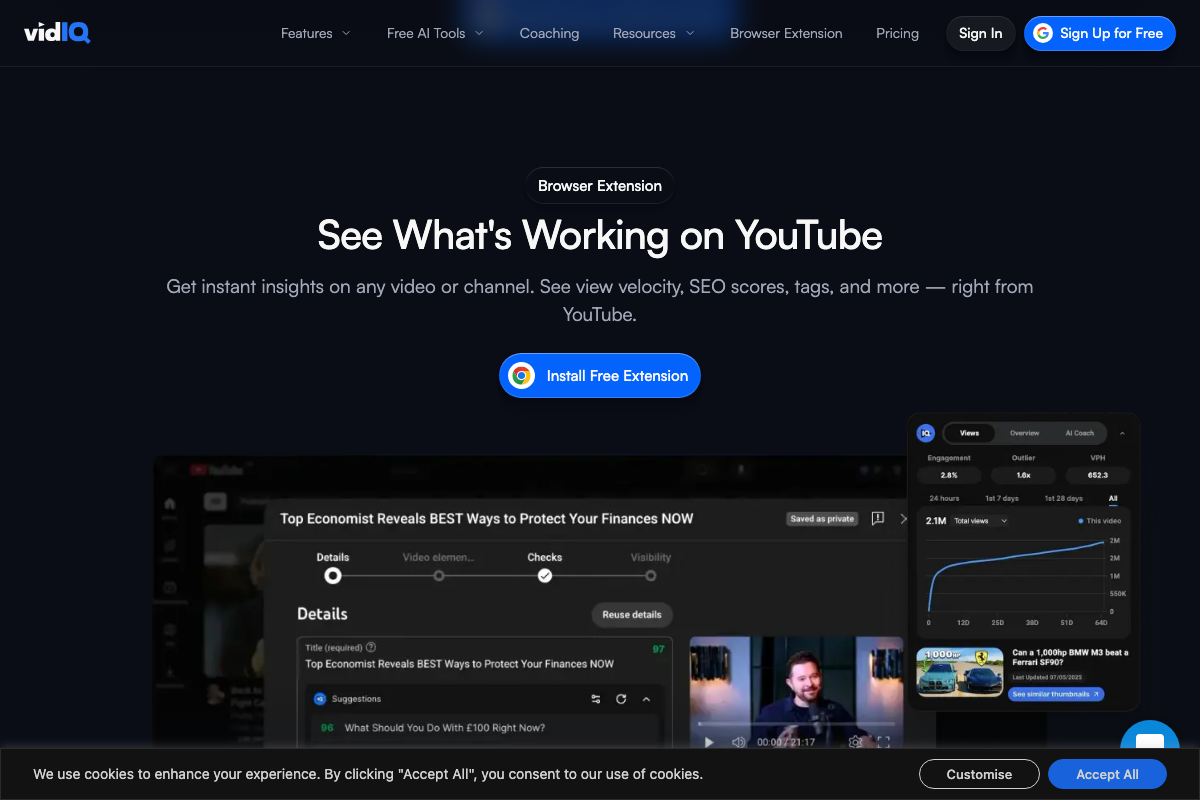
The video’s approach here matches the current docs exactly. vidIQ’s browser extension confirms the mechanism: it surfaces view velocity per hour, engagement rate, and an outlier score per video directly within YouTube, operationalizing the “channel builds authority” model the video describes. The extension also embeds an AI Coach tab, extending the coaching capability from step 3 into the browsing context itself.
11. Convert on-channel expertise into a consulting brand
No official documentation was found for this step — proceed using the video’s approach and verify independently.
Useful Links
- YouTube partner earnings overview – YouTube Help — Official reference for YouTube Partner Program earnings mechanics, CPM structures, and monetization eligibility thresholds; the article could not be loaded during research for this post and should be reviewed directly.
- YouTube — YouTube’s homepage; creator monetization tools and earnings data are accessible only in an authenticated state via YouTube Studio.
- vidIQ: Get More Subscribers & Views on YouTube | YouTube Tools — Channel optimization platform with a dedicated Coaching navigation item, keyword and thumbnail scoring tools, and a browser extension that overlays per-video performance data directly on YouTube.


0 Comments