

The Hidden Cost of the AI Data Center Moratorium Bill
Senator Bernie Sanders and Representative Alexandria Ocasio-Cortez introduced the AI Data Center Moratorium Act, proposing a full stop on new data center construction until federal AI legislation is in place. The debate collapsed almost immediately into two loud camps on social media, but the economic mechanics underneath deserve a closer look. Work through the argument laid out in this video and you’ll understand what the bill actually proposes, why the energy math is alarming ordinary residents, and why the supply-demand paradox the bill’s supporters haven’t addressed may be its most consequential flaw.
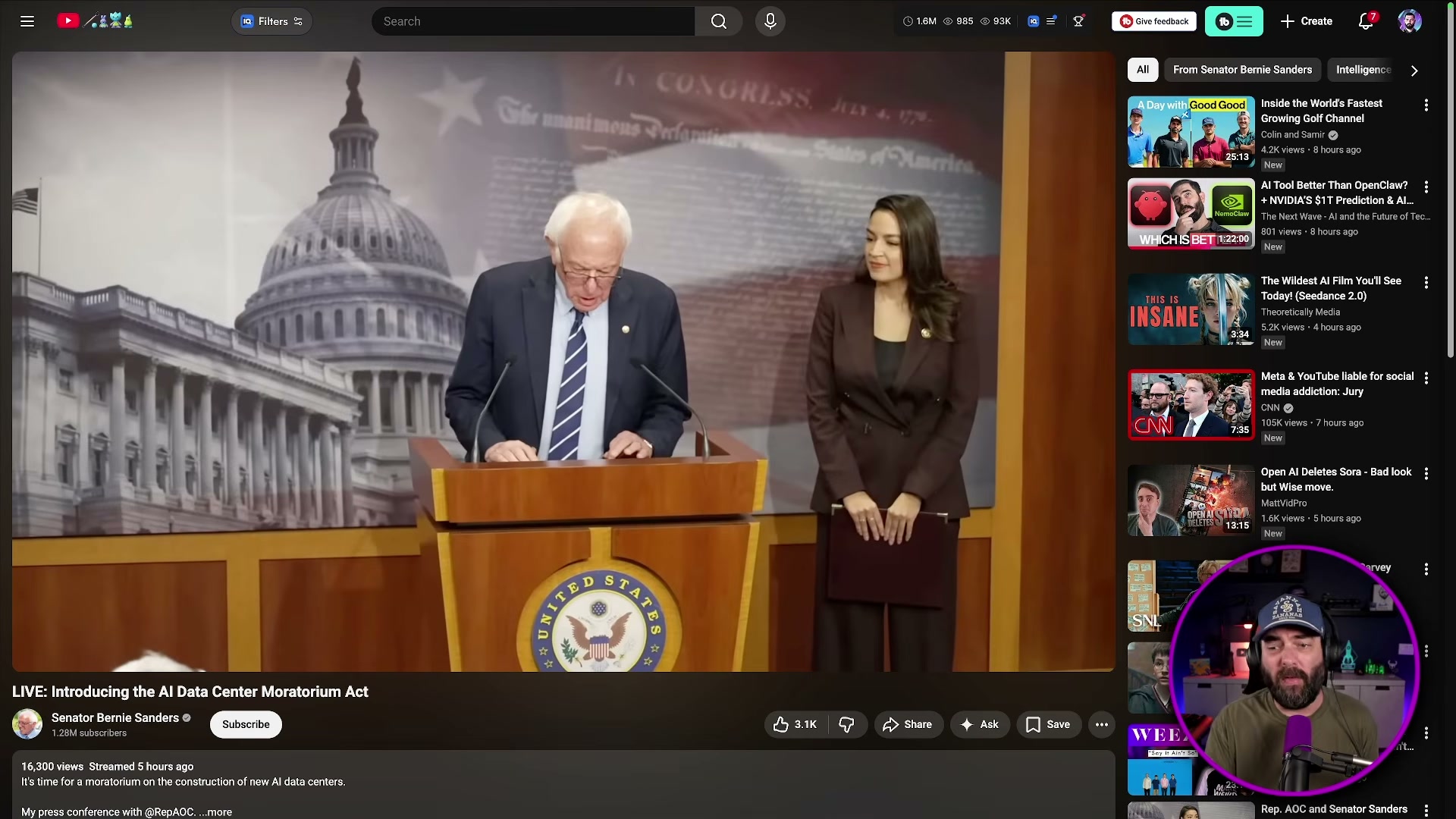
- Understand what the bill actually requires. The AI Data Center Moratorium Act would prohibit all new data center construction nationwide. The ban lifts only after Congress passes federal AI legislation establishing worker and consumer protections, environmental safeguards, and civil rights defenses. There is no sunset clause tied to a timeline — the freeze holds until legislation clears.
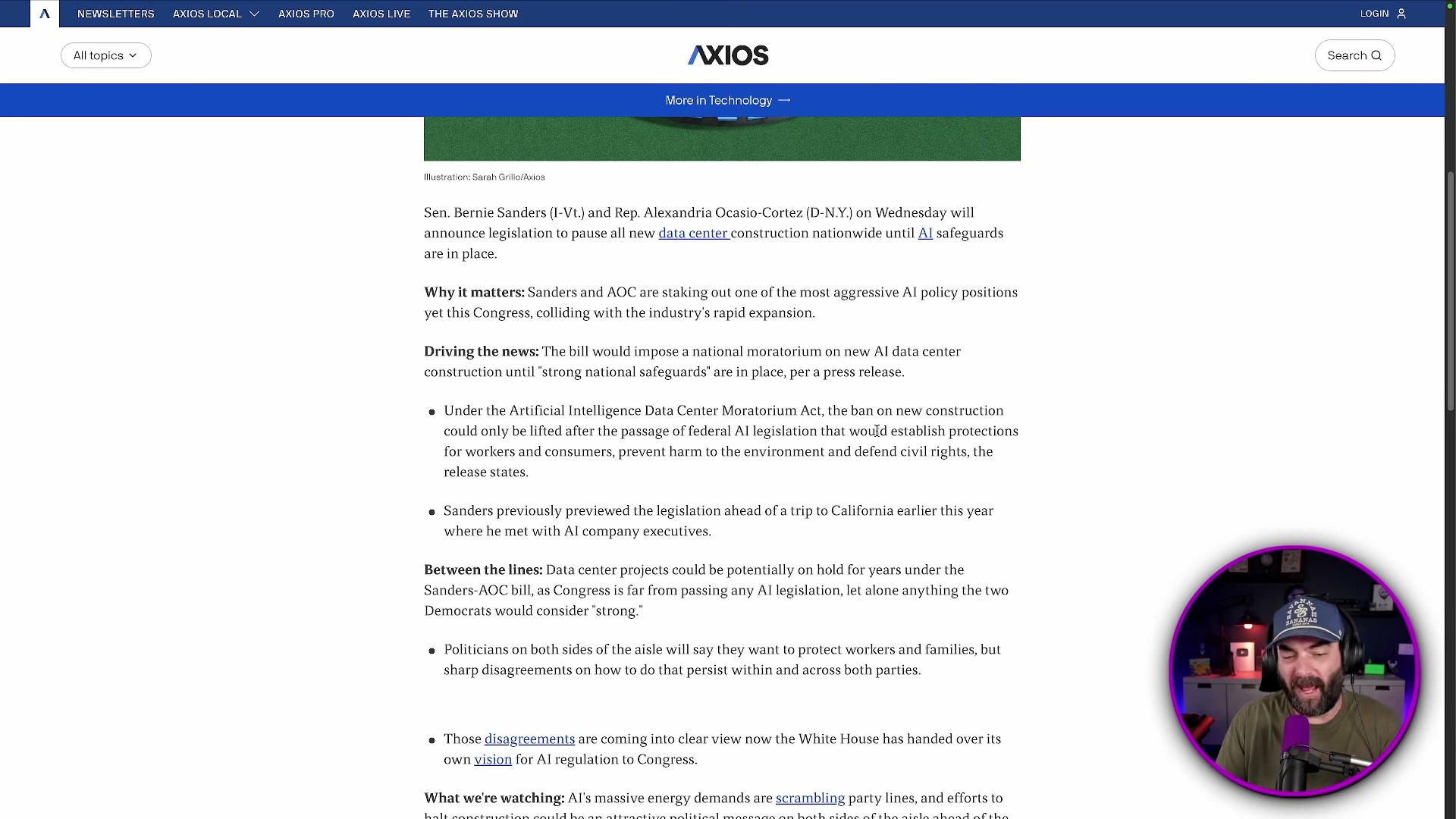
-
Map the electricity cost connection. Residential electricity prices have risen more than 36% since 2020. Department of Energy data shows roughly 6% year-over-year increases from August 2024 to August 2025. The independent market monitor for PJM — the grid operator covering 13 states and Washington D.C. — found data centers are the primary driver of rising capacity prices. States with the highest data center density (Virginia, Texas, Illinois, Ohio, California) have seen the steepest residential bill increases.
-
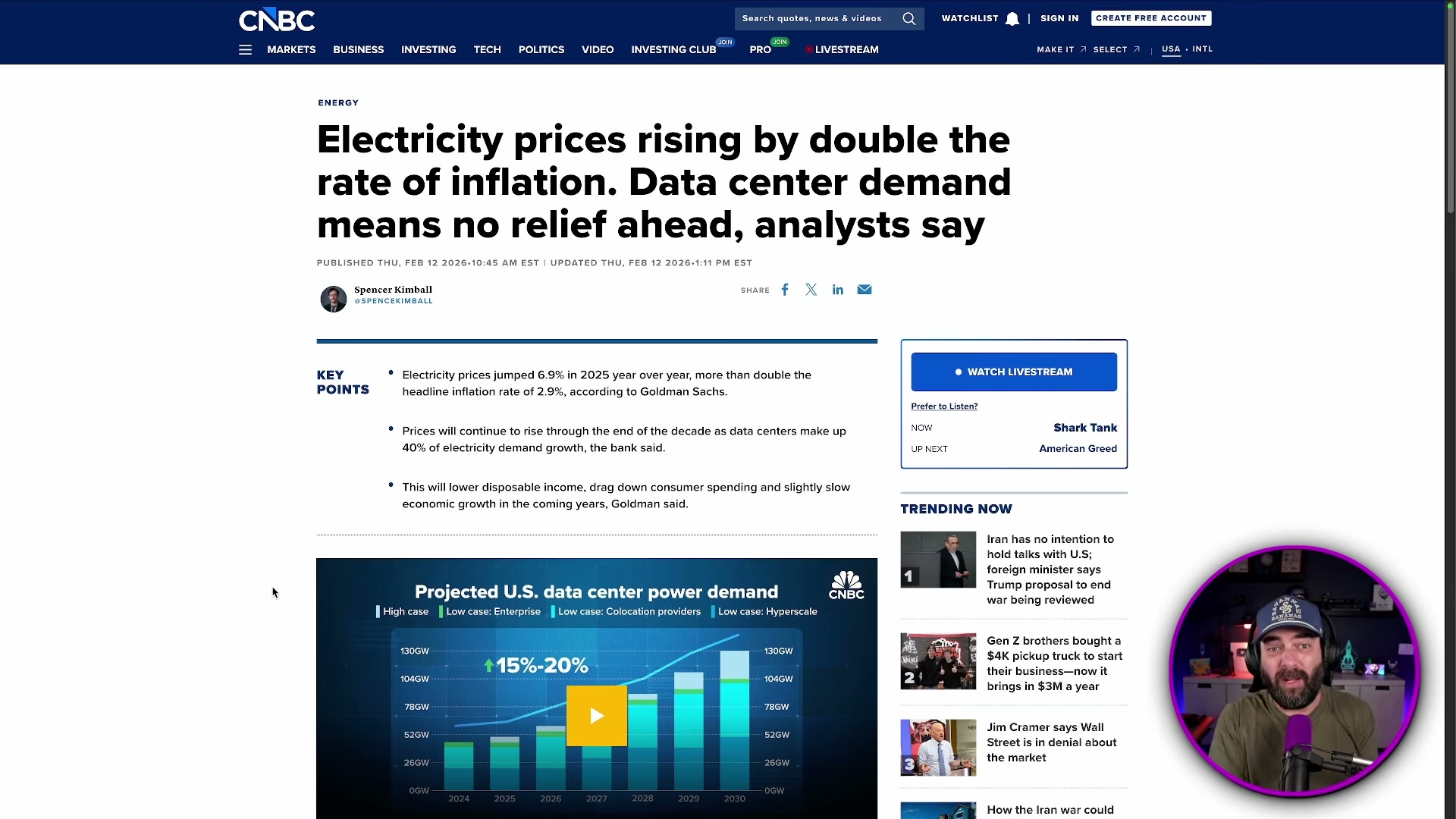
Quantify the demand curve. A single data center campus running at the lower end of peak demand consumes roughly the same electricity as the entire city of San Francisco. Data center electricity demand is projected to grow 15–20% annually. The mechanism is basic supply and demand: a data center joins a local grid, absorbs a large share of available capacity, and pushes residential prices up as usable supply shrinks.
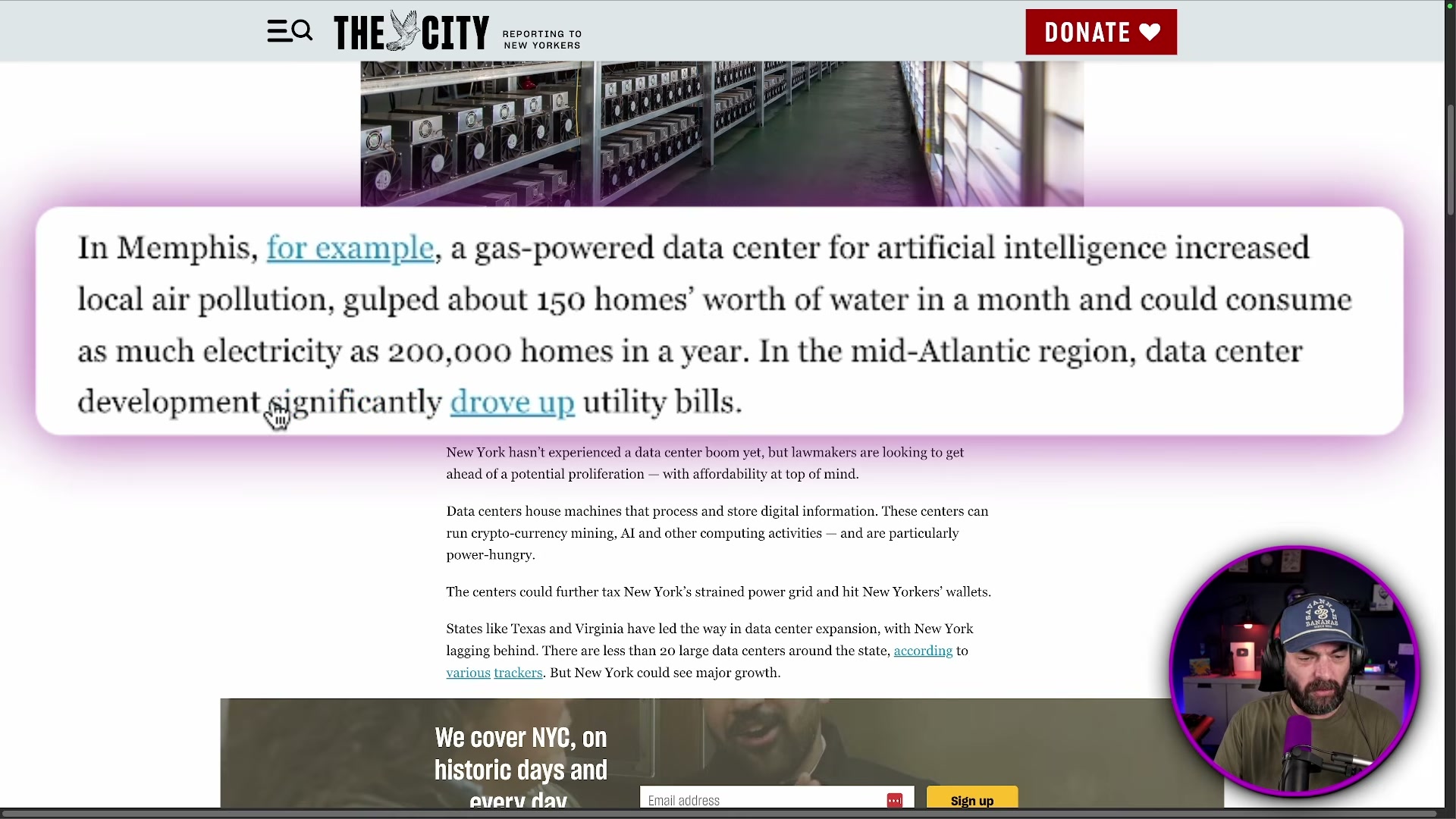
- Assess the real-world community harm. In Memphis, a gas-powered AI data center increased local air pollution, consumed the equivalent of 150 homes’ worth of water per month, and drew as much electricity as 200,000 homes annually. Residents who have never opened ChatGPT are paying higher utility bills because a data center shares their grid.
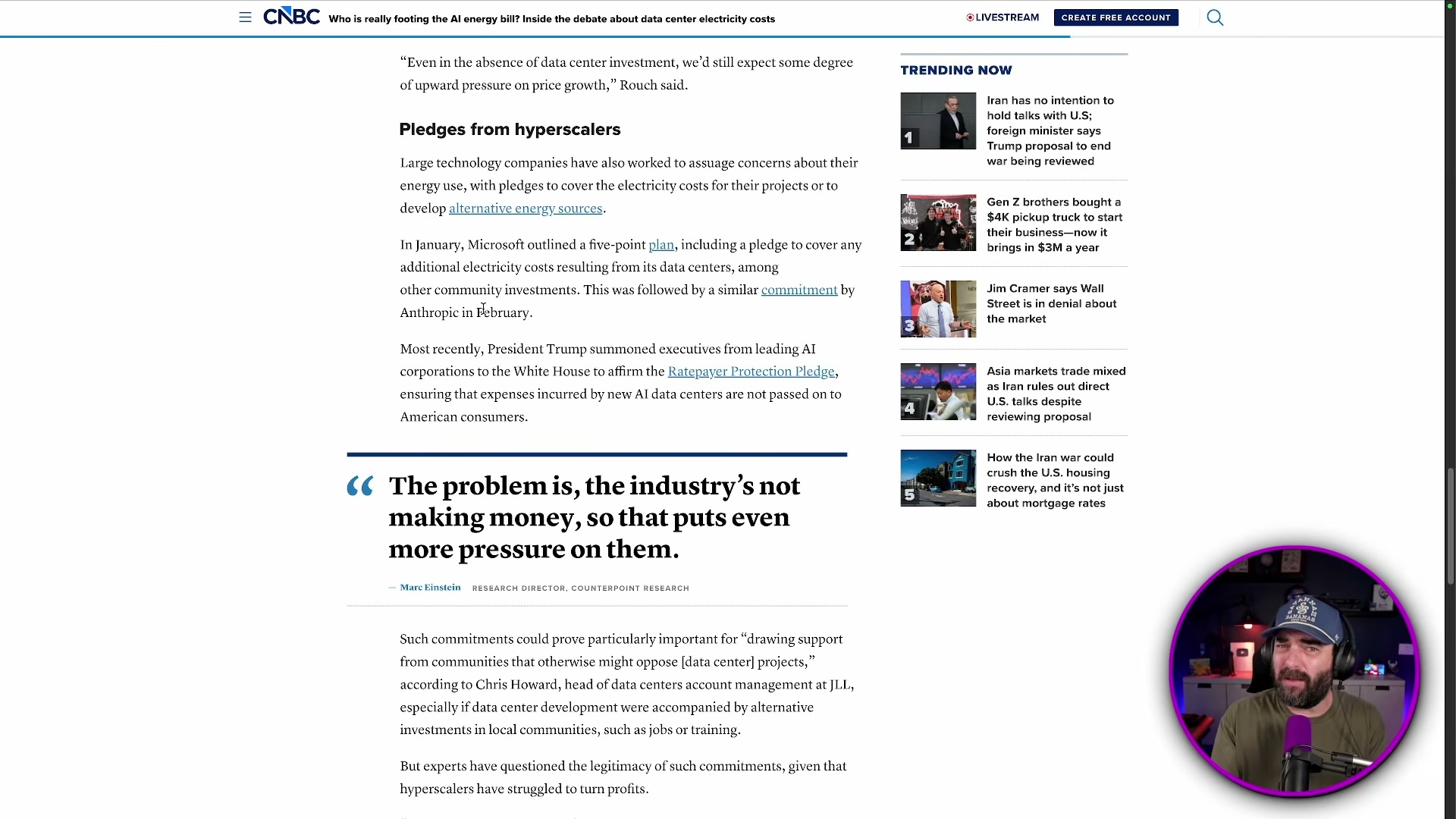
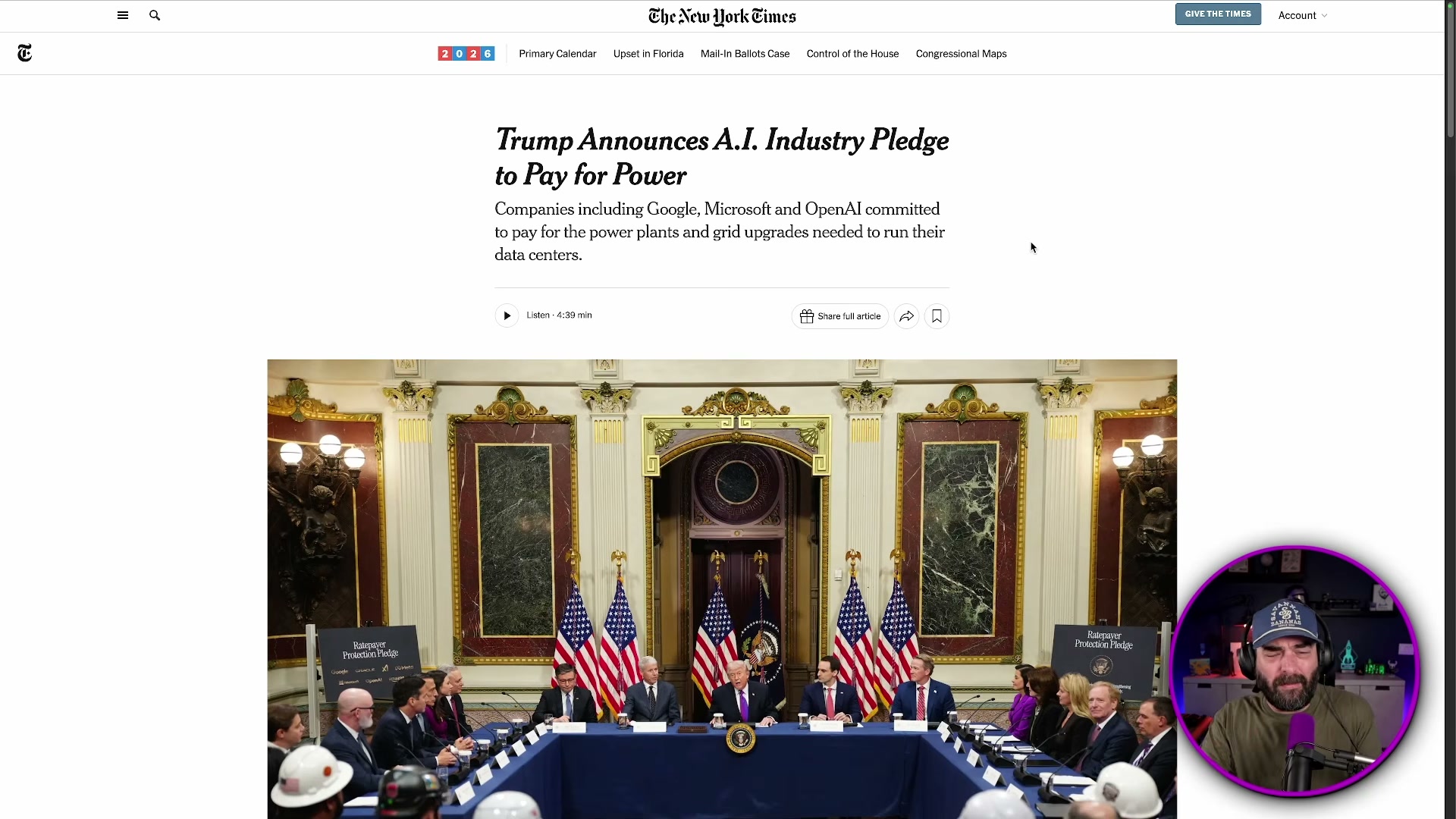
- Evaluate the industry counter-pledges. Microsoft’s “Community First AI Infrastructure” commitment proposes self-funded grid upgrades, net-positive water replenishment, local job creation, and expanded tax contributions. Google, Microsoft, and OpenAI separately pledged to fund power plants and grid infrastructure for their own facilities. If those commitments hold, the electricity cost problem the bill targets may already have a market-driven solution developing in parallel.
- Identify the supply-demand paradox the bill’s proponents haven’t addressed. A moratorium freezes the supply of compute capacity. Demand — from consumers, enterprises, and government — does not freeze with it. Constrained supply plus sustained demand means higher prices for compute access. The companies best positioned to absorb those higher prices are the trillion-dollar incumbents the bill aims to check. Smaller businesses and independent developers, operating on tighter margins, get priced out first. The regulation designed to redistribute power from Big Tech may paradoxically entrench it.
How does this compare to the official docs?
The video walks through the intuitive economic logic effectively, but the actual bill text, PJM market monitor reports, and DOE energy data carry specific figures and enforcement mechanisms that reframe several of the arguments — and that’s where Act 2 starts.
Here’s What the Official Docs Show
The video builds a solid intuitive case, and Act 2 layers in the primary sources it cites — the actual bill text, PJM market monitor reports, and DOE electricity data — so you can pressure-test each claim at the source. None of the documentary evidence was successfully captured in this analysis pass, so every step below carries an unverified flag; the links section points you to where each source lives.
Step 1 — What the bill actually requires
The video describes a hard freeze on new construction pending federal AI legislation. The operative details — whether the bill covers colocation expansions, what agency holds enforcement authority, and how “federal AI legislation” is defined as a trigger — live in the bill text itself.
No official documentation was found for this step — proceed using the video’s approach and verify independently.
Step 2 — The electricity cost connection
The 36% residential price increase since 2020 and the 6% year-over-year figure attributed to DOE are the kind of numbers that shift in revised datasets. Pull the EIA Electric Power Monthly before quoting them in a client deck.
No official documentation was found for this step — proceed using the video’s approach and verify independently.
Step 3 — Quantify the demand curve
The 15–20% annual growth projection is sourced to Goldman Sachs analysis covered by CNBC. The PJM Independent Market Monitor’s annual report is the more authoritative citation for the capacity price mechanism in the 13-state footprint.
No official documentation was found for this step — proceed using the video’s approach and verify independently.
Step 4 — Real-world community harm
The Memphis facility figures — 200,000-home electricity draw, 150-home water consumption — should trace to EPA filings or utility commission records, not secondary reporting alone.
No official documentation was found for this step — proceed using the video’s approach and verify independently.
Step 5 — Industry counter-pledges
Microsoft’s “Community First AI Infrastructure” commitment is a public corporate pledge, not a regulatory filing — which means enforcement is voluntary. Verify current pledge terms directly at microsoft.com before citing scope or dollar figures.
No official documentation was found for this step — proceed using the video’s approach and verify independently.
Step 6 — The supply-demand paradox
The structural argument — that compute supply caps under sustained demand entrench incumbent players — is analytically sound but awaits CBO scoring or an independent economic analysis to carry in policy conversations.
No official documentation was found for this step — proceed using the video’s approach and verify independently.
Useful Links
No source URLs were returned by the screenshot analysis pass. The primary sources referenced across both acts are listed below for manual verification — URLs were not captured and are not invented here per editorial policy.
- AI Data Center Moratorium Act — Bill Text — Full legislative language introduced by Sanders and AOC; the authoritative source for scope, definitions, and lift conditions.
- EIA Electric Power Monthly — DOE dataset tracking residential electricity prices by state; source for the year-over-year rate figures cited in the video.
- PJM Independent Market Monitor Annual Report — The independent grid watchdog report identifying data centers as the primary driver of rising capacity prices across 13 states.
- Goldman Sachs AI Power Demand Analysis via CNBC — Institutional projection underlying the 15–20% annual data center electricity demand growth figure.
- Microsoft Community First AI Infrastructure — Official corporate pledge detailing proposed grid, water, and community investment commitments.
- NYT: Big Tech Power Infrastructure Pledges — Reporting on Google, Microsoft, and OpenAI commitments to self-fund power plants and grid upgrades in response to regulatory pressure.


0 Comments