

What Big SEO Agencies Do Differently: Lessons From Omnicom’s Former Head of SEO
Enterprise SEO shops operate with resources, systems, and institutional knowledge that most small agencies can’t match on paper — but the gap is smaller than it looks. In this post, you’ll learn how to package your services like an enterprise firm, build keyword strategies that surface opportunities the giants miss, and tell the kind of attribution story that keeps clients renewing. The tactics come straight from a podcast conversation with Omnicom’s former head of SEO, a practitioner who has run SEO at the most valuable publicly traded marketing agency in the world.
-
Upgrade your client-facing deliverables. Ditch the raw Excel exports. Enterprise agencies invest in visually coherent, well-designed reports because clients — especially those who don’t live in SEO — form trust judgments on presentation before they evaluate substance. If a potential client is comparing you to two other agencies and yours is the only deck that looks intentional, that alone moves the needle. Design your deliverables so they communicate competence before the reader absorbs a single data point.
-
Build a bespoke knowledge base that large agencies can’t replicate. Generalist holding companies like Omnicom sell everything — paid media, creative, PR, SEO. Their breadth is also their weakness. A specialist shop can demonstrate depth that a generalist account team simply won’t have. Document your niche expertise explicitly: what categories do you understand at a granular level, and what does that mean for a client in that space? Your pitch should make that depth impossible to ignore.
-
Map the gaps in large-agency SEO coverage and pitch directly against them. Enterprise agencies are spread thin. Identify which SERPs, topical clusters, or content formats their clients underperform in — then show prospects what capturing those positions is actually worth. Framing yourself against a specific gap is more persuasive than a generic capabilities pitch.
-
Bucket keywords into ultra-granular topical clusters. Broad keyword buckets obscure real opportunity. The example from the conversation: a brand like Luxottica operates in two fundamentally different keyword universes — eyewear styling and eye health. Collapsing those into a single “eye stuff” bucket makes it impossible to see competitive dynamics clearly. Go at least three to four levels deep in your keyword taxonomy before drawing strategic conclusions.
-
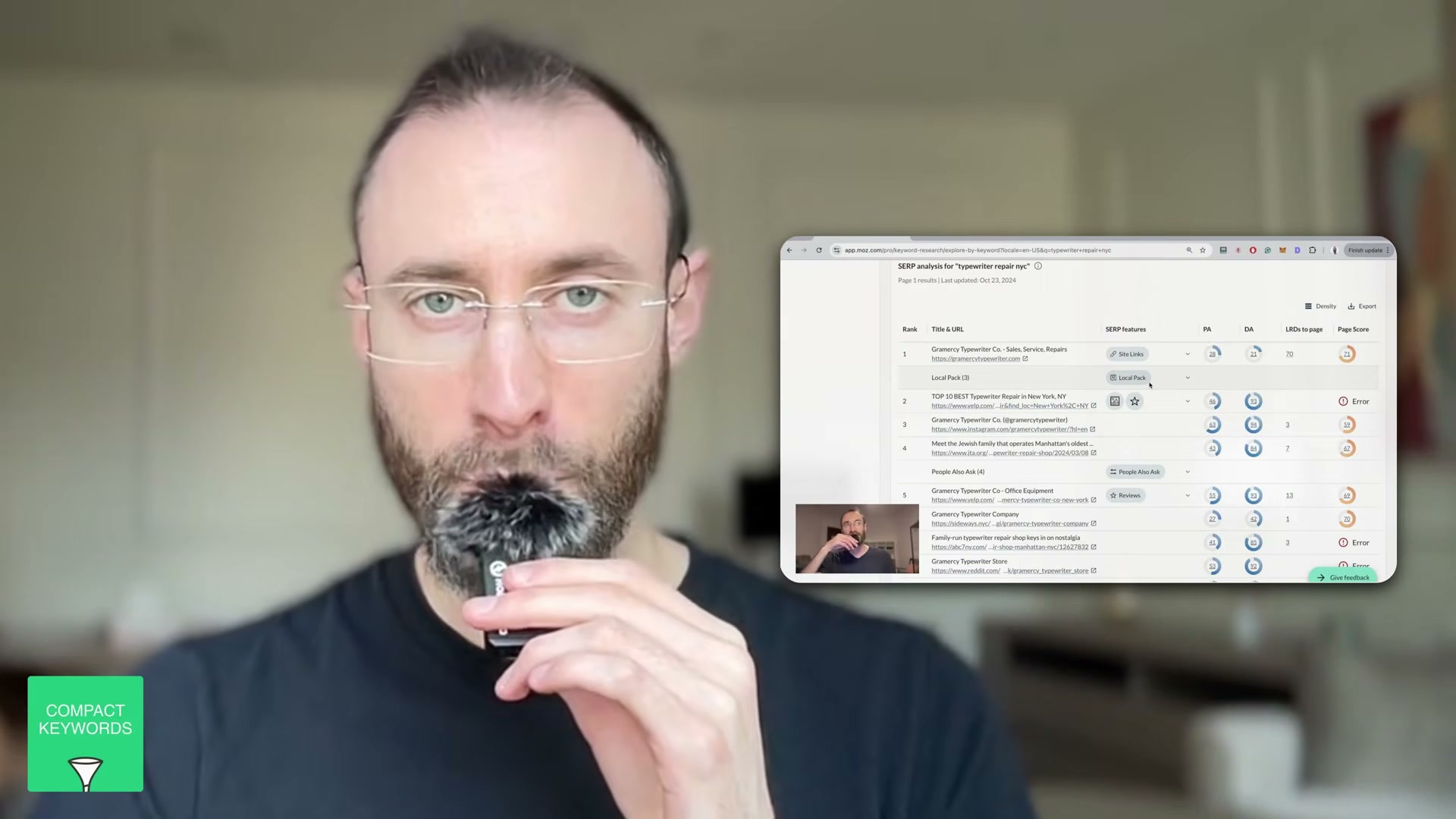
Use that granularity to find SERPs where dominant publishers are underperforming. Once your keyword map is genuinely granular, publishers like WebMD that dominate broad health categories often have thin or weak coverage in specific subcategories. Those gaps are your entry points. A smaller brand with focused topical authority can outrank a larger domain on a well-defined cluster — and ranking there builds the topical signals that make adjacent rankings easier to win.
-
Pursue featured snippet and AI Overview placements for maximum SERP real estate. An AI Overview occupies the same vertical footprint as an old-style featured snippet and appears above paid results. Winning that position for queries your competitors ignore delivers brand impressions that don’t show up in click data — which makes them easy to undervalue and hard to defend if you’re not measuring them separately.
-
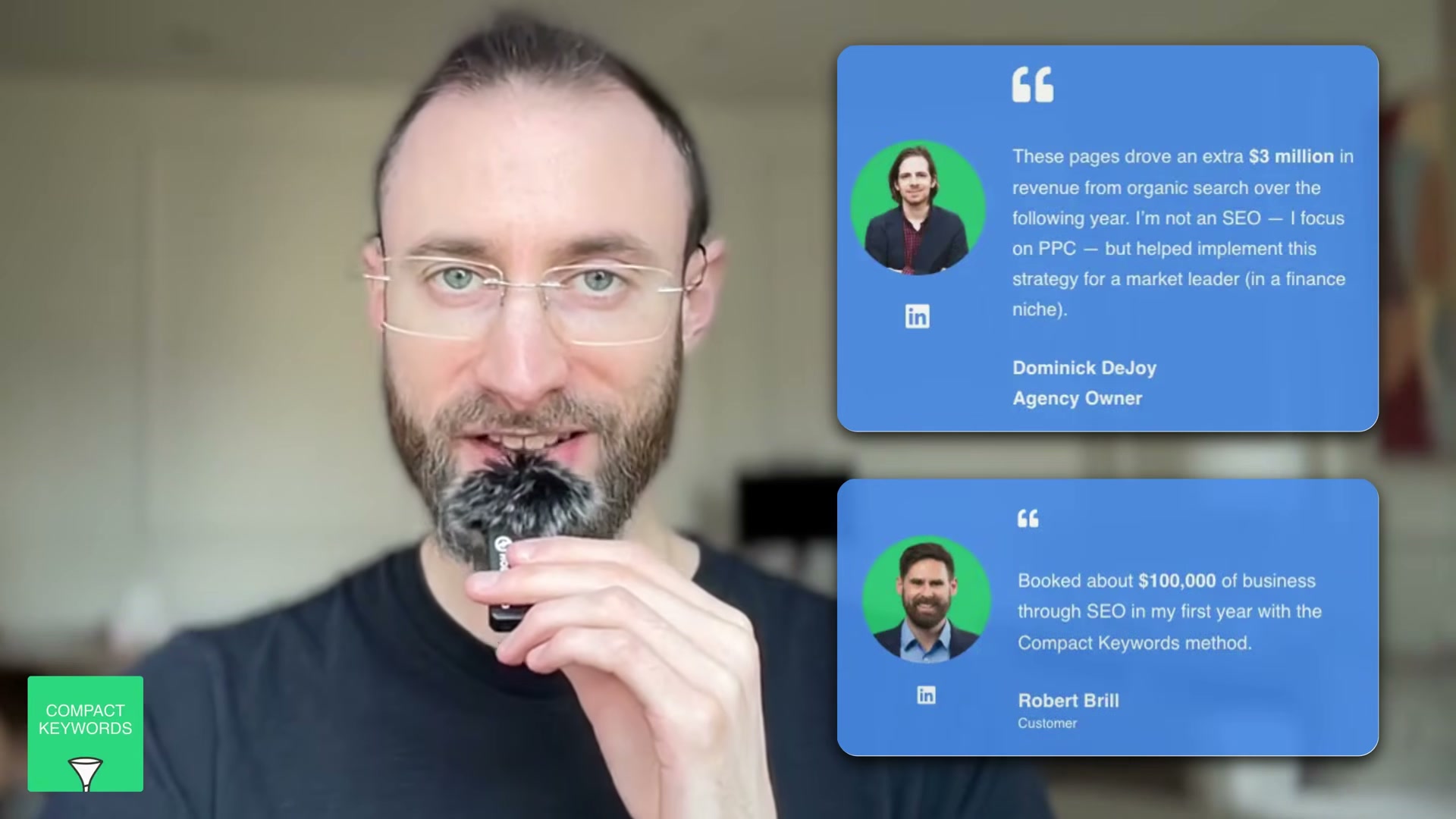
Tell a downstream attribution story. Organic rankings create effects that ripple into direct traffic, branded search volume, and paid search efficiency. Showing clients only rankings or organic sessions leaves the most compelling part of the story untold. Map the chain: this ranking led to this lift in direct visits, which reduced this paid cost-per-acquisition. That narrative is what separates agencies that get renewed from agencies that get replaced.
- Anchor every deliverable in the value returned to the user, not the tactic deployed. Rankings are a mechanism, not an outcome. Reframing every recommendation around what the end user gets — and what that means for the client’s business — is what gives SEO strategy staying power in executive conversations.
How does this compare to the official docs?
The strategic framing here comes from practitioner experience rather than platform guidelines, so the next section checks each recommendation against current Google Search Central documentation and industry benchmarks to surface where the advice aligns, where it diverges, and where the official record adds important nuance.
Here’s What the Official Docs Show
The video delivers genuinely useful practitioner framing from someone who has run SEO at enterprise scale — the strategic instincts are sound and worth applying. What the documentation review adds here is transparency about what could and could not be independently verified, so you can proceed with appropriate confidence at each step.
Step 1 — Upgrade your client-facing deliverables.
No official documentation was found for this step — proceed using the video’s approach and verify independently.
Step 2 — Build a bespoke knowledge base that large agencies can’t replicate.
No official documentation was found for this step — proceed using the video’s approach and verify independently.
Step 3 — Map the gaps in large-agency SEO coverage and pitch directly against them.
No official documentation was found for this step — proceed using the video’s approach and verify independently.
Step 4 — Bucket keywords into ultra-granular topical clusters.
No official documentation was found for this step — proceed using the video’s approach and verify independently.
Step 5 — Use granularity to find SERPs where dominant publishers are underperforming.
No official documentation was found for this step — proceed using the video’s approach and verify independently.
Step 6 — Pursue featured snippet and AI Overview placements for maximum SERP real estate.
This is the one step where the documentation sweep returned anything substantive — and what it returned is partial context rather than verification. The screenshots tagged to developers.google.com/search/docs captured the Google homepage instead of Search Central documentation, so no platform-level guidance on AI Overviews or featured snippet eligibility appears in the reviewed materials.
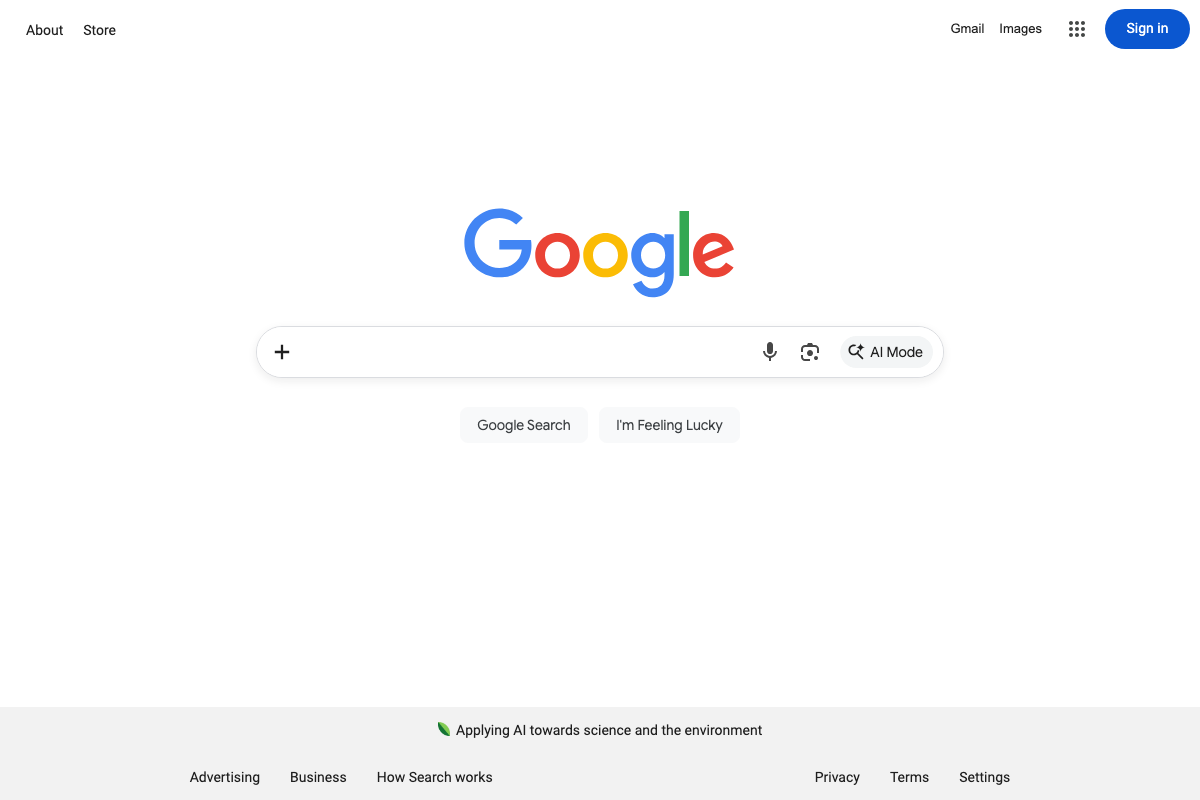
What the Google homepage screenshots do confirm: as of March 2026, Google has surfaced an “AI Mode” button directly inside the primary search bar — a first-class, default-visible element alongside voice search and Google Lens. That confirms AI-assisted search is no longer an opt-in experiment at the interface level.
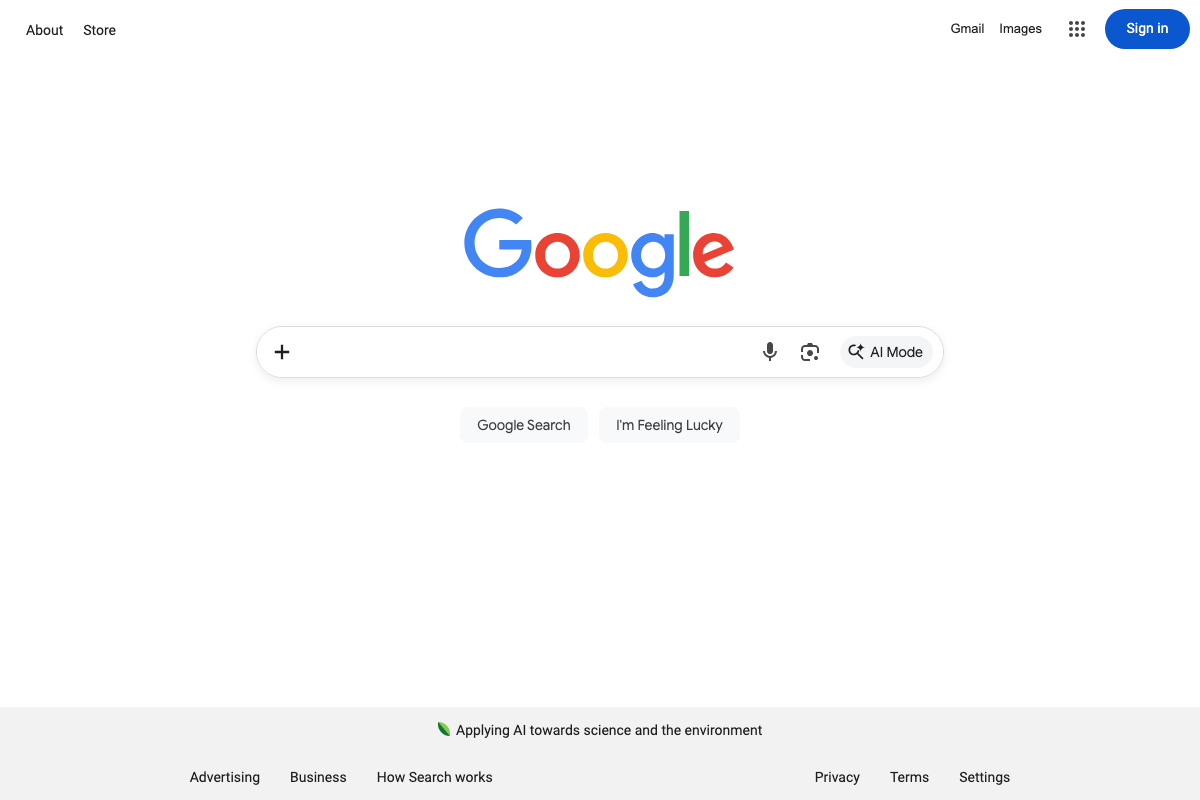
What this does not confirm: the specific SERP placement mechanics described in the video. No live SERP with an AI Overview panel was captured, so the claim that AI Overviews occupy the same vertical footprint as featured snippets and appear above paid results cannot be verified or corrected from these images. For current AI Overview eligibility guidance, go directly to Google Search Central — the source the screenshots were meant to capture.
Step 7 — Tell a downstream attribution story.
No official documentation was found for this step — proceed using the video’s approach and verify independently.
Step 8 — Anchor every deliverable in the value returned to the user, not the tactic deployed.
No official documentation was found for this step — proceed using the video’s approach and verify independently.
Useful Links
- Documentation to Improve SEO | Google Search Central | Google for Developers — Google’s authoritative reference for Search documentation, including structured data, crawling, indexing, and AI Overview eligibility guidance; the primary source the documentation sweep intended to capture.
- Google — Google’s live search homepage; confirms “AI Mode” is integrated into the primary search bar as of March 2026, relevant context for Step 6.
- LinkedIn: Log In or Sign Up — LinkedIn’s public-facing homepage; no SEO practitioner resources, agency positioning content, or keyword strategy materials are accessible without authentication.


0 Comments