

Travel Marketing in 2026: How to Win AI Search with Digital PR
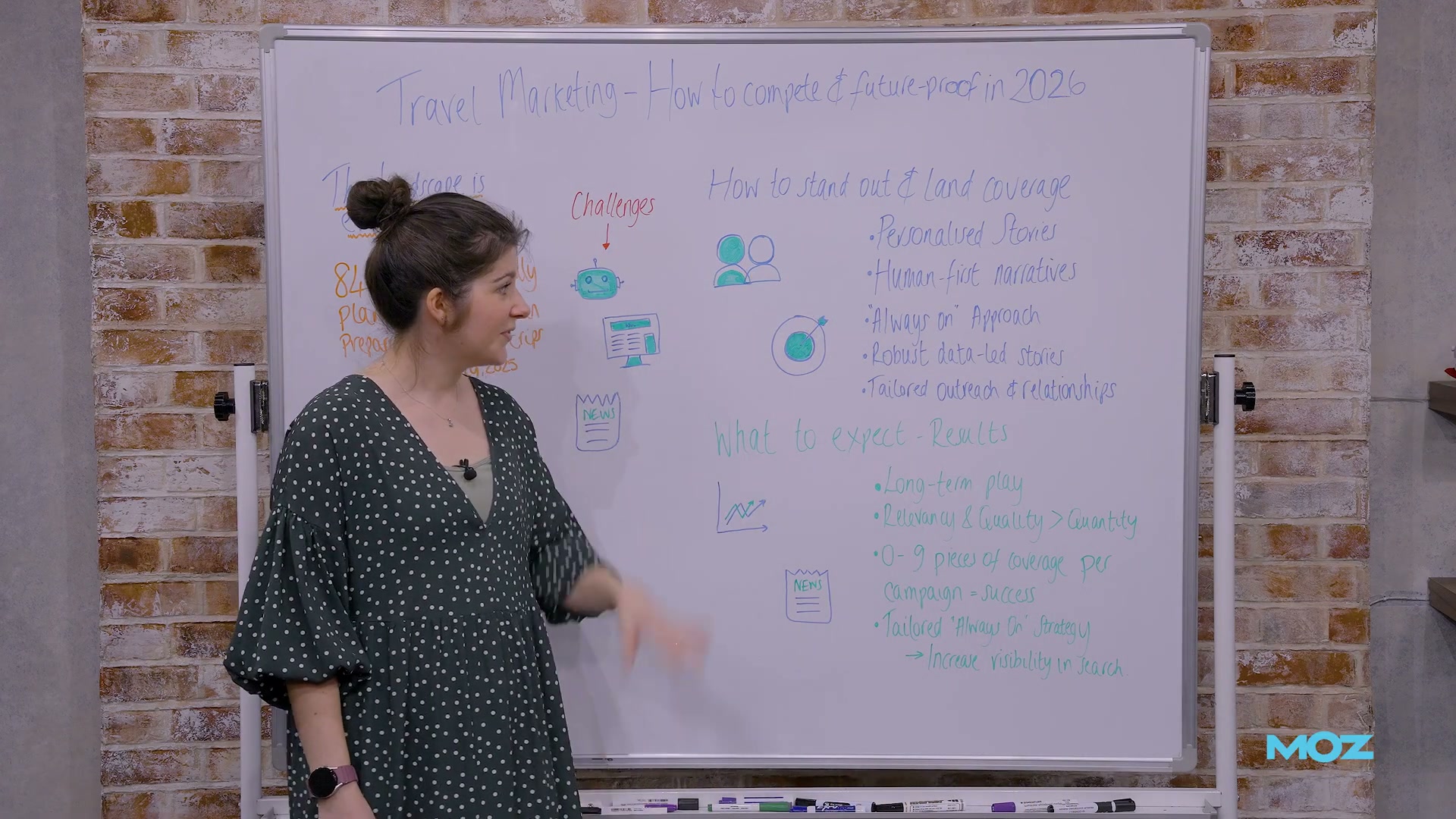
The rules of travel search have changed. With 84% of global travelers planning to use AI for trip planning, earning visibility in AI-generated responses is now as important as ranking in traditional search — and the mechanism driving that visibility is digital PR. This tutorial walks you through the five-pillar framework Chloe Osunsami of ERA presented in her Moz Whiteboard Friday session, giving you a concrete strategy for building brand mentions that make travel brands show up where travelers are increasingly looking.
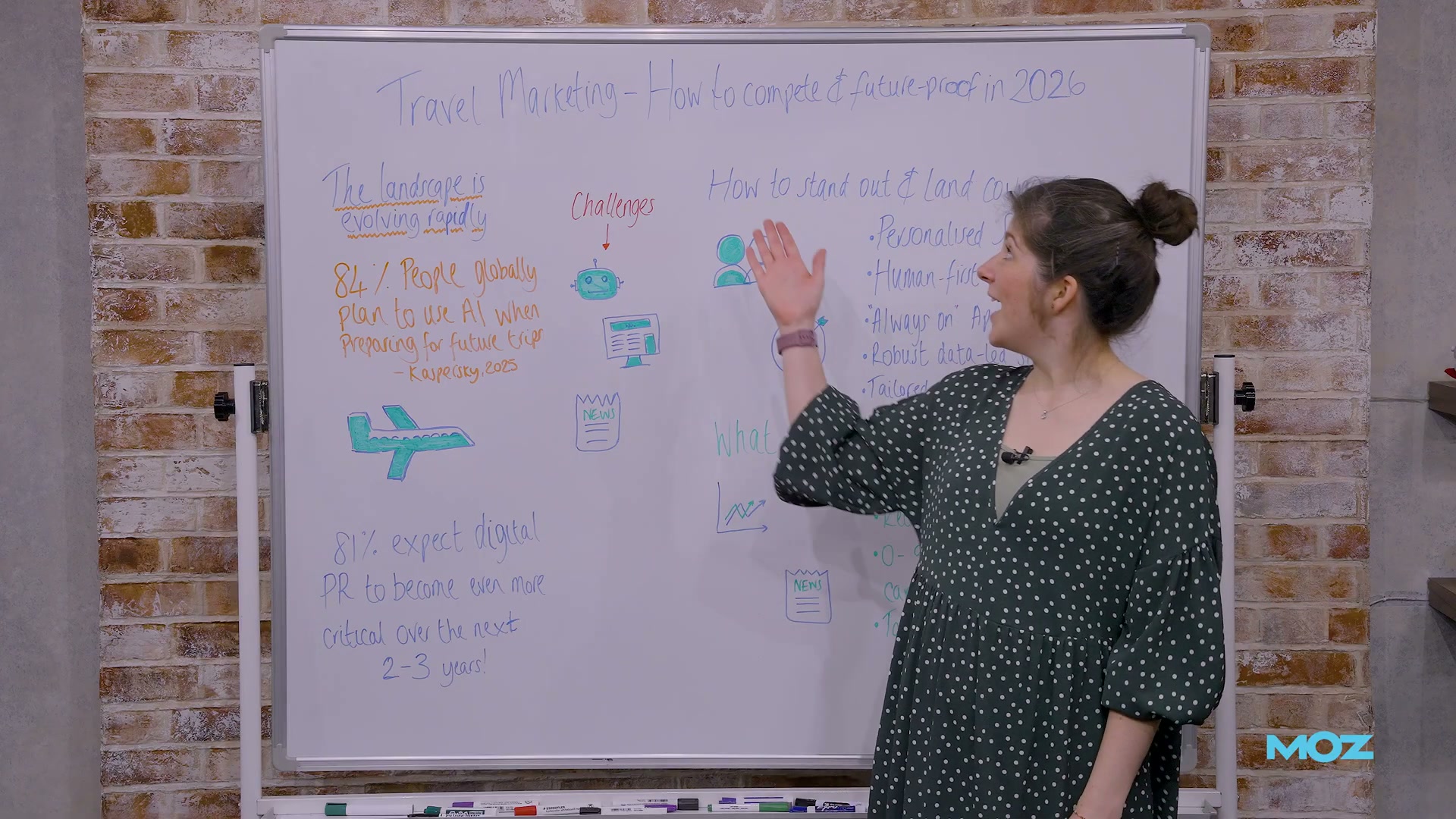
- Acknowledge the AI shift in travel search. Before building any strategy, accept the scale of the disruption: 84% of global travelers plan to use AI to research trips — from choosing destinations and accommodation to generating full personalized itineraries. If your brand is not appearing in those AI outputs, you are invisible to a majority of the planning journey.
-
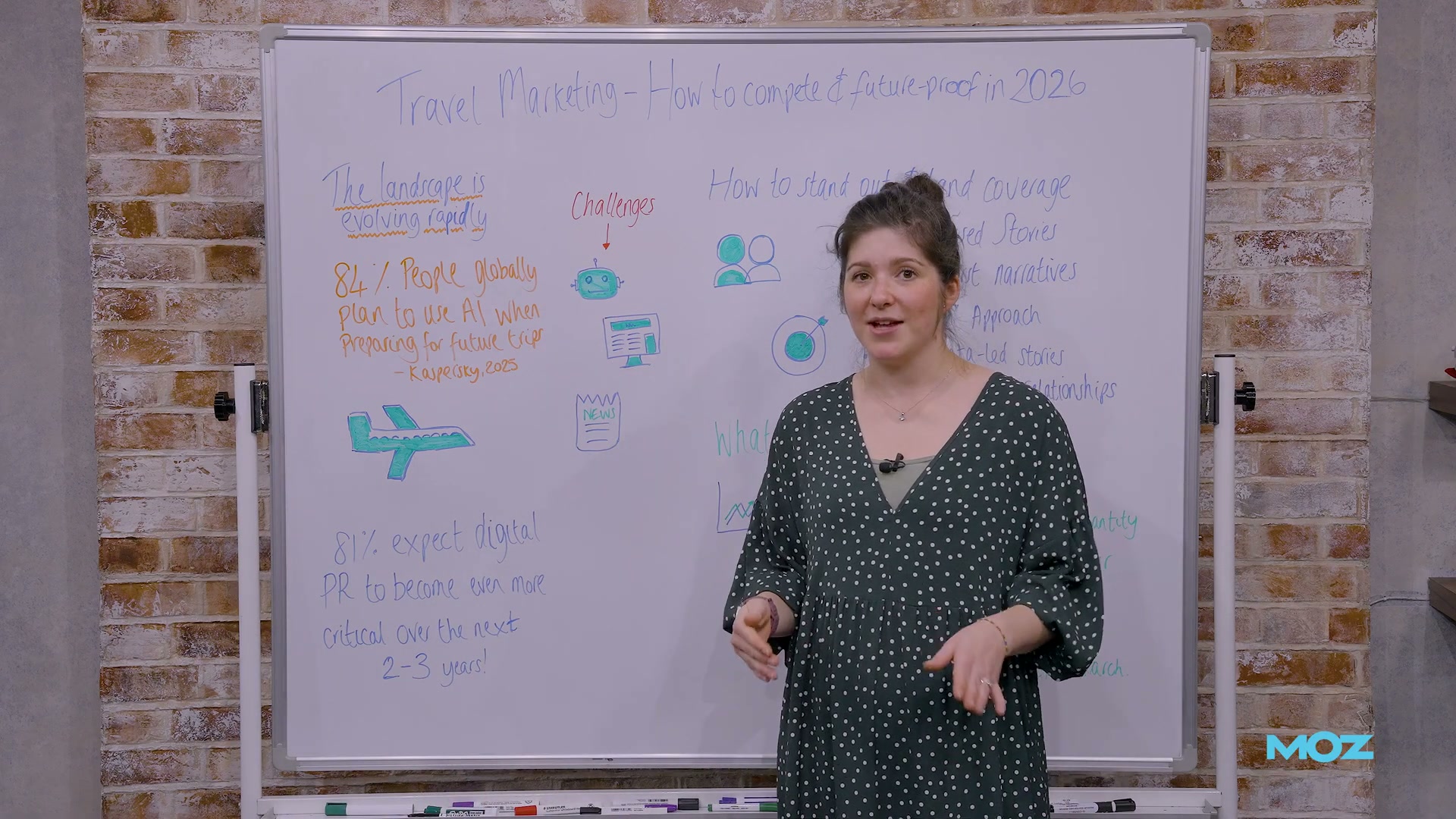
Understand why digital PR is the lever that moves AI visibility. Traditional SEO focused on links. AI visibility correlates with brand mentions. Studies show that brand mentions — the currency of digital PR — are among the strongest predictors of whether a brand surfaces in AI-generated responses. ERA’s research found that 81% of senior digital PRs expect the discipline to become even more critical over the next two to three years, and 57% have already seen rising demand from travel clients.
-
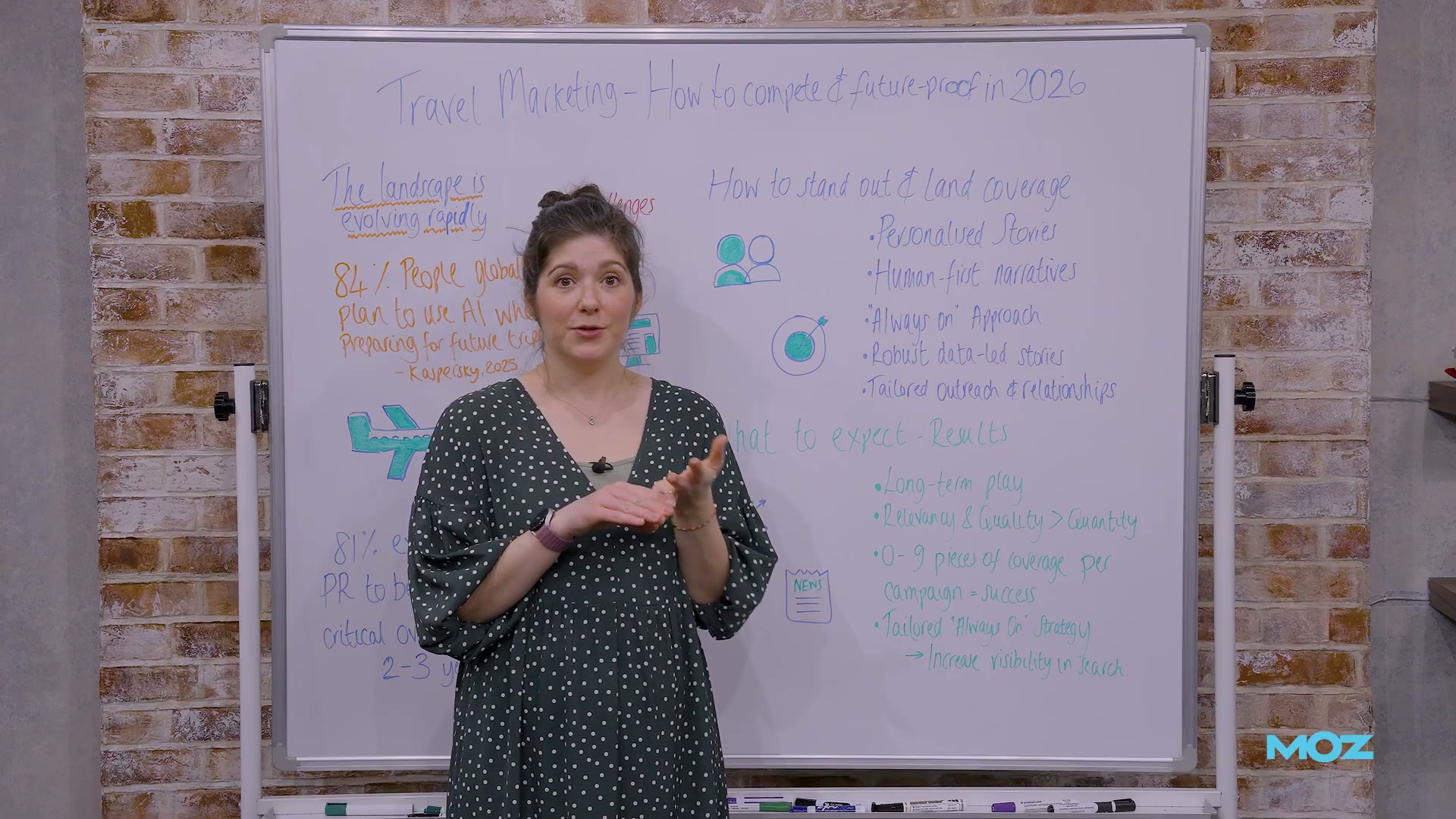
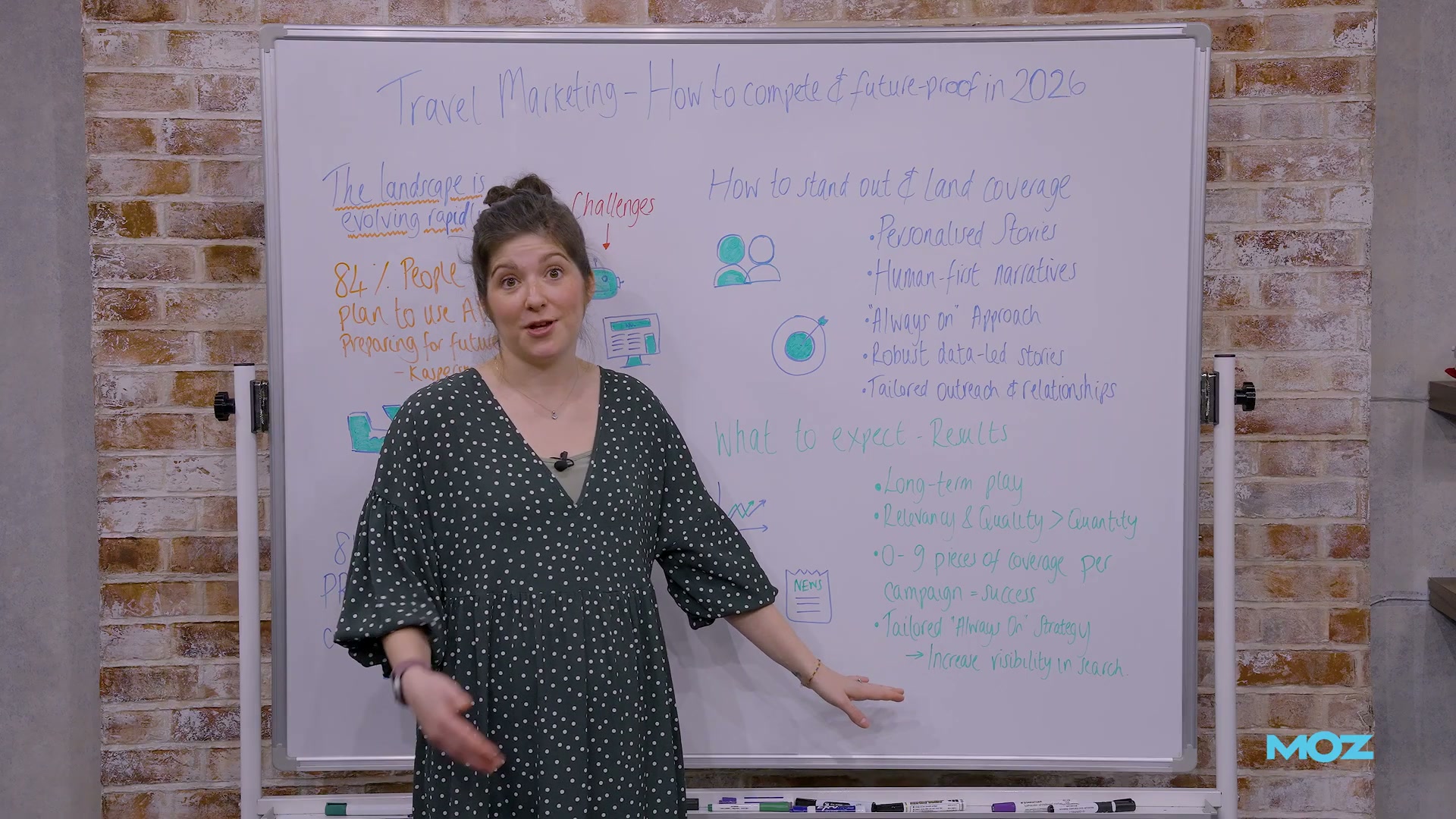
Build Pillar 1: Personalized Stories. Go beyond demographics. Research your target persona’s values, hobbies, passions, and real-world economic constraints — the factors that actually shape travel decisions in 2026. Journalists already lead with this lens and keep their readers front of mind in every pitch. Match that or lose the coverage.
- Build Pillar 2: Human-First Narratives. AI-generated content cannot replicate lived experience. Counter that by adding behind-the-scenes insight, untold angles, and case studies to your pitches. These elements are what journalists are actively seeking to differentiate their editorial from the surge of synthetic content flooding inboxes.
-
Build Pillar 3: An Always-On Approach. Data-led creative campaigns are used by 95% of the digital PRs surveyed — but 71% layer in newsjacking and reactive tactics on top to sustain a consistent cadence of coverage. An always-on strategy compounds brand mentions over time rather than spiking and going quiet, which is what AI visibility actually rewards.
-
Build Pillar 4: Unique, Proprietary Data. When your campaign is data-led, that data must be owned. Third-party or scraped datasets invite validity questions and invite comparisons to AI-produced content. Proprietary research removes both objections immediately and gives journalists something they cannot get anywhere else.
-
Build Pillar 5: Tailored Outreach and Relationships. Study each journalist’s beat, editorial style, and existing coverage before any pitch. Critically, journalists told ERA’s researchers that they source expert commentary from people already in their network — not from open call-outs. If the relationship does not exist before the pitch, the commentary slot is already filled.
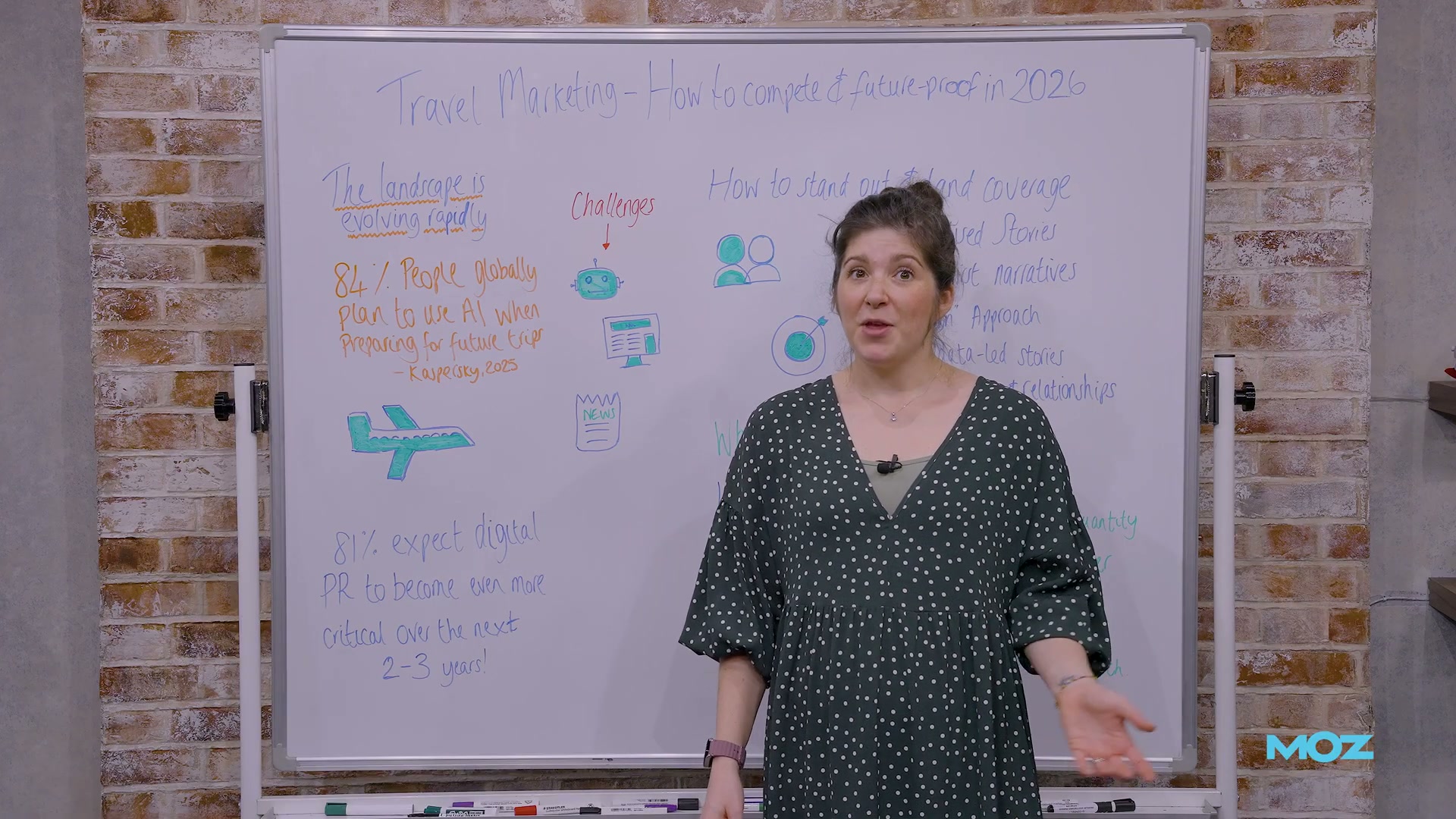
- Set realistic expectations for results. Digital PR is a long-term play. Most campaigns over the past 12 months generated 10–19 pieces of coverage — above the 0–9 threshold that roughly half of surveyed PRs considered a success. AI visibility gains follow the same slow curve: a sustained, tailored strategy builds authority incrementally across both traditional and AI search, but it will not move overnight.
How does this compare to the official docs?
The framework Chloe presents draws on ERA’s proprietary research rather than a single published standard, which means it is worth cross-referencing with what Moz’s own documentation and the broader SEO authority canon say about brand signals, E-E-A-T, and AI citation mechanisms before baking this into your agency’s playbook.
Here’s What the Official Docs Show
The video lays out a compelling five-pillar framework grounded in ERA’s proprietary research — what follows builds on that foundation by anchoring the parts that can be independently verified and flagging clearly where third-party documentation runs out. This is additive context, not a regrade.
Step 1: Acknowledge the AI shift in travel search.
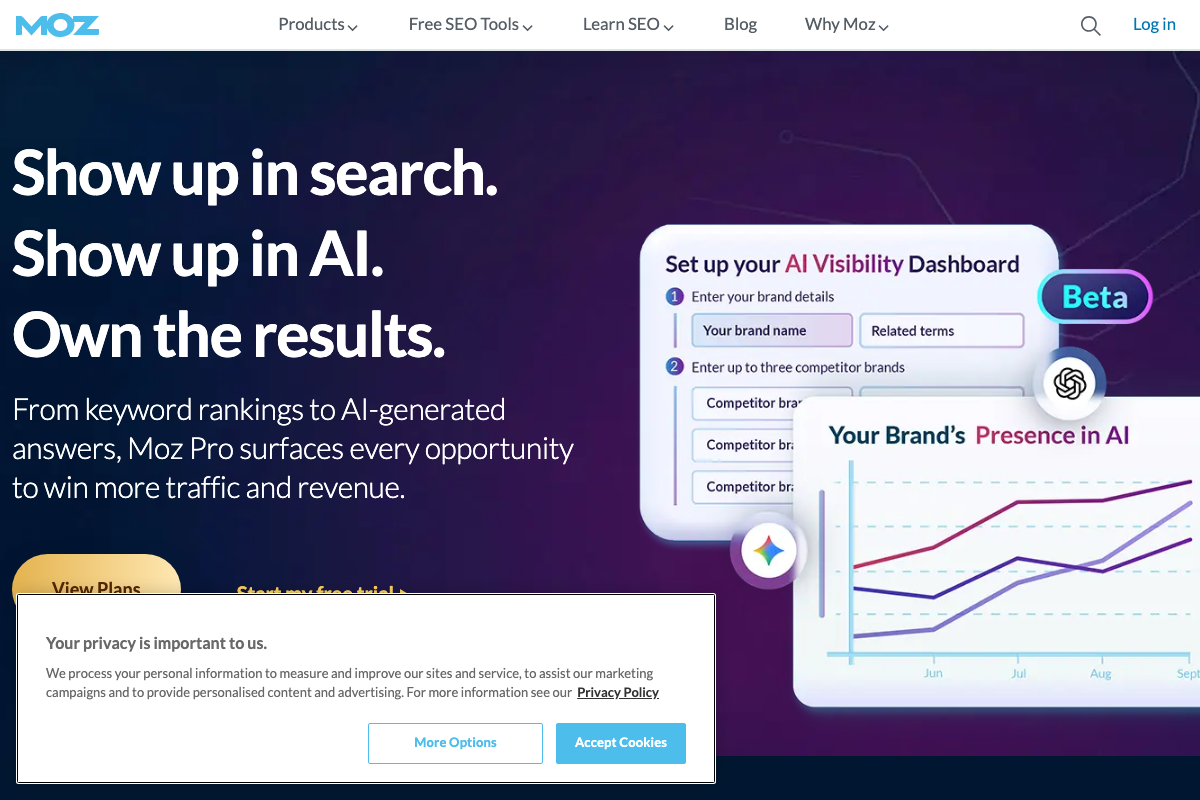
Moz’s own product homepage corroborates the macro premise directly. The AI Visibility Dashboard — a dedicated product panel tracking “Your Brand’s Presence in AI” with competitor comparison fields — confirms that AI brand visibility is a measurable, product-level concern, not just a strategic talking point.
One nuance the video does not raise: Moz’s dashboard carries a Beta label as of early 2026, which signals that the tooling to measure AI brand presence is still maturing. If you are building a reporting workflow around AI visibility metrics, factor in that no measurement standard has fully stabilized yet.
The video’s approach here matches the current docs exactly on the core premise.
Step 2: Understand why digital PR is the lever that moves AI visibility.
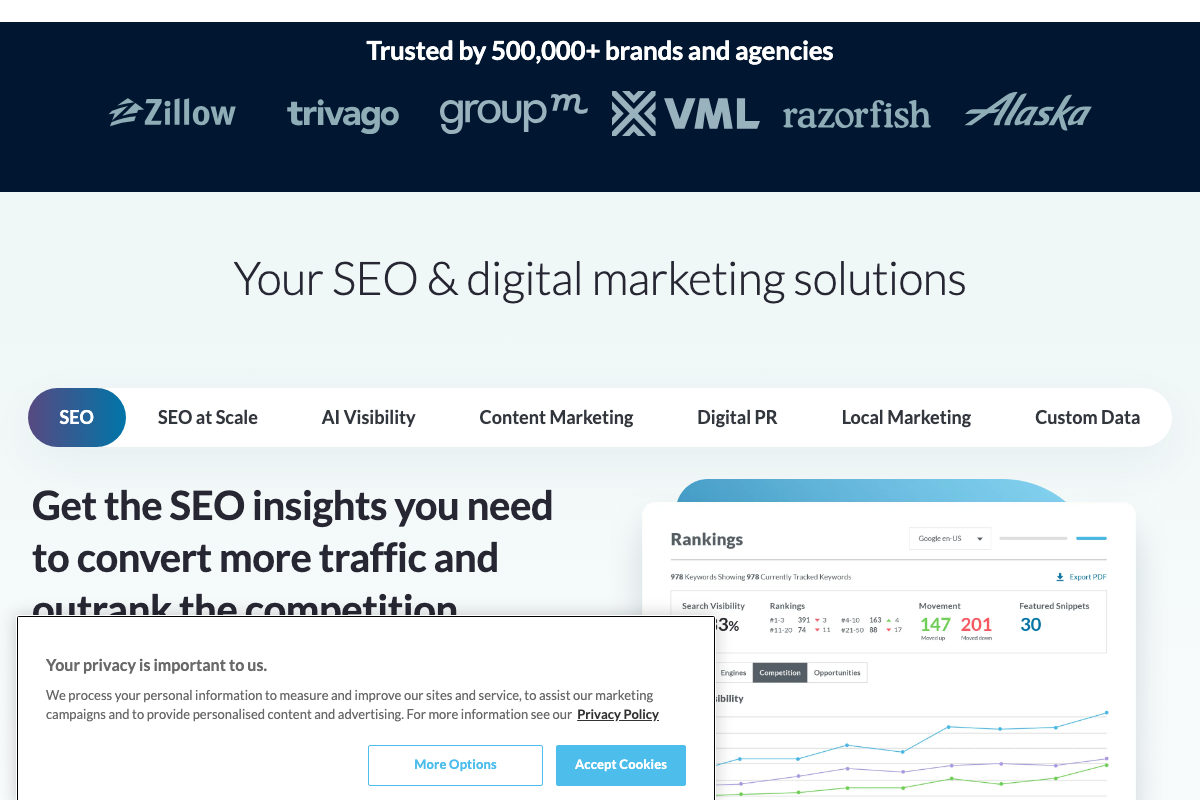
Moz’s product navigation lists “AI Visibility” and “Digital PR” as co-equal solution categories — sitting alongside SEO, Content Marketing, and Local Marketing as distinct disciplines. That taxonomy independently corroborates the video’s argument that digital PR activity has a direct pathway to AI search visibility, and it does so through a commercial structure that reflects real market demand, not editorial opinion.
Also worth noting: Trivago appears in Moz’s client list among 500,000+ brands and agencies. Travel brands are already investing in exactly this stack.
The video’s approach here matches the current docs exactly.
Step 3: Build Pillar 1 — Personalized Stories.
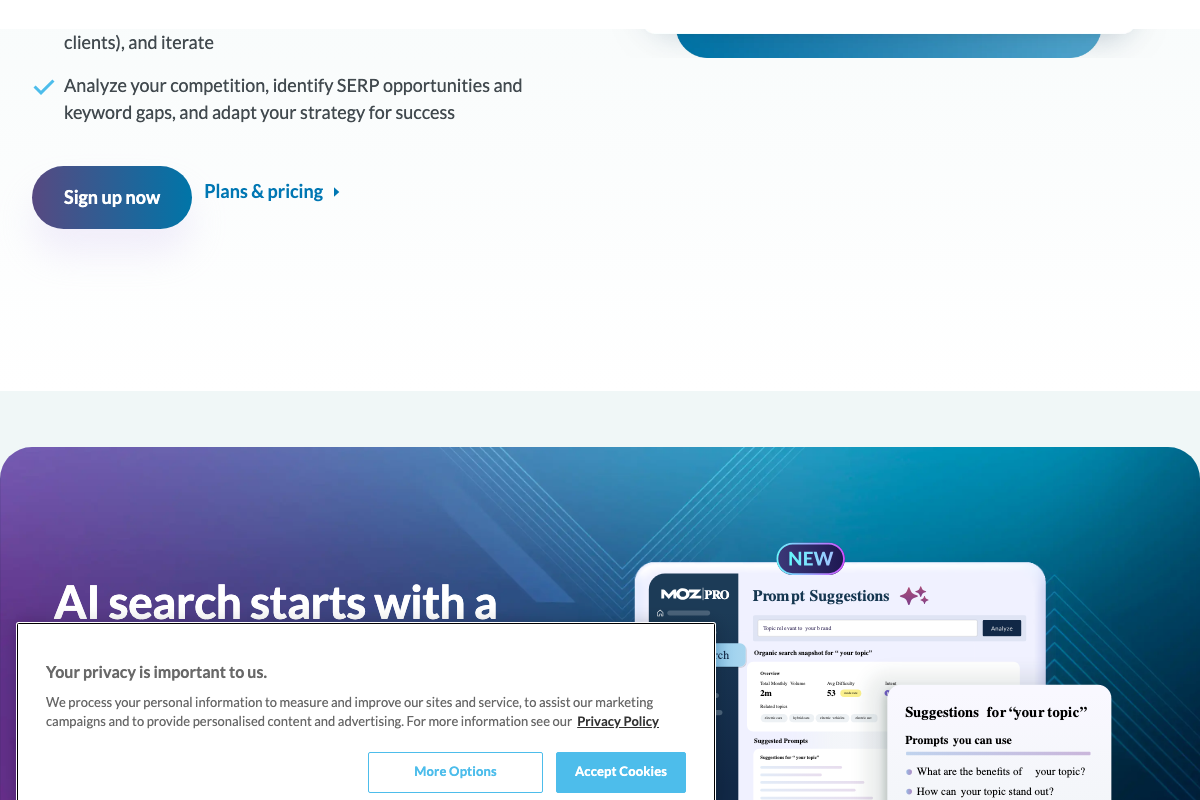
Moz’s newly released Prompt Suggestions feature (flagged “NEW” on the homepage) offers a concrete workflow extension here: by analyzing how AI models frame prompts around a topic — “What are the benefits of your topic?”, “How can your topic stand out?” — you can reverse-engineer the narrative angles most likely to generate AI-visible coverage. That is a more operationalizable version of the persona research the video recommends.
No official documentation was found for the specific statistical claims in this step (84% of travelers, etc.) —
proceed using the video’s approach and verify independently.
Step 4: Build Pillar 2 — Human-First Narratives.
No official documentation was found for this step —
proceed using the video’s approach and verify independently.
Step 5: Build Pillar 3 — An Always-On Approach.
No official documentation was found for this step — the 95% data-led campaigns figure and 71% newsjacking statistic are sourced from ERA’s proprietary research and do not appear in any captured documentation.
Proceed using the video’s approach and verify independently.
Step 6: Build Pillar 4 — Unique, Proprietary Data.
No official documentation was found for this step —
proceed using the video’s approach and verify independently.
Step 7: Build Pillar 5 — Tailored Outreach and Relationships.
No official documentation was found for this step —
proceed using the video’s approach and verify independently.
Step 8: Set realistic expectations for results.
No official documentation was found for this step — the 10–19 pieces of coverage benchmark is drawn from ERA’s survey data and is not corroborated by any captured third-party source.
Proceed using the video’s approach and verify independently.
Useful Links
- Moz — SEO Software for Smarter Marketing — Moz homepage featuring the AI Visibility Dashboard (Beta), Prompt Suggestions tool, and product navigation confirming AI Visibility and Digital PR as co-equal solution categories; the primary documentation source for Steps 1–3 in this post.


0 Comments