

SEO Myths Debunked: What Patrick Stox Actually Thinks About Redirects, Authority, and GEO
Patrick Stox has spent six-plus years at Ahrefs pressure-testing assumptions most practitioners treat as settled. In this conversation with Edward Sturm, he works through a stack of widely-held beliefs — on subdomains, redirect value, domain authority, and the relationship between GEO and brand marketing. Work through these ten positions and you’ll walk away with a sharper decision framework for where to spend your optimization effort and how to counsel clients on competitive ceilings.
-
Decide whether the subdomain versus subfolder question is worth your time. Stox’s answer is direct: it isn’t. The consolidation signal matters more than the structural choice, and the debate consumes energy that could go toward indexation or link reclamation.
-
Reframe GEO as a brand and marketing coordination problem, not an SEO task. For small businesses — plumbers, dentists, lawyers — you have real leverage over the signals LLMs consume. For enterprise brands, an underfunded SEO team can at best nudge the conversation; product quality, messaging, and every customer touchpoint shape what the broader internet says about you.
-
Use 301 and 302 redirects without hesitation. Both pass value. A 302 typically keeps the original URL indexed while equity flows through; if the destination page begins appearing in the index instead, that’s where value is going — and it’s still moving in a useful direction.
-
Apply the technical SEO decision gate in sequence. Check indexation first — if pages aren’t indexed, nothing else matters. Then reclaim lost equity by redirecting old URLs that have accumulated links. On international properties, resolve hreflang errors before touching content or link strategy.
-
Diagnose hreflang problems by examining which country versions appear in SERPs and whether users can identify they’re on the wrong version or complete a transaction. Stox describes a marketplace client losing millions daily because the wrong country version surfaced in search and the site blocked checkout for mismatched locales — the fix was straightforward, but achieving proper recrawl took six to eight months.
-
Audit internal linking before investing in external link building. On high-DR domains, homepage PageRank is already strong — a single internal link from that page to a target URL is often more impactful than months of outreach.
-
Evaluate URL Rating at the page level rather than Domain Rating when assessing keyword difficulty. DR gives a useful proxy for site-wide link equity, but a strong domain with poor internal linking can be beatable — until it adds a homepage link to the target page, at which point you likely won’t win.
-
If you’re a small business competing against large publishers, target keywords in the 50–100 monthly search volume range. Large teams skip these terms because the unit economics don’t justify the resource allocation — they are consistently underfished.
-
For LLM and GEO visibility as a small business, operate like a genuine presence in your community. Participate in local events, publish accurate service information, and build real-world brand signals. This is the same substrate that drove organic search visibility before generative AI, and it still does.
- Counsel clients honestly about competitive ceilings. When the authority and resource gap is too large to close, the strategically sound move is redirecting effort toward keyword segments where a win is achievable — not continuing to compete on a playing field that’s already decided.
How does this compare to the official docs?
Stox’s positions are practitioner-derived and grounded in pattern recognition across large-scale sites, but several — particularly on redirect equity, hreflang mechanics, and PageRank’s continued role in Google’s ranking systems — have specific documentation that either confirms, sharpens, or meaningfully complicates what’s described here.
Here’s What the Official Docs Show
Act 1 captures Patrick Stox’s practitioner instincts with precision — what the documentation adds is sourced, platform-level confirmation for two of the ten positions, plus transparency about where the evidence trail runs cold. For most of the core technical claims, official documentation coverage is thin enough that the video remains your best working reference.
Step 1 — Subdomain vs. subfolder
No official documentation was found for this step — proceed using the video’s approach and verify independently.
Step 2 — GEO as brand and marketing coordination
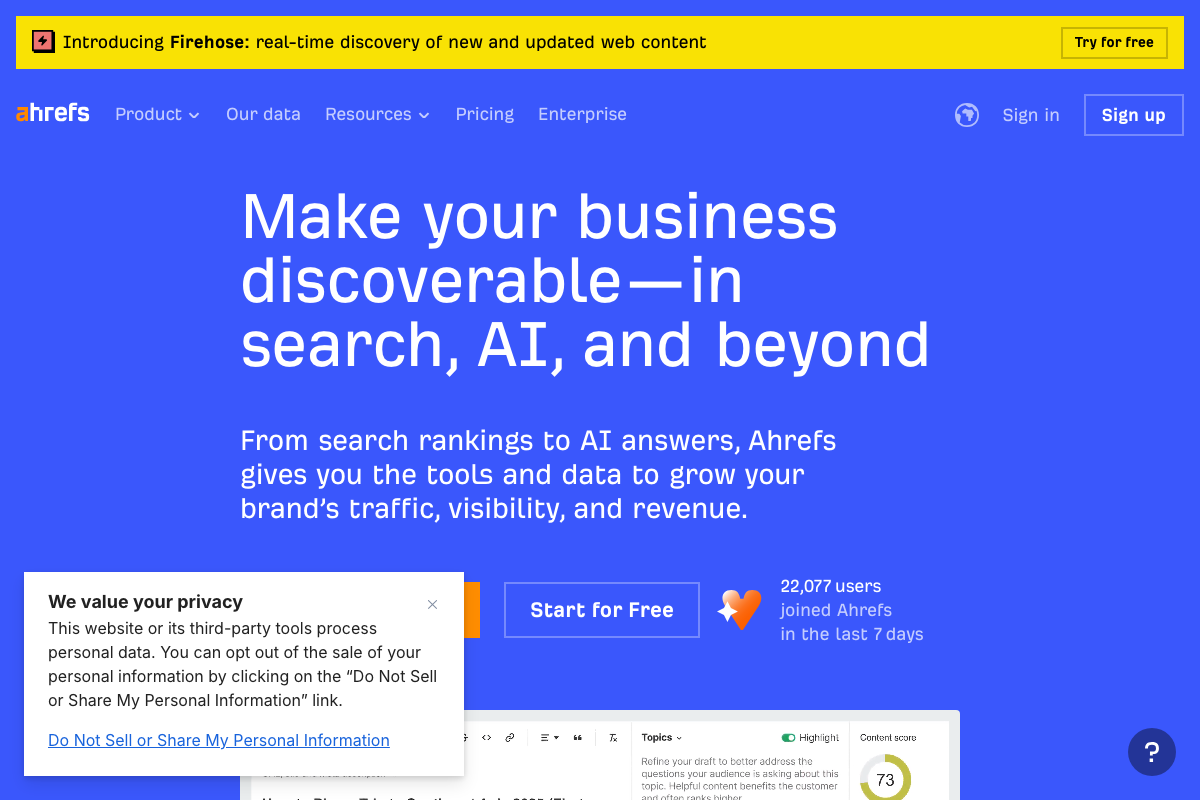
Ahrefs’ own homepage as of April 2026 reads: “Make your business discoverable — in search, AI, and beyond.” The video’s framing of GEO as a broader discoverability problem, not a narrow SEO task, maps directly to how the platform now describes its own scope. One addition worth noting: Ahrefs publicly describes itself as an “AI Marketing Platform” in its page title and branding — a positioning the video doesn’t reference but that strengthens the argument if you’re pitching GEO services to a skeptical client.
The video’s approach here matches the current docs exactly.
Step 3 — 301 and 302 redirect behavior
No official documentation was found for this step — proceed using the video’s approach and verify independently.
Step 4 — Technical SEO decision gate sequence
No official documentation was found for this step — proceed using the video’s approach and verify independently.
Step 5 — Hreflang diagnosis methodology
No official documentation was found for this step — proceed using the video’s approach and verify independently.
Step 6 — Internal linking before external link building
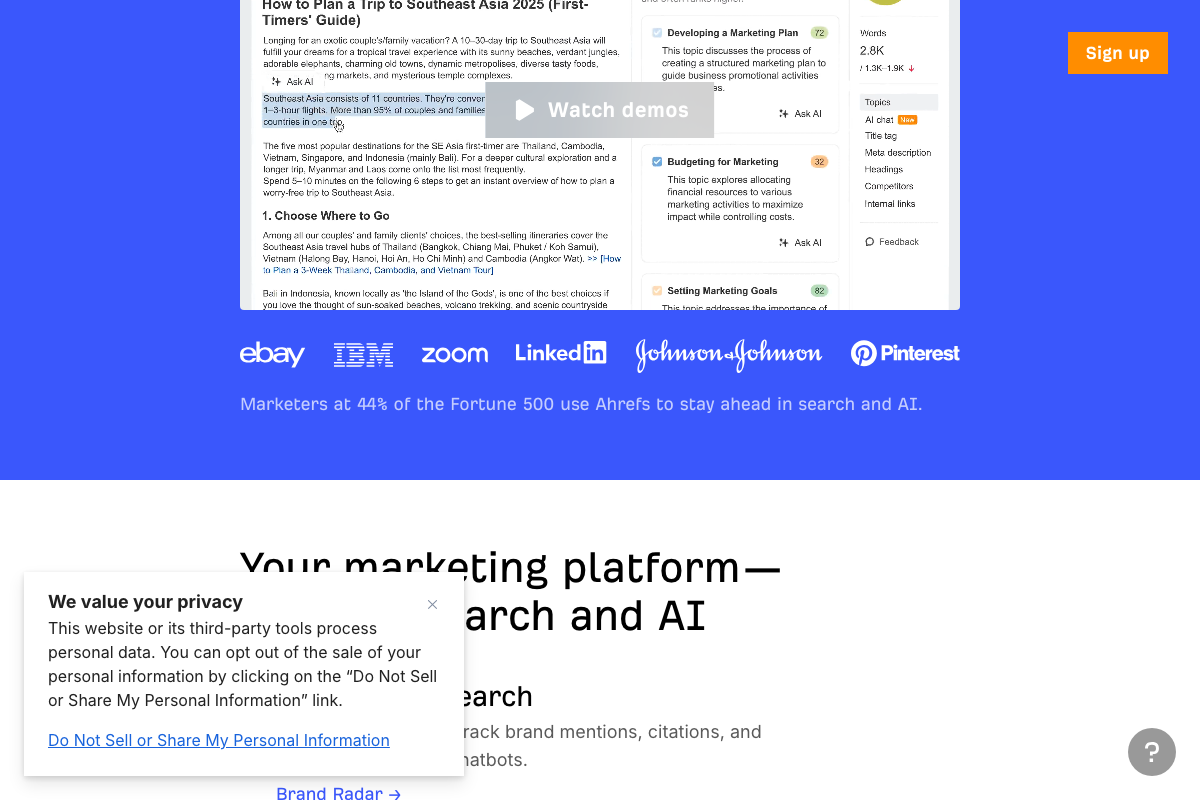
“Internal links” is visibly listed as a tracked metric in the Ahrefs content editor sidebar — surface-level confirmation that internal linking is a discrete, auditable dimension within the platform. No Ahrefs help documentation on internal linking audit methodology was captured in the available screenshots.
No official documentation was found for the methodology described in this step — proceed using the video’s approach and verify independently.
Step 7 — DR vs. UR for competitive difficulty
No official documentation was found for this step — proceed using the video’s approach and verify independently.
Step 8 — 50–100 MSV keyword targeting for small businesses
No official documentation was found for this step — proceed using the video’s approach and verify independently.
Step 9 — LLM and GEO visibility for small businesses
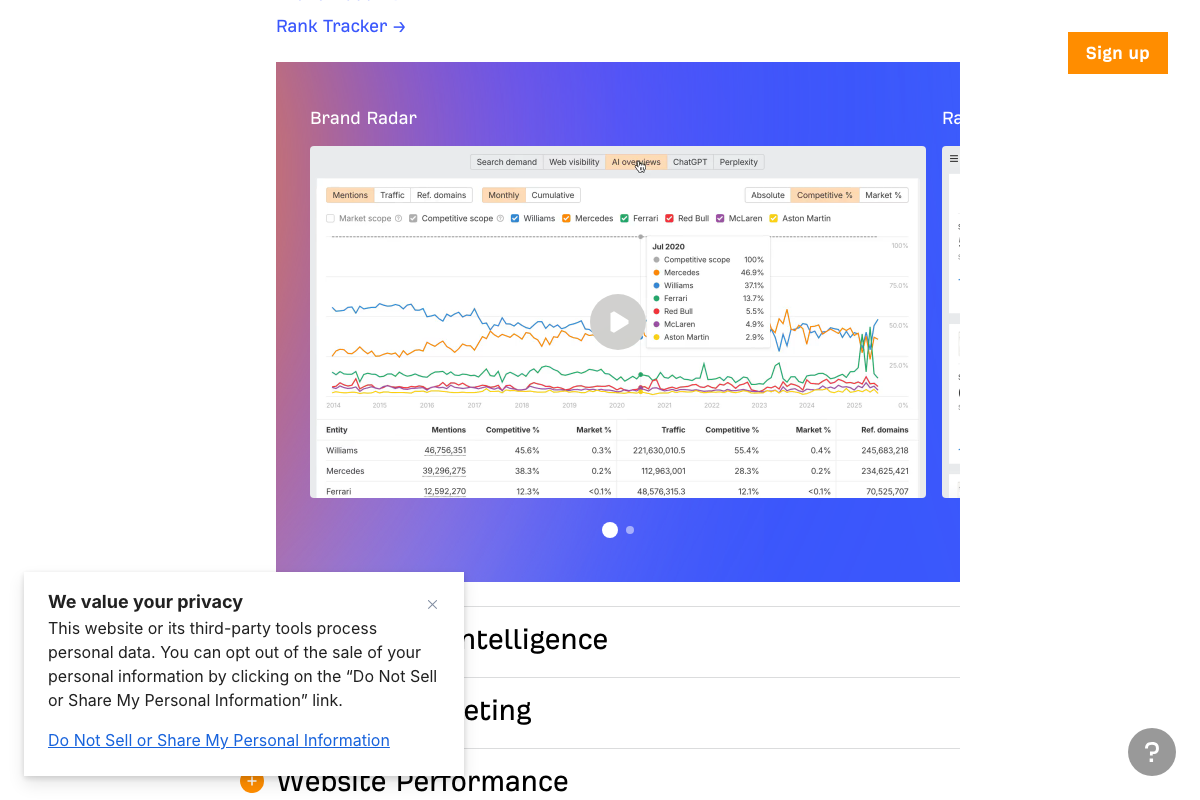
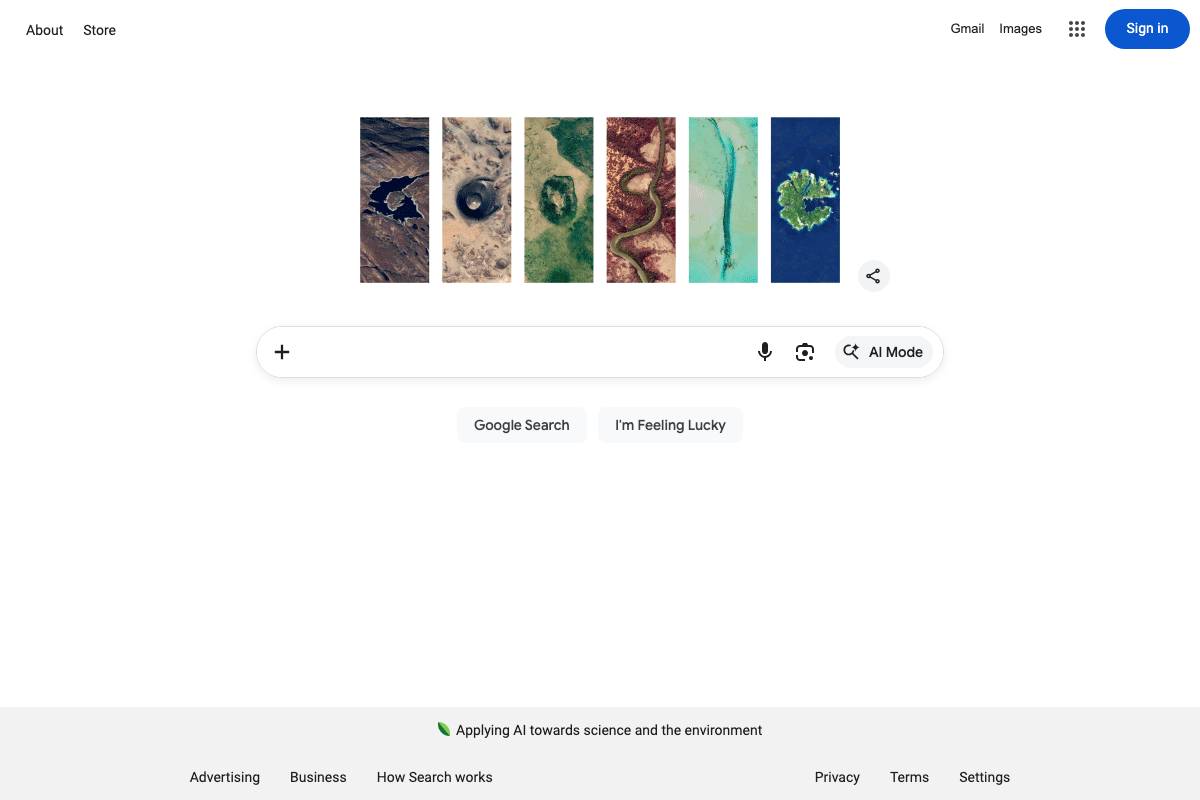
Ahrefs Brand Radar tracks ChatGPT, Perplexity, and AI Overviews as distinct, named tabs with live visibility data — “Competitive %” and “Market %” columns included. The infrastructure to monitor exactly what Stox describes exists and is active in the current platform. Brand Radar’s explicit tracking of “citations” is directly relevant to LLM visibility strategy. Meanwhile, Google’s own homepage now shows an “AI Mode” button in the primary search bar, confirming that AI-driven search is a front-line Google product as of April 2026.
The video’s approach here matches the current docs exactly.
Step 10 — Counseling clients on competitive ceilings
No official documentation was found for this step — proceed using the video’s approach and verify independently.
Useful Links
- Ahrefs — AI Marketing Platform Powered by Big Data — Ahrefs homepage confirming the platform’s current scope across traditional search, AI visibility, and brand discoverability.
- Google Search — Google’s consumer search homepage, showing “AI Mode” as an active primary interface option as of April 2026.
- Documentation to Improve SEO | Google Search Central — The intended source for Google’s official guidance on indexing, redirects, hreflang, and crawling; no documentation content was captured in the available screenshots — visit directly for verification of steps 3, 4, and 5.


0 Comments