

How Jotform Gets 2.7M Google Clicks a Month
Jotform earns 2.7 million monthly Google clicks — the majority from people who’ve never heard of the brand. This breakdown traces the exact architecture behind that number: product-driven landing pages, strategic subfolder expansion, and a blog that prunes rather than grows. Work through these steps and you’ll have a repeatable framework for turning your own products into search assets.
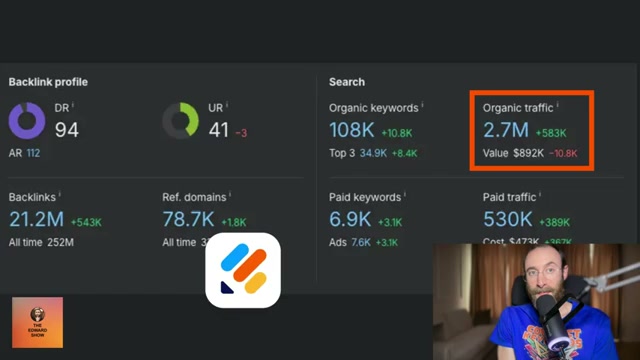
- Open Jotform’s domain overview in Ahrefs. The baseline metrics: DA 92, 21.2 million backlinks, 108,000 ranking keywords with 35,000 in positions 1–3, and 2.7 million monthly clicks. The backlink count reflects a decade in market — not a campaign.

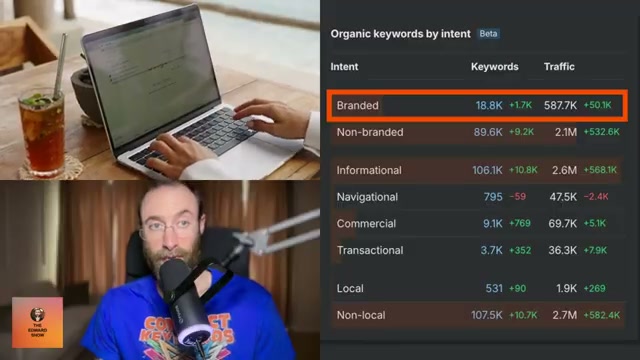
- Filter the keyword data by intent. Branded searches account for roughly 600K clicks. The remaining 2.1 million are non-branded — users looking for a template, a tool, or an answer, not for Jotform by name. That split is the core signal: Jotform is winning intent-based searches at scale.
- Navigate to
jotform.com/pdf-templates. Every page in this subfolder targets a transactional query and delivers the product above the fold with no editorial padding. Jotform is building lightweight products that resolve search intent directly — not blog posts written about these keywords.
- Run
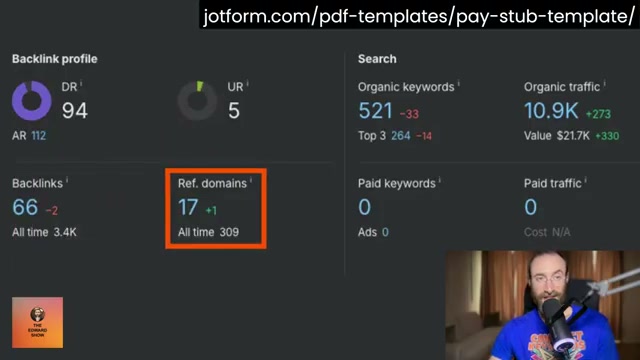
jotform.com/pdf-templates/pay-stub-templatethrough Ahrefs. The page earns approximately 11,000 monthly clicks from 521 keywords with only 17 referring domains. The H1, page title, and above-the-fold layout all resolve to “free pay stub PDF template.” Low backlinks, tight intent match, high traffic — that ratio is the whole strategy.
- Extend the pattern across
/form-templates,/surveys, and the newer/aisubfolder. The AI directory is ranking for 2,900 non-branded keywords with traffic accelerating.jotform.com/ai/quiz-generatorearns 11,000 clicks per month targeting “AI quiz generator” with 228 referring domains and zero paid traffic.

-
Check Jotform’s branded keyword defense. They run paid ads on “Jotform pricing,” “Jotform login,” and similar terms. A live search for “Jotform pricing” surfaces competitor pages from Zyte and checkthat.ai explicitly targeting the brand with 2026 comparison content — exactly the gap that opens when a brand abandons its own branded SERPs.
-
Pull
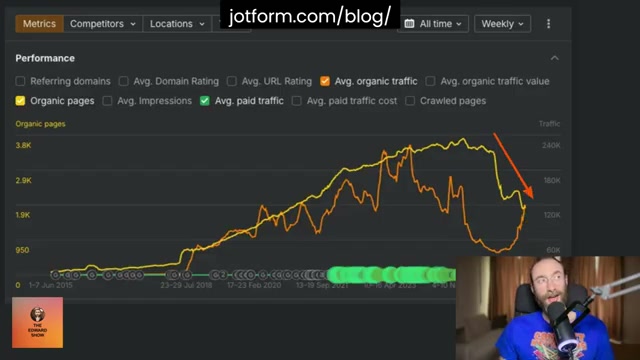
jotform.com/blogin Ahrefs. The blog has fewer indexed pages than a year ago — Jotform pruned low-value content — yet total blog traffic increased. Removing pages that diluted topical authority freed the surviving posts to perform better.
- Evaluate the remaining blog signals and risks: AI summarization buttons (ChatGPT, Perplexity, Claude, Grok), TLDR sections, rich media, and author profiles indicate content quality. The exposure lies in self-promotional listicles (“best X for Y” where Jotform ranks first) and informational expansions like
/blog/rsvp-meaning. The ClickUp collapse from 1.19 million to 28,000 monthly visits and HubSpot’s topical authority overstretch are the active precedents. Search ChatGPT for “best affiliate programs for beginners without a website” and Jotform appears — proof the tactic is generating GEO visibility now, but the downside risk is documented.
Warning: this step may differ from current official documentation — see the verified version below.
How does this compare to the official docs?
The video makes a strong empirical case for product-page SEO, but several of the underlying principles — subfolder authority, topical relevance signals, and GEO optimization — have documented guidance from Google and Ahrefs that either reinforces or complicates what the data shows on screen.
Here’s What the Official Docs Show
The video builds a compelling empirical case from live Ahrefs data — Act 2 adds the documented constraints on two research methods the tutorial uses and one interface detail that could change your GEO test results. The core thesis holds; these are precision additions.
Step 1 — Domain baseline metrics
No official documentation was found for this step — proceed using the video’s approach and verify independently.

Step 2 — Branded vs. non-branded keyword split
No official documentation was found for this step — proceed using the video’s approach and verify independently.

Step 3 — Inspect the /pdf-templates subfolder
No official documentation was found for this step — proceed using the video’s approach and verify independently.
The site: operator is the natural inspection tool here. The documented limitation that applies to this step is covered in full at step 10 below.

Step 4 — Audit a single template page in Ahrefs
No official documentation was found for this step — proceed using the video’s approach and verify independently.

Step 5 — Extend the pattern to /form-templates, /surveys, and /ai
No official documentation was found for this step — proceed using the video’s approach and verify independently.
Step 6 — Branded keyword defense (Pricing and Login pages)
The video’s approach here matches the current docs exactly. Jotform’s live homepage confirms both a Pricing link and a Login link in the top navigation — the exact destinations the video identifies as worth defending with paid ads.
Step 7 — Blog pruning audit
No official documentation was found for this step — proceed using the video’s approach and verify independently.

Step 8 — Competitor ads, branded SERPs, GEO test, and strategic risks (steps 8–14)
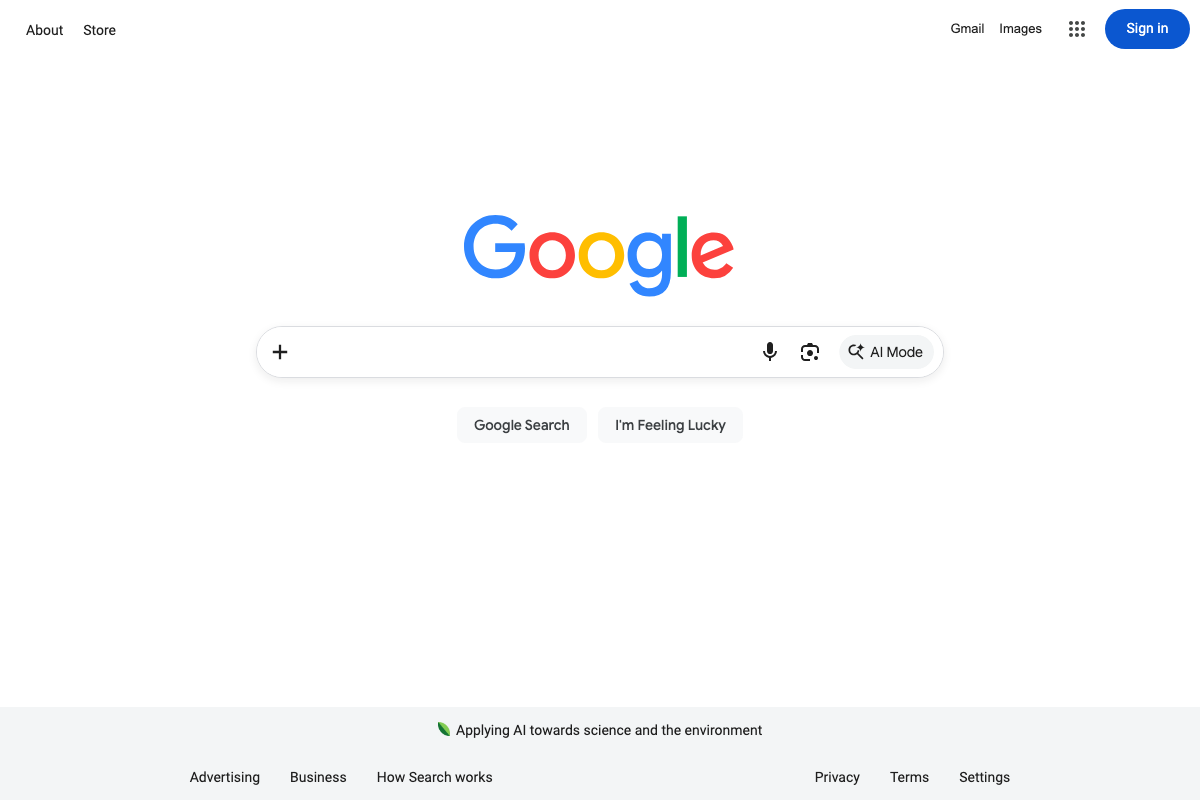
For the competitor ad and branded SERP research in steps 8–9: Google’s interface now includes an “AI Mode” button alongside the standard search bar. Any keyword strategy targeting branded or non-branded terms should account for AI-generated overviews that may appear above both paid and organic listings — a layer the video predates.
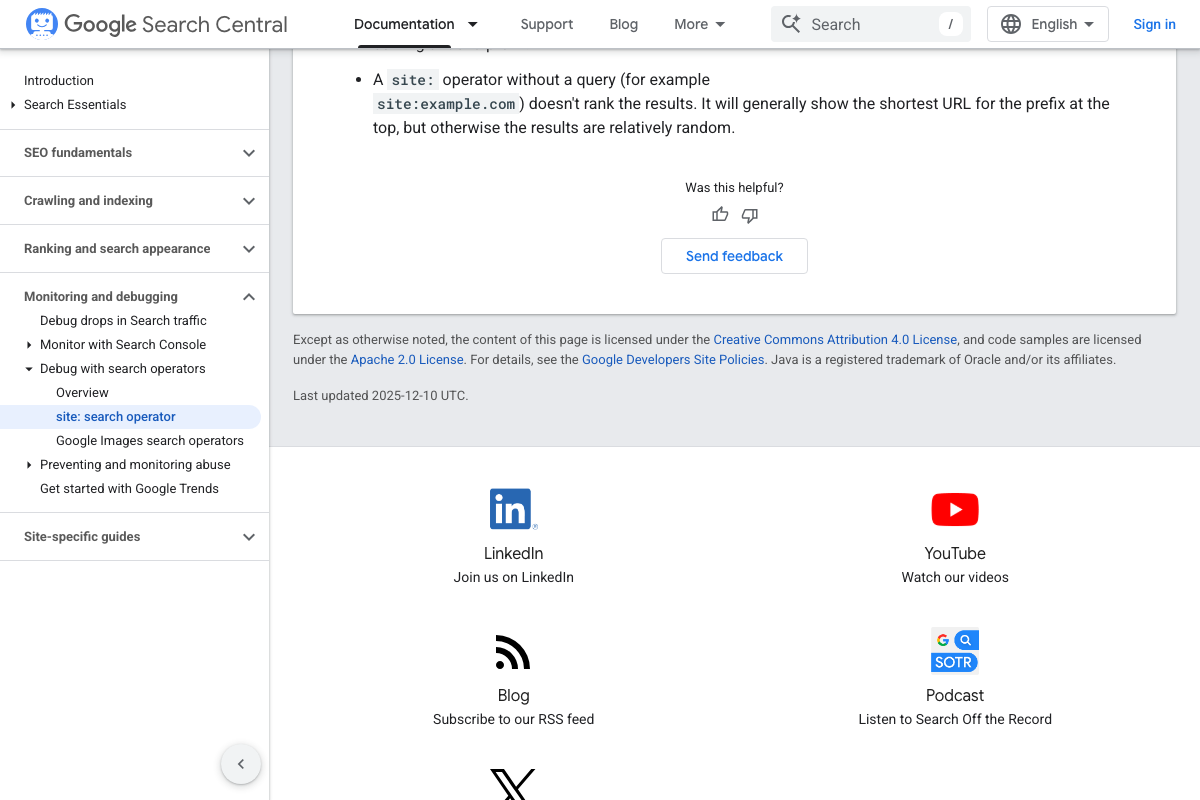
For the blog de-indexing audit in step 10: Google Search Central explicitly states that for large sites, bare site: results are “not always exhaustive” and are returned in a “relatively random” order without a keyword qualifier. As of June 2026, the site: operator confirms whether a specific page is indexed — it cannot reliably enumerate all de-indexed pages across a large domain. Use Google Search Console’s URL Inspection tool for authoritative indexing status.
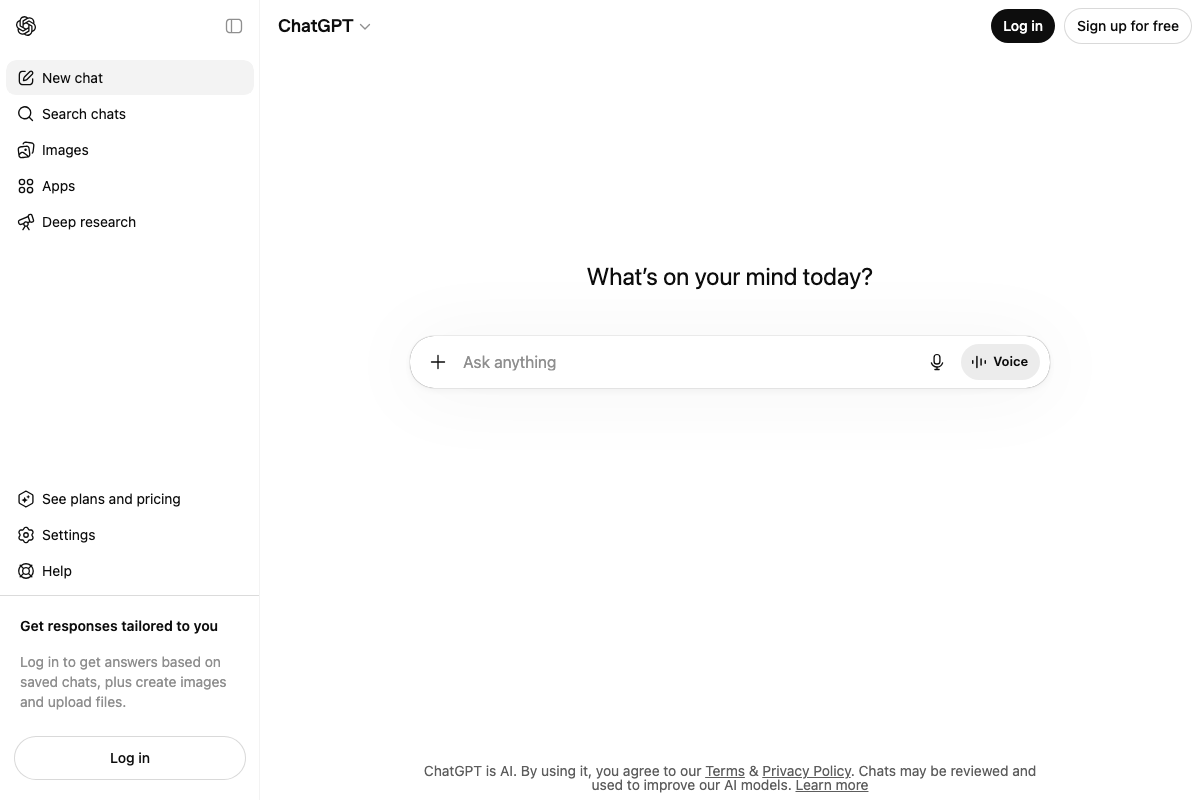
For the GEO test in step 12: ChatGPT’s interface includes a “Deep research” mode in the sidebar — a distinct function that produces more exhaustive, sourced outputs than standard chat. The video does not specify which mode was used for the “best affiliate programs for beginners without a website” query. Results may differ materially depending on mode and whether you are in a logged-in session.
No official documentation was found for the specific GEO test result, the ClickUp traffic collapse comparison, or the topical authority risk assessment in steps 11–14 — proceed using the video’s approach and verify independently.
Useful Links
- How To Use the Site Search Operator | Google Search Central — Official documentation for the site: operator, including the large-site non-exhaustiveness and random-ordering caveats that directly affect the blog de-indexing methodology in step 10.
- Free Online Form Builder & Form Creator for 2026 | Jotform — Jotform’s live homepage confirming Templates, Pricing, and Login as primary navigation destinations, supporting the branded keyword defense described in step 6.
- Google — The search interface used for competitor keyword research in steps 8–9, now featuring an AI Mode button that may surface AI-generated overviews above traditional organic and paid listings.
- ChatGPT — The AI platform used for the GEO brand mention test in step 12; the consumer interface includes a Deep research mode that may produce materially different brand citation results than standard chat.


0 Comments