

Adapt Your Marketing Strategy for Google’s AI-First Search
Google’s search overhaul isn’t on the horizon — it’s already live. Following Google I/O, AI Mode is rolling out as the default experience, and the metrics most marketing teams track today are measuring a product that no longer exists. Work through these steps and you’ll know how to audit your current AI visibility, restructure your content for citation, and retool your team’s skills before the shift fully completes.
- Recognize that AI Mode is the new default. Google I/O formalized what’s been building for two years: conversational, multi-sentence prompts now replace short-keyword queries, and a single AI-generated answer replaces the ten blue links. This isn’t a lab feature — it’s the product direction for all Google Search users.

- Internalize the zero-click reality. An Ahrefs study across 5.47 million queries found that AI Overviews cut organic click-through rates by 61%. With Google AI Mode surpassing 2.5 billion monthly users, 93% of searches now end without a click to any external site. Referral traffic from Google is no longer a reliable growth signal — it’s a lagging indicator of a behavior that’s disappearing.

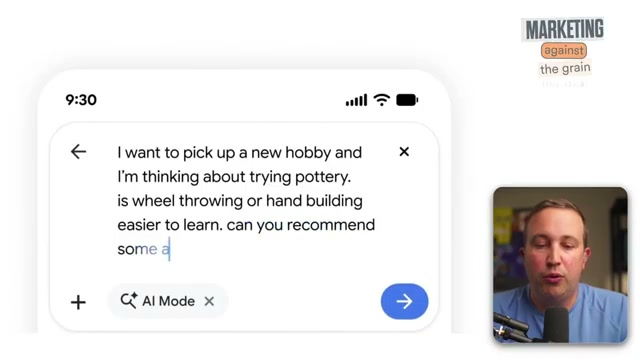
- Understand the citation overlap problem. Ranking #1 in traditional Google Search does not guarantee an AI Mode citation. Research from IKOD shows only 17–36% overlap between top-10 organic results and the sources AI Mode actually cites. A page that once held the top position now has, at best, a one-in-three chance of appearing in an AI-generated answer.
- Fix Mistake #1 — measure AI visibility, not search traffic. Drop keyword rankings and referral traffic as primary KPIs. Track mentions (brand appearances in AI-generated answers) and citations (linked sources inside those answers). Being cited in an AI Overview correlates with 35% more organic clicks and 91% more paid clicks compared to uncited brands.
-
Fix Mistake #2 — write for human customers, not crawlers. The old playbook — keyword targeting, long-form H2-heavy posts, aggressive internal linking — optimized for string-matching algorithms. AI search synthesizes arguments and consensus from across the web. Content that earns citations today is built from proprietary data, original research, and task-based formats tied to a specific customer job-to-be-done.
-
Fix Mistake #3 — retool for AI search optimization skills. Keyword SEO skills and AI search optimization are meaningfully different disciplines. What some teams are calling AO (Answer Engine Optimization) pulls from PR, product marketing, and data journalism. Whether that means retraining your current team or changing who you hire, the gap is real and the window to close it is narrowing.

-
Run a citation audit. Identify 10–15 prompts your buyers would realistically type. Enter each one into Google AI Mode — not standard Google Search — screenshot every response, and record whether your brand is mentioned or cited versus which competitors appear. That baseline tells you exactly where you stand before any changes.
-
Replace your generic content calendar with specific, original assets. Named case studies, proprietary survey data, and documented customer examples are the inputs AI systems aggregate into citations. Generic posts written to hit keyword volume targets produce neither traffic nor citations in this environment.

- Distribute across the platforms AI uses to assess authority. Reddit threads, LinkedIn posts, YouTube videos, and earned press placements in outlets like Fortune, Forbes, and Inc. are the consensus signals AI search draws on to determine which brands own a topic. Publishing exclusively to your own domain limits the surface area AI can reference when building its answers.
How does this compare to the official docs?
The steps above reflect one practitioner’s read on a fast-moving platform — Act 2 puts those recommendations against Google’s own published guidance and third-party measurement research to show exactly where the advice holds up and where a closer look is warranted.
Here’s What the Official Docs Show
Act 1 gives you a solid practitioner framework for navigating Google’s AI search shift — Act 2 layers in what the captured documentation actually shows, so you can calibrate which steps to act on with full confidence today. Where the screenshots add context or surface a meaningful difference, you’ll find it noted directly below each step.
Step 1 — AI Mode exists, but it’s opt-in today.
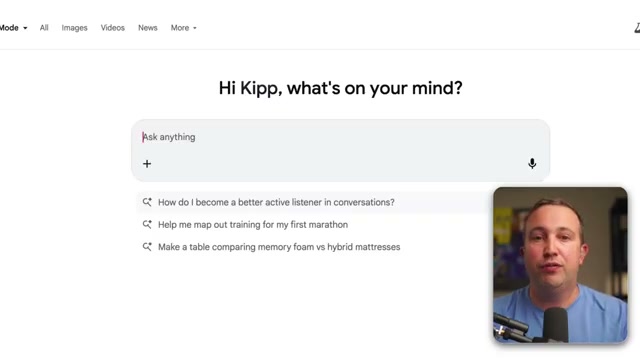
The Google homepage screenshots confirm AI Mode is a real, deployed feature — a labeled button inside the search bar, sitting alongside the standard “Google Search” and “I’m Feeling Lucky” controls. As of May 27, 2026, the correct description is that AI Mode is an opt-in experience: the video’s framing of it as “becoming the default search experience” describes a strategic direction, not the current interface state.

No official documentation was found for the broader rollout claims in this step — proceed using the video’s approach and verify independently.
Step 2 — The zero-click statistics.
No official documentation was found for this step — proceed using the video’s approach and verify independently.
Step 3 — The citation overlap data.
No official documentation was found for this step — proceed using the video’s approach and verify independently.
Step 4 — Measuring AI visibility and citations.
No official documentation was found for this step — proceed using the video’s approach and verify independently.
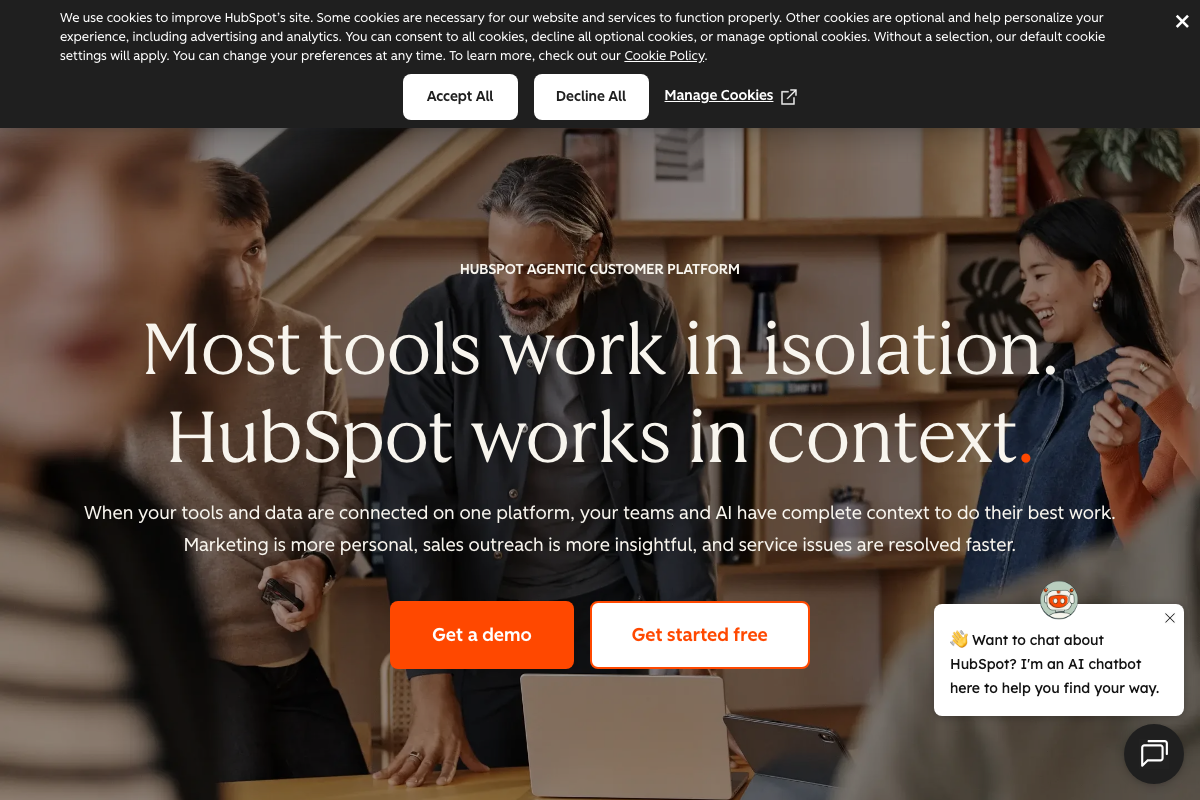
Note: all three HubSpot screenshots captured the general marketing homepage only. If an AI Search Grader product exists at HubSpot, its product page was not captured here and cannot be confirmed from this documentation pass.
Step 5 — Writing for human customers, not crawlers.
No official documentation was found for this step — proceed using the video’s approach and verify independently.
Step 6 — Retraining for AI search optimization.
No official documentation was found for this step — proceed using the video’s approach and verify independently.
Step 7 — Running a citation audit.
The video’s approach here matches the current docs exactly. The Google homepage confirms AI Mode is accessible as a distinct, named entry point — making the audit workflow of entering realistic buyer prompts into AI Mode and recording which brands are cited both sound and executable right now.

Step 8 — Replacing generic content with original assets.
No official documentation was found for this step — proceed using the video’s approach and verify independently.
Step 9 — Distributing across the platforms AI uses for authority signals.
The video’s approach here matches the current docs exactly. Reddit, LinkedIn, and YouTube are all confirmed as publicly accessible, high-traffic platforms. LinkedIn’s content discovery surface organizes posts by topic category; Reddit surfaces community content with visible engagement metrics; YouTube supports multi-format publishing including Shorts — all consistent with the tutorial’s recommendation to expand your distribution surface beyond your own domain.


Useful Links
- Google — Google homepage where AI Mode is accessible today as a labeled opt-in button in the search bar.
- Google AI Overviews Help — Google’s official support page for AI Overviews and AI Mode features; referenced in screenshot metadata but the page itself was not captured in this documentation pass.
- HubSpot — HubSpot platform homepage; no dedicated AI Search Grader or citation measurement product page was captured across three screenshot attempts.
- Reddit — Reddit’s public platform, confirming availability as a content distribution and community engagement channel with both organic and paid brand presence options.
- LinkedIn — LinkedIn’s professional network, confirming a content discovery surface organized by topic category and a confirmed marketing professional audience.
- YouTube — YouTube’s public platform, confirming availability as a multi-format content channel supporting standard video and Shorts formats.


0 Comments