

How to Build a Brand Identity That Commands a Premium
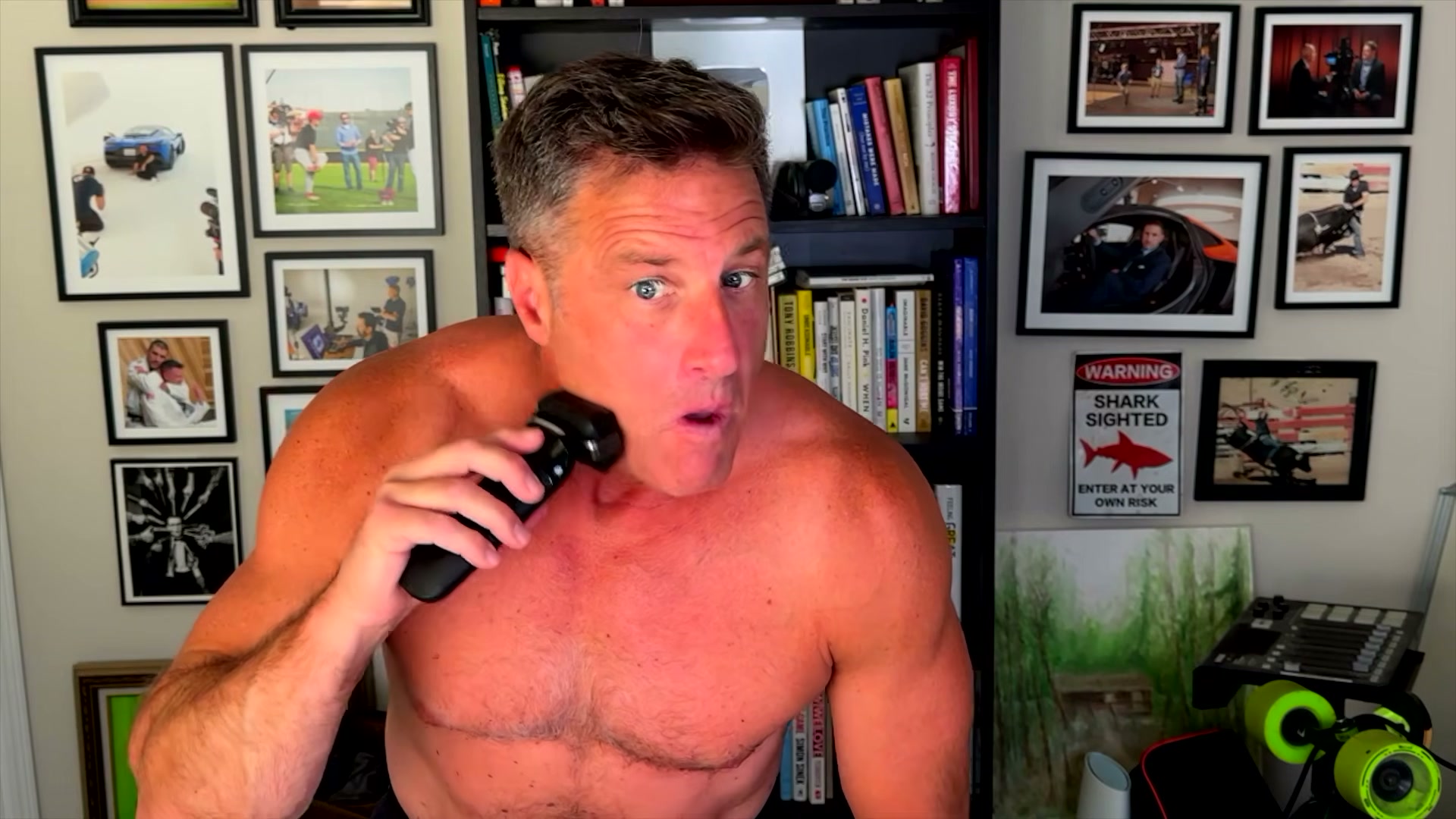
Manscaped didn’t become a category-defining men’s grooming brand by accident — it got there by making explicit choices most brand teams avoid. In this Behind the Brand interview, CMO Marcelo Cortez walks through the framework that took Manscaped from a taboo conversation to a Super Bowl advertiser. Work through these steps and you’ll know how to define a brand that stands for something, target a psychographic instead of a demographic, and deploy humor as a strategic asset rather than a tonal accident.
-
Define what a brand is — not what it looks like. A brand is not a logo, not packaging, and not a color palette. Cortez frames it as “a shorthand for what you stand for — what people talk about when you’re not in the room.” Distinctiveness is the threshold: without it, you have a product, not a brand. The shelf moment between Advil and generic ibuprofen makes the point — identical molecules, different price points, because one carries trust built through brand identity.
-
Identify your brand’s core promise at two levels. The first is functional: what does the product literally do? The second is the lifestyle it represents — who the customer becomes by using it. Cortez frames Manscaped’s promise around attraction: not just looking groomed, but projecting the confidence and intelligence that humor signals. Both layers need to be explicit before any creative work begins.
- Develop a psychographic profile by asking who gives a damn. Demographics tell you age and income. Psychographics tell you what your customer cares about. Cortez distills Manscaped’s target to one sentence: men who care about how they look — at work, at school, in relationships, not just for a romantic partner. That single attitudinal filter spans UFC sponsorships and drag queen community partnerships simultaneously, because both audiences share the same underlying value: intentional self-presentation.
- Use humor to lower the barrier in taboo categories. When your category is difficult to discuss openly, humor becomes infrastructure, not decoration. Cortez describes it as “the most effective and most powerful way to establish communication and break those barriers.” It signals intelligence, empathy, and quick thinking — and it gets people comfortable enough to engage with a conversation they’d otherwise deflect.

-
Balance a loose voice with obsessive quality execution. Humor without quality reads as cheap. Cortez describes compensating for a humorous, loose brand voice with “obsessive delivery on quality on every other touchpoint” — packaging, product build, website. Every element that isn’t funny has to work harder to justify the premium price position.
-
Deliberately exclude audiences to strengthen commitment to your target. Manscaped’s psychographic definition — men who care about how they look — implicitly excludes men who don’t. Cortez treats that exclusion as a feature: tighter targeting creates a stronger sense of belonging for the people who do identify. The brand becomes something worth talking about because not everyone is invited.
- Distill your brand brief to its simplest possible statement. Manscaped’s internal shorthand — from ball to all — captures the category expansion from below-the-belt grooming to full men’s grooming in four words. A brief that fits in one sentence survives a 100-person organization; one that requires a deck does not.
How does this compare to the official docs?
Cortez’s framework is grounded in live brand-building experience, but marketing has formalized bodies of knowledge — and where his approach intersects with, or diverges from, established brand strategy methodology is exactly where Act 2 gets useful.
Here’s What the Official Docs Show
Act 1 gave you Marcelo Cortez’s framework from the inside — the strategic logic a CMO uses to build a brand in real time. What follows layers in what’s publicly verifiable from MANSCAPED’s own live digital presence, confirming where the video’s claims hold up and flagging where the documentation runs out.
Step 1 — Define what a brand is, not what it looks like.
No official documentation was found for this step — proceed using the video’s approach and verify independently.
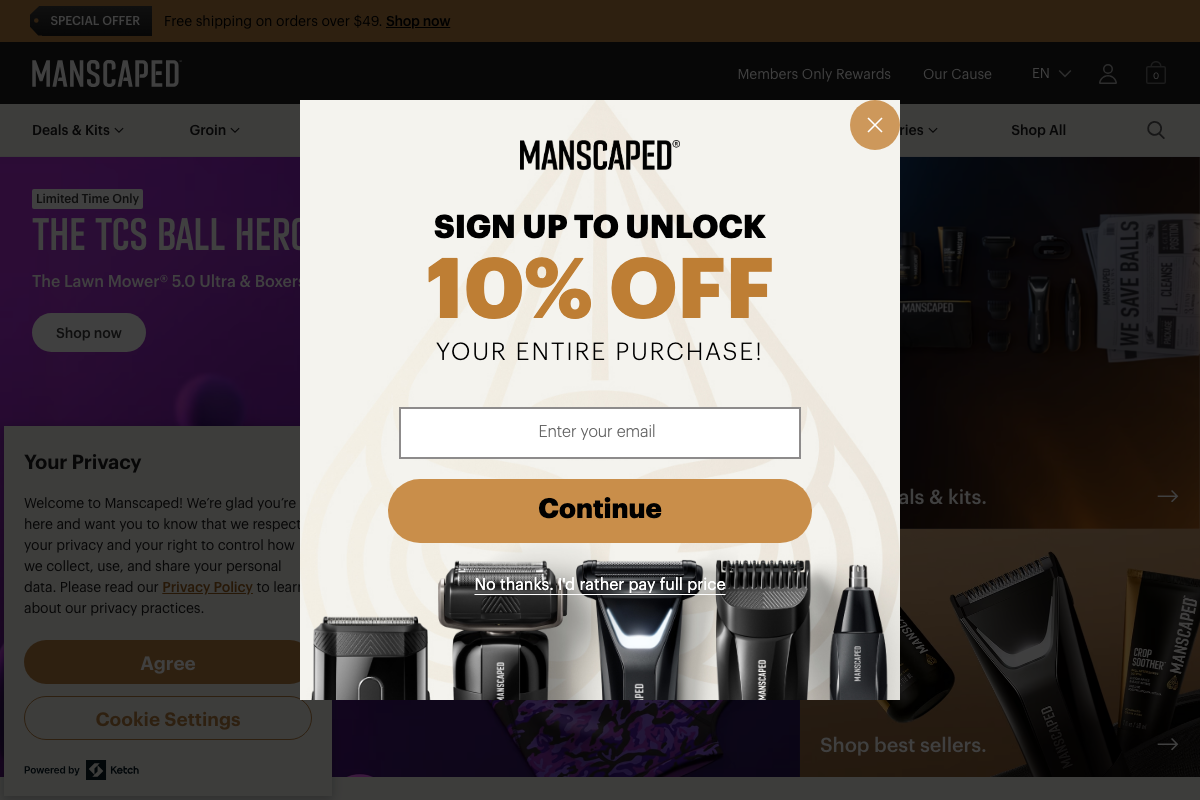
The live homepage does offer one useful visual reference: the MANSCAPED wordmark renders as a bold, standalone lockup — visually distinct from the product photography beneath it. That separation gives you a concrete example of Cortez’s brand-vs.-logo distinction, even if the site doesn’t articulate the philosophy in copy.
Step 2 — Identify your brand’s core promise at two levels.
The video’s approach here matches the current docs exactly — at least for the functional half. The page title “The Leader in Men’s Grooming Tools & Essentials” appears consistently across all three homepage captures and functions as a stable, public-facing functional brand promise, exactly as Cortez described.
That said, the lifestyle promise layer — the “who the customer becomes” framing Cortez describes around confidence and attraction signaling — is not visible in the homepage copy. That half of step 2 is unverifiable from these screenshots alone.

Step 3 — Develop a psychographic profile by asking who gives a damn.
No official documentation was found for this step — proceed using the video’s approach and verify independently.
No about page, brand manifesto, or audience segmentation copy is accessible from the homepage captures. The psychographic framework Cortez describes — men who care about intentional self-presentation across all contexts — cannot be confirmed or refuted from what’s visible here.
Step 4 — Use humor to lower the barrier in taboo categories.
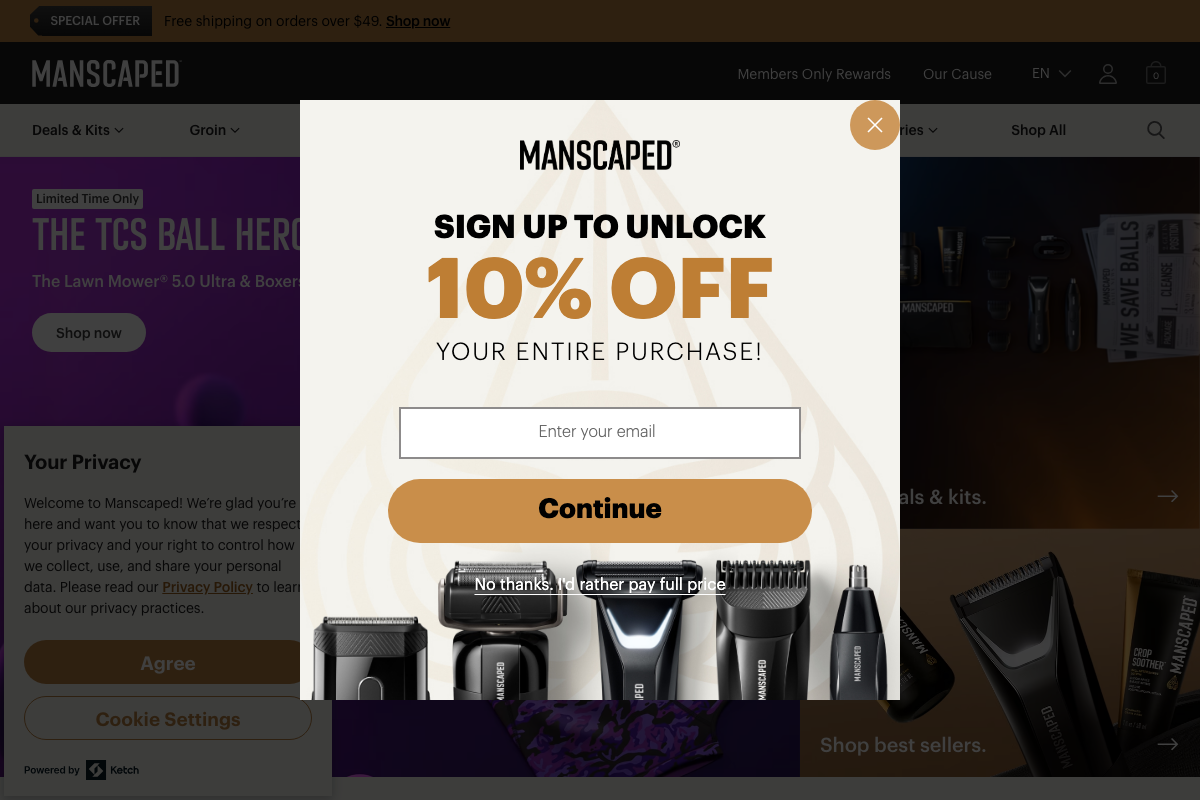
The video’s approach here matches the current docs exactly. Humor-in-naming is not an inference — it’s the lead message on the live homepage. “THE TCS BALL HERO BUNDLE” is the primary hero banner text, and “The Lawn Mower® 5.0 Ultra” carries its double-entendre openly. Both names are live, registered, and front-and-center. Cortez’s description of humor as infrastructure rather than decoration is confirmed without any interpretive lift required.
Step 5 — Balance a loose voice with obsessive quality execution.
The video’s approach here matches the current docs exactly. The homepage modal design, typography, product photography, and logo treatment all maintain a consistent premium aesthetic across three separate page-load captures — confirming that the humorous naming lives inside a polished, high-production visual environment. The quality execution Cortez describes as compensation for a loose brand voice is directly visible.
Step 6 — Deliberately exclude audiences to strengthen commitment to your target.
No official documentation was found for this step — proceed using the video’s approach and verify independently.
Audience exclusion as a strategic choice is a brand positioning decision that lives upstream of any homepage — no category landing pages, audience segmentation copy, or brand manifesto pages were accessible from these captures.
Step 7 — Distill your brand brief to its simplest possible statement.
As of April 2026, the phrase “from ball to all” does not appear anywhere on the live MANSCAPED website. The public-facing tagline is “The Leader in Men’s Grooming Tools & Essentials.” Cortez’s internal shorthand appears to be a strategic statement used inside the organization, not a consumer-facing line — which is consistent with what a functional brand brief should be. Notably, the navigation categories (“Deals & Kits,” “Beauty & Shave”) do reflect the category expansion the phrase describes, even if the phrase itself isn’t surfaced publicly.
Useful Links
- MANSCAPED® | The Leader in Men’s Grooming Tools & Essentials | MANSCAPED US — The live homepage used to verify steps 2, 4, and 5; primary source for all screenshot analysis in Act 2.


0 Comments