

ChatGPT began serving ads to free-tier users on February 9, 2026 — and the rollout is moving faster than most marketing teams anticipated. According to Search Engine Land, ads are now appearing for roughly one in five questions on the free tier in the US, with international expansion already planned. This tutorial breaks down exactly how the ChatGPT ad system works, who can access it, and — critically — how you should position your brand right now whether or not you have a $200,000 pilot budget.
What This Is
The ChatGPT Ad Pilot Program
OpenAI launched its advertising pilot on February 9, 2026, marking the AI industry’s decisive shift toward ad-supported revenue models for non-paying user bases. The program is closed and invite-only at launch, with entry requirements that immediately signal its intended audience: a reported minimum spend commitment of $200,000 per pilot participant, as detailed in the NotebookLM strategic research briefing.
The program targets users on the Free tier and the “Go” tier ($8/month), while conspicuously excluding Plus, Pro, Business, Enterprise, and Education subscribers. This tiering strategy is deliberate — it mirrors the monetization playbook used by Spotify, YouTube, and LinkedIn: reward paid users with an ad-free experience while monetizing the much larger free user base. OpenAI is betting that the value of full conversational access will either convert free users to paid tiers or, failing that, generate sustainable ad revenue from those who stay free.
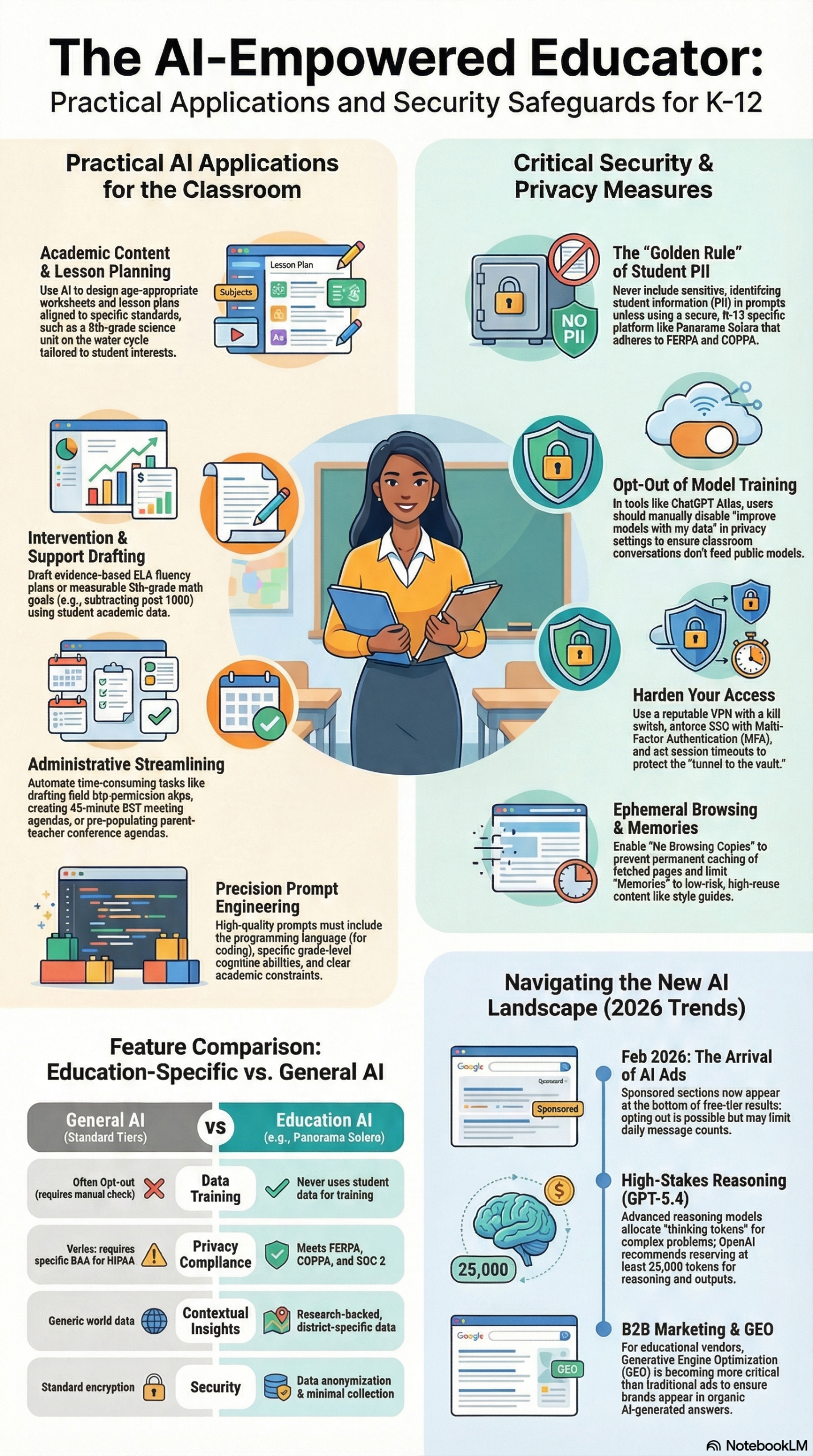
What makes ChatGPT’s approach structurally different from conventional search advertising is the placement mechanism. Unlike Google Ads that sit above organic results and compete with them, ChatGPT ads appear as clearly labeled “sponsored sections” at the bottom of AI-generated responses. The organic answer is delivered first, in full — then the ad follows. OpenAI’s official statement, quoted in the research briefing, is direct: “Answers are optimized based on what’s most helpful to you. When you see [ads], they are always clearly labeled as sponsored and visually separated from the organic answer.”
Targeting is strictly contextual — the system only uses the current conversation topic to serve ads. No user profiles, no behavioral tracking across sessions, no demographic layers. If a user asks about booking a weekend trip, they may see a sponsored result from a travel brand. If they’re asking about quarterly revenue projections, they won’t. This constraint is significant for advertisers used to audience-based targeting: you’re buying intent signals, not audience segments.
The early pilot partners — Adobe, Omnicom, and WPP — give you a clear picture of the initial use case footprint: travel, shopping, creative tools, and local services. These are all high-intent, B2C categories where users are actively in decision mode, not passive discovery mode.
Free users do have an opt-out mechanism, but it comes with a built-in friction cost: Search Engine Land reports that opting out of ads results in OpenAI limiting the number of back-and-forth messages allowed per session. In practice, this creates a deliberate trade-off — full conversational access costs you ad exposure, or costs you $8/month.
One behavior that surprised early observers: ads are appearing on the very first prompt for high-intent queries, not after extended conversations. A question like “What’s the best way to book a weekend away?” triggers an ad immediately. This is significant because it positions the ad opportunity at the top of the funnel, where user intent is sharpest — not as a last-resort monetization layer buried in a long session.
A parallel development worth flagging: the research briefing notes that alongside the ad launch, OpenAI has been rolling out GPT-5.4 reasoning models — a series that allocates internal “reasoning tokens” to think through complex problems before producing a visible response. These reasoning models power the quality of organic AI answers that users see before your sponsored content. The better the organic answer, the more trust the user places in the overall ChatGPT interface — which ultimately benefits ad credibility too.
Why It Matters
The arrival of ChatGPT ads is a structural shift in digital advertising — not just a new format to add to your channel mix.
For large agencies and enterprise B2C brands, the pilot is directly actionable. Adobe, Omnicom, and WPP are already in. If you’re in travel, retail, CPG, or local services, this is the first iteration of a platform that will eventually become self-serve and accessible at standard ad-spend thresholds. Getting in early means building first-mover playbooks and understanding creative performance before the platform commoditizes.
For B2B marketers, the calculus is fundamentally different. The research briefing cites Obility’s analysis directly: “Your prospects aren’t querying ChatGPT ‘which ERP system should I buy?’ and then clicking an ad… Put [budget] into making sure your brand shows up in AI-generated answers organically.” The $200k minimum spend barrier combined with B2C-centric contextual targeting makes the current pilot a poor ROI play for most B2B teams. The strategic move for B2B is Generative Engine Optimization (GEO) — earning citations in AI-generated organic responses, not buying ad placements.
For developers and technical leads, the ad system has clear API implications. Ads are only served in consumer product interfaces (ChatGPT.com and the mobile app); they do not appear in API responses. If your application is built on the OpenAI API, your users won’t see ChatGPT ads. The monetization pressure driving ads into the consumer product may eventually influence API pricing tiers, but that’s a 2027-and-beyond concern.
For everyone building brand presence now, the broader shift from SEO to GEO is urgent — not optional. As AI-generated answers increasingly become the first touchpoint in user research journeys, traditional search ranking becomes less valuable than appearing inside those answers as a cited, trusted source. The window to build organic AI presence before the self-serve ad market opens in 2027 is narrow and closing.
The Data
The following tables summarize the key structural details of the ChatGPT Ad Pilot and compare available channel strategies, sourced from the research briefing and Search Engine Land.
ChatGPT Ad Pilot: Program Specs
| Parameter | Details |
|---|---|
| Launch Date | February 9, 2026 |
| Program Type | Closed, invite-only pilot |
| Ad-Supported Tiers | Free tier, “Go” tier ($8/month) |
| Ad-Free Tiers | Plus, Pro, Business, Enterprise, Education |
| Ad Placement | Bottom of response; clearly labeled “sponsored” |
| Targeting Method | Contextual only (current conversation topic) |
| Minimum Pilot Spend | ~$200,000 commitment per participant |
| Early Pilot Partners | Adobe, Omnicom, WPP |
| Primary Use Cases | Travel, shopping, local services, creative tools |
| Opt-Out Option | Yes, but limits session message count |
| Ad Timing | First prompt for high-intent queries |
| Self-Serve Timeline | Expected 2027 |
| API Impact | No ads served via API responses |
Channel Strategy Comparison: Paid vs. Organic AI Visibility
| Strategy | Best For | Accessible Now | Approx. Cost | Time to Results |
|---|---|---|---|---|
| ChatGPT Ad Pilot | B2C enterprise brands | Invite-only | $200k+ minimum | 30–60 days |
| Generative Engine Optimization (GEO) | All brands, especially B2B | Yes | Content investment | 60–120 days |
| Google AI Overviews Optimization | All brands | Yes | Content investment | 30–90 days |
| Self-Serve ChatGPT Ads | SMBs and mid-market | No (2027) | TBD | N/A |
Step-by-Step Tutorial
This tutorial covers two parallel tracks: Track A for enterprise teams evaluating the paid ad pilot, and Track B for everyone else building organic AI visibility through GEO. Most readers should run both tracks simultaneously, weighted toward Track B based on your current budget and access level.
Prerequisites
- Track A: Agency or brand with $200k+ quarterly digital ad budget; existing relationship with OpenAI or a pilot agency partner (Omnicom, WPP)
- Track B: Access to your content CMS, web analytics platform, and a team member who owns SEO/content strategy
- Both tracks: A list of 20–30 high-intent queries your target customers are likely asking ChatGPT right now
Track A: Preparing for the ChatGPT Ad Pilot
Step 1: Qualify your use case before pursuing access
Before approaching an agency partner, map your product or service to the current use case set. As of March 2026, ChatGPT ads are proven for travel, shopping, creative tools, and local services — all high-intent, B2C decision-stage queries. Run an internal audit: list 10 top-of-funnel questions your customers might ask ChatGPT. If 7 or more are consumer-intent and decision-stage queries (“best [product type] under $X,” “where to [do activity] in [city]”), you have a qualified use case. If most of your queries are B2B evaluative (“compare enterprise CRM platforms”), hold your budget for GEO and wait for the B2B ad format to mature.
Step 2: Engage a pilot partner agency
The program is closed to direct brand relationships below enterprise scale. The path in for most organizations is through Omnicom, WPP, or a verified sub-agency within their networks. Contact your account team and ask specifically about the ChatGPT Ads pilot and eligibility criteria. Come prepared with: your target audience definition, primary conversion actions (bookings, purchases, sign-ups), and the conversation contexts you want to associate with.
Step 3: Define your contextual targeting brief
ChatGPT’s ad targeting is conversation-based, not keyword-based. Your brief needs to answer three questions:
– What conversation topics should trigger your ad?
– What is the user trying to accomplish in that moment?
– What is the single action you want them to take after seeing your sponsored section?
Keep the brief narrow and specific. A travel brand targeting “weekend trip planning for couples” will outperform one trying to capture “travel, flights, hotels, transportation, and vacation packages” in a single campaign. The tighter your contextual alignment, the more relevant the placement — and the more efficient your $200k goes.
Step 4: Design creative for the post-answer placement format
ChatGPT ads appear after the AI has already delivered a helpful response. The user has received value before they see your sponsored content. This changes the creative brief entirely. Your ad isn’t competing with the organic answer — it’s extending it.
Think of the sponsored section as a contextually relevant recommendation that appears after trust is established. For a travel brand responding to a “weekend trip ideas” query, an effective sponsored section might read: “[Brand] — Book the getaways ChatGPT recommends. Compare availability and prices for [destination type] in one search.” The CTA must be immediate, specific to the user’s evident intent, and low-friction. Don’t ask for an email signup after a trip planning query; ask for a click to a pre-filtered search result that matches their context.
Step 5: Establish measurement baselines before launch
ChatGPT’s pilot reporting capabilities are still maturing. Before your first dollar goes live, establish these baselines in your existing analytics stack:
- Direct and organic traffic volume from AI referrals (check referrer strings for
chatgpt.comin Google Analytics or equivalent) - Conversion rates on the landing pages you’ll use for ChatGPT-referred traffic
- Branded search volume via Semrush, Ahrefs, or similar tools
You’ll use these to isolate the incremental impact of ChatGPT ad placements. Without a pre-campaign baseline, you won’t be able to prove — or disprove — that the pilot is working.
Track B: Building Organic AI Visibility Through GEO
Generative Engine Optimization is the practice of ensuring your brand, products, and content are cited inside AI-generated answers organically — without paid placement. This is where the majority of marketing teams should be investing right now.
Step 1: Audit your current AI brand visibility
Before building, measure. Create a test set of 20 representative queries your customers would ask an AI assistant. For each query, check ChatGPT, Perplexity, and Google AI Overviews: Is your brand mentioned? What sources does the AI cite? Which competitors appear? This baseline is your GEO starting point and your benchmark for measuring progress.
Several AI visibility tracking tools have launched in 2025–2026 specifically for this purpose — search “AI brand mention tracker” or “AI search visibility tool” to identify current options that fit your stack.
Step 2: Build third-party validation at scale
The research briefing is unambiguous: “AI models prioritize information confirmed by multiple independent sources (reviews, analyst coverage, earned media).” A well-optimized brand website alone isn’t sufficient. You need your brand verified across multiple independent sources that AI training data and retrieval systems actively reference.
Priority action items:
– Accumulate reviews on G2, Capterra, Trustpilot, and sector-specific review platforms
– Pitch for analyst coverage relevant to your category (Gartner, Forrester, or niche analysts)
– Earn press mentions in publications that AI models frequently cite as authoritative
– Participate substantively in Reddit communities in your category — the research briefing explicitly identifies Reddit conversations as “frequent source material for LLMs”
Step 3: Clean up and complete your directory presence
AI models retrieve structured data from directories to answer factual brand queries. Audit and complete your listings in:
- Google Business Profile
- LinkedIn Company Page
- Apple Maps and Yelp (for local businesses)
- Crunchbase (for tech companies)
- Industry-specific directories and databases
Ensure every listing has accurate, complete, and consistent information. Inconsistent NAP data (name, address, phone) across directories creates conflicting signals that reduce AI model confidence when surfacing your brand.
Step 4: Restructure existing content for AI parsability
The research briefing recommends “moving away from ‘walls of text’ toward well-organized content with descriptive headings that AI models can easily parse.” Apply this to your highest-traffic existing pages before creating new ones:
- Break long paragraphs into shorter, factual statements
- Write descriptive H2 and H3 headings that match natural language query phrasing
- Add FAQ sections to existing high-traffic pages — AI models consistently cite structured Q&A formats
- Create concise “answer paragraphs” at the top of every article (one clear sentence that directly answers the implied query)
- Add schema.org structured data markup: Article, FAQPage, and HowTo schemas are the highest-value types for AI retrieval
Step 5: Publish video transcripts as citation targets
Per the research briefing, “transcripts from webinars and product walkthroughs are increasingly indexed and cited in AI-generated responses.” This is one of the most underutilized GEO levers currently available. If you have webinar recordings, product demo videos, or interview content, transcribe them and publish the transcripts as standalone pages or append them to relevant existing content. AI models can retrieve and cite this structured, expert-attributed, factual content at high rates.
Step 6: Monitor, iterate, and compound monthly
Run your 20-query AI visibility audit monthly. Track brand citation frequency over time. GEO feedback loops are slower than paid ads — expect 60–90 days before structural content changes begin showing up in AI responses, and 90–120 days before citation rates move meaningfully. The compounding nature of this investment is its advantage: organic AI presence, once established, doesn’t stop working when a budget is exhausted.
Expected Outcomes
- Track A: Measurable placement frequency, CTR, and conversion data from ChatGPT-referred traffic within 30–60 days of pilot launch
- Track B: Increased brand citation frequency in AI-generated responses within 60–90 days; measurable lift in direct traffic and branded search volume within 90–180 days
Real-World Use Cases
Use Case 1: Travel Brand Capitalizing on High-Intent Queries
Scenario: A mid-size online travel agency with $250k/quarter in digital ad spend wants to test ChatGPT as an acquisition channel.
Implementation: Through a WPP agency relationship, the OTA enters the pilot with contextual targeting around “weekend trip planning,” “family vacation ideas,” and “hotel recommendations.” Their sponsored section appears after ChatGPT delivers an organic itinerary, offering a “Compare and book these trips” CTA linked to a pre-filtered search results page matching the user’s evident destination intent.
Expected Outcome: High-intent clicks from users already in decision mode. Conversion rates should exceed standard display and approach branded search levels, given the query-intent alignment at the moment of ad exposure.
Use Case 2: B2B SaaS Skipping Ads, Investing in GEO
Scenario: A project management software company ($80/user/month) is evaluating whether ChatGPT ads justify the $200k minimum.
Implementation: Based on Obility’s analysis cited in the research briefing, they decline the pilot and invest in GEO instead: pursuing G2 and Capterra reviews, earning analyst mentions, and restructuring their software comparison pages to be AI-parsable with descriptive headings and FAQ schemas. They publish structured comparison guides targeting “best project management software for remote teams” and similar long-tail queries.
Expected Outcome: Brand mentions begin appearing in ChatGPT software comparison responses within 90–120 days, driving organic demo requests. ROI outperforms what any single $200k pilot spend could have delivered, and the asset compounds indefinitely.
Use Case 3: Local Services Business Using Directory and Review Strategy
Scenario: A regional HVAC company wants to appear when customers ask ChatGPT “best HVAC company in [city].”
Implementation: They optimize their Google Business Profile, Yelp, and Angi listings. They run a systematic review solicitation campaign. They publish a local FAQ page: “How to choose an HVAC company in [city]: licensing, reviews, and what to ask.” They earn a mention in a local news article covering home maintenance. Zero ad spend required.
Expected Outcome: Local ChatGPT queries for HVAC recommendations return the company as a cited source, referencing their review scores and directory presence. Inbound call volume increases without any paid media budget.
Use Case 4: E-Commerce Brand Running Paid and Organic in Parallel
Scenario: A direct-to-consumer outdoor gear brand with $500k/year in digital ad spend wants to test the ChatGPT channel while building long-term AI presence.
Implementation: They run the pilot through an agency partner for queries like “best hiking boots for rocky terrain” and “lightweight backpacking gear under $300.” Simultaneously, they invest in GEO: publishing detailed comparison guides with AI-parsable structure, earning links from outdoor review sites, and publishing gear video walkthroughs with full transcripts. Both tracks run in parallel.
Expected Outcome: The paid pilot delivers immediate click attribution and campaign learnings. The GEO investment creates a compounding organic presence that will reduce cost-per-acquisition over time — particularly as the self-serve platform opens in 2027 and competition for ad placements increases.
Use Case 5: Marketing Agency Building Ahead of 2027
Scenario: A digital marketing agency managing 20+ brand clients wants to position itself as the go-to partner when ChatGPT’s self-serve ad platform launches.
Implementation: They build an AI visibility audit into every client’s quarterly reporting cadence. They run GEO playbooks for all accounts. They document ChatGPT ad creative frameworks from pilot campaigns in their network. They create an internal “ChatGPT Ad Creative Brief” template so they can activate quickly when self-serve access opens.
Expected Outcome: When the self-serve platform launches in 2027, the agency’s clients already have measurable AI organic presence and the agency has tested creative frameworks ready to deploy. Competitive ramp-up time compresses from months to weeks.
Common Pitfalls
Pitfall 1: Applying B2B Logic to a B2C Platform
The most common mistake is treating ChatGPT ads like LinkedIn or Google Search and targeting B2B decision-makers. Current contextual targeting is built entirely around consumer-intent queries. B2B buyers don’t ask ChatGPT “which ERP system should I buy?” and then click a sponsored section. The research briefing cites Obility’s analysis directly: redirect that budget to GEO until B2B-specific formats emerge.
Pitfall 2: Opting Free Users Out Without a Content Strategy
Your target audience may be heavily skewed toward free-tier ChatGPT users. Understand that they can opt out of ads — but doing so limits their session message count, per Search Engine Land. Don’t rely on forced ad exposure. Design your sponsored content to be genuinely useful so opt-out rates stay low and your GEO organic presence covers the gap for users who do opt out.
Pitfall 3: Neglecting GEO While Chasing Pilot Access
Teams spending 90 days pursuing pilot access while neglecting GEO fundamentals are making a compounding strategic error. Organic AI visibility builds over time and doesn’t stop when a budget runs out. Paid ad exposure stops the moment the campaign ends. Run both tracks in parallel — and weight toward GEO for most organizations.
Pitfall 4: Reformatting Content Superficially
GEO requires structural content changes, not just cosmetic ones. Many teams add FAQ sections to new pages while leaving their highest-traffic existing content in wall-of-text format. Prioritize restructuring your top 20 existing pages first — they carry established authority and will see AI citation lift faster than newly published pages.
Pitfall 5: Launching Without Measurement Baselines
Entering the pilot or launching a GEO program without pre-established baselines means you cannot isolate or prove incremental impact. Before either track goes live, lock in your ChatGPT referral traffic volume, branded search volume, and AI citation frequency. Without these, you’re flying blind on attribution.
Expert Tips
Tip 1: Map Conversations, Not Keywords
ChatGPT’s contextual targeting is conversation-based, not keyword-based. Stop building keyword lists; start mapping conversational contexts. Model the full dialogue arc a user follows when they’re in a buying mindset for your category. That arc — the sequence of questions, not a single query — is your actual targeting unit. Brief your agency partner with dialogue maps, not keyword clusters.
Tip 2: Treat Reddit as a First-Class GEO Channel
The research briefing specifically identifies Reddit conversations as “frequent source material for LLMs.” This surprises many marketers who’ve deprioritized Reddit over the past few years. Identify the subreddits where your category is discussed, contribute substantive answers (not promotional noise), and ensure your brand is represented authentically in those threads. These conversations get retrieved and cited at meaningful rates.
Tip 3: Build a Structured Brand Facts Library
AI models cite specific, verifiable facts rather than general claims. Create and publish a master “Brand Facts” page: founding year, customer count, pricing range, key differentiators, third-party review scores, relevant certifications. Keep it updated quarterly. This structured, factual reference page becomes a reliable citation target for AI-generated brand mentions across multiple platforms.
Tip 4: Tag AI Referral Traffic Before the Pilot Launches
Check your analytics right now for chatgpt.com in your referrer data — this traffic is likely already appearing even without paid ads, as users click links cited in organic ChatGPT responses. Configure a UTM structure for ChatGPT referrals immediately so you can measure conversion quality of this channel before any paid layer is added. This baseline data will be invaluable for proving pilot ROI.
Tip 5: Prepare Creative Templates for 2027 Self-Serve
The self-serve ChatGPT ad platform is expected in 2027. Brands and agencies that invest in understanding the “post-organic-answer sponsored section” format now will have a meaningful advantage when self-serve access opens. Use the time before then to A/B test contextual CTA copy and sponsored content formats in other contextual ad environments — native advertising networks are the closest analog. Apply those learnings to ChatGPT the moment self-serve access opens.
FAQ
Q1: Can I buy ChatGPT ads right now if I’m not a large enterprise?
Not directly. As of March 2026, the ChatGPT Ad Pilot is invite-only with a reported minimum spend of approximately $200,000, per the research briefing. The path in for mid-market brands is through an established agency partner — Omnicom and WPP are confirmed participants. A self-serve platform is expected in 2027, which is when direct brand access at standard ad-spend thresholds becomes realistic.
Q2: Do ChatGPT ads appear in API responses or only in the consumer product?
Ads are only served within ChatGPT’s consumer interfaces — ChatGPT.com and the mobile app. If your application is built on the OpenAI API, your users will not see ChatGPT ads. This is an important distinction for teams building on OpenAI’s infrastructure: the current ad model does not affect API-based products.
Q3: How does ChatGPT contextual targeting differ from Google Ads?
Google Ads lets you build audience segments, layer in behavioral, demographic, and retargeting data, and bid on individual keywords. ChatGPT’s contextual targeting currently uses only the current conversation topic — no user profiles, no cross-session tracking, no demographic layers. As Search Engine Land notes, it’s closer to contextual keyword adjacency than to full Google Ads campaign targeting. The platform may add sophistication over time.
Q4: What is Generative Engine Optimization and how is it different from SEO?
Traditional SEO optimizes for ranking position in a list of blue links. GEO optimizes for being cited inside an AI-generated answer as the AI’s source material. The research briefing identifies the core GEO levers: third-party validation across multiple independent sources, directory accuracy, AI-parsable structured content, and video transcript indexing. GEO and SEO share many fundamentals but diverge significantly in how you structure content and which authority signals carry the most weight in AI retrieval.
Q5: If a free user opts out of ChatGPT ads, what actually happens?
According to the research briefing, free users who opt out of ads will have their per-session message count limited by OpenAI. The trade-off is explicit: accept ads and retain full conversational access on the free tier, or opt out and receive a reduced number of back-and-forth exchanges per session. This design creates a meaningful incentive structure for ad acceptance among users who can’t or won’t pay for Plus or Go subscriptions.
Bottom Line
ChatGPT launched its ad pilot on February 9, 2026, targeting free-tier users with contextual, post-answer sponsored placements — and ads are already appearing on roughly one in five free-tier queries in the US. For enterprise B2C brands with large agency relationships and the $200k minimum spend, the pilot is worth entering now to build first-mover playbooks before the platform scales. For everyone else — including most B2B teams — the highest-ROI move is Generative Engine Optimization: building the organic AI visibility that compounds in value and outperforms paid ads on a cost-per-acquisition basis over time. A self-serve ChatGPT ad platform is expected in 2027, which means you have roughly 18 months to build the organic presence that will make your paid campaigns more effective when the floodgates open. The brands that wait until 2027 to start thinking about AI visibility will be starting from zero against competitors who’ve been building for two years.


0 Comments