

How Matt Jones Built a $1.5M/Year Business Selling Sneaker Crease Protectors
Two founders with zero manufacturing experience turned a customer pain point spotted on a retail floor into Crease Beast — a memory foam sneaker accessory brand now clearing $1.5 million in annual revenue. By working through this tutorial, you’ll understand exactly how they validated the product idea, found a manufacturer through Alibaba, scaled through Sneaker Con, and built 700,000 organic social followers without a paid media budget. The sponsored segment also walks through Axio (now Accio), an AI sourcing agent from Alibaba.com that can compress several early-stage steps considerably.
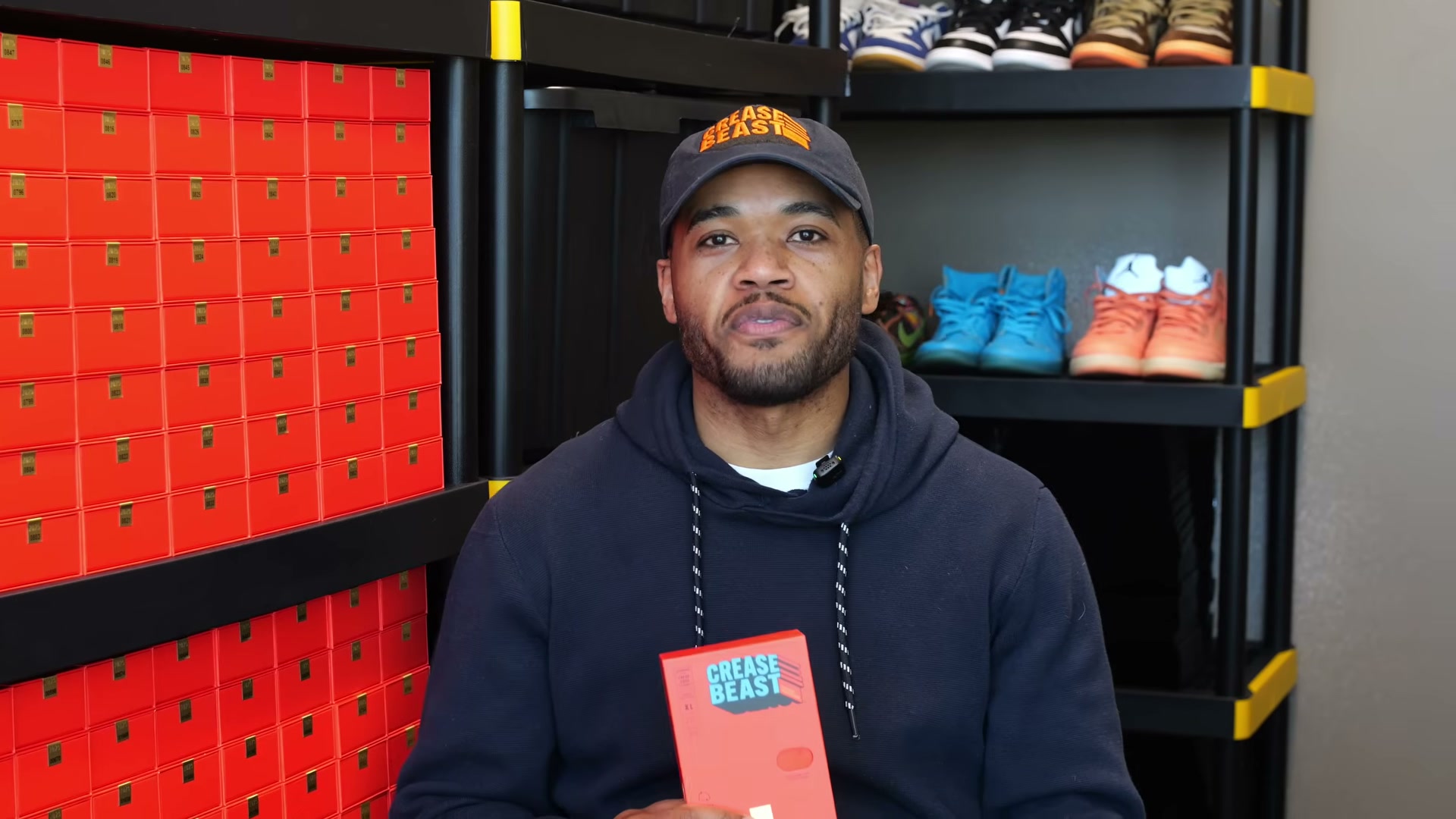
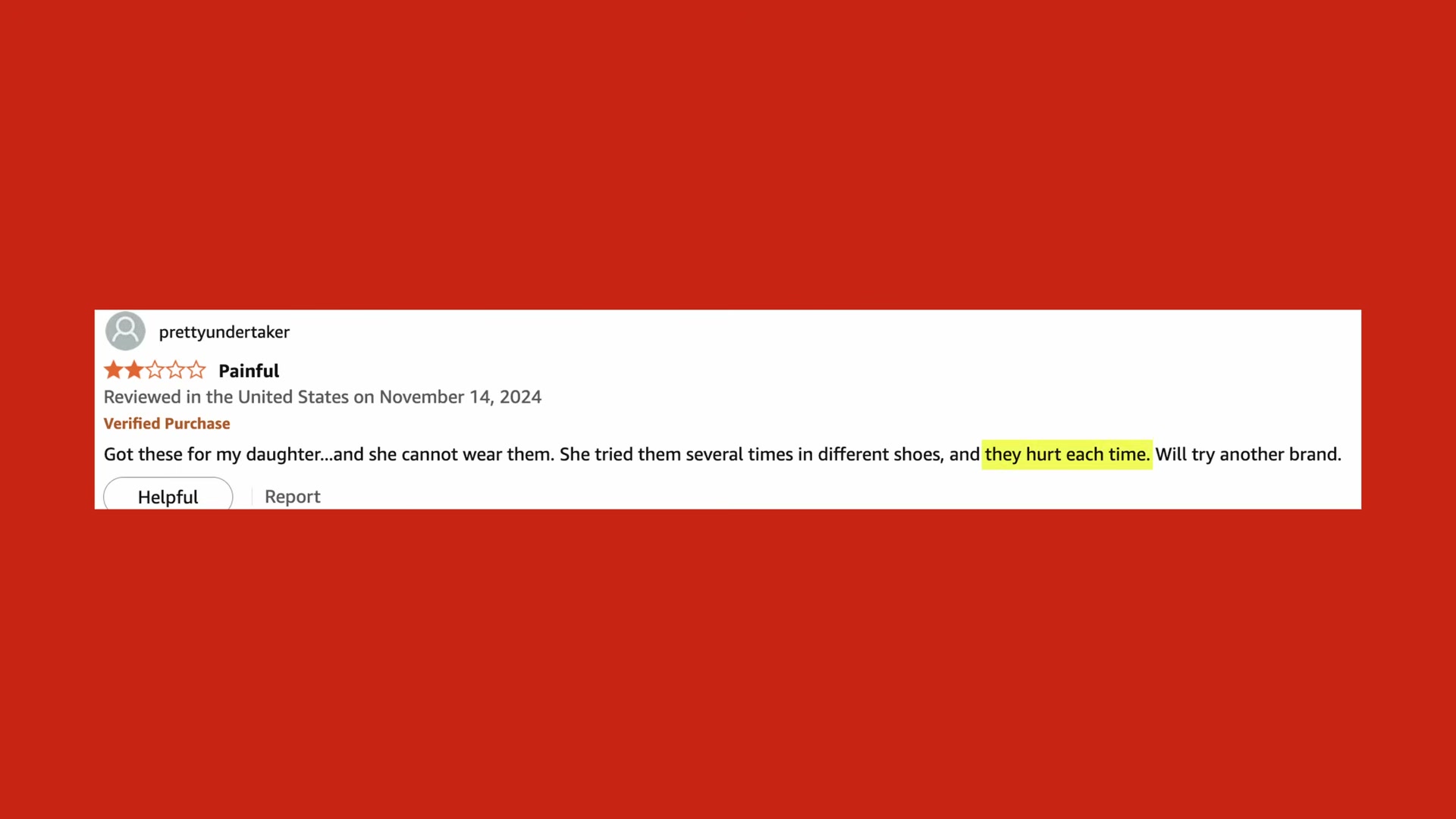
- Identify the market gap through direct retail observation. Matt Jones spent years managing footwear stores at Skechers, Foot Locker, and Nike. He noticed customers gravitating toward crease protectors but complaining about the only option available: rigid hard-plastic shields. The insight wasn’t research-driven — it came from watching real customers and concluding the dominant format couldn’t possibly be comfortable to walk in.
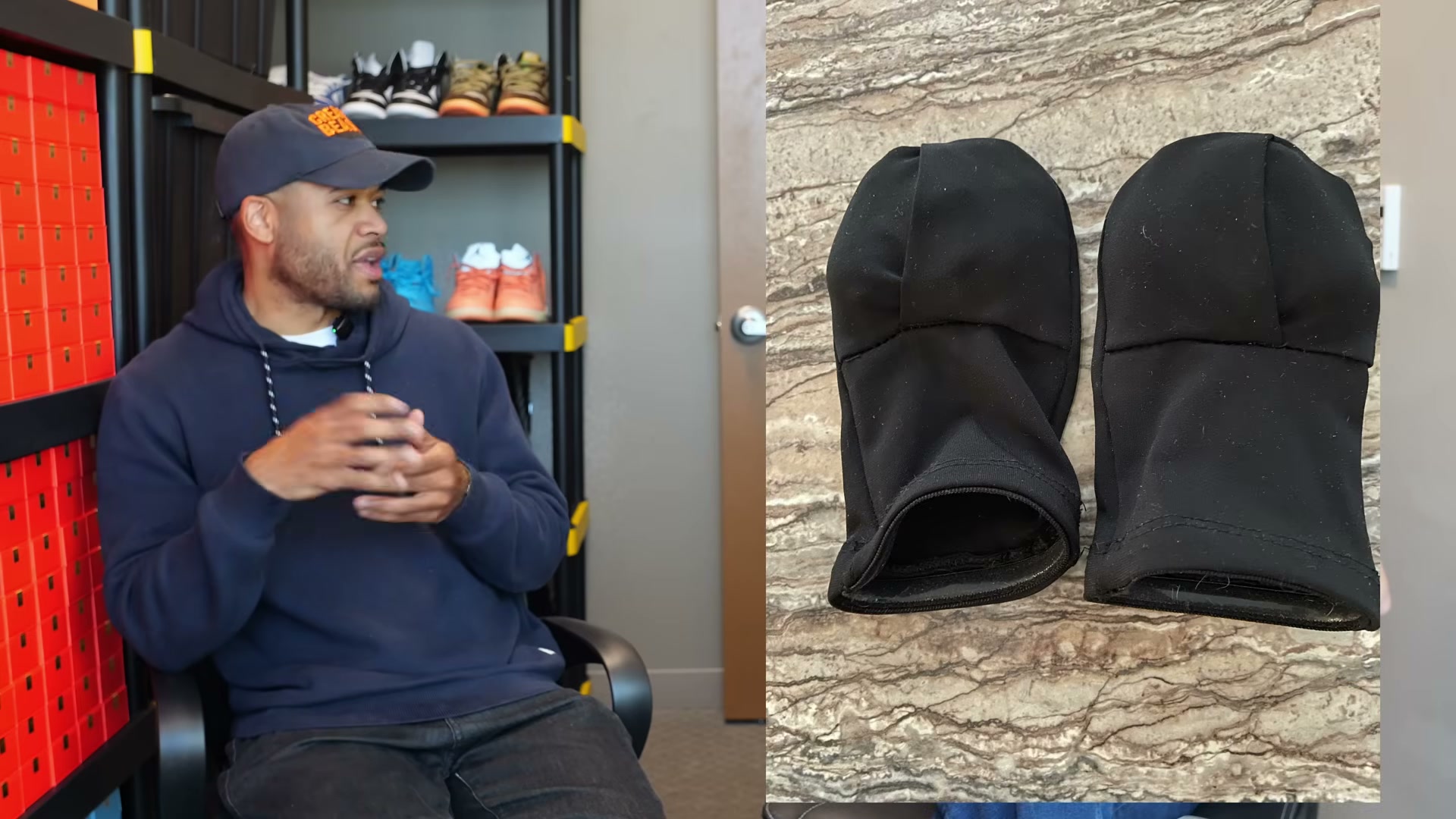
- Validate the concept with the cheapest possible prototype. Before touching a manufacturer, Jones and co-founder Xavier brought their idea to a local seamstress. The brief was minimal — mock up a sock with a small pocket on top — just enough to confirm the concept was physically viable. The goal wasn’t a sellable product; it was a proof-of-concept for under the cost of a manufacturing sample.
- Test materials from Amazon before committing to a supply chain. Jones ordered a range of soft-material candidates directly from Amazon — foam pieces, air pockets, and other candidates — and tested each for real-world wearability. Memory foam won because it flexed naturally with foot movement while still filling the negative space inside the shoe. The entire materials R&D phase cost roughly the price of a few Amazon orders.
-
Send a design brief to multiple Alibaba manufacturers simultaneously. Once the material was locked in, the founders moved to Alibaba.com and contacted several manufacturers with their design specifications. They requested samples from each, then ran a 12-month iteration cycle — testing different sizes and cuts through daily wear — before arriving at a final spec. The process was longer than expected, but running multiple supplier conversations in parallel prevented a single point of failure.
-
Place a conservative first order funded by credit cards. The initial production run was 2,500 units — deliberately small to cap downside risk. The financing was personal: maxed credit cards, no outside funding. Selling out within two months validated both the product and the demand signal needed to justify scaling inventory.
-
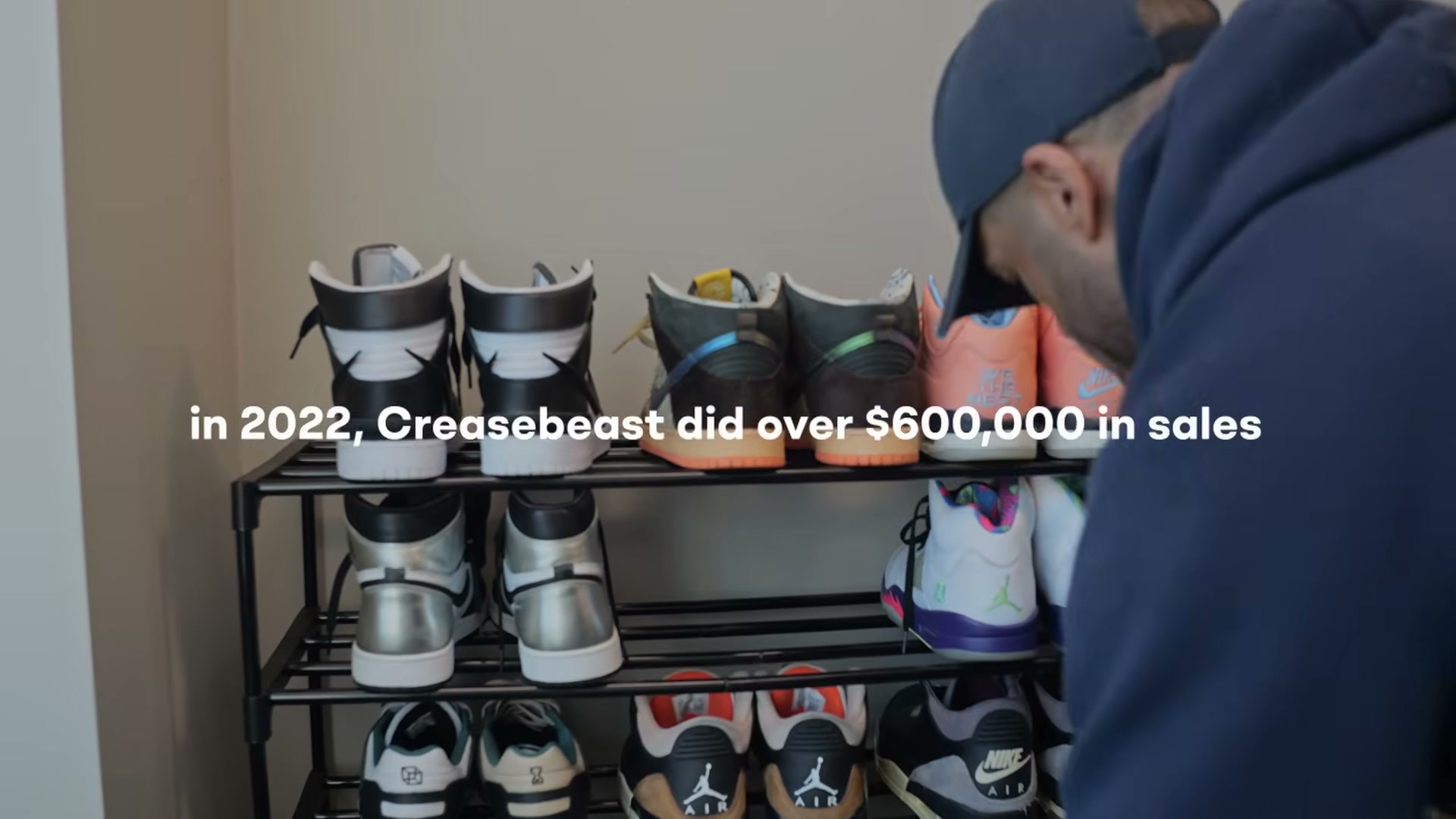
Use sell-out velocity as your scaling trigger. Crease Beast sold out in two months and was out of stock for five of its first twelve months of operation — yet still grossed over $600,000 that year.
- Invest in the Sneaker Con circuit to build brand credibility. The founders committed roughly $20,000 to attend 10 Sneaker Con shows across different cities, covering vendor fees, travel, and hotels. The spend put them in front of the exact customer who would pay full price and evangelize the product.

-
Build organic social through community-native content. With no paid media budget, Crease Beast grew to over 700,000 combined followers across platforms by creating content that fits naturally inside sneaker culture — Instagram Reels with a recognizable style and humor. The audience grew because the content earned attention, not because it bought it.
-
File patents early, even if you don’t fully understand them yet. Jones and Xavier pursued design patents, provisional patents, and non-provisional patents — categories they had to learn on the job. A single patent can run $20,000 when filing fees and amendments are included, and they hold multiple. The protection justifies the cost given competitors can see and copy a successful physical product quickly.
-
[Sponsored] Use Axio/Accio to accelerate manufacturer discovery. The video demonstrates Alibaba’s AI sourcing agent — now rebranded as Accio — with a live example: a treat-dispensing dog collar. After entering a product brief, the tool returns manufacturer recommendations, supplier contact details, AI-generated mockup images, and 3D assembly diagrams. Outreach to shortlisted suppliers happens directly within the platform.
Warning: this step may differ from current official documentation — see the verified version below.

How does this compare to the official docs?
The video compresses several Alibaba sourcing steps into a single sponsored segment, and the platform itself rebranded mid-video from Axio to Accio — which means the interface, feature set, and pricing structure shown may already be out of date.
Here’s What the Official Docs Show
Act 1 walked you through how Matt Jones and Xavier built Crease Beast from concept to $1.5M/year — this act works through the same steps using available official documentation to fill gaps, flag what couldn’t be verified, and surface anything the video left off the table. Because the screenshot set captured access-restriction pages on Amazon and unauthenticated login walls on Instagram, several steps in this act carry explicit unverified flags rather than false confidence.
Step 1 — Identify the market gap through direct retail observation.
No official documentation was found for this step — proceed using the video’s approach and verify independently.
Step 2 — Validate the concept with the cheapest possible prototype.
No official documentation was found for this step — proceed using the video’s approach and verify independently.
Step 3 — Test materials from Amazon before committing to a supply chain.
Amazon.com is an active e-commerce platform where prototype materials are routinely sourced — the platform’s existence and general purpose are consistent with what the video describes. However, the documentation captures for this step all returned Amazon’s bot-detection interstitial rather than any product listing, search result, or category page.
The specific claim that memory foam pieces and air-pocket materials were sourced from Amazon cannot be confirmed or contradicted from these captures. If you’re replicating this step, Amazon product searches for “memory foam sheets,” “foam inserts,” and “air pocket cushioning” are reasonable starting points — but treat the exact sourcing path as unverified.
No verified product-level documentation was found for this step — the platform exists, but the specific material sourcing claims remain unconfirmed.
Step 4 — Send a design brief to multiple Alibaba manufacturers simultaneously.
No official documentation was found for this step — proceed using the video’s approach and verify independently.
Step 5 — Place a conservative first order funded by credit cards.
No official documentation was found for this step — proceed using the video’s approach and verify independently.
Step 6 — Use sell-out velocity as your scaling trigger.
No official documentation was found for this step — proceed using the video’s approach and verify independently.
Step 7 — Invest in the Sneaker Con circuit to build brand credibility.
No official documentation was found for this step — proceed using the video’s approach and verify independently.
Step 8 — Build organic social through community-native content.
No official documentation was found for this step — proceed using the video’s approach and verify independently.
Step 9 — File patents early, even if you don’t fully understand them yet.
No official documentation was found for this step — proceed using the video’s approach and verify independently.
Step 10 — [Sponsored] Use Axio/Accio to accelerate manufacturer discovery.
No official documentation was found for this step — proceed using the video’s approach and verify independently.
Step 11 — Build organic reach on Instagram Reels.
The documentation captures for this step all returned Instagram’s public login wall — three separate capture attempts yielded the same unauthenticated landing page with no Reels interface, account content, or reach data visible.

Instagram does confirm, via its own footer, that it is a current Meta property with Threads and Meta AI as companion products — consistent with the video’s general reference to building a social presence on the platform. The video’s specific claims about Reels-driven organic growth and the Crease Beast account’s follower trajectory cannot be confirmed or contradicted from these captures.
One clarification the login page does surface: Instagram now lists Instagram Lite as a distinct product, which is not mentioned in the video and may be relevant if you’re targeting lower-bandwidth markets.
No authenticated content, Reels interface, or platform analytics were captured for this step — the video’s organic growth claims remain unverified by this screenshot set.
Useful Links
- Instagram — Instagram’s public homepage, confirming platform availability and current Meta ecosystem context (Threads, Meta AI, Instagram Lite) as of © 2026.
- Amazon.com — Amazon’s e-commerce platform, referenced in step 3 as the sourcing channel for prototype materials; product-level content was not accessible in the documentation captures.


0 Comments