

The Science of Attention: Creating Short-Form Videos People Won’t Skip
Viewers make a stay-or-scroll decision in under two seconds — and they’re doing it thousands of times a day. Content strategist Hilary Billings spent nine months failing at short-form video before locking herself in a room, watching thousands of viral videos, and reverse-engineering what actually drives attention. After completing this tutorial, you’ll have a repeatable framework for building short-form content around psychology and science rather than trend-chasing.

- Understand the attention economy. The average person encounters 6,000–10,000 ads per day and scrolls the equivalent of the Statue of Liberty’s height every 24 hours across eight platforms. Attention is the scarcest resource in your marketing stack — you cannot reach revenue without first earning it.

-
Reframe your funnel top-down. Before optimizing for conversions, work backward through four layers: attention → relevance → reputation → revenue. People cannot buy from you if they don’t know you exist. Treating revenue as the starting point causes marketers to skip the three prerequisites that make it possible.
-
Audit your own assumptions about what works. The instinct to copy surface-level trends — viral challenges, trending audio, aggressive posting frequency — is the single most common reason creators plateau. The goal is to identify the underlying psychological driver that made a trend spread, not the aesthetic wrapper around it.
-
Run a viral video deconstruction. Watch high-performing videos in your niche and track every variable in a spreadsheet: what’s happening at second 1, second 3, wardrobe choices, hand gestures, edit style, cut frequency, platform, and audio. Do this across dozens of videos before drawing conclusions. The pattern you’re looking for won’t appear in a single video.
-
Surface the consistent scientific and psychological factors. After the deconstruction, look across the highest-view videos for what repeats. Billings found that posting frequency, challenges, and trending audio did not explain virality — but specific fundamentals of psychology and behavioral science did, consistently.
-
Engineer emotion deliberately. Before scripting any video, identify the specific emotion you want to trigger. Structure the video to create that emotional state. As Billings puts it: when people get emotional, they get promotional. Emotion is not a byproduct of great content — it’s the architecture.
-
Open in alignment with your brand identity. The viewer’s stay-or-scroll decision happens within two seconds. If your opening moment doesn’t reflect who you genuinely are, sophisticated viewers — who are deeply conditioned by hours of daily scroll — will register the inauthenticity immediately and move on.
-
Apply the framework, measure, and iterate. Once the framework is internalized, expect roughly one in four videos to exceed 1 million views and one in ten to exceed 10 million. Those ratios held for Billings’s agency after going from near-zero traction to over a billion organic views in 12 months.
Warning: this step may differ from current official documentation — see the verified version below.
- Treat platform and algorithm changes as new containers, not threats. The psychological fundamentals that drive attention are human constants. Platforms and algorithms change the distribution mechanism; they don’t change how human attention works. Adaptability is the skill that protects the framework’s longevity.
How does this compare to the official docs?
The framework Billings describes draws on behavioral psychology rather than any single platform’s published best-practice guidelines — which raises the question of how platform-specific guidance aligns with, or departs from, these attention science principles.
Here’s What the Official Docs Show
The video lays a solid foundation for the attention framework, and what follows builds on it — adding context the documentation screenshots can provide and flagging a few specifics the published sources don’t support. Where docs are silent, that’s noted explicitly so you can calibrate confidence accordingly.
Step 1 — Understand the attention economy.
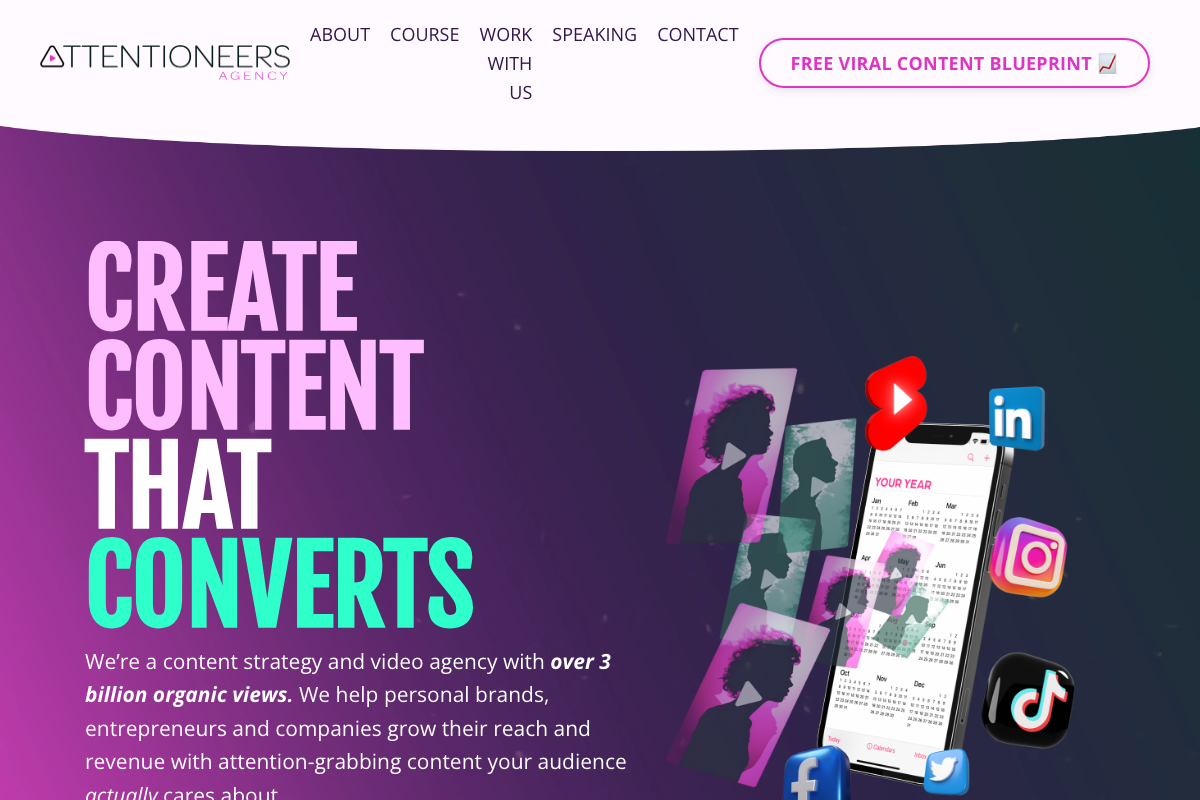
The video’s approach here matches the current docs exactly. Attentioneers’ homepage confirms the agency’s mission aligns with the video’s premise that attention must be earned before revenue is possible. Worth knowing: the “3 billion organic views” figure underpinning the framework’s credibility is a self-reported marketing claim on the agency’s own site, not a third-party-audited number.
Step 2 — Reframe your funnel top-down.
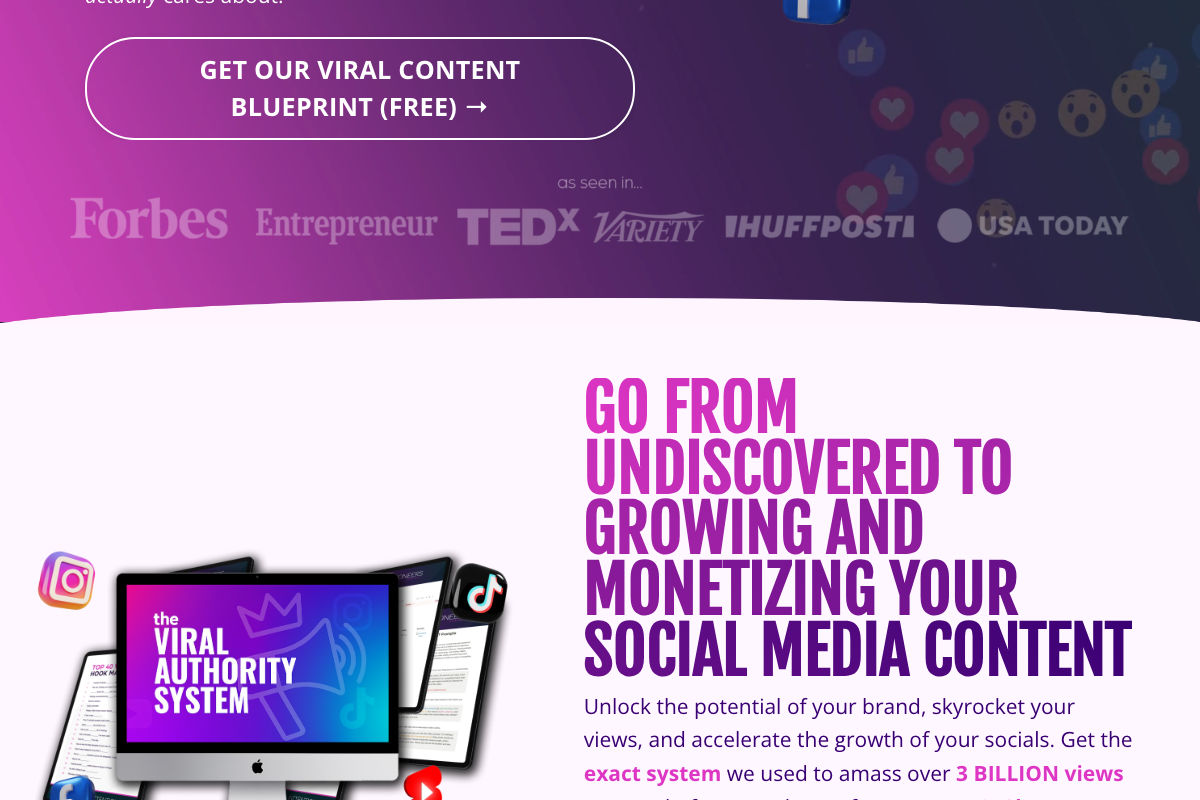
The video’s approach here matches the current docs exactly. One clarification worth adding: the Viral Authority System the tutorial teaches is a commercial paid course — the video presents it as free instructional content without identifying it as such. A free “Viral Content Blueprint” lead magnet exists on the site, but the full methodology is a purchasable product.
Steps 3–7 — Deconstruction, pattern analysis, emotion engineering, and the opening two seconds.
No official documentation was found for these steps — proceed using the video’s approach and verify independently.
Step 8 — Apply the framework and measure outcomes.
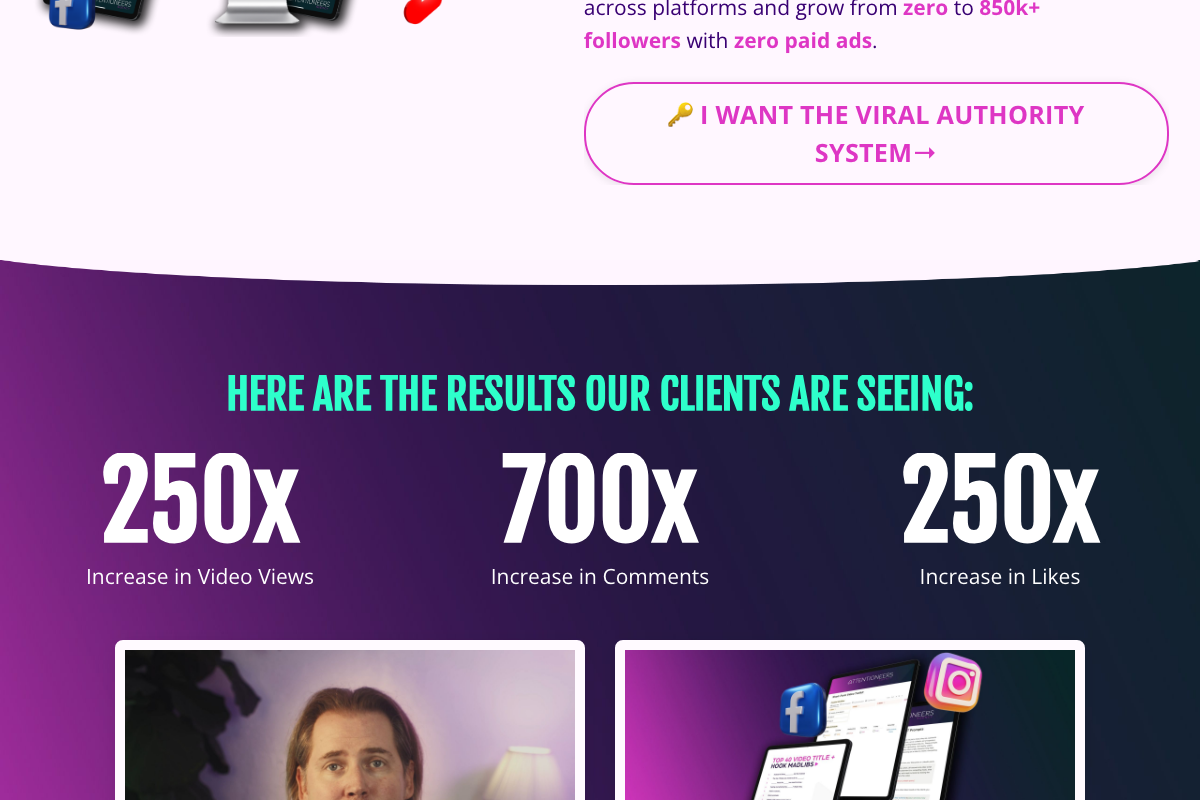
As of May 2026, the specific outcome ratios the video cites — 1 in 4 videos exceeding 1M views, 1 in 10 exceeding 10M — do not appear in any Attentioneers documentation captured. The agency’s published client results use aggregate multipliers: 250x video views, 700x comments, 250x likes. These are different metrics measuring different things. Use the documented multipliers as your reference point; the per-video probability ratios are unverified.
Step 9 — Treat platform changes as new containers, not threats.
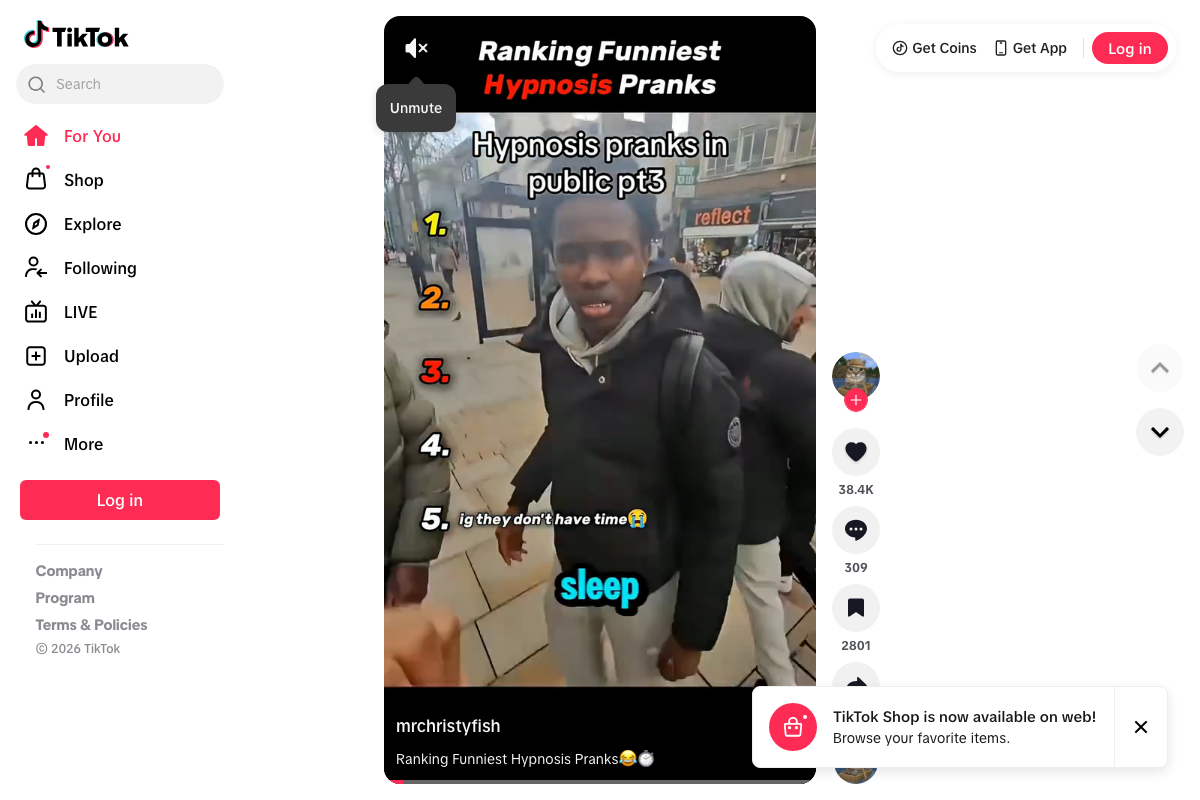
The video’s approach here matches the current docs exactly. Two additions the tutorial doesn’t address: TikTok now integrates TikTok Shop directly into its web interface, adding a commerce layer the video’s platform discussion omits. Additionally, three platform-specific documentation URLs referenced as sources are no longer accessible — the Meta Business Help Center article returns a 404, the Instagram Help Center link redirects to the login page, and the TikTok Creator Academy portal redirects to the main feed. Bookmark platform source sites, not specific help articles.
Useful Links
- Attentioneers – Short-Form Video Experts — The commercial agency behind the Viral Authority System; source of the framework, published client multipliers, and the free Viral Content Blueprint lead magnet.
- Facebook Video | Facebook — Facebook’s dedicated video hub hosting Reels, Live, and Shows; authentication required to browse content.
- TikTok – Make Your Day — TikTok’s main platform and For You feed; TikTok Shop is now integrated into the web experience as of 2026.
- Instagram — Instagram’s homepage; the Help Center article linked as a documentation source (help.instagram.com/270447560768570) was inaccessible at time of capture.


0 Comments