

Increasing Conversions: Quick Wins That Work in 2026
Organic traffic is down, inboxes are noisier than ever, and AI-generated content has made it harder to stand out — but conversion optimization in 2026 still follows a set of disciplined, repeatable tactics. Demand generation expert Jay Schwedelson lays out a framework that starts with your email database, runs through your homepage architecture, and ends with a pop-up strategy most marketers dismiss too quickly. Work through these steps and you’ll have a conversion system that compounds over time.
-
Reframe database growth as your primary KPI. Your email list loses roughly 20% of its addressable audience every year through bounced addresses, disengagement, and job changes. That means a list of 1,000 contacts shrinks to around 680 genuinely reachable contacts within two years — before you’ve sent a single campaign. Track net growth (new subscribers minus churn) on a weekly or monthly dashboard, and treat it as a North Star metric alongside revenue.
-
Audit your homepage and move data capture to the hero position. The primary real estate on your homepage — the first thing a visitor sees — should be an incentivized sign-up, not a header bar link or a footer form. Bury that CTA and you waste the highest-intent traffic you’ll ever get. Redesign your hero section around a single, clear capture mechanism before anything else.
-
Choose framing that matches your business model. E-commerce brands see stronger opt-in rates when they replace generic newsletter language with “insiders list” or “first to know” positioning. The psychological driver is exclusivity and FOMO, not fear of missing out on a sale. B2B and info-product companies should offer a guide, template, or report — something concrete that justifies handing over an email address.
-
Calculate LTV before committing to a discount incentive. If you’re considering a 10% off pop-up for first-time visitors, pull the lifetime value numbers for discount-acquired customers versus organic buyers first. If LTV is comparable, a fiscal incentive is justified. If discount buyers churn faster or spend less over time, shift to access-based framing — early drops, founding member status — which attracts buyers who are invested in the brand, not the deal.
-
Add a pop-up for first-time visitors. A well-configured pop-up offering any incentive — a discount, a guide, early access — should convert around 5% of first-time visitors. That’s not an interruption; it’s a capture mechanism for people who would otherwise leave with no relationship established. Configure it to show once per session and suppress it for returning visitors.
-
Layer timed pop-ups on high-intent pages. Product pages and pricing pages attract visitors who are already evaluating a purchase. A pop-up triggered after 10–30 seconds of dwell time on those pages can hit 10% or higher opt-in rates. The extended dwell time acts as a behavioral signal — these visitors are engaged enough to be worth a direct ask.
-
Shift content toward lo-fi, human-signal formats. Across social platforms, content that signals human involvement — background noise, handheld footage, unpolished delivery — is outperforming AI-generated output in engagement metrics. Instagram’s Adam Mosseri has publicly pointed to ambient authenticity cues as engagement drivers. Integrating lo-fi content into your distribution mix reinforces the trust signals that convert.
-
Treat all of these tactics as an always-on system, not a campaign. Database growth, homepage optimization, pop-up configuration, and content strategy compound when they run simultaneously. Any single tactic in isolation produces marginal results; the combination is where the lift shows up.
How does this compare to the official docs?
The tactics Schwedelson outlines come from practitioner experience and campaign data — the next section checks them against platform documentation and CRO research to identify where the numbers hold up and where the guidance needs nuance.
Here’s What the Official Docs Show
The tactical framework in Act 1 draws on practitioner experience and campaign data — and the platform evidence available in 2026 adds useful context to several steps without overturning the core approach. What’s here extends what the video covers, particularly where platform behavior can be observed directly.
Step 1 — Reframe database growth as your primary KPI
No official documentation was found for this step — proceed using the video’s approach and verify independently.
Step 2 — Audit your homepage and move data capture to the hero position
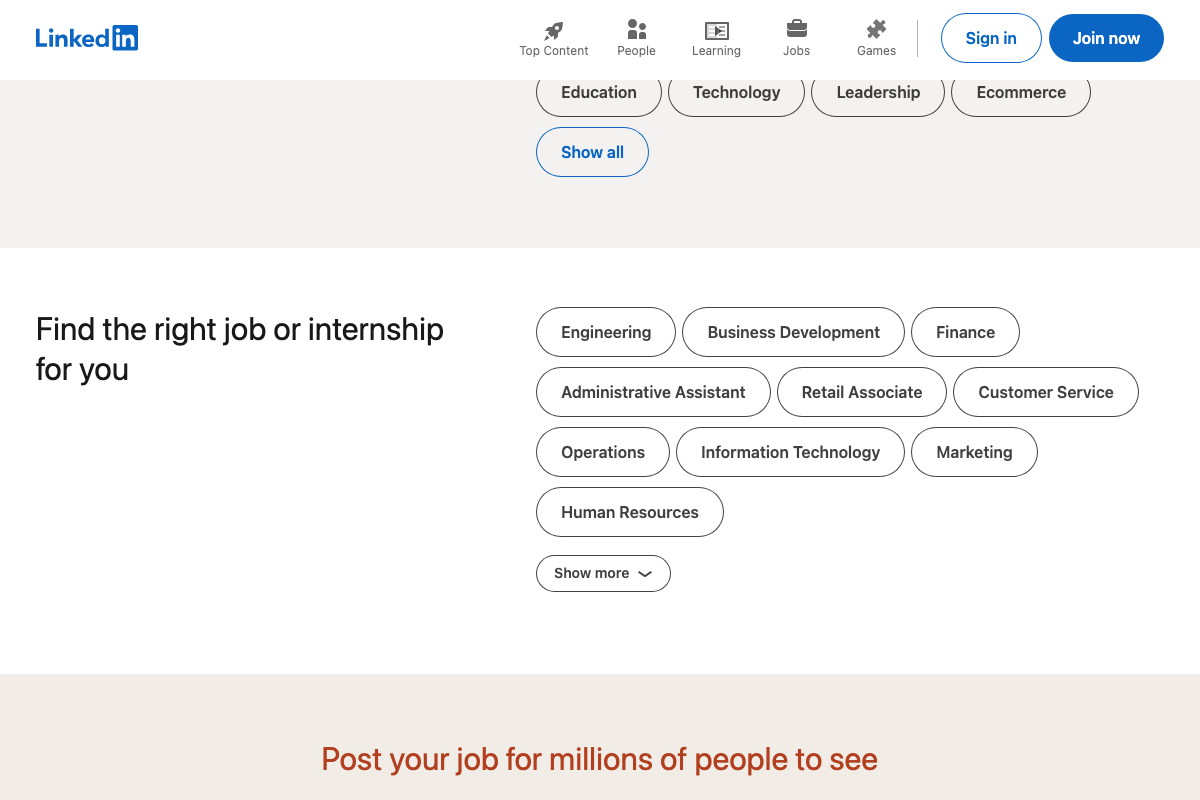
LinkedIn’s own logged-out homepage places its entire acquisition CTA stack — “Join now,” “Continue with Google,” “Sign in with email” — in the hero, above the fold, before a single piece of content is visible. The mid-scroll and lower-page views contain zero secondary email capture elements, illustrating precisely the pattern the video argues against: list-building absent everywhere except the hero. The video’s approach here matches the current docs exactly.

Step 3 — Choose framing that matches your business model
No official documentation was found for this step — proceed using the video’s approach and verify independently.
Step 4 — Calculate LTV before committing to a discount incentive
No official documentation was found for this step — proceed using the video’s approach and verify independently.
Step 5 — Add a pop-up for first-time visitors
No official documentation was found for this step — proceed using the video’s approach and verify independently.
Step 6 — Layer timed pop-ups on high-intent pages
No official documentation was found for this step — proceed using the video’s approach and verify independently.
Step 7 — Shift content toward lo-fi, human-signal formats
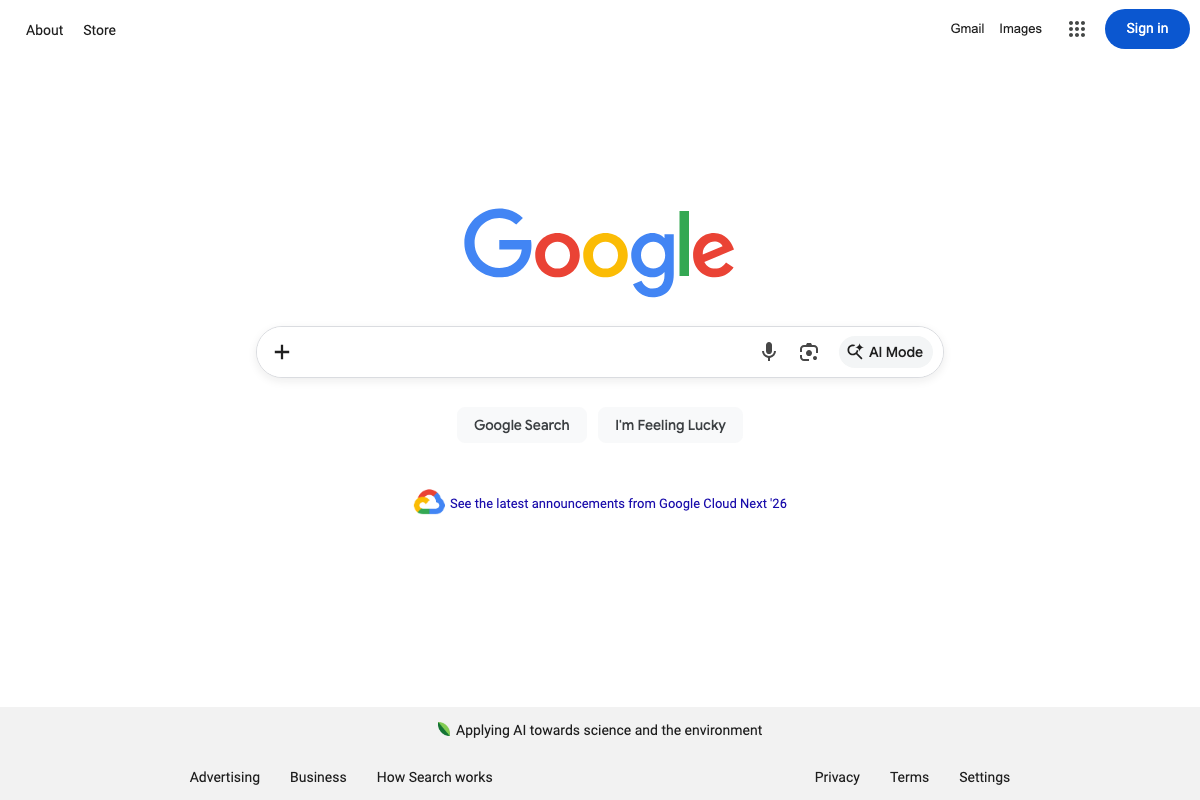
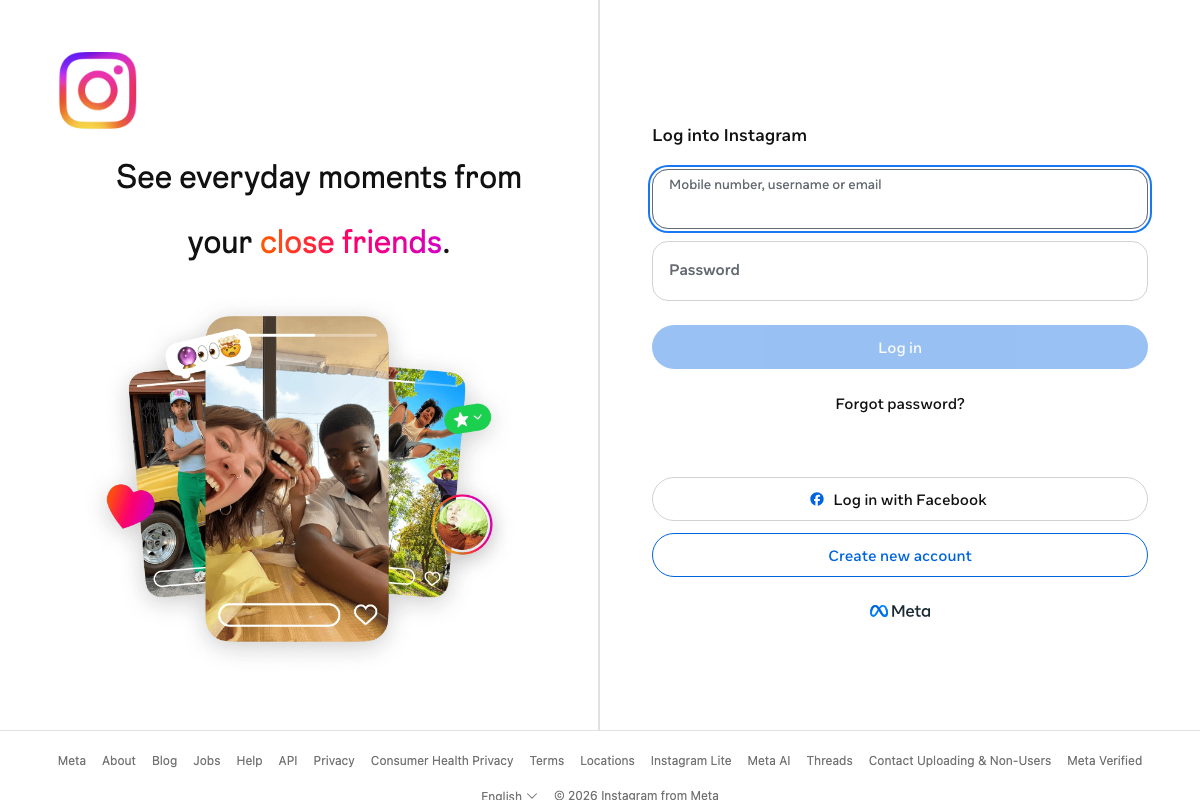
Google’s homepage as of April 2026 places “AI Mode” directly inside the primary search bar alongside the microphone and lens icons — AI-powered search is now a native default interface feature, not a toggle buried in settings. That platform-level confirmation supports the video’s premise that AI-generated content has reached structural saturation in search, making human-signal differentiation a durable strategic advantage rather than a passing aesthetic choice. Instagram’s own 2026 brand homepage reinforces the operating environment: its hero imagery leads with candid, real-person, moment-driven photography rather than polished or generated visuals. Neither screenshot constitutes formal platform guidance on content strategy, but both reflect the distribution landscape the tactic is built for.
No official platform documentation for the specific lo-fi engagement benchmarks cited in this step was found — proceed using the video’s approach and verify independently.
Step 8 — Treat all of these tactics as an always-on system
No official documentation was found for this step — proceed using the video’s approach and verify independently.
Useful Links
- LinkedIn: Log In or Sign Up — LinkedIn’s 2026 logged-out homepage, used here as direct platform evidence of hero-position data capture architecture in action.
- Instagram — Instagram’s 2026 login page, referenced for its candid, human-centric brand imagery as contextual support for the lo-fi content differentiation strategy.
- Google — Google’s 2026 homepage, confirming “AI Mode” as a native search bar feature and the AI-saturated search environment underpinning the content strategy recommendation.


0 Comments