

SEO Q&A: Outbound Links, AI Writing Giveaways, Ranking Without Backlinks, and Whether SEO Still Pays
After working through this video, you’ll know when to link out from both blog posts and conversion pages, which AI writing patterns are actively costing you trust, how to rank without a heavy backlink investment, and how to structure an SEO channel that actually generates revenue rather than ad pennies.
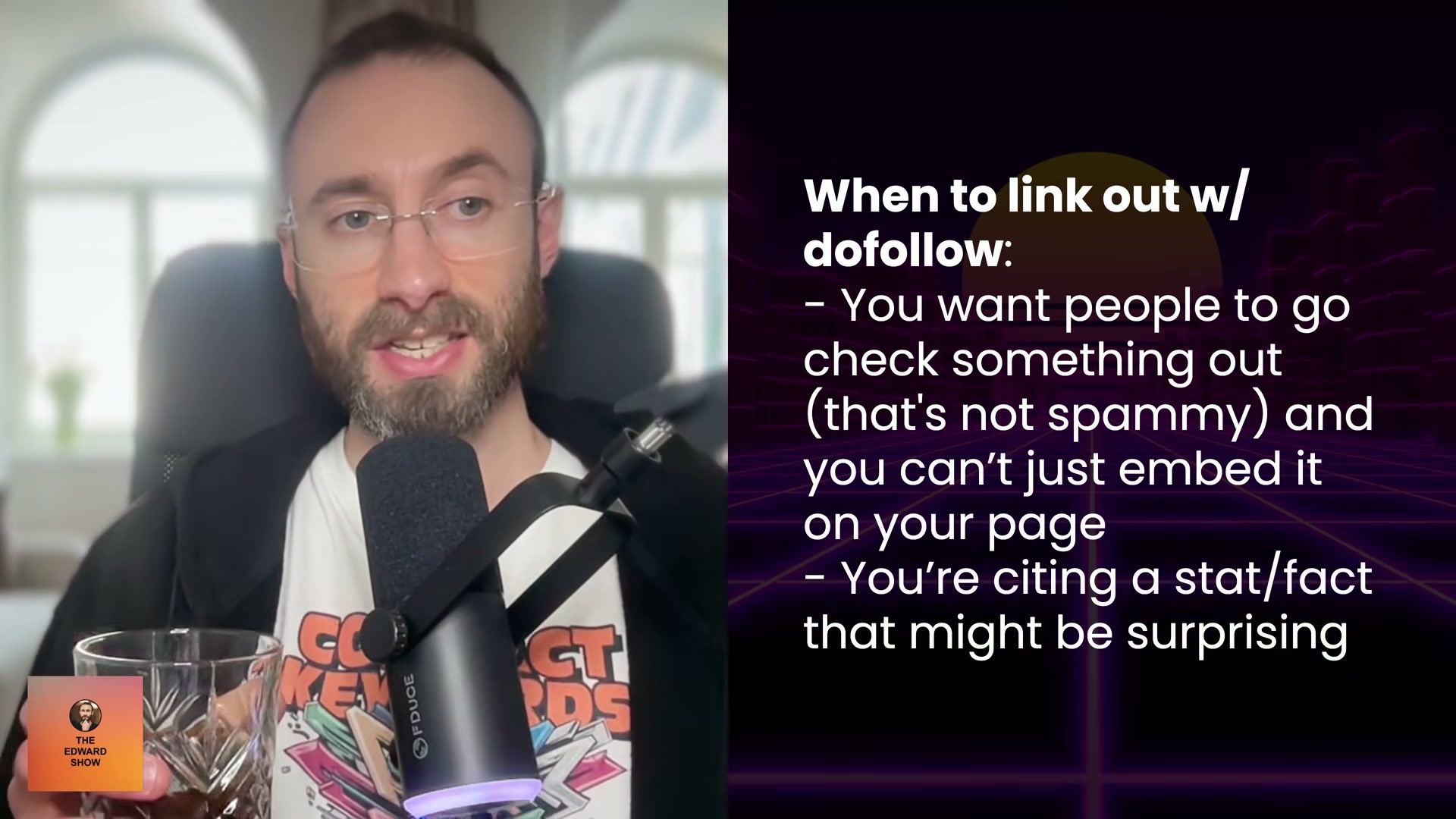
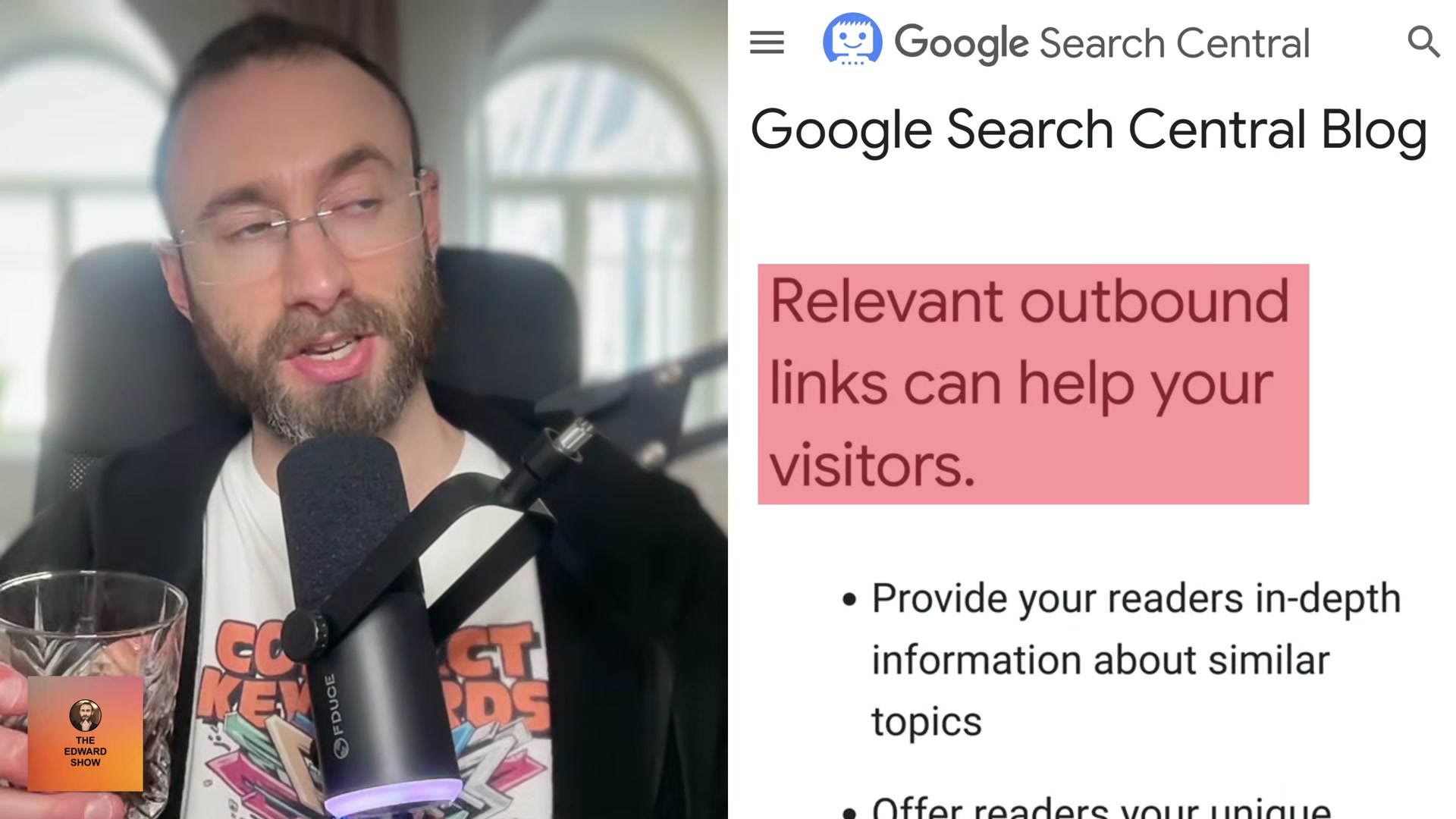
- Link out from any blog post or SEO sales page where you cite a statistic or fact that would surprise a reader. A sourced claim is more credible than an unsourced one — and experiments where all other variables were held equal have shown that pages with outbound links consistently outperform pages without them. That logic applies to bottom-of-funnel product and landing pages too: if you’re citing data to explain why your offer is the right fit, link to the source.
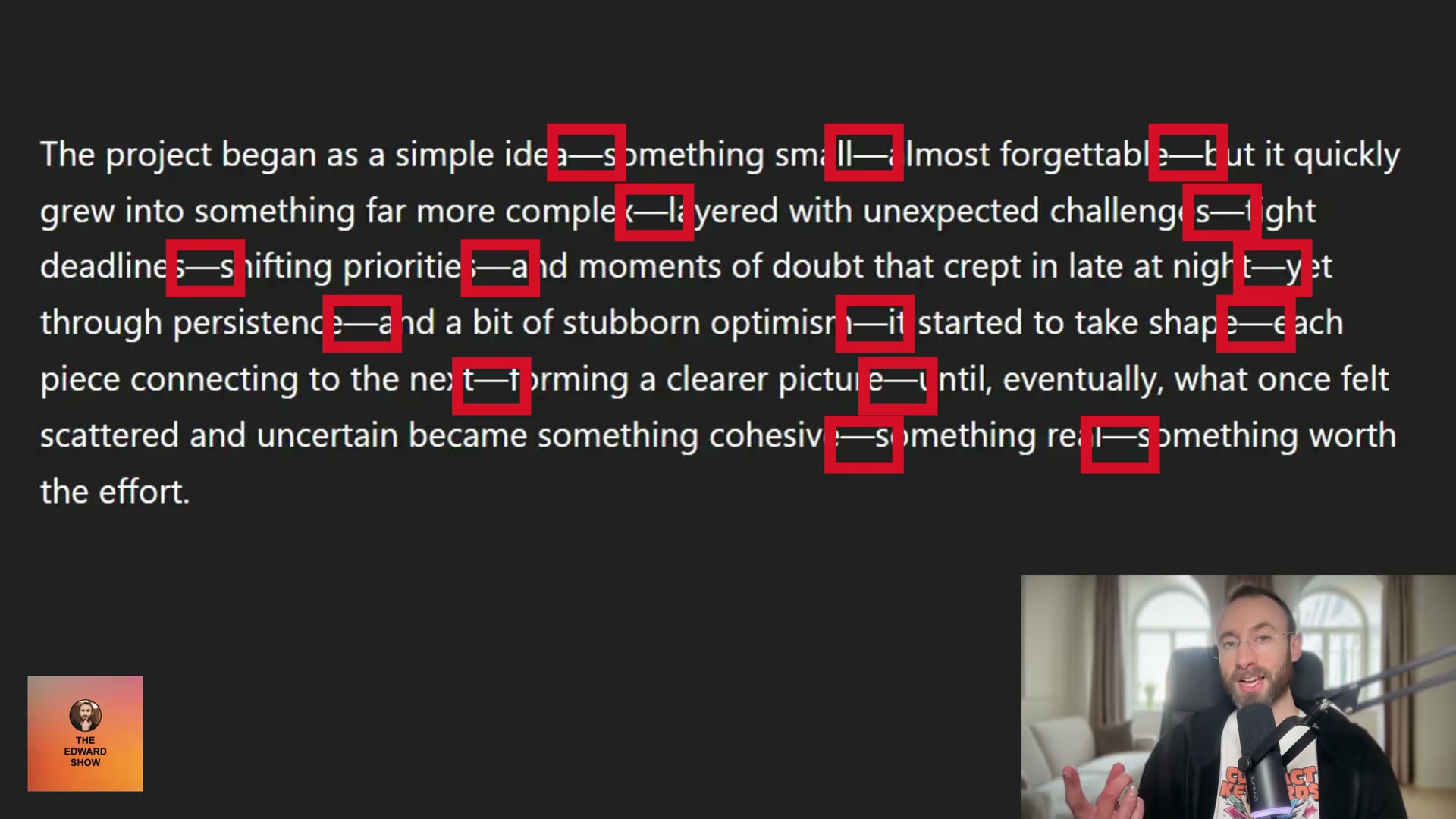
- Audit your AI-assisted content for the highest-frequency giveaways before publishing: em dashes used throughout, the word delve, bullet points where the first word is bolded followed by a colon, the construction “it’s not X, it’s Y,” and opening lines like “In the age of.” These patterns cluster in AI output because the model reaches for them as structural defaults. Readers recognize them — consciously or not — and pogo-stick back to the SERP before they convert.

- Do not deliberately introduce grammatical errors to fool AI detection tools. Degrading your prose on purpose trades one problem for a worse one. Removing the most egregious signals is sufficient to reduce pogo sticking and recover reader trust.
- Build topical authority through tight site architecture and content pruning rather than pursuing high-authority backlinks. Thinning a bloated site concentrates link equity on the pages that matter. Relevance and clear internal structure are operationally easier to achieve than earning referral-traffic-passing links from authoritative domains — and they compound.

-
Target high-intent, bottom-of-funnel keywords where the minimum viable backlink threshold is low. A business doing normal marketing likely already clears that bar — the gap is content and relevance, not domain authority.
-
Produce video content on YouTube and TikTok that targets the same keywords your SEO pages target. A single keyword can earn simultaneous SERP coverage through an indexed page and a video result — two assets for the cost of one research pass.
-
If you’re monetizing SEO traffic, build or sell a subscription product rather than relying on AdSense or affiliate commissions. The transcript cites a real-world case where a SaaS switched from AdSense ($150/month on 156,000 visitors) to subscriptions ($110,000/month) — a difference of roughly 700x. Tools like Claude Code or Replit lower the barrier to building that product yourself.
-
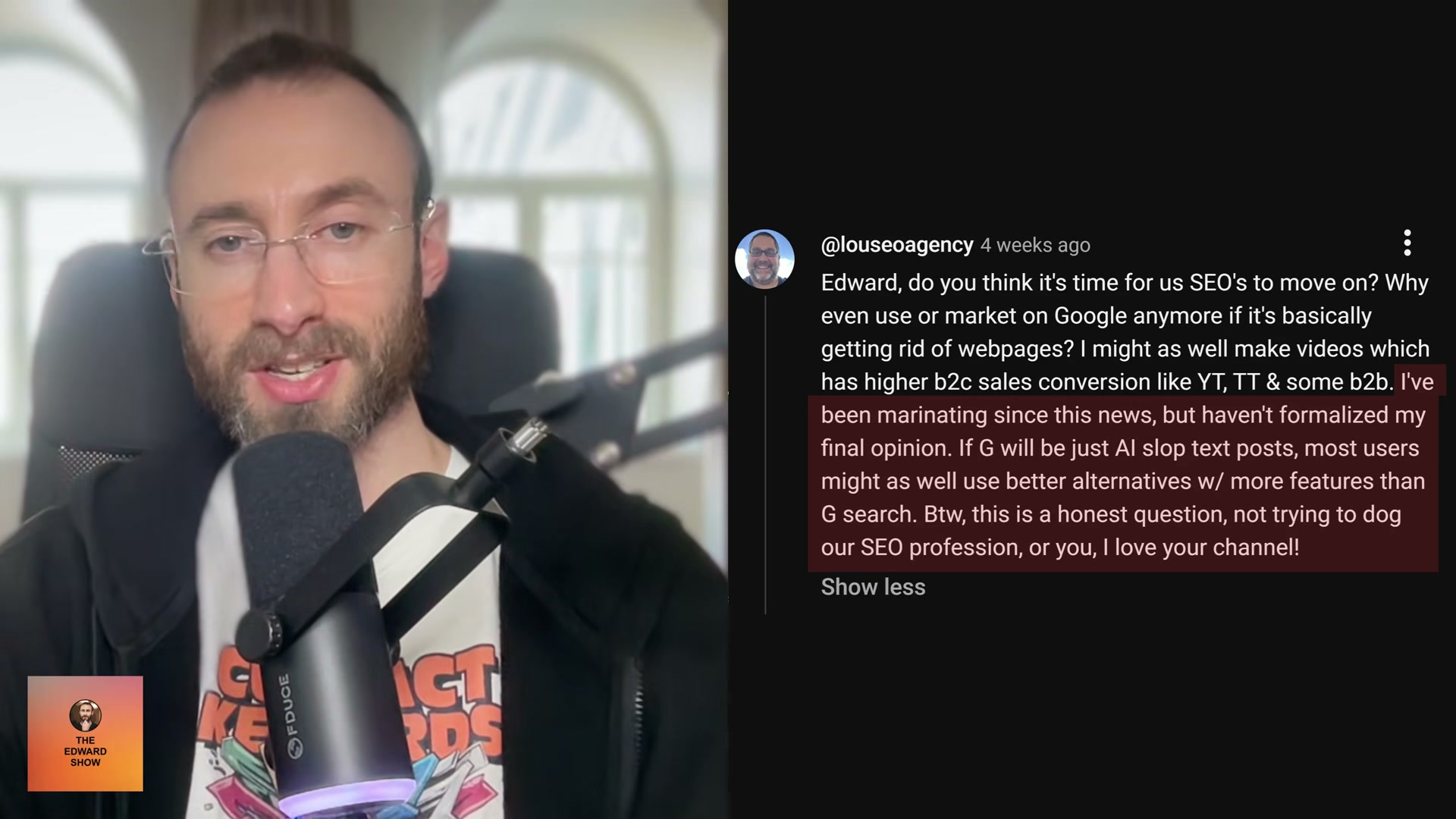
Treat Google’s AI-enhancement patents as a brief to strengthen what algorithmic rewrites cannot replace: detailed documentation, positive third-party reviews, and deep bottom-of-funnel relevance for buyers who are ready to act now.
How does this compare to the official docs?
The video’s recommendations track closely with Google Search Central guidance in some areas and diverge meaningfully in others — Act 2 maps each step against the primary sources so you can see exactly where the advice holds, where it extrapolates, and where the documentation changes the calculus.
Here’s What the Official Docs Show
The video covers useful, practitioner-tested ground on outbound links, AI writing patterns, and monetization strategy. This act works through the same steps using official platform documentation as the reference layer — where screenshots confirmed what the video describes, you’ll see that noted; where the documentation couldn’t be reached or wasn’t captured, that’s flagged plainly so you can verify independently.
Step 1 — Link out when you cite surprising facts or statistics
No official documentation was found for this step — proceed using the video’s approach and verify independently.
The screenshots collected for this step resolved to google.com (the consumer homepage) rather than Google Search Central. Google’s public documentation on outbound links and quality signals lives at developers.google.com/search/docs — that source was not captured.
Step 2 — Audit for AI writing giveaways before publishing
No official documentation was found for this step — proceed using the video’s approach and verify independently.
All three screenshots for this step captured chatgpt.com (the consumer chat UI), not platform.openai.com/docs. The video’s specific list of giveaways — em dashes, delve, bold-colon bullets, “it’s not X it’s Y,” “In the age of” — cannot be confirmed or refuted against any OpenAI model behavior documentation from these captures.
Step 3 — Don’t introduce deliberate errors to defeat AI detection
No official documentation was found for this step — proceed using the video’s approach and verify independently.
The same ChatGPT homepage captures apply here. No OpenAI documentation on model output patterns or detection evasion was captured in the screenshot set.
Step 4 — Build topical authority through site architecture and content pruning
No official documentation was found for this step — proceed using the video’s approach and verify independently.
Steps 1, 4, 5, and 8 all drew from the same set of three google.com homepage captures. Google’s documentation on topical relevance, internal link equity, and site architecture is published at developers.google.com/search/docs/fundamentals — that page was not reached.
Step 5 — Target high-intent, low-backlink-threshold keywords
No official documentation was found for this step — proceed using the video’s approach and verify independently.
The screenshot set does not include documentation from Google Search Central, Ahrefs, or any keyword research tool that would verify or contextualize the claim about minimum viable backlink thresholds.
Step 6 — Publish video on YouTube and TikTok targeting the same keywords as your SEO pages
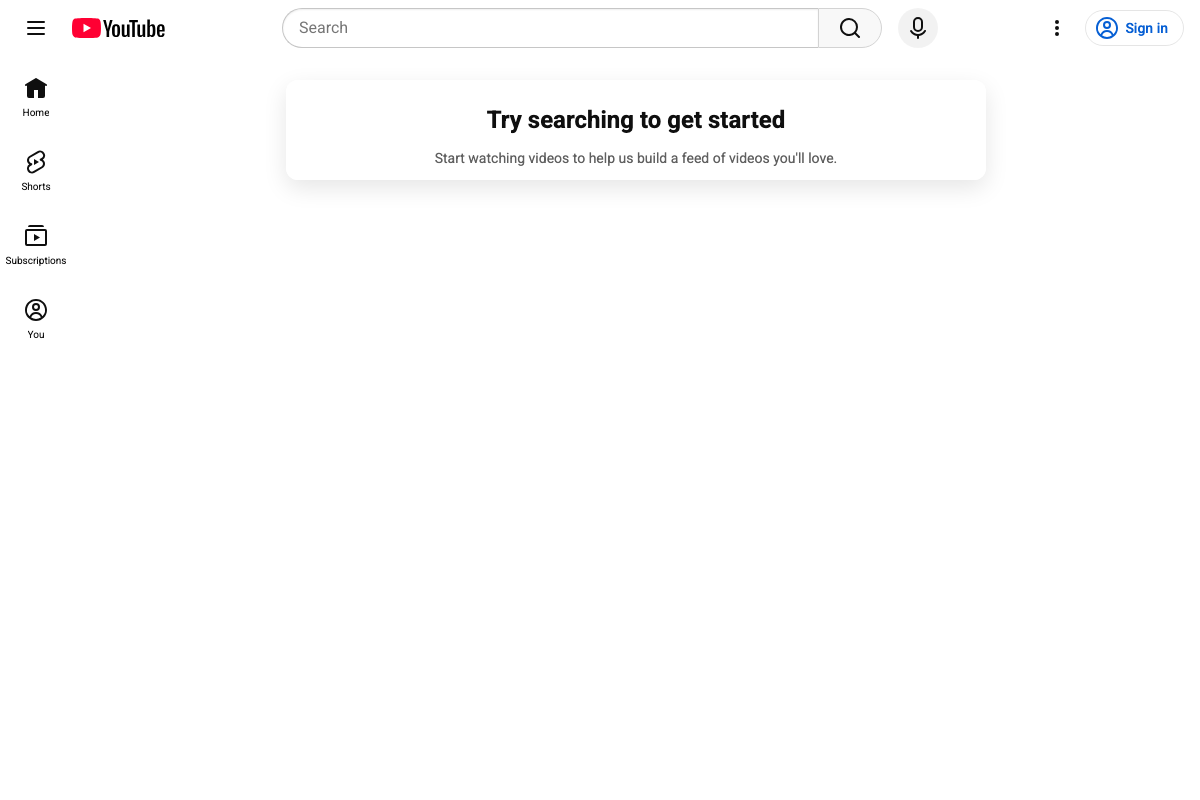
The video’s approach here matches the current docs exactly on one point: YouTube’s primary discovery surface is search-first. The logged-out YouTube homepage captured in the screenshots shows a centered search bar and a “Try searching to get started” prompt — structurally consistent with the tutorial’s keyword-targeting logic.
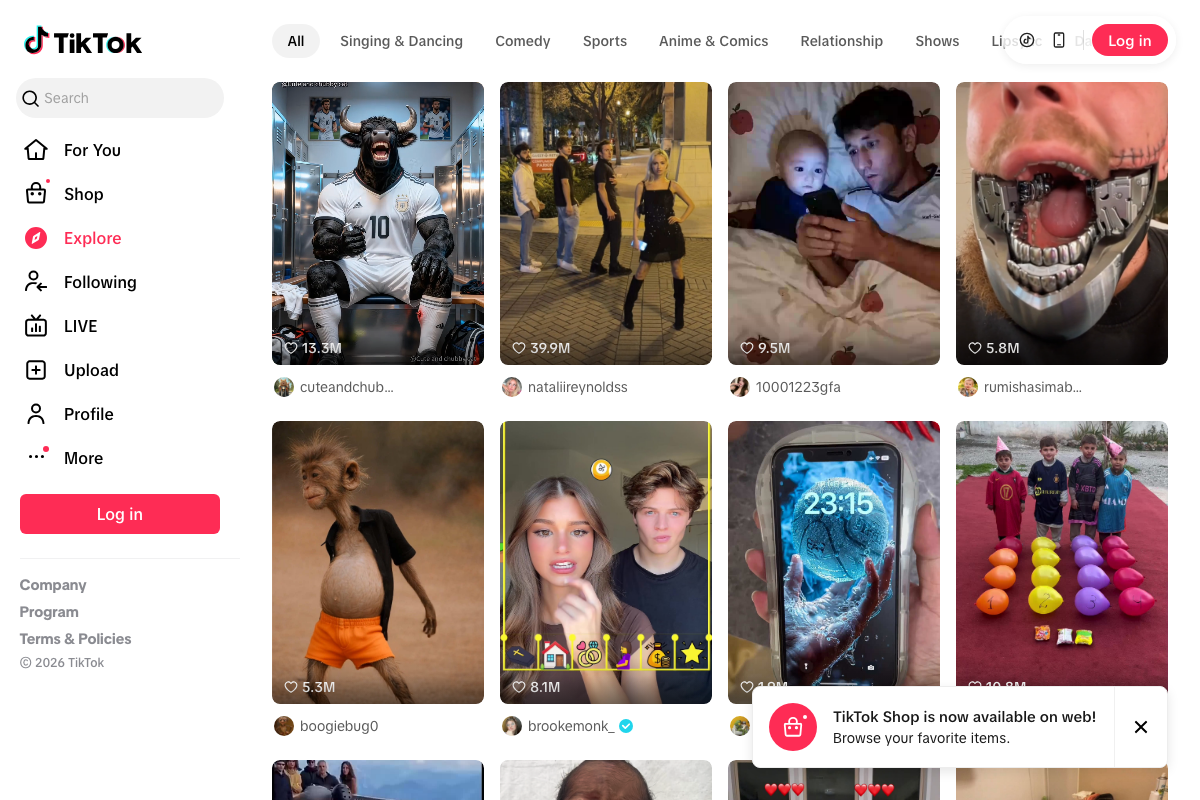
One useful addition from the TikTok screenshots: TikTok’s Explore page is category- and algorithm-driven, not search-first. The primary interface shows content grids organized by topics like Singing & Dancing, Comedy, and Sports — there is no keyword search bar as the entry point. The tutorial implies TikTok keyword targeting mirrors SEO keyword intent directly, but TikTok’s discovery architecture is structurally different from YouTube’s. TikTok does have an internal search function, but it is not the dominant surface the Explore page presents.
Step 7 — Build a subscription product instead of relying on AdSense
The video’s approach here matches the current docs exactly. Both Replit and AdSense screenshots confirm the platforms as described.
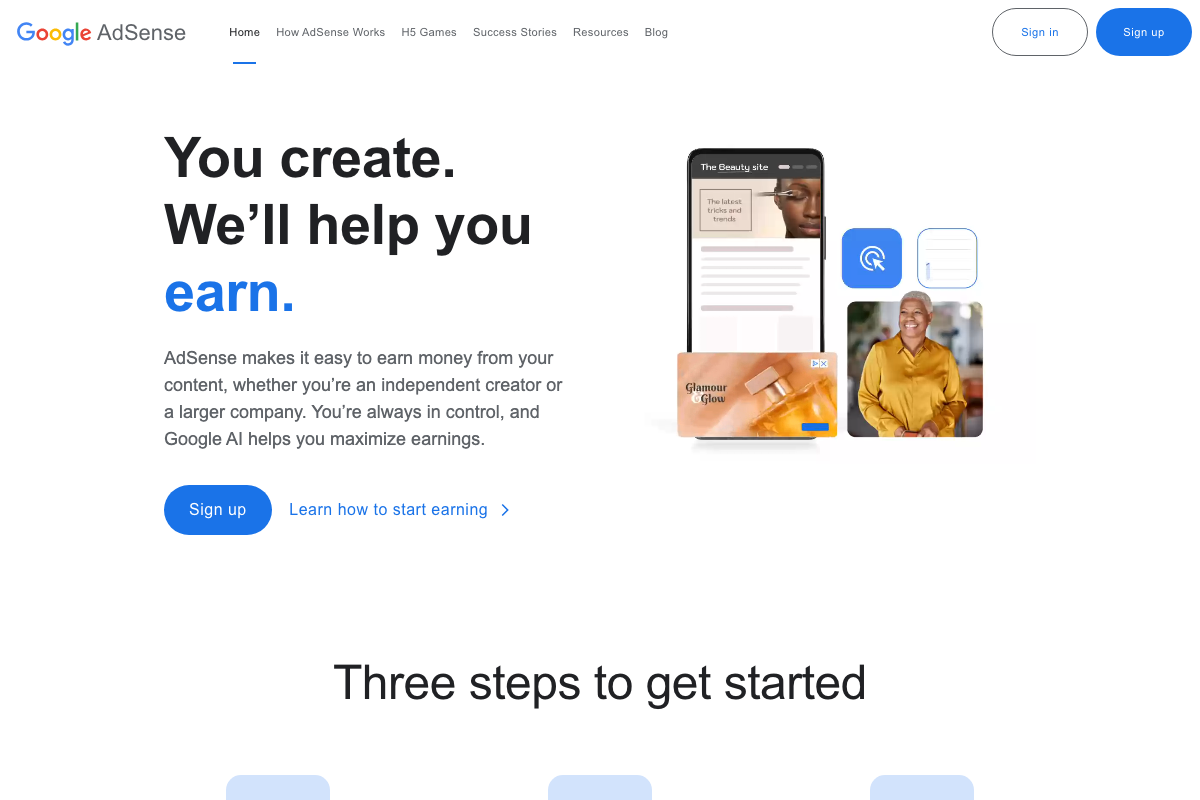
AdSense: The AdSense marketing pages confirm the platform’s positioning as a passive, Google-dependent revenue model. The three-step onboarding (Sign up → Take control → Start earning) is low-friction, and the “Google AI helps you maximize earnings” note adds one detail the video didn’t cover: Google automates ad optimization after initial setup, which means publishers have limited control over yield after placement.
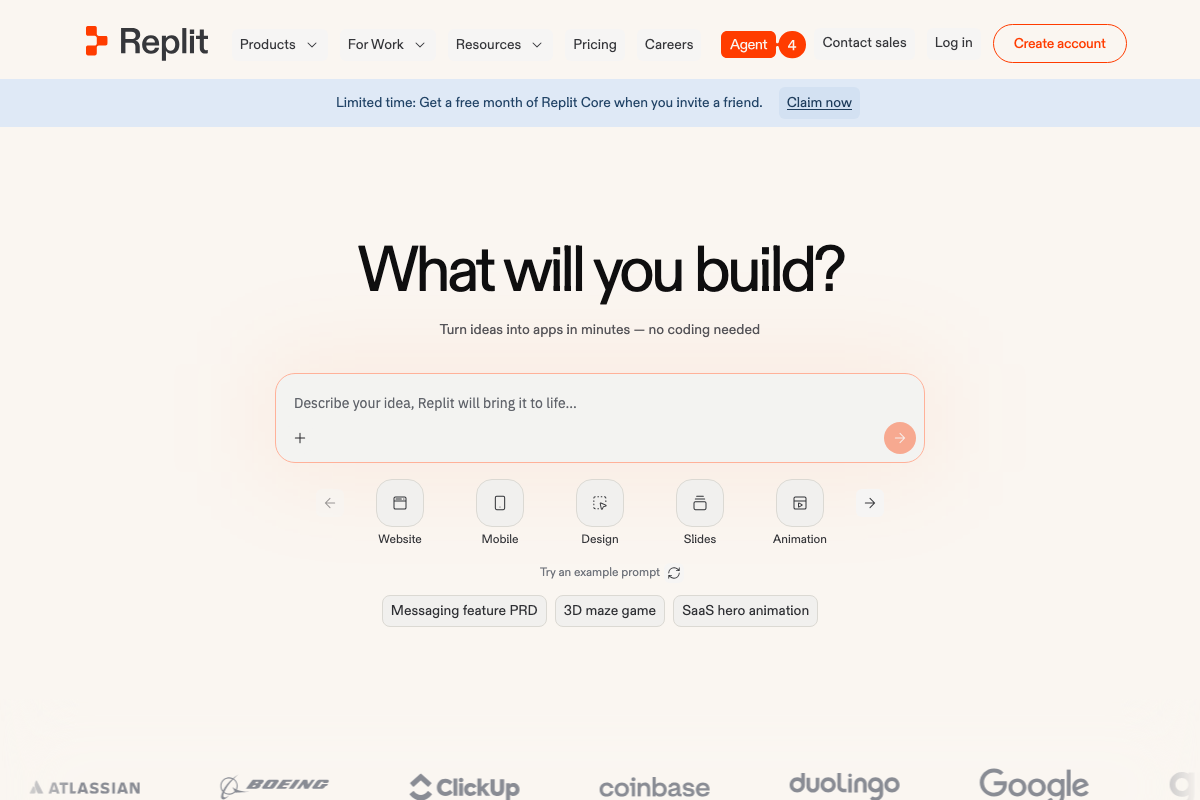
Replit: Replit’s “no coding needed” and “Ship Anything” messaging directly supports the tutorial’s recommendation. Agent 4’s Parallel Agents feature — which runs auth, database, and design tasks simultaneously — and the “Describe It. Publish It.” natural-language-to-deployed-app workflow lower the build barrier further than the video implies.
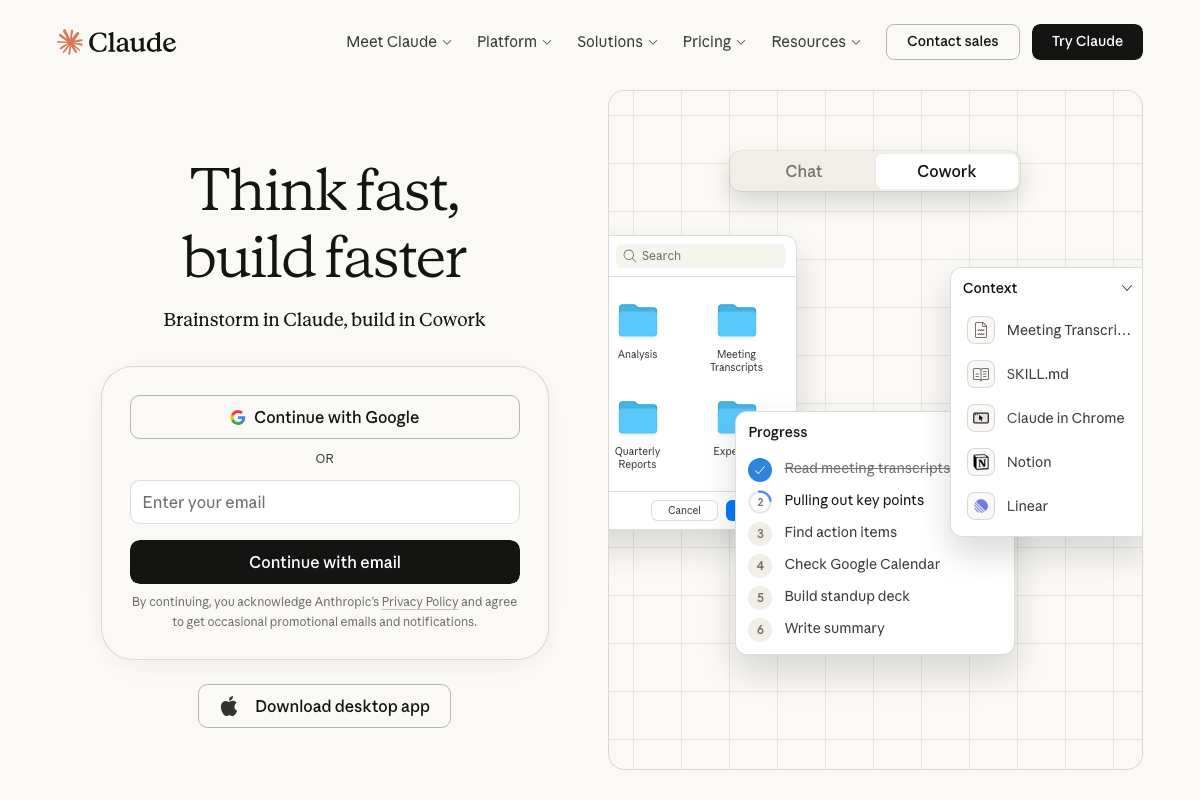
Claude Code: As of April 2026, the correct product for autonomous software engineering is Claude Code — a terminal-based CLI agent accessed via npm and billed through the Anthropic API. The video refers to “Claude Code” for building SaaS products, which is accurate as a product name, but the screenshots captured claude.ai’s Cowork feature (a collaborative task workspace with Notion, Linear, and Google Calendar integrations) — a separate product serving a different use case. If you’re following the tutorial’s advice, the relevant documentation is at docs.anthropic.com/en/docs/claude-code, not the claude.ai web interface.
Step 8 — Treat Google’s AI-enhancement patents as a brief for documentation, reviews, and bottom-of-funnel depth
No official documentation was found for this step — proceed using the video’s approach and verify independently.
The Google patent referenced in the video was not captured in the screenshot set. The third google.com homepage duplicate was the only asset available for steps 1, 4, 5, and 8.
Useful Links
- Google — Consumer homepage; includes a footer “How Search works” entry point to Google’s public ranking explanation.
- ChatGPT — Consumer chat interface for OpenAI’s ChatGPT; not a substitute for API or model documentation.
- Google AdSense – Earn Money from Your Website with Monetization — Official AdSense marketing and onboarding page confirming the platform’s passive monetization model and three-step setup.
- Claude Code — Resolves to the claude.ai Cowork product page; the Claude Code CLI documentation is separately maintained at docs.anthropic.com/en/docs/claude-code.
- Replit – Build apps and sites with AI — Official Replit homepage confirming no-code app building, Agent 4 capabilities, and full-stack deployment infrastructure.
- YouTube — YouTube’s logged-out homepage confirming search-first discovery interface and Shorts as a distinct content format.
- Explore – Find your favourite videos on TikTok — TikTok Explore page confirming category-based (not keyword-search-based) primary discovery surface as of April 2026.


0 Comments