

How Joe Ades Turned a $5 Potato Peeler Into a Sales Masterclass
Joe Ades sold potato peelers on the streets of New York until he became a millionaire — and every word of his pitch was doing deliberate work. By studying his technique through the AIDA framework, you’ll learn how to structure attention, interest, desire, and action into any sales message, whether it’s a street corner demonstration or a landing page.

-
Watch the full pitch as a case study. Before breaking it apart, watch Joe work the crowd without analysis. Notice the rhythm, the pauses, the physical movement. You’re looking for a complete sales arc — from cold audience to cash in hand — compressed into under three minutes.
-
Map the four AIDA phases onto the pitch. AIDA stands for Attention, Interest, Desire, and Action. Joe’s pitch hits each phase in sequence without gaps or filler. Your job in this step is to draw those four boundaries in the transcript so every technique that follows has a home.
-
Attention — pull the crowd in physically before you speak. Joe’s first move isn’t words — he gestures the crowd forward: “Come up a yard, you’ll see me.” Physical proximity creates investment before a single feature is mentioned. In digital terms, this translates to your headline and hero visual doing the same job: close the distance before the pitch begins.
-
Attention — engineer your language for maximum clarity. Joe’s sentences run seven words or fewer. Roughly 80% of his words are one syllable. Personal pronouns appear constantly. When he does reach for a longer phrase — “like a politician… underhanded” — it lands as a punchline, not padding. Audit your own copy against these constraints.
-
Interest — demonstrate, don’t describe. Joe never says the peeler is sharp. He peels a potato in record time, then peels a carrot, then hands the peeler to someone in the crowd. The product proves itself. Apply this by leading with a live output — a finished result, a working demo, a before/after — before you mention a single spec.

-
Interest — use audience participation to deepen engagement. Handing the peeler to a bystander isn’t a gimmick. It activates Cialdini’s principle of reciprocation: once someone has received value — in this case, a free demo and a turn with the product — they feel a social obligation to return it. Joe burns through produce so the crowd watches a pile of peel grow. The debt accumulates visually.
-
Desire — reframe every feature as a personal benefit. Nobody wakes up wanting a new peeler. Joe doesn’t sell the blade; he sells potato chips, kids who eat their vegetables, and relief from arthritic hands. Each benefit is tied to a specific person in the listener’s life. Write your desire phase by asking: what does this feature let the customer feel, avoid, or become?
-
Desire — layer in scarcity without manufacturing it. “They’re made in Switzerland, not China” does double work: it signals quality and implies limited provenance. Scarcity only converts when desire already exists — which is why it appears here, late in the sequence, not at the top.

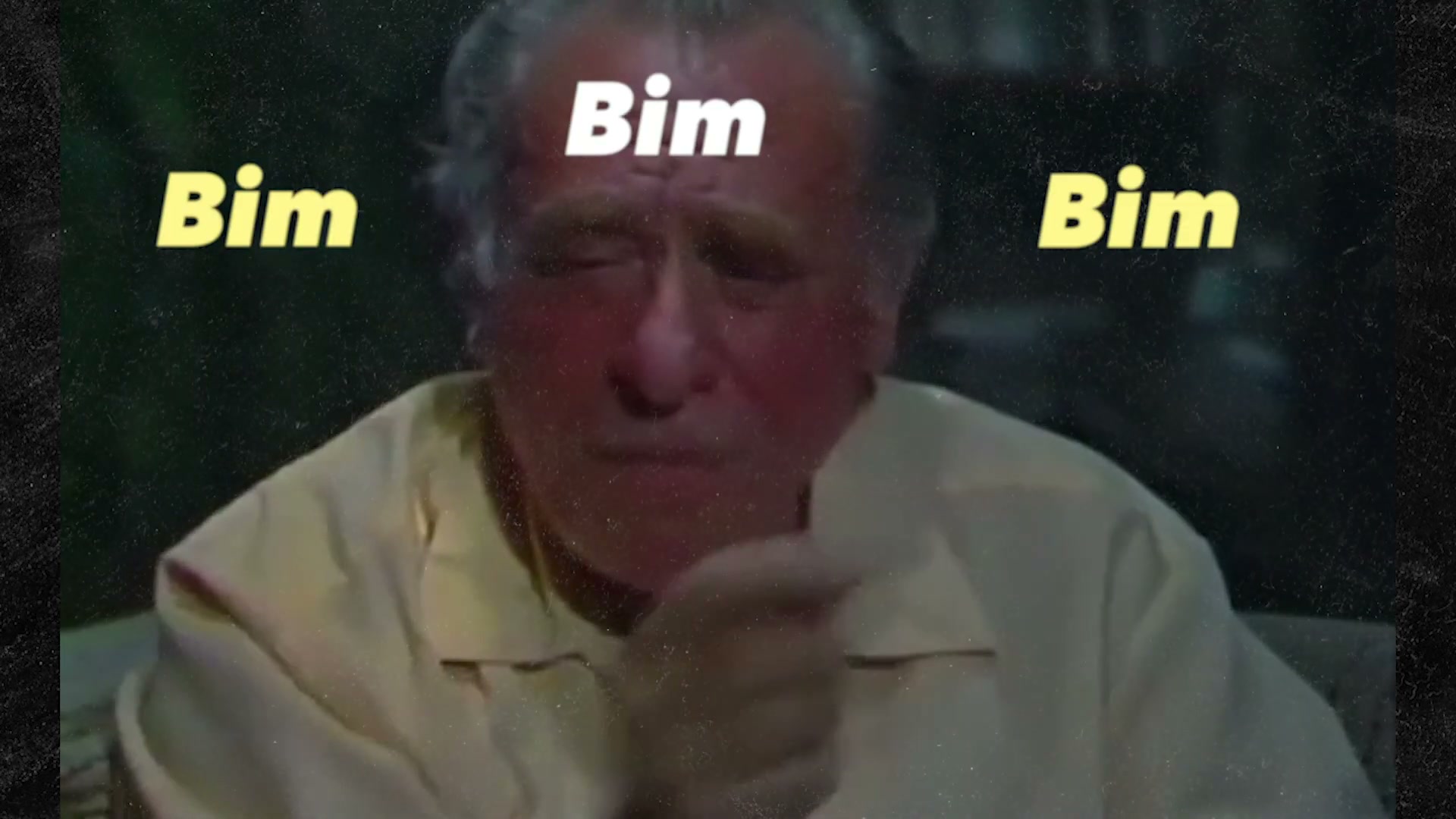
- Action — soft-close by removing friction, not applying pressure. Joe never asks for money. He takes a stack of notes from his pocket and moves the peelers to the front of the table. The crowd reads the signal and reaches for their wallets. The principle: people are happy to buy but resist being sold to. Design your CTA so the customer feels like they made the decision independently.
Warning: this step may differ from current official documentation — see the verified version below.
- The meta-lesson — likability as a differentiator. All things being equal, people buy from friends. Joe’s charisma isn’t decoration; it’s infrastructure. Before optimizing your funnel, ask whether the person behind the pitch is someone the audience would genuinely want to deal with.
How does this compare to the official docs?
Harry Dry’s breakdown makes AIDA tangible through a single unforgettable case study — but the framework has a richer theoretical history and several documented variations worth examining against what Joe’s pitch actually does.
Here’s What the Official Docs Show
The video’s structural approach to the Joe Ades pitch is sound — the frameworks it references are real and the sequencing holds up. This act layers in the institutional context behind those frameworks and notes where the documented record extends meaningfully beyond what the tutorial covers.
Step 1 — Watch the full pitch as a case study.
No official documentation was found for this step — proceed using the video’s approach and verify independently.
Step 2 — Map the four AIDA phases.
No official documentation was found for this step — proceed using the video’s approach and verify independently.
Step 3 — Attention: pull the crowd in physically before you speak.
No official documentation was found for this step — proceed using the video’s approach and verify independently.
One addition worth naming: Cialdini’s Pre-Suasion (2016), listed on his official site alongside Influence, documents a distinct principle about shaping audience mindset before the ask — a direct match for Joe’s crowd-gathering move. The video doesn’t cite it by name; it’s a second documented lever doing visible work in this step.

Step 4 — Attention: engineer your language for maximum clarity.
No official documentation was found for this step — proceed using the video’s approach and verify independently.
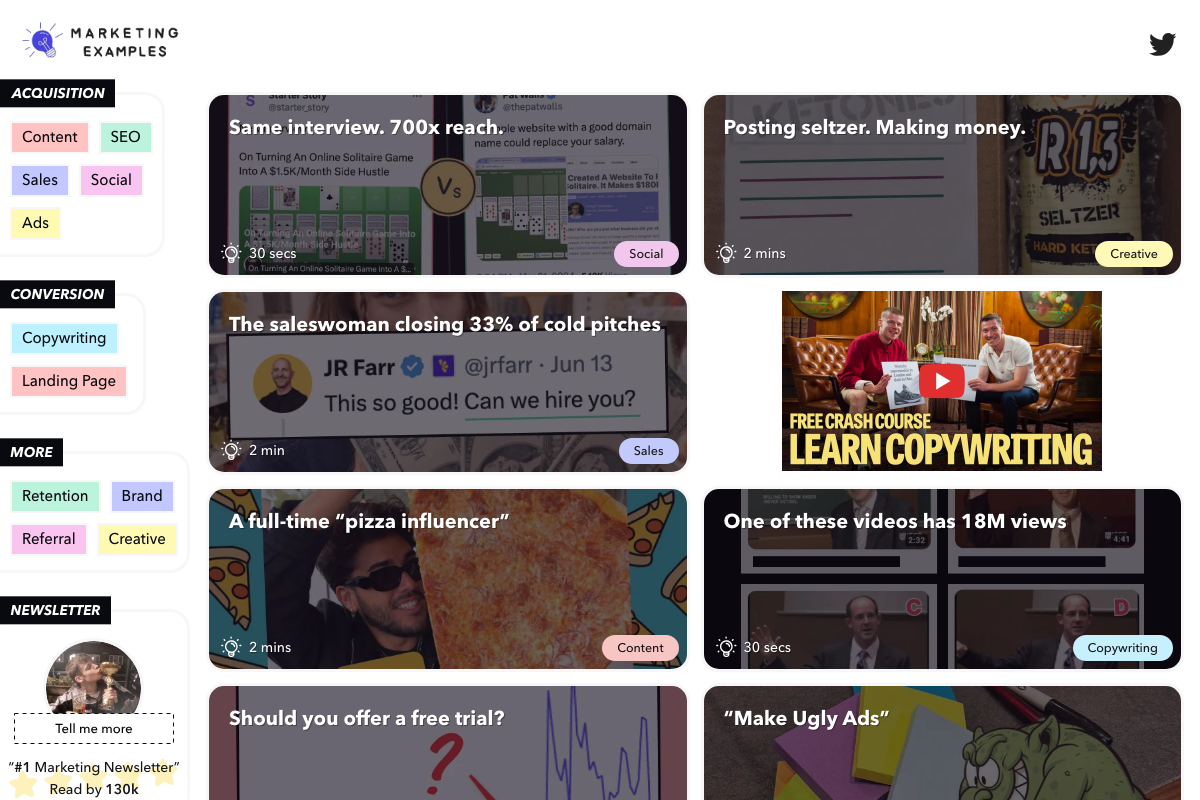
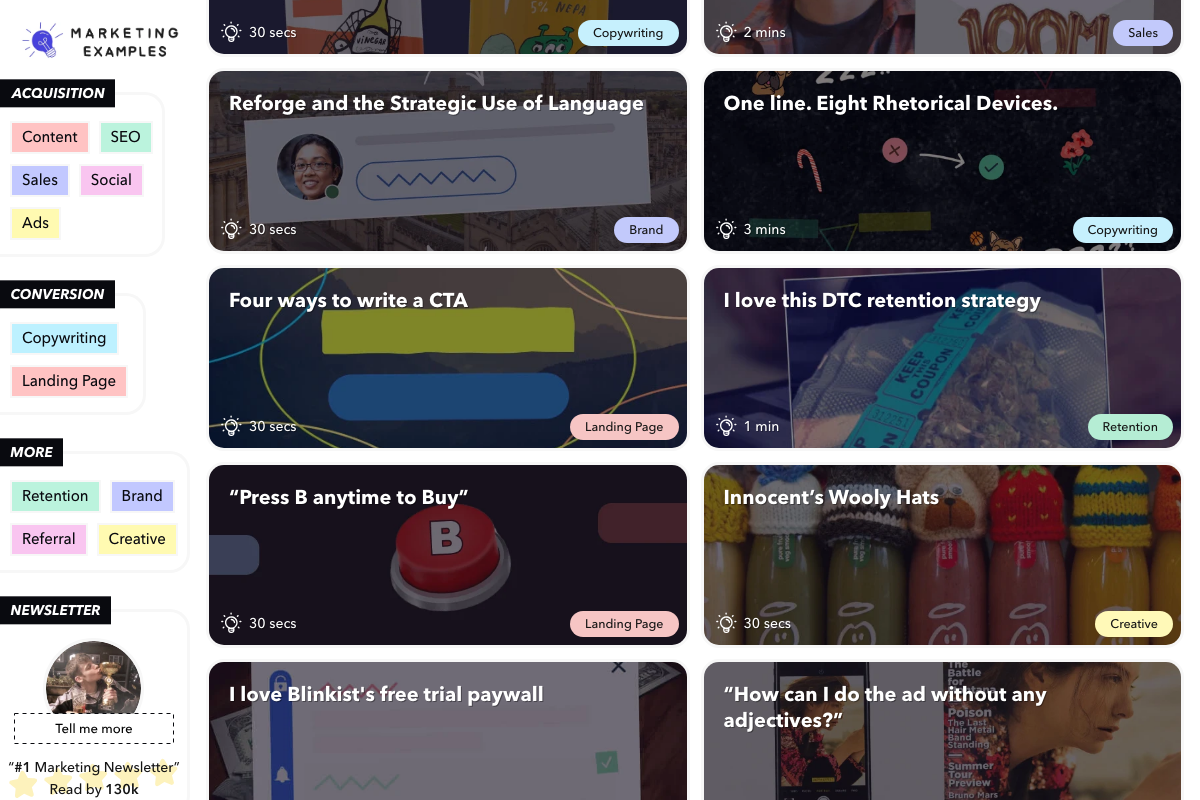
Marketing Examples confirms that concise, high-impact language construction is a documented copywriting discipline. The video’s specific metrics — sentences ≤7 words, 80% one-syllable words — do not appear in the available documentation. Treat them as practitioner heuristics until you can source a primary reference.
Steps 5 & 6 — Interest: demonstrate, then hand it over.
No official documentation was found for these steps — proceed using the video’s approach and verify independently.
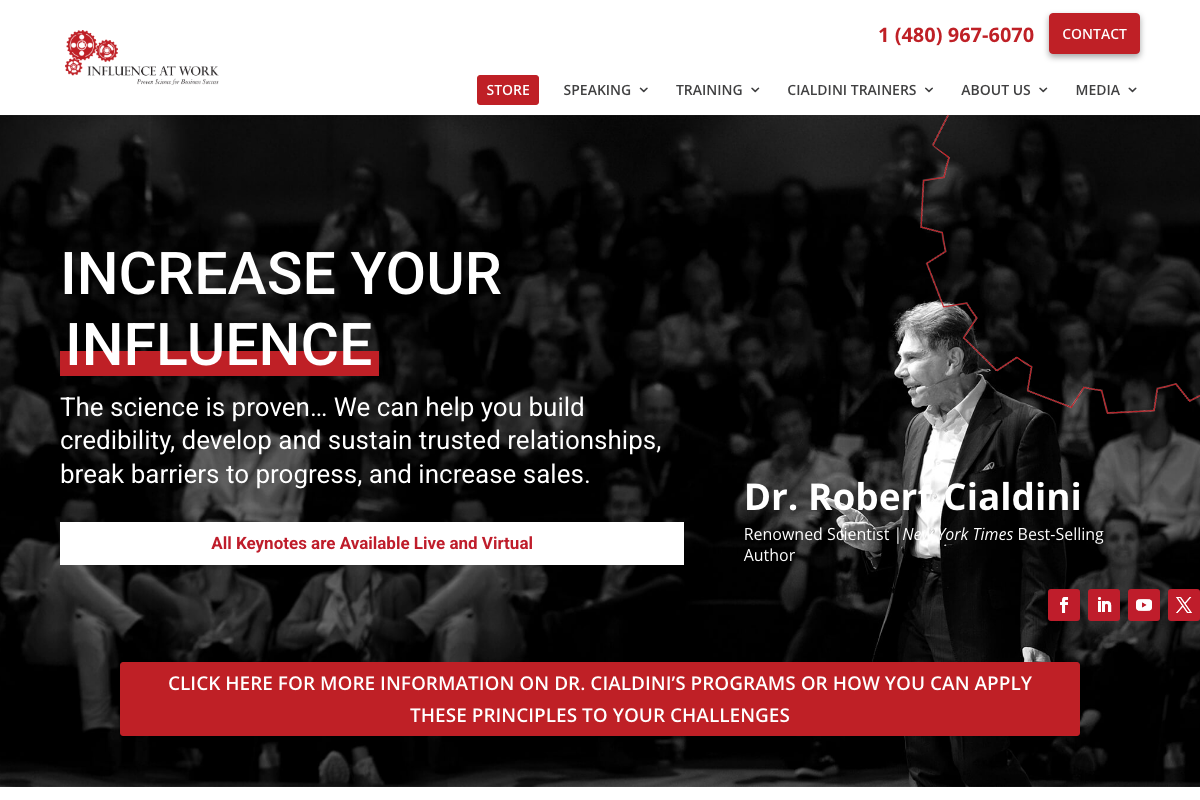
The video correctly names reciprocation as the operative Cialdini principle — but Cialdini’s official framework comprises seven principles of persuasion, not one. The full set — reciprocation, social proof, authority, liking, commitment, scarcity, and unity — is documented at Influence at Work. The tutorial applies one; the remaining six represent additional levers this pitch analysis leaves on the table.

Step 7 — Desire: reframe every feature as a personal benefit.
The video’s approach here matches the current docs exactly. Cialdini’s Influence is the documented source confirming that value-framing and trust-building drive purchase decisions — the mechanism operating behind every benefit statement Joe makes.
Step 8 — Desire: layer in scarcity without manufacturing it.
No official documentation was found for this step — proceed using the video’s approach and verify independently.
The Loom and Tropicana cases on Marketing Examples confirm that differentiation positioning carries measurable commercial consequences — consistent with the provenance play in this step, though both examples operate at brand scale rather than individual transaction level.

Step 9 — Action: soft-close by removing friction.
No official documentation was found for this step — proceed using the video’s approach and verify independently.
“Four ways to write a CTA” on Marketing Examples documents the friction-reduction principle in written, digital contexts. The underlying mechanics transfer; the specific physical-close execution Joe uses (moving product forward, visibly handling cash) has no direct documented analog in the available sources.
Step 10 — The meta-lesson: likability as infrastructure.
No official documentation was found for this step — proceed using the video’s approach and verify independently.
Influence at Work’s stated institutional mission — “build credibility, develop and sustain trusted relationships, break barriers to progress, and increase sales” — is documented framing for exactly what the video calls the likability advantage.
Useful Links
- INFLUENCE AT WORK | Dr. Robert Cialdini Influence Training & Keynotes — Cialdini’s official institutional site covering all seven principles of persuasion, certified training programs, corporate consulting, and primary sourcing for Influence and Pre-Suasion.
- Marketing Examples — Real-world marketing case studies organized by funnel stage, including CTA design frameworks, language strategy, and conversion analysis drawn from documented brand campaigns.


0 Comments