

What Agentic AI Actually Means for Marketing Leaders
Marketing is drowning in AI terminology that collapses distinct ideas into a single buzzword. This Hootsuite panel builds a precise definition of Agentic AI from the ground up — contrasting it with automation and dashboards, grounding it in a real Talkwalker use case, and mapping the human roles that remain essential. You’ll finish with a working mental model to evaluate tools, brief your team, and identify where agents can operate autonomously versus where human judgment is non-negotiable.
- Define Agentic AI in plain language. Agentic AI is not about generating summaries or content on demand. It reasons through problems, evaluates trade-offs, and surfaces recommendations grounded in context and goals — less a tool you query, more a teammate you brief with an objective and let figure out the path.
- Contrast Agentic AI with traditional automation and dashboards. Traditional automation executes preset rules reliably but rigidly — think Zapier, email autoresponders, or scheduled social posts. Dashboards aggregate historical data and surface trends, but analysis and next steps stay with you. Agentic AI sits between intent and action: it interprets what’s happening, tests scenarios, and helps leaders decide what to do.
- Ground the concept in a Hootsuite Talkwalker use case. A traditional setup flags every competitor mention. A dashboard shows volume over time. An agentic system finds the mentions, assesses sentiment, identifies which ones match your current priorities, drafts a response or briefing, and flags anything requiring human review — working through the problem the way a junior analyst would, without being asked at each step.
- Introduce the Agentic operating framework. An agentic operating framework assembles a team of specialized agents plus humans working end-to-end. Some agents run autonomously given the right data and setup; others operate in a delegated mode — handling research and synthesis while surfacing outputs that still need human perspective before a decision lands.
- Define decision-ready intelligence. Decision-ready intelligence is the point where data stops being interesting and becomes usable. It tells a leader three things quickly: what’s changing, why it matters, and what to do next — with prioritized recommendations and clear thresholds already attached. The output isn’t a 40-slide deck requiring two follow-up meetings; it’s an early signal that arrives while the window to act is still open.
- Establish the human role via Pascal Bornet’s Q-makes framework. Bornet identifies three areas where humans outperform agentic systems: genuine creativity (starting from a blank sheet), critical thinking (interrogating and pressure-testing AI output), and social authenticity (the human empathy that AI-generated avatars cannot replicate). These are the quality gates that stand between agentic output and consequential decisions.
-
Map the “agent verse.” Hootsuite Talkwalker uses “agent verse” to describe an interconnected set of purpose-built agents — for content creation, publishing, advertising, and communications strategy — that collaborate with humans rather than replace them. Organizations that can connect agents across functions, with humans positioned at the right decision points, are positioned to move fastest when market signals shift.
-
Preview the near-term workflow trigger. The immediate future looks like this: you send an email or Teams message, an agent receives the request, routes it to the appropriate tool, begins processing, and surfaces results — often before you’ve returned from the meeting that prompted the question. The interface is familiar; the speed and depth of output are not.
How does this compare to the official docs?
The panel draws the conceptual map with clarity, but the specifics of configuring agents, setting oversight thresholds, and wiring tools together inside an agentic framework is where platform documentation either validates these ideas — or complicates them.
Here’s What the Official Docs Show
The panel discussion in Act 1 builds a compelling conceptual framework for agentic AI in marketing — and the official documentation largely supports that framing, while surfacing a few capabilities the video didn’t cover. What follows works through the same steps in sequence, noting where documentation confirms, extends, or simply couldn’t be reached.
Step 1 — Define Agentic AI in plain language.
No official documentation was found for this step —
proceed using the video’s approach and verify independently.
Talkwalker’s own blog does publish actively on agentic AI in marketing context (see Step 3), but no documentation directly defining agentic AI as a standalone concept was captured in the available screenshots.
Step 2 — Contrast Agentic AI with traditional automation and dashboards.
No official documentation was found for this step —
proceed using the video’s approach and verify independently.
The distinction between automation, dashboards, and agentic systems is a panel-originated framework. No corresponding documentation from Talkwalker, Microsoft, or any other captured source draws the same three-way contrast in the same terms.
Step 3 — Ground the concept in a Hootsuite Talkwalker use case.
The video’s approach here matches the current docs exactly — in the broadest sense: Talkwalker is confirmed as a Hootsuite product, brand mention monitoring is a documented live capability, and Talkwalker itself publishes content on agentic AI in marketing. The Hootsuite–Talkwalker branding is unambiguous on the live site as of March 2026.

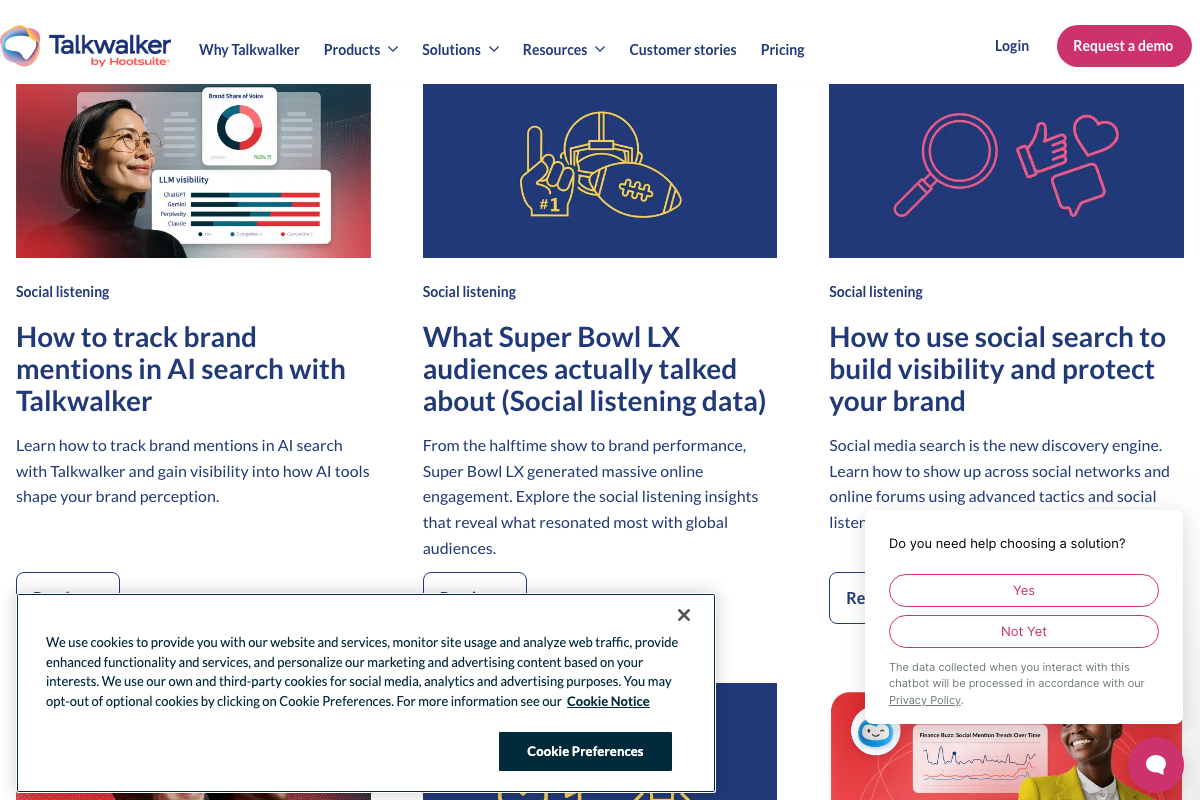
One meaningful extension the video doesn’t cover: Talkwalker’s documented LLM visibility feature tracks your brand’s share of voice inside AI chatbots — ChatGPT, Gemini, Perplexity, and Claude. The blog hero image makes this prominent. If your competitor-monitoring brief includes how your brand is represented in AI-generated answers (not just social posts), this is a documented capability worth adding to your evaluation checklist.
What the screenshots don’t confirm is the specific multi-step agent workflow the video describes — detect competitor mention → assess sentiment → draft response → flag for human review. That sequence is plausible given the platform’s capabilities, but it is not surfaced in published documentation from the captured pages. Treat it as an illustrative workflow, not a documented product feature.
Step 4 — Introduce the Agentic operating framework.
No official documentation was found for this step —
proceed using the video’s approach and verify independently.
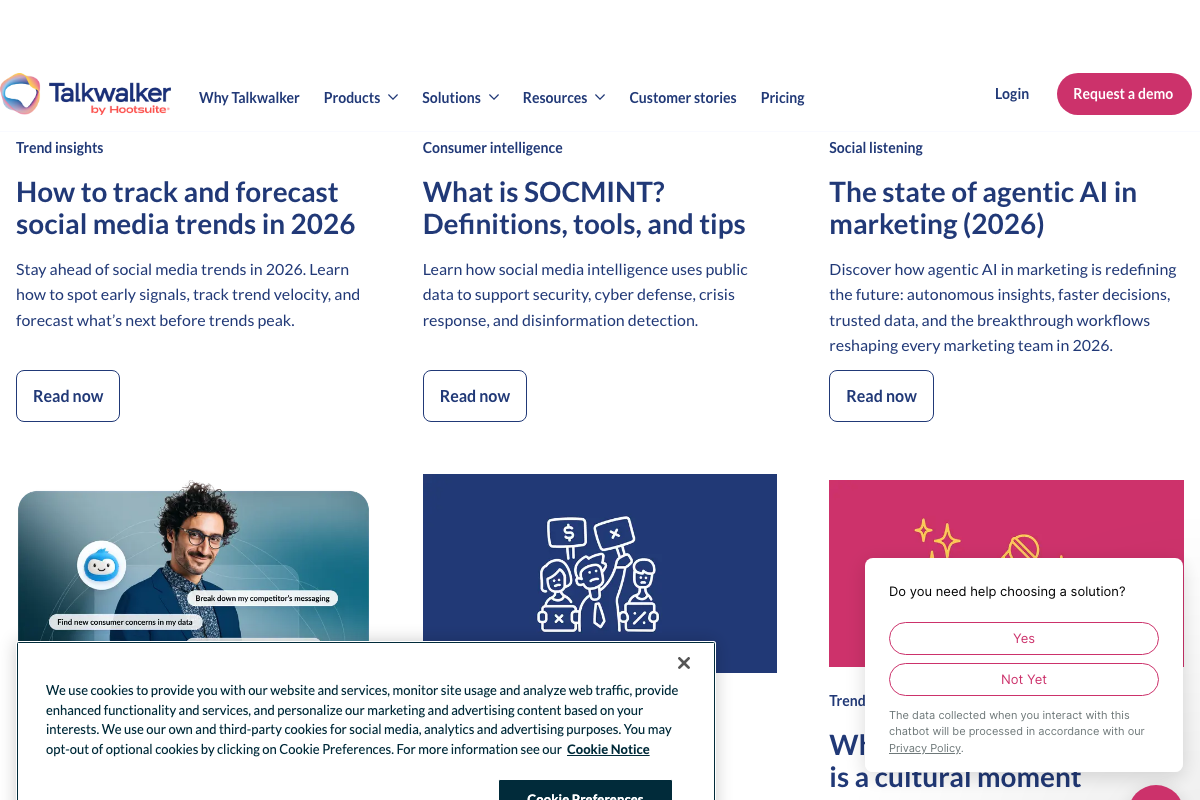
Talkwalker’s “state of agentic AI in marketing (2026)” article — visible in the screenshot — uses language aligned with this framing (“autonomous insights,” “faster decisions,” “breakthrough workflows”). That’s corroborating context, but the specific human-agent operating framework diagram the video references is not documented in any captured screenshot.
Step 5 — Define decision-ready intelligence.
No official documentation was found for this step —
proceed using the video’s approach and verify independently.
“Decision-ready intelligence” as defined in the panel — what’s changing, why it matters, what to do next — is a panel-coined framing. It does not appear as a documented term in any of the captured screenshots.
Step 6 — Establish the human role via Pascal Bornet’s Q-makes framework.
No official documentation was found for this step —
proceed using the video’s approach and verify independently.
Pascal Bornet’s Q-makes framework (creativity, critical thinking, social authenticity) is not referenced in any of the captured documentation. Verify this framework directly via Bornet’s own published work before citing it in internal briefings or strategy documents.
Step 7 — Map the “agent verse.”
No official documentation was found for this step —
proceed using the video’s approach and verify independently.
The “agent verse” framing appears to be Hootsuite Talkwalker’s own coined terminology. No external documentation corroborates the specific term or the interconnected agent architecture it describes.
Step 8 — Preview the near-term workflow trigger.
Microsoft Teams is confirmed as a current, AI-integrated platform — “Get more done every day with Microsoft Teams – powered by AI” is the live homepage headline as of March 2026. Automation-triggered workflows and Microsoft 365 Copilot in Teams are both documented, active capabilities.

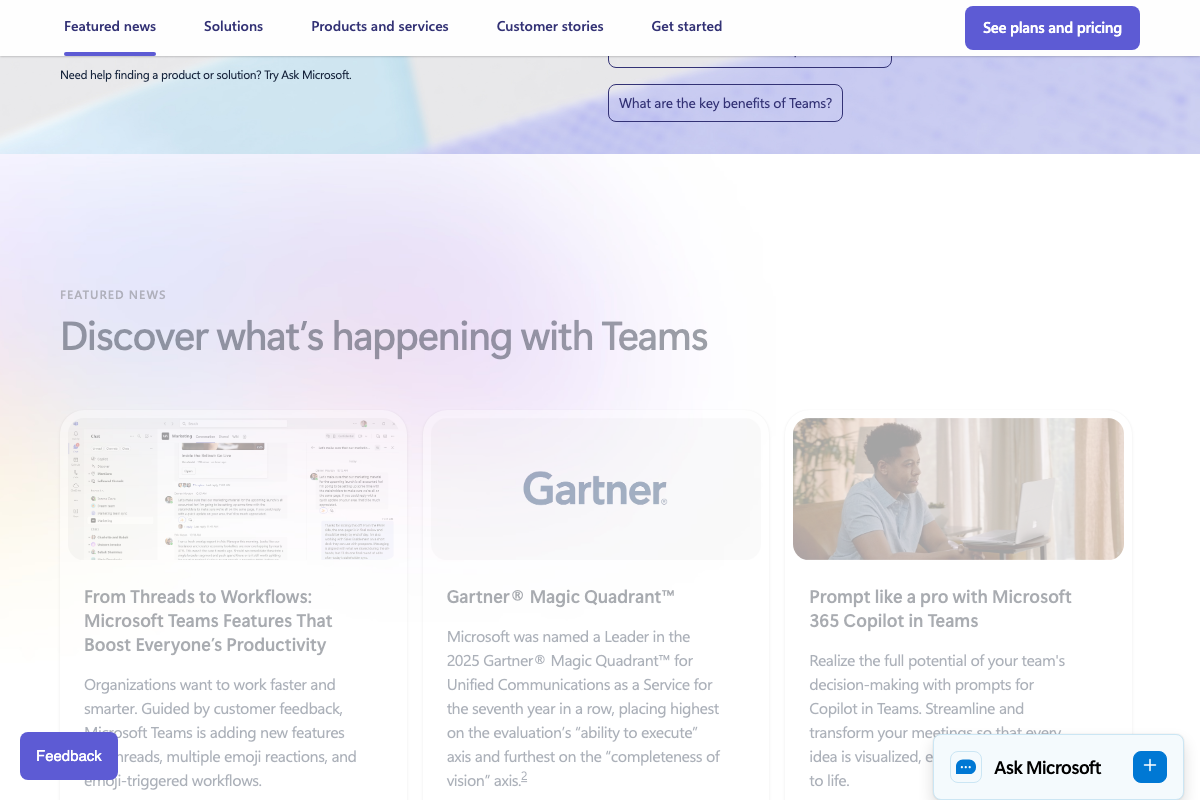
What the screenshots don’t confirm is the specific routing sequence the video describes: Teams message → agent → tool selection → surfaced results. That flow is architecturally consistent with Copilot in Teams and Power Automate, but the documentation for that specific agent-routing pattern lives in Microsoft’s Copilot and Power Automate docs — not on the Teams product homepage captured here. If you’re building or pitching this workflow, go to the Copilot Studio and Power Automate documentation directly to validate the configuration.
Note on ServiceNow: All three ServiceNow screenshot capture attempts returned Akamai Access Denied errors. Any enterprise workflow platform references that may connect to ServiceNow cannot be confirmed or contradicted from available documentation. Verify independently at servicenow.com.
Useful Links
- Talkwalker Blog — Hootsuite’s social listening and consumer intelligence platform blog, covering agentic AI in marketing, brand mention tracking in AI search, LLM visibility, and social media intelligence as of 2026.
- Microsoft Teams — Video Conferencing, Meetings, Calling — Microsoft Teams product homepage documenting AI-powered meetings and messaging, automation-triggered workflows, and Microsoft 365 Copilot in Teams.


0 Comments