

Vary Your Off-Site Brand Blurbs to Build Topical Authority Faster
Most SEO strategies obsess over on-page signals while leaving off-site messaging on autopilot — the same one-sentence description copy-pasted into every guest post, podcast bio, and PR placement. This tutorial walks you through a method for rotating keyword-embedded blurb variants across link-building and PR placements so each one advances a specific ranking goal. By the end, you’ll know how to build a set of brand descriptions that hit exact and partial keyword matches across placements, audience contexts, and product lifecycle stages.
-
Audit the blurb you’re using everywhere. Write down the single-sentence brand description you currently deploy across all channels. For the fictional SaaS used as the tutorial example — Fizzle Client — that blurb is: “Fizzle Client is a modern email client built for privacy, speed, and smarter communication.” Accurate, but it targets no keyword a buyer would search.
-
Run SEO research to surface high-intent keywords your product already serves. Look for features and use cases your product already supports but hasn’t targeted with dedicated pages. Fizzle Client offers voice notes, email tracking, and built-in video playback — none of which appear in the original blurb.
- Create a dedicated landing page for each high-intent keyword. Build one page per keyword, placing each phrase in the page title, meta description, URL slug, H1, and the opening sentence of body copy. Fizzle Client targets three: “email client with voice notes,” “email client with built-in video playback,” and “email client with tracking.”
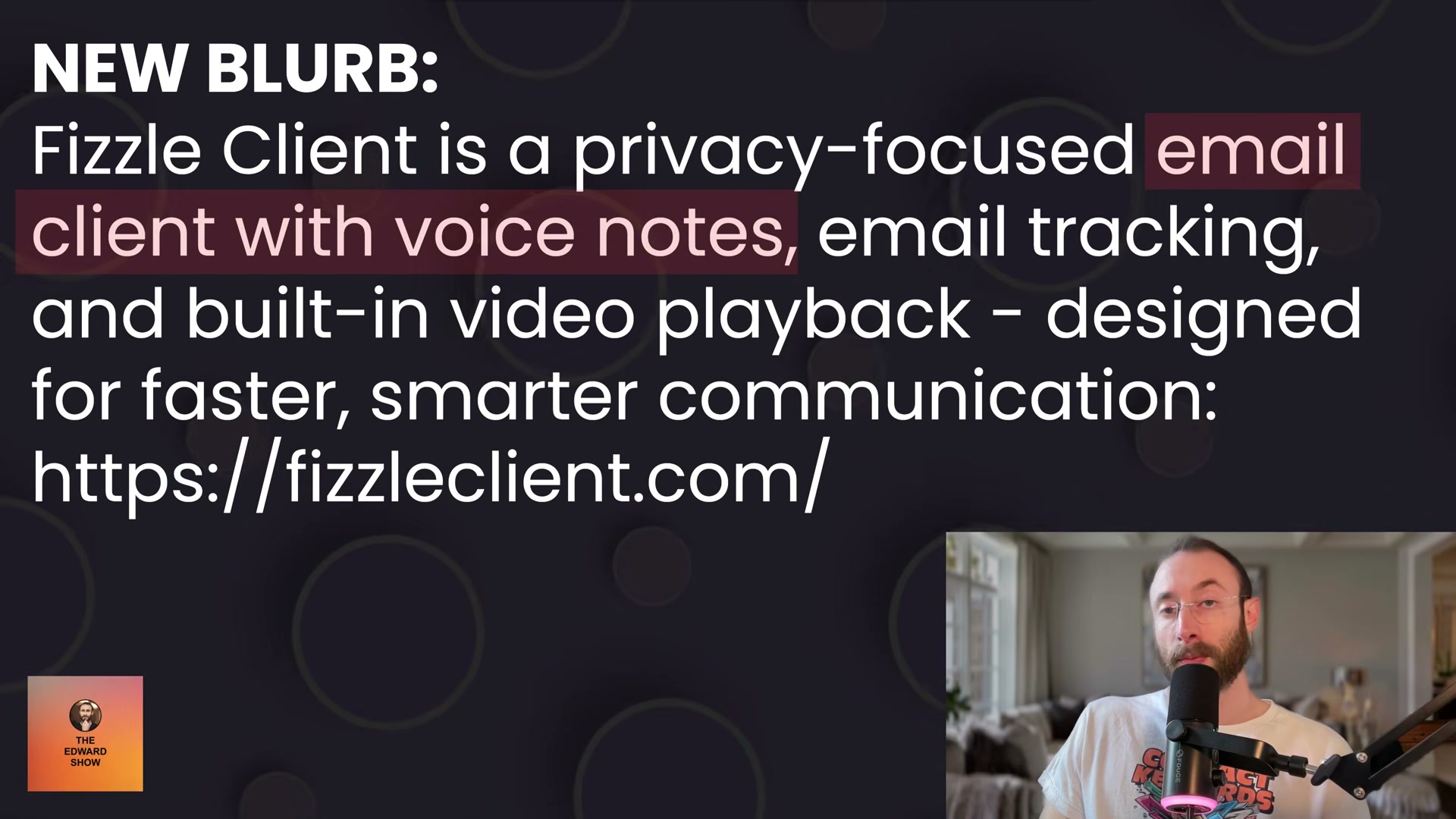
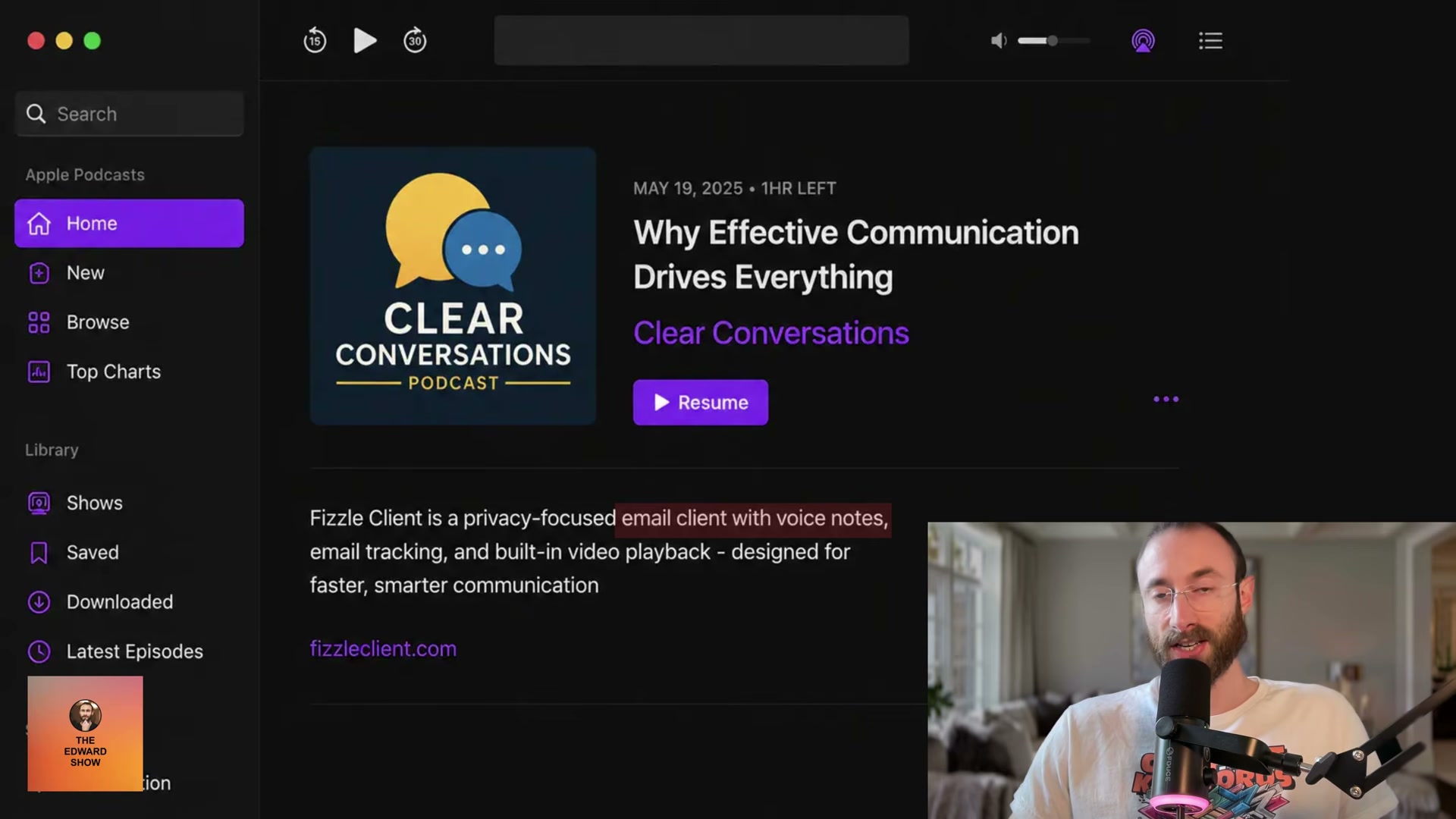
- Rewrite your brand blurb to incorporate the new keywords naturally. The goal is a coherent brand description, not a keyword list. The revised Fizzle Client blurb: “Fizzle Client is a privacy-focused email client with voice notes, email tracking, and built-in video playback designed for faster, smarter communication. fizzleclient.com.”

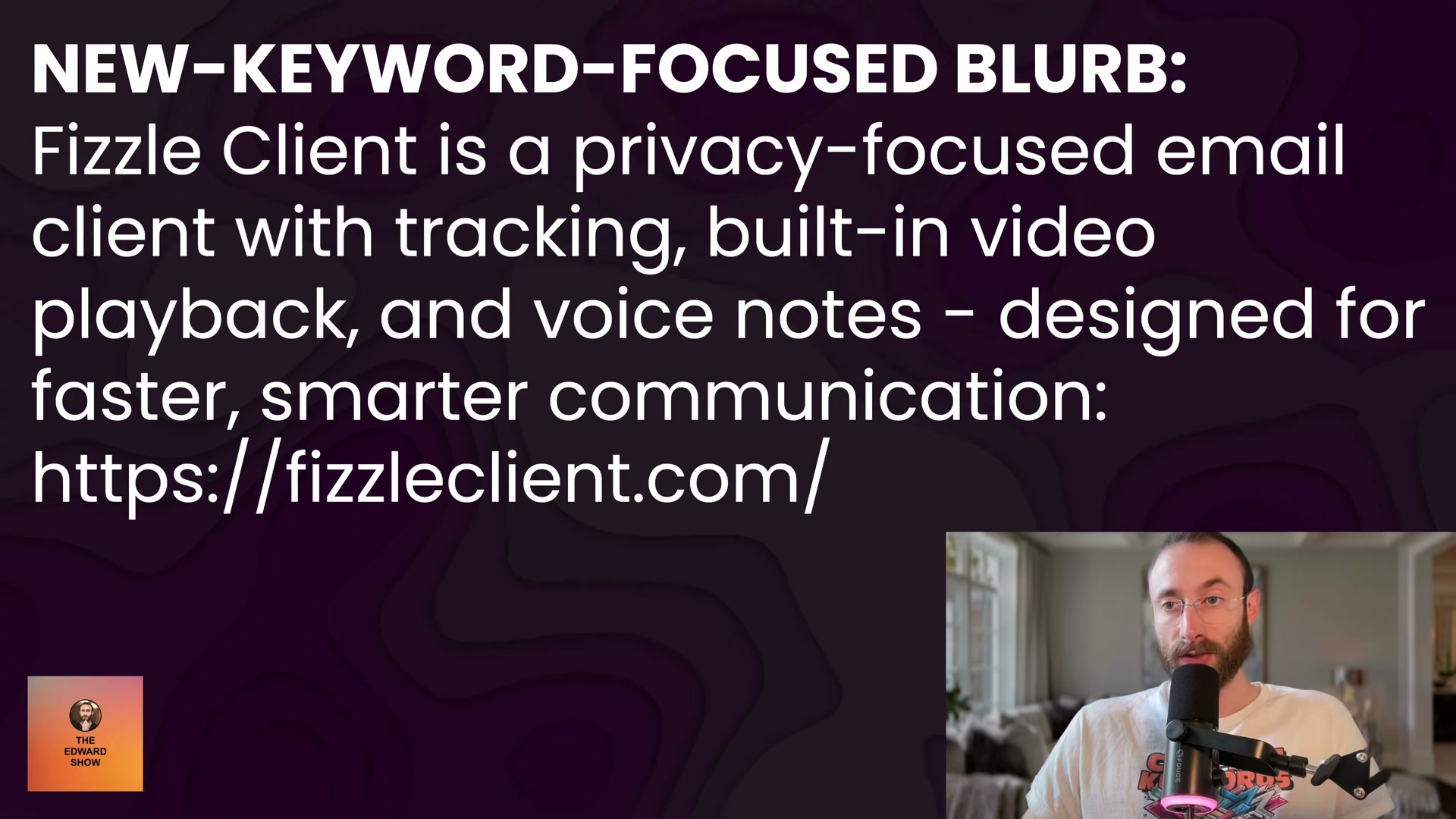
- Deploy multiple variants so different placements hit different keyword matches. Reorder the feature list across versions. One variant leads with “email client with voice notes” for an exact match on that phrase; another leads with “email client with tracking.” Distributed across guest posts, podcast descriptions, and directories, the variants collectively cover your full keyword set — some placements hit exact matches, others hit partials.
-
Skip a keyword in the blurb if you’re already ranking or competition is negligible. If your site already holds a strong position for a keyword, blurb reinforcement is optional. If no competitor is targeting the phrase with on-page signals and your domain has an established topical track record, you’ll likely rank without it — and your blurb real estate is better spent elsewhere.
-
Match the blurb to the audience of each specific placement. A podcast on effective communication calls for a blurb that leads with voice notes, not tracking. Audience-tuned messaging raises click-through rate, and the strongest backlinks pass qualified referral traffic — not just link equity.
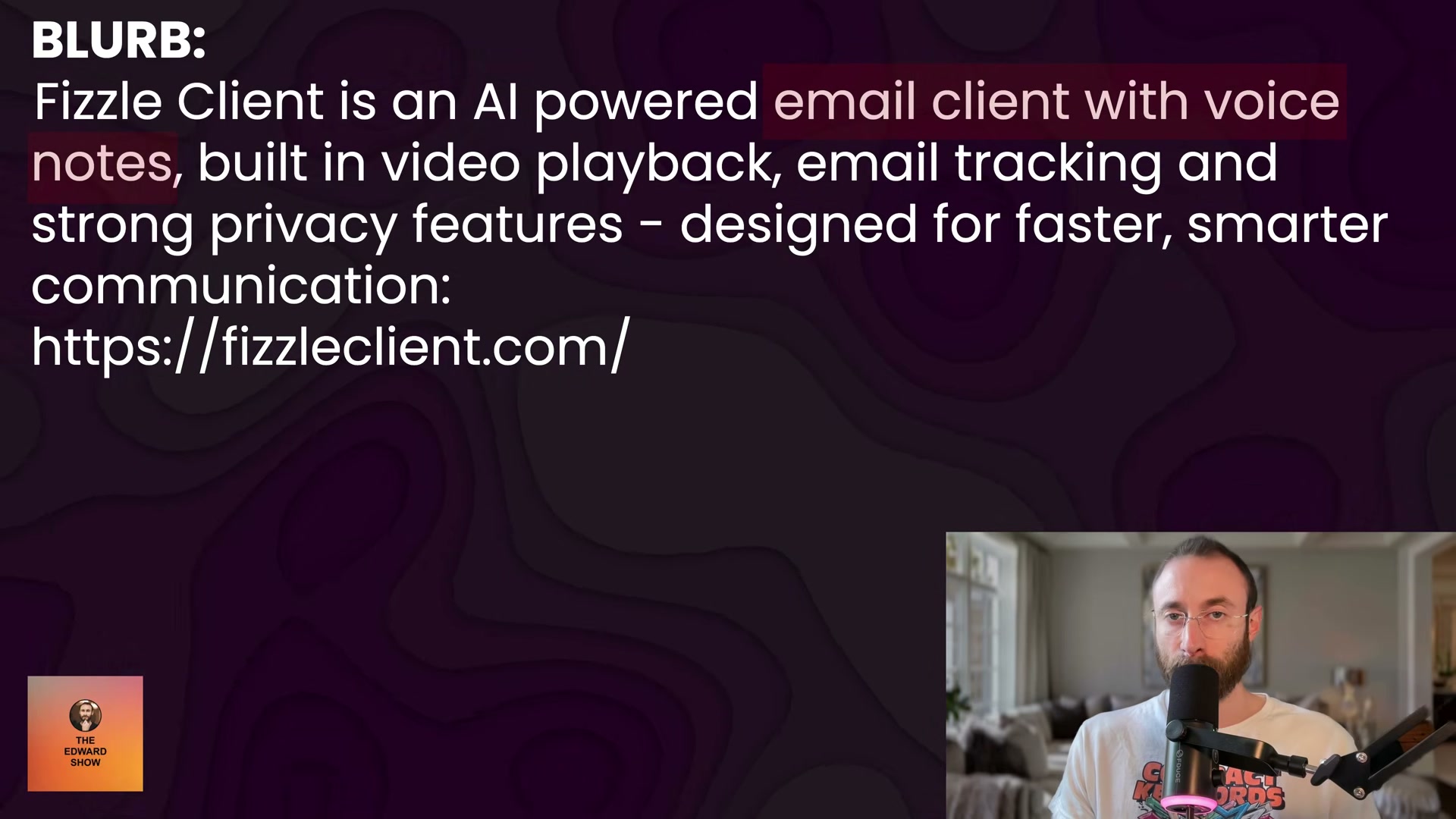
- Evolve the blurb each time new features ship. When Fizzle Client adds an AI email composing assistant, the blurb shifts to lead with “AI-powered email client.” That single change expands topical authority into a new keyword cluster while carrying forward the existing feature signals.
How does this compare to the official docs?
The approach draws on core SEO principles — topical authority, anchor text variation, and transactional keyword targeting — each of which has documented guidance from Google Search Central and major SEO tool providers, and Act 2 puts those sources directly alongside the method shown here.
Here’s What the Official Docs Show
The video presents a sound strategic framework for off-site keyword distribution, and the steps here layer in published guidance from Google Search Central and established SEO reference sources to give each tactic a documented foundation. Think of this act as the sourced companion to what the video demonstrated — same sequence, with the authoritative backing attached.
1. Audit the blurb you’re using everywhere.
No official documentation was found for this step — proceed using the video’s approach and verify independently.
2. Run SEO research to surface high-intent keywords your product already serves.
No official documentation was found for this step — proceed using the video’s approach and verify independently.
3. Create a dedicated landing page for each high-intent keyword.
No official documentation was found for this step — proceed using the video’s approach and verify independently.
4. Rewrite your brand blurb to incorporate the new keywords naturally.
No official documentation was found for this step — proceed using the video’s approach and verify independently.
5. Deploy multiple variants so different placements hit different keyword matches.
No official documentation was found for this step — proceed using the video’s approach and verify independently.
6. Skip a keyword in the blurb if you’re already ranking or competition is negligible.
No official documentation was found for this step — proceed using the video’s approach and verify independently.
7. Match the blurb to the audience of each specific placement.
No official documentation was found for this step — proceed using the video’s approach and verify independently.
8. Evolve the blurb each time new features ship.
No official documentation was found for this step — proceed using the video’s approach and verify independently.
Documentation note: Screenshots were attempted across all eight steps of this workflow but no files were captured during the review pass. As a result, every step in this act carries an unverified status. The underlying principles — topical authority clustering, anchor text variation, and transactional keyword targeting — have well-established coverage in Google Search Central and major SEO tool documentation. Before deploying this workflow at scale, cross-reference each step against the sources listed below and verify that current guidance has not shifted.
Useful Links
No source URLs were returned from the documentation screenshot analysis for this post. The following reference points were cited directionally in Act 1 and are candidates for manual verification:
- Google Search Central — How Search Works — Google’s foundational documentation on how content is crawled, indexed, and ranked; relevant context for topical authority strategy.
- Google Search Central — Links and Search — Official guidance on how Google evaluates links, including off-site signals from placements and directories.
- Google Search Central Blog — Primary source for algorithm updates and quality guidance that directly affects off-page SEO tactics like blurb distribution.


0 Comments