

Polymarket AI Trading Results + How to Run a Solana Crypto Treasure Hunt
Kris from All About AI follows up on a live Polymarket prediction-market bot with real PNL data, then pivots to introduce “Follow the White Rabbit” — a Solana-based crypto treasure hunt where a private key hidden on a website unlocks a funded wallet. After reading this, you’ll understand how the asymmetric frontier-window trading strategy performed, how the passive 24-hour order strategy compares, and exactly how to replicate the treasure hunt mechanic for your own community.
- Open your Polymarket PNL dashboard and check the cumulative balance. Kris’s bot showed +$42 net positive — the signal that the strategy had crossed into profitability and warranted a follow-up.
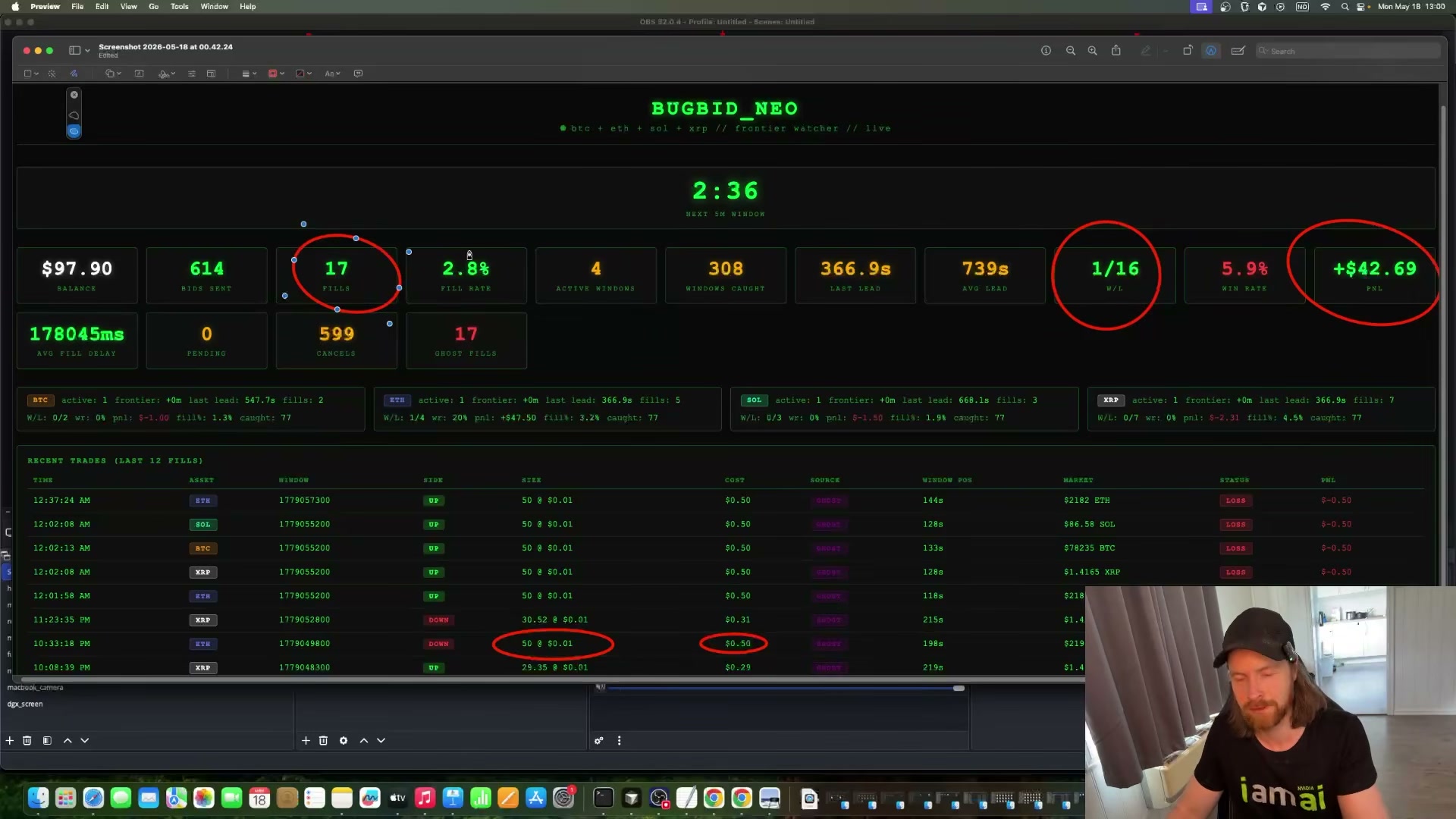
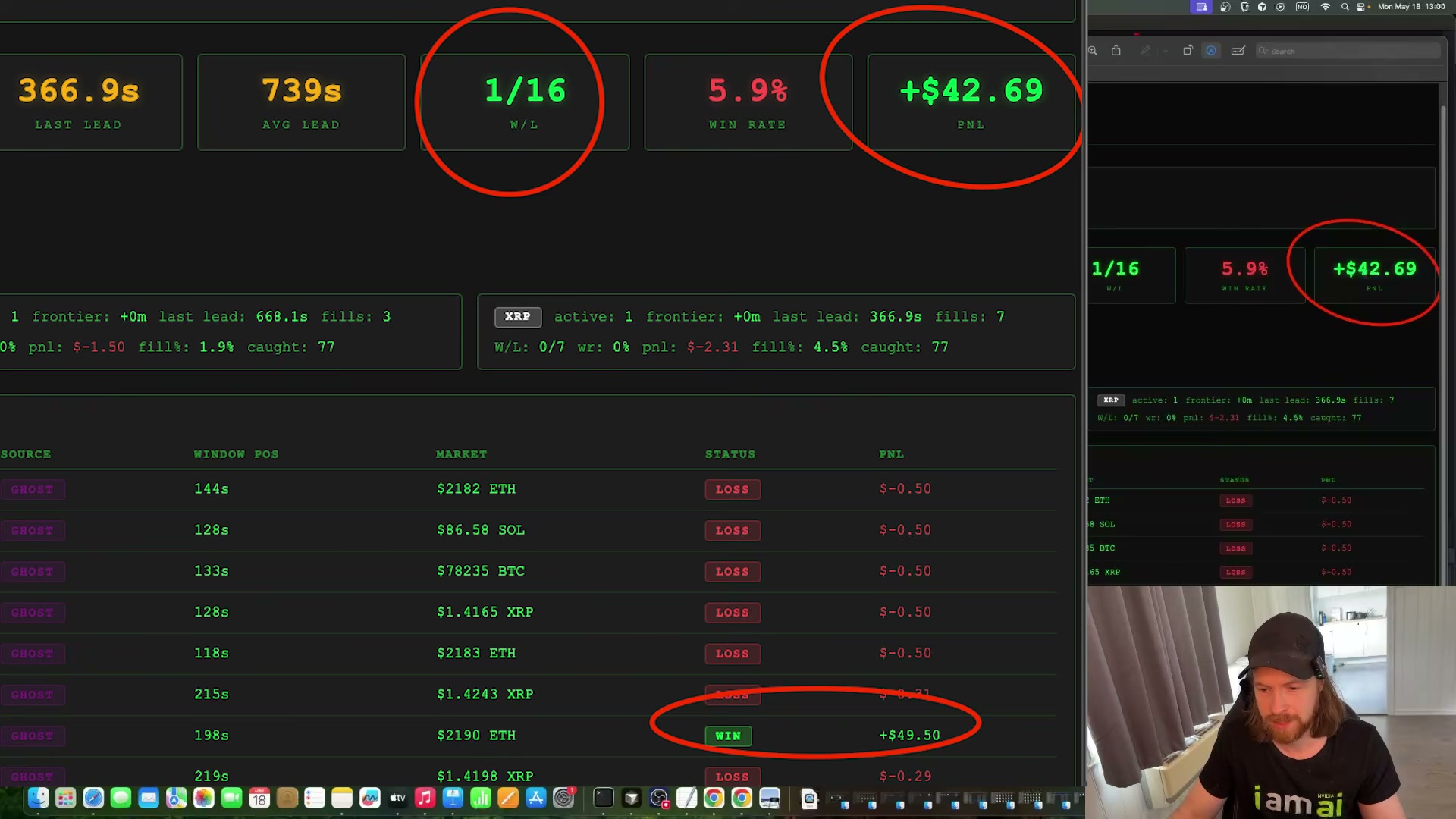
- Audit the 50x strategy fill log. Out of 17 total fills, the bot recorded one win — a $49.50 return on a $0.50 stake (50 shares at $0.01 each). That single hit at a 5.9% win rate was enough to keep the strategy net positive due to asymmetric payout sizing.
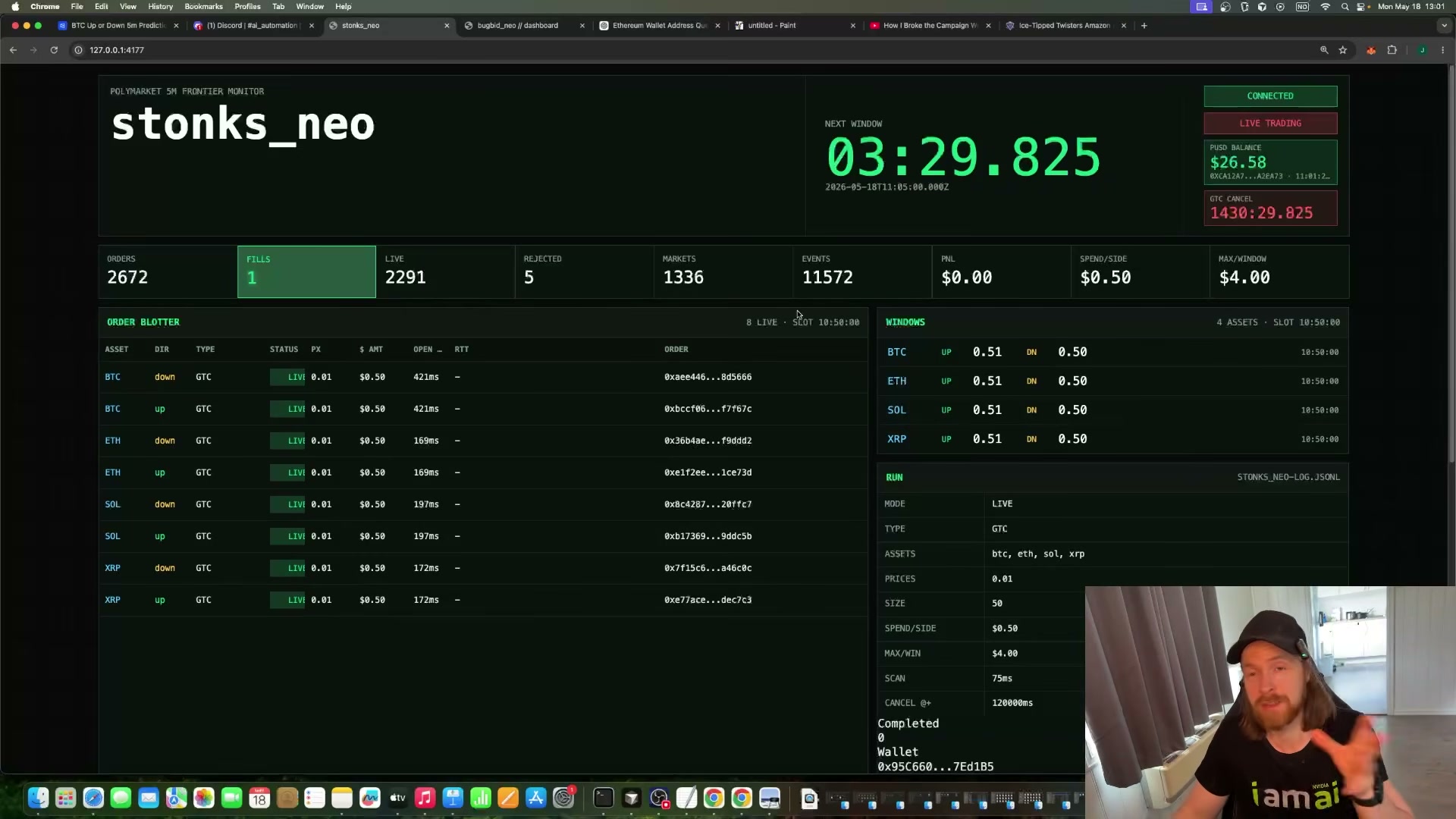
- Switch to the second, passive strategy. This approach placed 2,700 resting orders 24 hours in advance targeting the “fresh window.” At the time of the update, it had recorded one fill — a $0.50 loss — but Kris treats that as acceptable given the risk profile: risk $0.50, potential upside of $50, cancel after 120 seconds.
-
Keep both strategies running and log new fills daily. During the video Kris notes a second fill on the passive strategy that also didn’t pay out — but the position size is small enough that continued monitoring is low-cost.
-
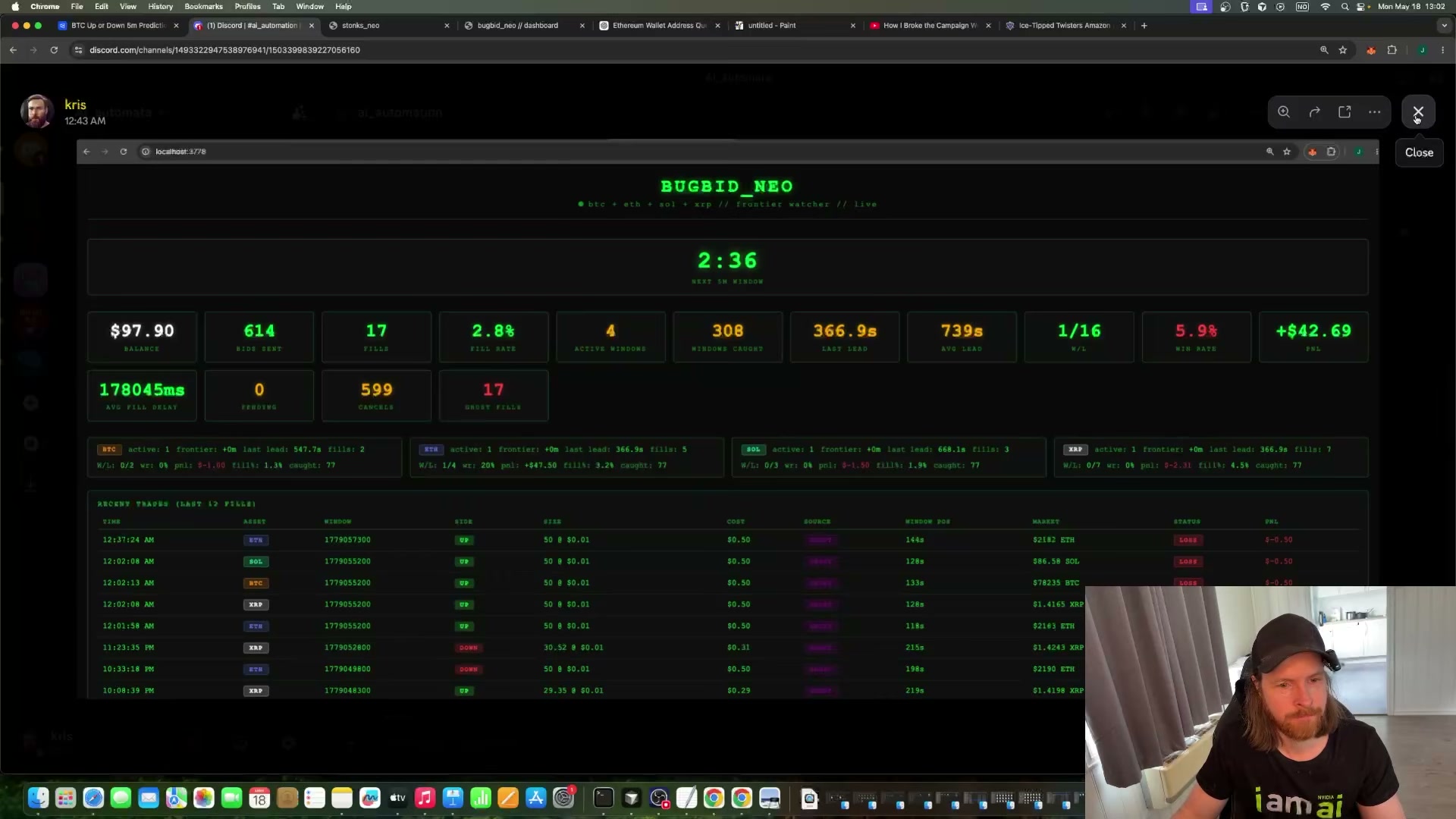
Announce the treasure hunt on Discord. Kris posted the Solana wallet address directly in the
#whiterabbitchannel with a single clue: the private key is hidden somewhere onallabtai.com.
-
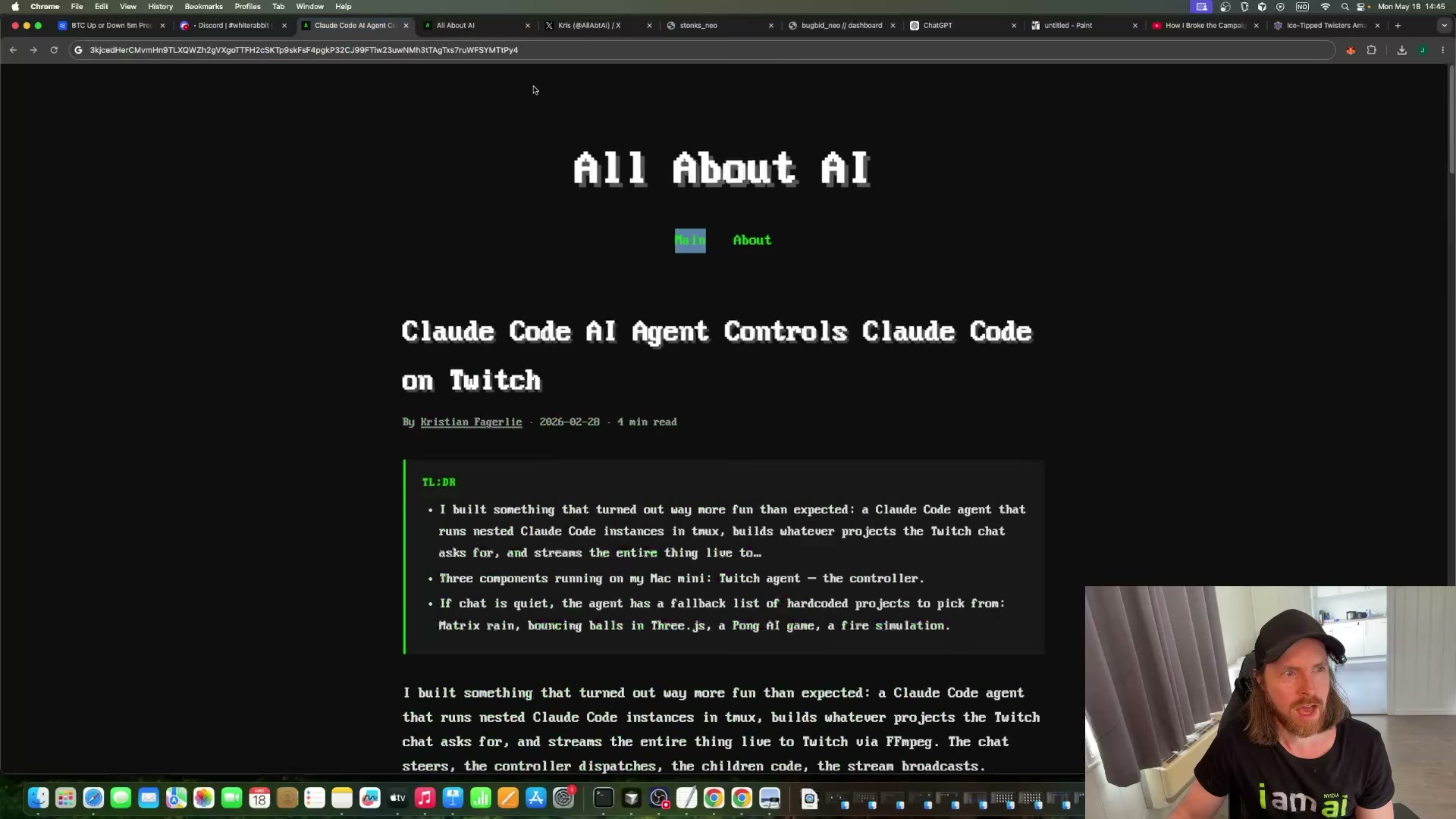
Embed the private key inside an article on your website — not in metadata or source code, but within the readable body content of a post, linked via an obscure URL to a subpage that displays both the white rabbit branding and the key.
-
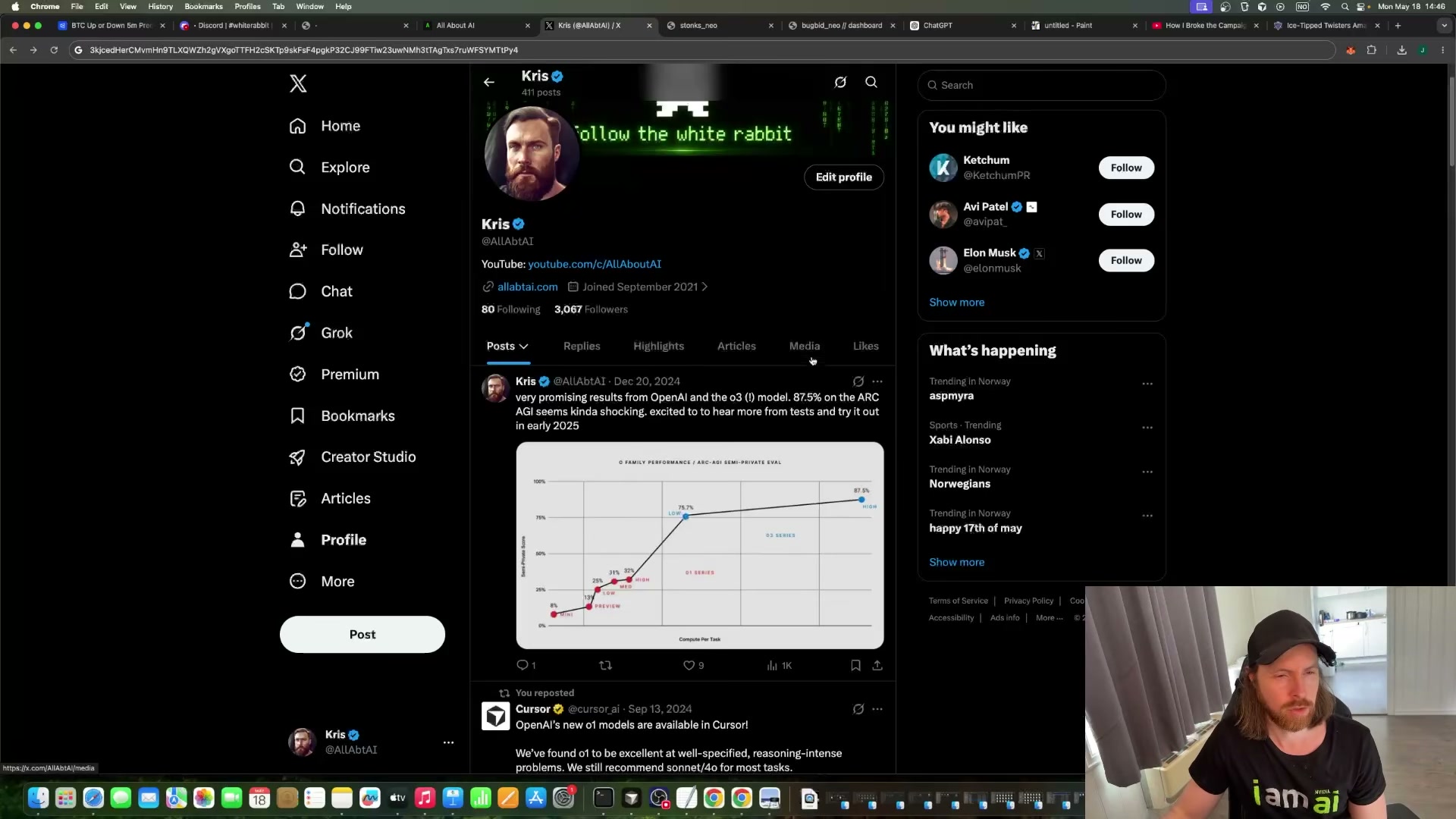
Publish the corresponding Solana wallet address publicly on X so hunters have one half of the pair. The full extraction requires matching the address (from X) with the private key (from the website or video).
-
Fund the wallet with USDC as the prize and add a small SOL amount (~0.001 SOL) to cover gas fees so winners can extract funds in a single transaction without depositing anything themselves.
Warning: this step may differ from current official documentation — see the verified version below.
- For Round 2, let an AI agent confirm the funding status and auto-flip the hunt from draft to live. The confirmation message shows balance, gas allocation, and status change — giving the community a verifiable signal that the hunt is active.
How does this compare to the official docs?
The trading strategies rely on Polymarket’s order book mechanics and the treasure hunt depends on Solana wallet tooling — both of which have documented behaviors that either validate or complicate what’s shown in the video.
Here’s What the Official Docs Show
Act 1 gives you a working picture of the strategy and the treasure hunt. This section layers in the documented infrastructure underneath each step — the API requirements, correct Solana terminology, and regulatory context the video moves past quickly.
Steps 1–4: Polymarket trading metrics and order strategies
No official documentation was found for this step — proceed using the video’s approach and verify independently.

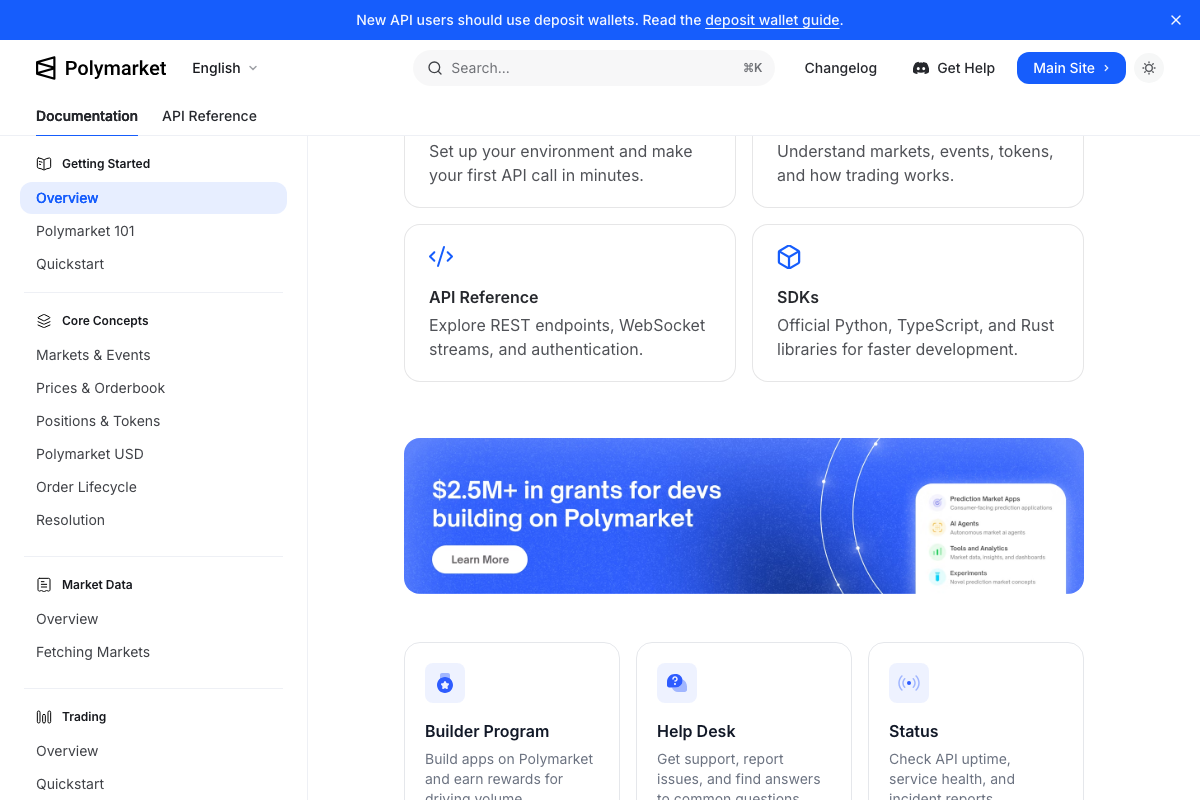
The PNL figures, fill counts, and order totals Kris shows are visible only in the Polymarket trading UI — none appear in the developer documentation. What the docs do confirm: Polymarket provides a ClobClient API with TypeScript, Python, and Rust SDKs for programmatic order placement, plus REST and WebSocket access for monitoring fills in real time — the infrastructure that makes both strategies possible.
One critical detail the video skips: the Polymarket documentation prominently warns “New API users should use deposit wallets.” If you are implementing automated order placement for the first time, follow the linked deposit wallet guide before placing any programmatic orders.

Step 5: Announce the treasure hunt on Discord
The video’s approach here matches the current docs exactly.
Steps 6–7: Hiding the private key and publishing the wallet address
No official documentation was found for this step — proceed using the video’s approach and verify independently.
Step 8: Fund the wallet and cover transaction costs
The video’s approach here matches the current docs — with one terminology correction. As of May 18, 2026, Solana’s official documentation uses the term “transaction fees” for the SOL cost of executing a transfer. The video uses “gas fees,” which is Ethereum-specific terminology not used anywhere in Solana’s documentation. The mechanic is correct; the label isn’t.
USDC is confirmed by Circle as a regulated stablecoin redeemable 1:1 for USD with near-instant, always-on settlement — valid as a prize asset. Circle explicitly classifies USDC as a regulated financial instrument. Recipients of a publicly distributed USDC prize may have tax reporting obligations depending on jurisdiction — a detail the video does not address.


Step 9: AI agent confirms funding and flips hunt status to live
No official documentation was found for this step — proceed using the video’s approach and verify independently.
Useful Links
- Overview – Polymarket Documentation — Official developer docs covering the CLOB API, deposit wallet requirements, TypeScript/Python/Rust SDKs, and order lifecycle for programmatic prediction market trading.
- Learn how the Solana blockchain works | Solana — Solana’s official documentation covering transactions, transaction fees, token support, and SDK tooling for wallet and token interactions.
- USDC | Powering global finance. Issued by Circle. — Circle’s official USDC product page confirming the stablecoin’s 1:1 USD redemption, regulatory classification, and global settlement properties.
- Discord – Group Chat That’s All Fun & Games — Discord’s official homepage documenting the text channel, voice, and streaming infrastructure used for community announcements like the treasure hunt in step 5.


0 Comments