

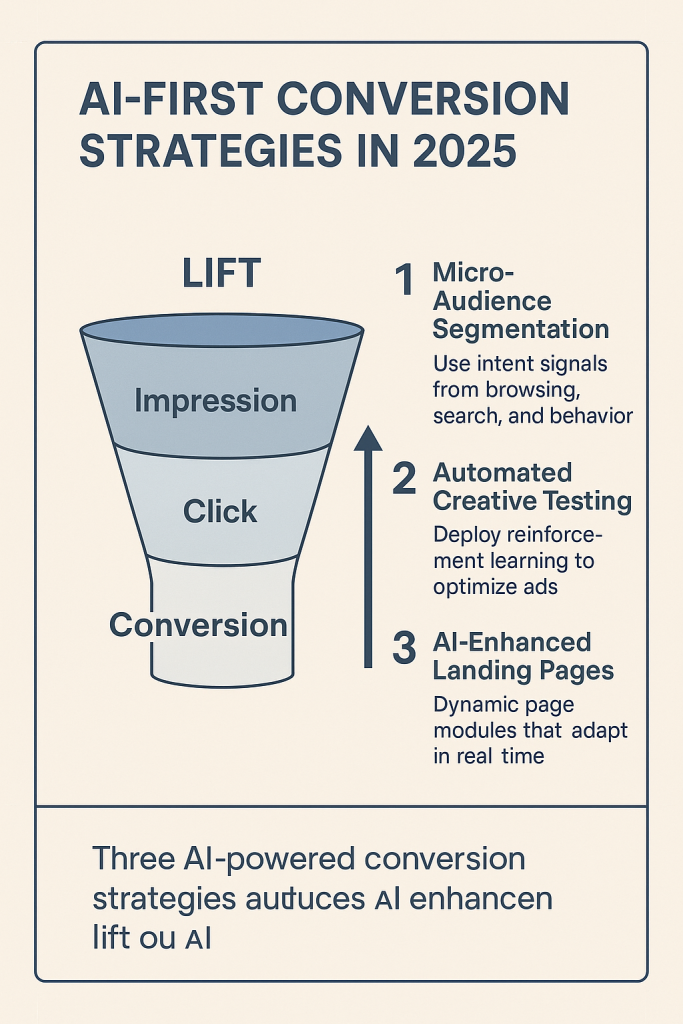
In 2025, marketers leveraging AI-powered micro-segmentation, automated creative optimization, and dynamic landing experiences are achieving conversion lifts of up to 3× compared to static campaign approaches. These methods combine real-time data processing with continuous creative testing to maximize ROI.
Problem Identification
Most marketing campaigns still operate on fixed creative cycles—a single set of ads, landing pages, and offers deployed for weeks or months before evaluation. This “set and forget” approach is misaligned with today’s hyper-fluid digital environment where consumer preferences, competitive offers, and algorithm priorities can shift overnight.
Three main inefficiencies plague traditional conversion optimization:
- Broad Targeting Waste – Ads reach large, loosely defined audiences, spending budget on individuals with minimal intent to convert.
- Slow Feedback Loops – Creative performance is often reviewed weekly or monthly, meaning underperforming ads waste spend for days before replacement.
- Static Messaging – Landing pages serve the same headline and offer to every visitor, regardless of their source, intent, or stage in the buying journey.
By integrating AI into every stage of the conversion funnel, marketers can make instant adjustments based on real-time audience signals.
Comprehensive Solution Framework
1. Micro-Audience Segmentation
- AI-Driven Clustering – Use AI models to segment audiences by behavior patterns, content engagement, psychographics, and purchase intent, not just demographics.
- Real-Time Signal Processing – Continuously track browsing history, ad engagement, and in-session behavior to refine targeting dynamically.
- Example – A SaaS company segments free trial sign-ups into “Explorers” (light usage, high bounce rate) vs. “Power Testers” (heavy feature use, low churn risk) and tailors upgrade offers accordingly.
2. Automated Creative Testing
- Reinforcement Learning (RL) Ads – AI continuously tests multiple variations of headlines, calls-to-action, images, and offers, automatically shifting budget to top-performers.
- Predictive CTR Modeling – Models forecast click-through rates before deployment, allowing underperforming creative to be cut before launch.
- Example – A retail brand runs 50 ad variants overnight, with the RL system pushing spend to the top 5 performers by morning.
3. AI-Enhanced Landing Pages
- Dynamic Content Modules – Headlines, product images, testimonials, and offers adapt in real-time based on visitor profile.
- Intent-Based Personalization – A returning visitor who previously viewed pricing sees a discount banner, while a first-time visitor sees a value proposition overview.
- Example – A travel company detects that a visitor’s IP is from a cold-weather region and automatically highlights tropical vacation packages.
Authority Building
- Meta AI Ads Benchmark (2025) – Campaigns using reinforcement learning for creative optimization improved CTR by 6–8% compared to static campaigns [1].
- HubSpot Personalization Study – Personalizing content to buyer intent increased lead-to-sale conversion rates by 212% [2].
- Harvard Business Review – Firms using AI in personalization strategies saw a 10–20% uplift in customer lifetime value [3].
Practical Implementation — Fast-Start Checklist
Step 1: Implement AI-based tracking to collect behavioral and psychographic signals (e.g., Clearbit, Segment).
Step 2: Build micro-segments based on recent behavior, not just static personas.
Step 3: Use AI ad optimization platforms (e.g., Meta Advantage+, Google Performance Max) for continuous creative testing.
Step 4: Deploy adaptive landing page builders like Mutiny, Unbounce AI, or Optimizely.
Step 5: Review performance dashboards daily and adjust audience definitions based on live data.
References
- Meta. “AI Ads Benchmark Report 2025.” Meta for Business. July 2025.
- HubSpot. “State of Personalization 2025.” HubSpot Research. June 2025.
- Harvard Business Review. “AI Personalization and Customer Lifetime Value.” HBR. April 2025.
I


0 Comments