

Unleashed Brands, the parent company behind youth-enrichment concepts including Urban Air Adventure Park, hired VaynerX to overhaul its social media marketing—a move that signals a broader shift in how franchise operators approach organic content, cultural relevance, and AI-powered personalization at scale. The decision was led by Pat O’Toole, formerly CMO at Burger King, stepping into the top marketing role at Unleashed Brands with an explicit mandate to elevate the brand’s social presence across its youth-enrichment portfolio. This tutorial breaks down exactly how the Unleashed Brands/VaynerX model works, what it means for franchise marketing teams everywhere, and how to replicate the strategy framework for any multi-location brand.
What This Is
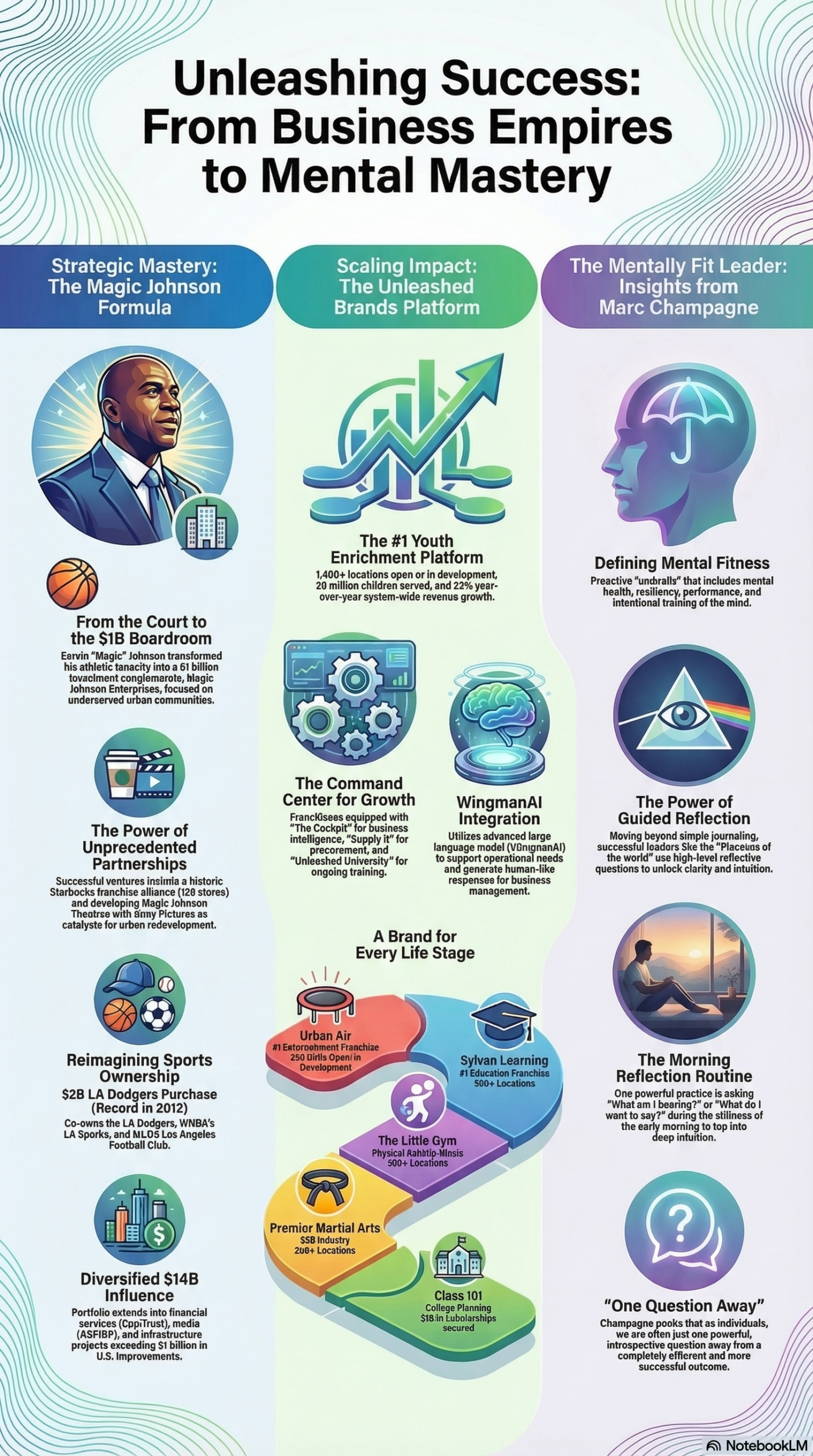
Unleashed Brands is a franchise holding company that aggregates and scales what it describes as “innovative and profitable” youth-enrichment concepts under a single operational umbrella, according to the NotebookLM research report on this topic. Rather than simply acquiring brands and letting them operate in silos, Unleashed Brands plugs each concept into a centralized enterprise infrastructure designed to handle operational complexity—freeing individual franchise operators to focus almost entirely on delivering a superior guest experience. It’s the infrastructure-as-competitive-advantage model applied to franchising.
The portfolio includes Urban Air Adventure Park, a large-format indoor adventure concept aimed at families and youth, which served as the focus brand for O’Toole’s first campaign at the company. Urban Air is purpose-built for heavy social investment: the brand’s target audience of kids, teens, and active families is hyper-active on platforms like TikTok, Instagram, and YouTube, where organic reach and cultural resonance matter as much as paid spend.
To drive that social presence, Unleashed Brands brought in VaynerX—Gary Vaynerchuk’s holding company for media, marketing, and agency services. VaynerX is not a single monolithic agency. It is an ecosystem of specialized entities, each focused on a distinct layer of the marketing stack, as detailed in the research report:
- Gallery Media Group: Media brands dedicated to consumer culture, editorial storytelling, and organic audience development.
- Eva Nosidam: A modern production company specializing in human-centric storytelling and platform-native content formats.
- Tingley Lane: An inventory optimization arm that converts underperforming paid media inventory into P&L value for brand partners.
- Marketing for the Now: An executive-level platform designed specifically for CMOs and CEOs navigating real-time platform and media shifts.
This multi-entity structure is what makes VaynerX fundamentally different from a traditional full-service creative agency. Rather than assigning a single team to a brand account, VaynerX deploys specialists across content production, organic distribution, media value optimization, and executive platform strategy simultaneously. For a franchise network like Unleashed Brands—which operates multiple concepts across hundreds of locations—this kind of distributed, specialist model maps directly onto the operational complexity of franchise marketing at scale.
Pat O’Toole’s background makes this agency selection strategic, not arbitrary. At Burger King, a similarly large franchise-driven brand where culture and social moments drove outsized returns relative to traditional paid media, O’Toole built his marketing approach around earned attention—not just purchased impressions. He arrives at Unleashed Brands carrying that same philosophy, and VaynerX’s documented emphasis on content that audiences “actually want to watch” is the operational implementation of that worldview, as noted in the research report.
What makes this partnership particularly worth studying is not just the agency selected, but the underlying logic: Unleashed Brands has already built a centralized enterprise infrastructure for operational management. The VaynerX engagement extends that same systems thinking into the marketing and content layer. The infrastructure handles the complexity; the people deliver the experience.
Why It Matters
For franchise marketing practitioners, the Unleashed Brands/VaynerX partnership signals several structural shifts worth tracking closely.
Cultural entrenchment is replacing pure paid social as the primary brand-building lever. According to the research report, VaynerX’s core marketing philosophy centers on a “now-focused” approach—marketing calibrated to the consumer’s current state of mind rather than a pre-planned campaign calendar. More specifically, VaynerX emphasizes content that people “actually want to watch,” which is a direct critique of the industry’s over-reliance on paid social promotion. For franchise brands that have historically leaned on local direct-mail offers and boosted posts, this is a meaningful reorientation of where marketing budget and creative energy belong.
AI is entering the franchise marketing infrastructure as a first-class tool, not an experiment. Unleashed Brands has already built WingmanAI—described in the research report as a “proprietary large language model designed to generate human-like responses for business input.” This means AI is deployed at the operational layer of the franchise system, not just in a pilot program. It is only a matter of time before AI-generated content drafts, response templates, customer communication tools, and social copy systems get layered into every franchise marketing stack. VaynerX, with its emphasis on “now-focused” scale and cultural fluency, is the natural strategic partner to help operationalize AI-powered content production.
Specialist agency ecosystems structurally outperform generalist agencies for franchise brands. A single creative agency cannot simultaneously optimize for content production quality, media inventory efficiency, CMO-level platform strategy, and human-centric storytelling production—at least not well. VaynerX’s ecosystem model mirrors the logic of Unleashed Brands’ own infrastructure approach: specialize each function, coordinate through a shared strategic framework, and deploy the right expert to the right problem. Franchise operators need systems that scale horizontally across locations. The agency partner needs to match that operational architecture.
First-campaign decisions under a new CMO carry disproportionate strategic weight. O’Toole’s choice to partner with VaynerX as his first major external engagement at Unleashed Brands is not just a vendor decision—it is a cultural signal to franchise owners, employees, and the broader market about what this marketing leadership values. CMOs who select now-focused, culturally-oriented agency ecosystems over traditional media-buying firms are announcing their philosophy before publishing a single piece of content. That choice itself becomes a piece of brand communication.
The Data
Unleashed Brands’ enterprise infrastructure separates operational management from guest experience delivery. Here is how each platform component maps to franchise marketing enablement, and how the VaynerX ecosystem aligns to cover the marketing layers that the internal platform does not:
Unleashed Brands Enterprise Platform
| Platform Tool | Primary Function | Marketing Relevance |
|---|---|---|
| Command Center | Integrated day-to-day operations management | Centralizes reporting across all franchise locations |
| The Cockpit | Business intelligence and data visualization dashboards | Tracks location-level performance data to inform media spend decisions |
| WingmanAI | Proprietary LLM for human-like business responses | Generates social copy drafts, handles customer-facing communications at scale |
| Supply X | Procurement network with exclusive rebates and discounts | Reduces operational costs, frees budget for marketing investment |
| Unleashed University | Continuous operations and leadership training | Scales brand standards and consistent voice across the franchise network |
Source: NotebookLM Research Report
VaynerX Ecosystem Coverage
| VaynerX Entity | Specialty | Role in Franchise Marketing |
|---|---|---|
| Gallery Media Group | Consumer culture media and editorial brands | Organic content distribution and audience development |
| Eva Nosidam | Human-centric storytelling and modern production | Video and social content production for platform-native formats |
| Tingley Lane | Media inventory optimization for P&L owners | Converts underperforming paid inventory into measurable value |
| Marketing for the Now | CMO/CEO platform and media strategy | Guides executive-level decisions on platform shifts in real time |
Source: NotebookLM Research Report
Together, the internal platform (WingmanAI, The Cockpit) and the external agency ecosystem (VaynerX) create a full-stack marketing infrastructure: AI handles scale and consistency, human specialists handle cultural intelligence and storytelling, and executive strategy advisors (Marketing for the Now) keep the whole system calibrated to where platforms are heading.
Step-by-Step Tutorial: Building a VaynerX-Model Franchise Social Strategy
This section walks through the exact framework that the Unleashed Brands/VaynerX model represents—so you can apply the same operational logic to any multi-location brand. The goal is to build a social media infrastructure that earns attention organically, deploys AI for scale, and aligns agency partners to the right specialist functions.
Phase 1: Conduct a Two-Layer Franchise Social Audit
Before you can scale a social media strategy, you need a clear-eyed picture of where you currently stand at both the brand level and the individual location level. For franchise networks, this dual-layer audit is non-negotiable—corporate performance and location-level performance are two different problems.
Brand-level audit (corporate accounts):
- Pull follower counts, engagement rates, reach, and impressions for all corporate-managed accounts across platforms (Instagram, TikTok, Facebook, YouTube).
- Identify which content types are generating organic engagement versus which only perform under paid boost. If most of your top content requires budget to perform, your organic content strategy is not working.
- Review the past 90 days of content output. Calculate the ratio of storytelling content versus promotional content. VaynerX’s documented philosophy prioritizes the former. If your ratio is heavily promotional, you have a structural content problem, not a media spend problem.
- Document your current content production capacity: how many pieces are published per week, who creates them, what the approval workflow looks like, and how long the average content cycle takes from concept to publish.
Location-level audit (franchise-operated accounts):
- Sample 10–20 franchise-operated local accounts across different markets and tenure levels. Are they active? Are they following brand guidelines? Are they producing content that would embarrass the brand?
- Identify which locations are outperforming organically. Study what they’re doing differently—it is often a single team member who understands the platform natively and produces authentic content without heavy oversight.
- Document the full range of inconsistencies: mismatched brand voice, off-brand imagery, promotional language that undercuts brand positioning, response times on comments and DMs.
This audit establishes your true baseline. VaynerX’s model of deploying specialists across a brand requires a clear understanding of existing gaps before bringing in any external resources.
Phase 2: Define Your “Now-Focused” Content Pillars
VaynerX’s philosophy, as documented in the research report, centers on marketing for the consumer’s current state of mind—what they are thinking, feeling, and experiencing right now, not what the brand wants to promote on its own schedule. To build this into your content architecture:
-
Map your audience’s emotional and behavioral calendar. For Urban Air Adventure Park, this means understanding exactly when families are most likely to seek active entertainment: school breaks, long weekends, summer holidays, rainy Saturday afternoons, post-school Friday energy. Each of these moments represents a specific “now” that your content should be calibrated to speak into.
-
Define 4–6 content pillars that reflect genuine cultural relevance, not just product features. For a youth-enrichment franchise brand, strong pillars might include:
- Family adventure moments: emotional, shareable, high reach
- Kid achievement and milestone celebrations: extremely high engagement for parent audiences
- Behind-the-scenes of the experience: authenticity and transparency that builds trust
- Staff personality spotlights: humanizes the brand and drives local community connection
-
User-generated content reposts: demonstrates real community and social proof at scale
-
Assign platform-specific formats to each pillar. TikTok demands vertical video, native audio trends, and fast-cut editing. Instagram rewards strong visual aesthetics, Reels with on-screen text, and intentional grid curation. Facebook still drives event discovery and RSVPs for local franchise locations better than any other platform. YouTube suits longer-form adventure content and family vlogs that drive search. Do not cross-post identical content across every platform. Adapt each pillar to the format where it will earn attention natively.
Phase 3: Build a Scalable Content Production System
The central operational challenge of franchise social media is producing enough volume of content to maintain presence across hundreds of locations, while maintaining enough consistency to protect brand standards. Unleashed Brands’ use of centralized infrastructure tools—Command Center and The Cockpit, as detailed in the research report—suggests the right model: centralize what should be centralized, and deliberately distribute what should stay local.
What to centralize at the corporate level:
– Brand asset libraries: approved photography, motion graphics, fonts, color palettes, logo usage
– Approved copy banks with vetted language for common scenarios (seasonal promotions, safety messaging, event announcements, crisis response)
– Campaign calendars and content briefs distributed 6–8 weeks ahead
– Brand voice guidelines with specific tone examples for each platform and each content pillar
– Caption and copy templates pre-built for each pillar
What to distribute to franchise operators:
– Local photography and video capture of actual guest experiences
– Location-specific events, community partnerships, and local milestones
– Community management: responding to local comments, DMs, reviews, and tags
– Local influencer relationships and micro-creator partnerships
– Real-time content reacting to local weather, events, or community moments
Set up a content management workflow using a platform like Sprout Social, Later, or Hootsuite that allows location-level accounts to submit locally-created content for corporate approval before publishing. This mirrors the core Unleashed Brands operational model directly: franchise operators handle the guest-facing experience; the enterprise platform manages infrastructure, standards, and oversight.
Phase 4: Deploy AI Tooling for Content at Scale
Unleashed Brands’ WingmanAI—described in the research report as a proprietary LLM for generating “human-like responses for business input”—signals that AI is already embedded in the franchise marketing stack at the platform level. Even without a proprietary model, you can build a functionally equivalent AI content layer using commercially available tools.
For caption and copy generation:
– Use a large language model (Claude, ChatGPT, or Gemini) with a detailed, example-rich brand voice prompt to generate first-draft captions for each content pillar.
– Build a prompt library with a distinct prompt for each content pillar: one for adventure moments, one for family milestone content, one for local event announcements, one for staff spotlights.
– Include 10–15 examples of approved brand copy in each prompt as few-shot examples. This dramatically improves output consistency and dramatically reduces the editing burden on your team.
– Route all AI-generated copy through a human review step before publishing. AI is a first-draft tool; your brand voice is the final standard.
For social listening and community management:
– Set up AI-assisted social listening using tools like Brand24, Mention, or Sprout’s AI Assist layer to flag high-priority comments, reviews, and brand mentions across all locations simultaneously.
– Pre-build AI-drafted response templates for the 15–20 most common community management scenarios: pricing questions, safety inquiries, birthday party booking, complaints, and compliments.
– Train location-level staff to review and lightly personalize AI-drafted responses before posting. The AI handles volume; the human handles tone calibration.
For content performance prediction:
– Tools like Predis.ai or Emplifi can score predicted engagement on content drafts before publishing, helping teams prioritize their highest-potential assets for production budget.
– Use platform-native analytics to build a historical performance database that informs AI scoring. Your best-performing historical content is the training signal for predicting future performance.
Phase 5: Structure Your Agency Partnerships as a Specialist Ecosystem
The VaynerX model works because it deploys multiple specialized entities simultaneously, as documented in the research report, rather than tasking a single generalist creative team with every marketing function. Here is how to replicate that structural logic without requiring a holding company:
-
Separate production from strategy explicitly. Your content production partner—video production company, photography studio, or UGC platform—should be a different relationship from your platform strategy advisor. One optimizes creative quality and production efficiency; the other optimizes when, where, and how content reaches audiences. Conflating these roles produces mediocre outcomes in both.
-
Bring in a dedicated media value specialist. VaynerX’s Tingley Lane function focuses on converting underperforming inventory into P&L value. For franchise brands, this means auditing your current paid social spend for structural inefficiency. An independent media audit will typically surface 15–30% of paid social budget that is over-targeting, mis-allocated, or generating impressions against audiences that do not convert.
-
Retain a platform strategy advisor. VaynerX’s “Marketing for the Now” entity is explicitly designed for CMOs navigating rapid platform shifts. The platforms change faster than internal teams can track. Having someone whose only job is to understand TikTok algorithm updates, Instagram reach changes, YouTube monetization policy shifts, and LinkedIn organic reach trends is not optional for any franchise brand that depends on organic social as a business channel.
-
Build a formal UGC capture program. Franchise brands have a structural competitive advantage in social media: they have real customers having real experiences every single day across hundreds of locations. Build a system that captures that content. Train front-line staff to invite guests to share, tag the brand, and use a branded hashtag. Provide simple on-site signage at the highest-engagement moments (the jump, the climb, the goal scored). This is the organic content pipeline that production entities like Eva Nosidam then amplify and refine.
Phase 6: Establish Measurement Infrastructure
A social media strategy without a measurement framework is a creative exercise, not a business program. Build the following measurement stack before you scale:
- Platform-native analytics: Pull monthly reports from each platform’s native analytics dashboard. Track reach, impressions, engagement rate, follower growth, and saves separately for organic versus paid content.
- Location-level benchmarking: Compare local account performance across every franchise location quarterly. Identify the top 10% of organic performers and study their content: what are they posting, at what frequency, and what types of content earn the most local engagement?
- Content pillar performance tracking: Assign a content pillar tag to every piece of content published. Track which pillars drive the highest organic engagement and reach. Reallocate production budget toward the pillars that earn the most attention.
- Conversion attribution: For franchise brands, the ultimate metric is location visits, party bookings, and revenue. Connect social platform data to your CRM or booking system using UTM parameters, unique promo codes per channel, or direct booking attribution. This is the chain that justifies social media as a revenue-generating channel, not just a brand-building cost center.
Expected Outcome: After 90 days of executing this full framework, franchise brands should see measurable improvement in organic reach, reduced dependency on paid social for baseline visibility, increased UGC volume from engaged guests, and cleaner attribution from social engagement to location-level revenue.
Real-World Use Cases
Urban Air Adventure Park: Launching a First Campaign Under a New CMO
Scenario: Pat O’Toole, fresh into his CMO role at Unleashed Brands, needed to design and launch his first major campaign for Urban Air Adventure Park—a large-format indoor adventure brand competing directly for share of leisure time and family entertainment budget against movie theaters, bowling alleys, trampoline parks, and experiential retail venues.
Implementation: Rather than defaulting to promotional paid social (the default playbook at most franchise brands), the Unleashed Brands team engaged VaynerX to architect a culturally resonant social strategy from the ground up. VaynerX’s Eva Nosidam production entity handles the actual storytelling content—video assets designed for organic platform distribution before any paid amplification. Gallery Media Group provides editorial reach and consumer culture distribution. The Cockpit and Command Center provide location-level performance data to identify which markets need the most social support. WingmanAI handles consistent copy generation across markets.
Expected Outcome: Higher organic reach and earned brand affinity, lower cost-per-awareness relative to pure paid social, long-term brand equity development across TikTok and Instagram with the family entertainment audience segment.
Multi-Concept Franchise Group Unifying Social Voice Across Brands
Scenario: A franchise group operating three distinct youth-enrichment concepts—similar to Unleashed Brands managing Urban Air alongside other portfolio brands—needs to maintain distinct, authentic brand voices for each concept while benefiting from centralized content production resources and brand infrastructure.
Implementation: Using the Unleashed Brands infrastructure model from the research report, the group builds shared operational infrastructure (Command Center equivalent for performance data, shared Supply X equivalent for vendor relationships) while maintaining entirely separate, brand-specific content libraries for each concept. WingmanAI-style LLM tooling generates first-draft captions per brand with distinct brand voice prompts for each concept—ensuring Urban Air content never sounds like it came from a coding education brand, and vice versa. A single VaynerX-style agency ecosystem oversees platform strategy while brand-specific creative teams handle production.
Expected Outcome: Consistent brand voice at scale across all locations for every concept, reduced duplication in production overhead through shared infrastructure, and significantly faster content deployment timelines versus managing each brand’s marketing function entirely in isolation.
New CMO Establishing Social Strategy Credibility in First 90 Days
Scenario: An incoming CMO at a national franchise brand—mirroring O’Toole’s move from Burger King to Unleashed Brands—needs to establish a clear and credible social media vision within the first 90 days in the role, while managing franchise owner expectations, corporate leadership visibility, and external market perception simultaneously.
Implementation: Following the playbook O’Toole demonstrated as reported by Marketing Dive, the new CMO begins with an agency selection process that signals strategic intent rather than just seeking executional capacity. Choosing a now-focused, culturally-oriented agency partner over a traditional media-buying firm sends a message about marketing philosophy before the first campaign is live. The initial campaign is explicitly designed to generate organic sharing and earned media—demonstrating to franchise owners that brand investment extends beyond paid impressions.
Expected Outcome: Internal team alignment around an organic-first social strategy, early credibility signal to franchise owners and investors, and a measurable baseline from which to demonstrate year-over-year growth in earned social metrics.
Franchise Brand Leveraging AI for Local Personalization at Scale
Scenario: A national franchise network with 200+ locations wants to generate locally-relevant social content at scale without hiring a dedicated content creator at every location or overwhelming a small corporate creative team with location-specific requests.
Implementation: Using the WingmanAI model from the research report as the blueprint, the brand deploys a simple AI copy generation tool (built on a commercial LLM API) trained on brand voice guidelines and approved copy examples. Franchise operators input a local event description, promotion detail, or milestone update into a simple form; the tool outputs three platform-ready caption options in the correct brand voice. Local managers select, lightly edit for hyper-local specifics, and submit for streamlined corporate approval before posting.
Expected Outcome: A 3–5x increase in local content publishing frequency, significantly improved brand voice compliance versus unsupported local publishing, and dramatic reduction in marketing manager workload at the corporate level—freeing corporate staff to focus on strategy and quality rather than reactive content production.
Common Pitfalls
1. Treating Paid Social as the Default, Not the Amplifier
The most damaging pattern in franchise social media is boosting every piece of content regardless of its organic performance. VaynerX’s documented philosophy, as noted in the research report, prioritizes content that earns organic engagement before paid amplification. Running paid spend on content that fails to generate organic engagement first trains both the platform algorithm and your internal team to expect budget as the only signal of content quality—a cycle that becomes increasingly expensive and increasingly ineffective.
How to avoid it: Publish every piece of content organically first. Monitor performance for 24–48 hours. Only commit paid budget to content that is already demonstrating organic engagement velocity. This rule alone will reduce wasted paid social spend significantly.
2. Centralizing Everything and Destroying Local Authenticity
Franchise brand marketing teams often try to control all social content centrally in the name of brand consistency. The result is a feed full of polished, generic content that performs beautifully in brand guidelines reviews and terribly in platform algorithms that reward authenticity and community signals.
How to avoid it: Apply the Unleashed Brands operational logic. Centralize infrastructure, templates, brand guidelines, and approval workflows. Distribute actual content creation to trained local staff who understand their specific community. Your brand standards should define guardrails—what is never acceptable—not every post.
3. Deploying AI Without Brand Voice Training
Deploying any AI copy tool—including a WingmanAI-style LLM—without feeding it extensive, specific brand voice examples produces generic, off-brand copy that erodes brand perception at scale. Generic AI copy is immediately recognizable to audiences, and audiences do not engage with it.
How to avoid it: Build a brand voice prompt library with a minimum of 15–20 approved copy examples per content pillar before deploying any AI tool for copy generation at scale. Treat the prompt engineering process with the same rigor as writing brand guidelines. The prompt is the brand voice documentation for the machine.
4. Ignoring Platform-Specific Content Norms
Franchise brands frequently cross-post identical content to TikTok, Instagram, Facebook, and YouTube simultaneously without adaptation. The result is content that looks algorithmically out of place on every platform and performs poorly across all of them—because native-feeling content on each platform requires fundamentally different production decisions.
How to avoid it: Shoot vertical video specifically for TikTok and Reels. Use clean, high-resolution horizontal imagery for the Instagram grid. Write longer, community-oriented copy for Facebook event pages. Film longer-form adventure content for YouTube. Different formats for different audience behaviors.
5. Failing to Build UGC Infrastructure
VaynerX’s content-first model—and specifically Eva Nosidam’s human-centric storytelling approach, as documented in the research report—relies on a steady stream of real, authentic experiences being captured and shared by real people. Franchise brands consistently underinvest in the operational systems that make UGC happen consistently: staff training, in-location signage, hashtag campaigns, and guest incentive programs.
How to avoid it: Treat UGC capture as an operational function, not a marketing nice-to-have. Train every front-line staff member to invite guests to share. Post signage at the highest-energy moments of the guest experience. Make sharing easy and rewarding. The resulting UGC pipeline will outperform any content your corporate creative team can produce in terms of organic algorithm reach.
Expert Tips
1. Match Your Agency Model to Your Operational Model
Unleashed Brands selected VaynerX partly because the ecosystem model—multiple specialized entities coordinated under a shared strategic framework—mirrors their own centralized infrastructure approach, as described in the research report. When evaluating agency partners, look for structural alignment with how your own organization runs, not just creative portfolio quality. A franchise holding company with a systems-first culture needs an agency with a systems-first structure.
2. Use the CMO’s First Campaign as a Strategic Communication Tool
As Marketing Dive reported, O’Toole’s first campaign at Unleashed Brands was not purely a marketing execution exercise. It was a communication of strategic philosophy—to franchise owners, to corporate leadership, to the market. New CMOs at franchise brands should treat every major first decision (agency selection, campaign approach, measurement framework) as a signal of what they stand for, not just a tactical choice.
3. Build the AI Tooling Infrastructure Before You Need It at Scale
Do not wait until you’re operating 500 locations to build AI tooling for content generation. Build the brand voice training library, the prompt architecture, and the approval workflow when you have 50 locations. The infrastructure scales with the business, and the early locations become your test environment for refining the prompts and workflows before they carry enterprise-wide volume.
4. Map Cultural Moments to Platform-Native Formats in Advance
VaynerX’s “now-focused” philosophy is operational, not abstract. Build a 12-month calendar of cultural and behavioral moments most relevant to your audience and pre-plan which platform formats you will use to engage each moment. For Urban Air, this means Spring Break TikToks, Summer Reels, Back-to-School local Facebook event campaigns, and holiday adventure content series. Do not react to cultural moments in real time—plan for them with production lead time, and react to unexpected moments when they arise.
5. Quantify Organic Reach as a Budget Equivalent
Every dollar of organic reach earned by your content is a dollar not spent on paid social. Build an internal financial model that assigns a CPM-equivalent dollar value to your organic impressions. When you can demonstrate to franchise owners and corporate leadership that your organic content generated the equivalent of $200,000 in paid media reach at zero marginal production cost, the business case for investing in content quality and production capacity becomes structurally compelling, not just intuitively appealing.
FAQ
Q: Why did Unleashed Brands specifically choose VaynerX over a traditional marketing agency?
A: As reported by Marketing Dive and analyzed in the research report, VaynerX’s multi-entity ecosystem model—spanning human-centric production (Eva Nosidam), consumer culture media distribution (Gallery Media Group), media value optimization (Tingley Lane), and executive platform strategy (Marketing for the Now)—is uniquely suited to the complexity of a franchise marketing challenge. A single full-service creative agency cannot deploy genuine specialists across all four of these functions simultaneously. VaynerX’s structure can, and that structural fit mirrors the Unleashed Brands operational model.
Q: What exactly is WingmanAI and how does it support social media marketing for franchise brands?
A: WingmanAI is Unleashed Brands’ proprietary large language model, described in the research report as a tool designed to “generate human-like responses for business input.” In franchise marketing terms, this type of AI tooling can generate first-draft social captions calibrated to brand voice, create response templates for community management across hundreds of location accounts, produce localized copy variations based on market-specific inputs, and handle the volume demands of consistent multi-location content publishing that no human copywriting team can sustain cost-effectively.
Q: How does Unleashed Brands’ enterprise infrastructure support franchise-level marketing execution?
A: Unleashed Brands deliberately separates operational management (handled by the enterprise platform: Command Center for day-to-day operations, The Cockpit for business intelligence, Supply X for procurement efficiency, Unleashed University for brand training) from the guest experience (delivered by individual franchise operators and their teams), as detailed in the research report. This same separation applies to marketing: corporate handles strategy, brand infrastructure, platform management, and agency relationships; local franchise teams handle authentic, community-level storytelling and guest engagement. VaynerX sits at the strategic coordination layer, amplifying both.
Q: What should a new CMO at a franchise brand prioritize in their first 90 days?
A: Based on the Unleashed Brands/VaynerX case study documented by Marketing Dive, the 90-day playbook is: (1) conduct an honest dual-layer audit of current social performance at both corporate and location levels; (2) select agency partners whose structure and philosophy signal your strategic intent, not just their executional track record; (3) launch a first campaign explicitly designed to earn organic attention and demonstrate cultural fluency, rather than simply buy impressions at scale.
Q: Is VaynerX’s “now-focused” marketing philosophy applicable to franchise brands with smaller budgets?
A: Yes, with deliberate adaptation. The “now-focused” philosophy—content precisely calibrated to the consumer’s current state of mind—is fundamentally a strategic mindset and an operational discipline, not a budget requirement. Smaller franchise networks can apply this approach by building an audience behavioral calendar, training local staff to capture authentic guest moments in real time, and publishing content within hours of locally-relevant events rather than waiting for a campaign approval cycle to complete. The commercial AI tools that enable this at scale (copy generation, social listening, content scheduling) are more accessible and affordable than ever. The discipline of cultural attentiveness is the real differentiator.
Bottom Line
The Unleashed Brands/VaynerX partnership is more than a vendor announcement—it is a working case study in how franchise brands should architect their social media marketing infrastructure in 2026. By pairing a centralized enterprise platform (WingmanAI for AI-powered content, The Cockpit for performance intelligence, Command Center for operational coordination) with a specialist agency ecosystem (Gallery Media Group for distribution, Eva Nosidam for production, Tingley Lane for media value, Marketing for the Now for executive strategy), Unleashed Brands has built a social marketing machine designed to earn organic attention and scale it intelligently across a complex multi-brand, multi-location franchise network. Pat O’Toole’s first campaign at the company—drawing directly on his Burger King experience with earned media, cultural resonance, and organic brand building—signals a clear strategic direction that franchise marketing practitioners should study carefully: earn attention first, amplify with budget second, and build the infrastructure to do both at scale. The framework is replicable. The audit, the content pillars, the production system, the AI tooling layer, the specialist agency structure, and the measurement infrastructure are all transferable to any franchise brand willing to build the operational discipline to execute them.


0 Comments